Kirjojen hintavertailu – 12 903 724 kirjaa ja 27 kauppaa
Kirjailija
Desmond Morton
Kirjat ja teokset yhdessä paikassa: 7 kirjaa, julkaisuja vuosilta 1982–2007, suosituimpiin kuuluu Canada. Vertaile teosten hintoja ja tarkista saatavuus suomalaisista kirjakaupoista.
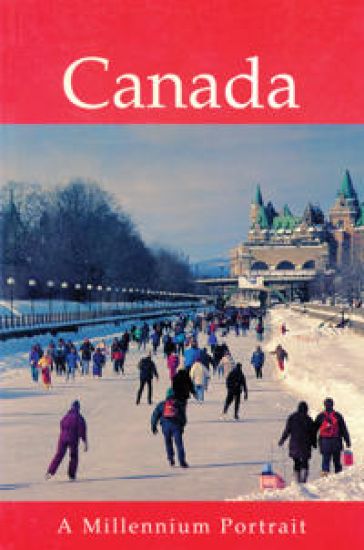
Morton, one of Canada's most respected historians has given us a short celebration of Canada with a depth of insight that truly helps us to know one another and all the regions of the country.
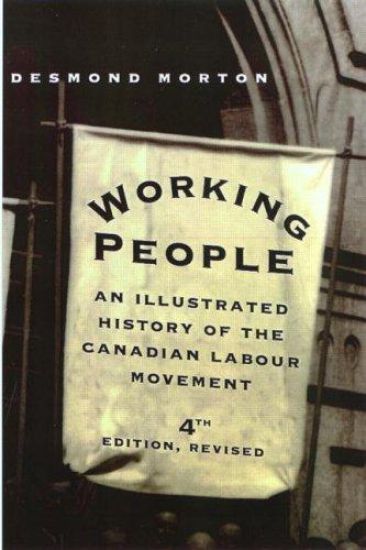
Desmond Morton highlights the great events of labour history -- the 1902 meeting that enabled international unions to dominate Canadian unionism for seventy years, the Winnipeg General Strike of 1919, and an obscure 1944 order-in-council that became the charter of labour's rights and freedoms. He looks at the "new model" unions that used their members' dues and savings to fight powerful employers and describes the romantic idealism of the Knights of Labor in the 1880s, one of the most dramatic and visionary movements ever to seize the Canadian imagination. He recounts the desperate struggles of miners, loggers, and fishers to protect themselves from both employers and the dangers of their work. Working People explores the clash between idealists, who fought for such impossible dreams as an eight-hour day, socialism, holidays with pay, industrial democracy, and equality for women and men, and the realists who wrestled with the human realities of self-interest, prejudice, and fear. Morton tells us about Canadians who deserve to be better known, such as Phillips Thompson, Helena Gutteridge, Lynn Williams, Huguette Plamondon, Mabel Marlowe, Madeleine Parent, and a hundred others whose struggle to reconcile idealism and reality shaped Canada more than they would ever know. This new edition brings the book up to date with discussions of globalization and its challenge to nationally based workers' organizations.
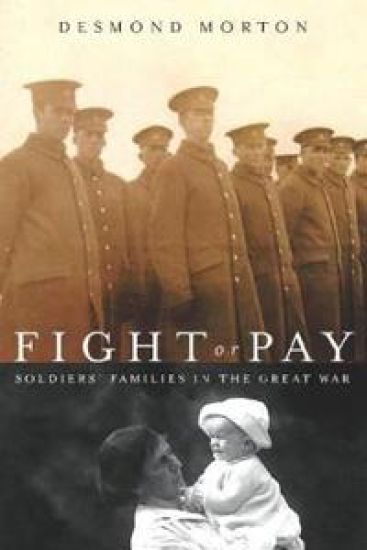
Our slogan has always been 'Fight or Pay.' We call upon the people to enlist or help others enlist. We sometimes say: 'If you cannot put the "I" into fight, put the "pay" into patriotism,' and that serves as a slogan on any platform.– Sir Herbert Ames, founder of the Canadian Patriotic FundUnlike the Second World War, the Great War exists in the collective memory of Canadians as a tragic war. Characterized by the brutality of trench warfare, the First World War is remembered largely for the immense sacrifice in life and limb of Canadian soldiers. In Fight or Pay, reknowned historian Desmond Morton turns his eye to the stories of those who paid in lieu of fighting – the wives, mothers, and families left behind when soldiers went to war. Aware that the recruiting effort would fail if men were forced to choose between their families and the front, the Canadian government and its wealthy backers introduced the Canadian Patriotic Fund, known in its day as "the Patriotic." Charged with support of soldiers' loved ones, the Patriotic and its volunteers set out to take over their lives and transform them into a middle-class model of frugal self-denial. Meanwhile, the Militia Department took on the task of deciding which dependants a soldier could support. Suddenly, the State and private philanthropists were managing family decisions that had never been their business before. A pan-Canadian story, Fight or Pay brings to light the lives of thousands of valiant women whose sacrifices have been overlooked in previous histories of the Great War. It is also an incisive and honest look at the beginnings of a social welfare system that Canadians have come to think of as intrinsic to citizenship. Social and military historians, scholars of gender studies, descendants of First World War families, and anyone with an interest in popular history will find Morton's tale a rich addition to the landscape of Canadian history.
Free Trade provides a historical framework for ongoing discussion of economic and environmental issues. While there is empirical evidence on trade flows - they increased dramatically in both directions - the debate on related issues continues. The impact of free trade on jobs and manufacturing productivity, the effectiveness of dispute settlement, the growth of foreign direct investment, the absence of adjustment programs, and the consequences for social programs are all issues for spirited discussion. Many of the leading actors in shaping both the FTA and NAFTA participated in the conference, including former Prime Minister Brian Mulroney, former President George Bush, former U. S. Treasury Secretary and Secretary of State James Baker, former Canadian Trade Ministers John Crosbie and Michael Wilson, former U. S. Trade Ambassadors Clayton Yeutter and Carla Hills, as well as former Mexican Trade Minister Jaime Serra Puche. Other senior officials included Canada's Derek Burney and Simon Reisman. Donald S. Macdonald, chairman of the landmark Royal Commission that recommended the "leap of faith" of free trade, gave the keynote address. A Royal Bank of Canada impact study, "Two Cheers for the FTA," provided a baseline for discussion by a panel of eminent economists from all three NAFTA countries, and strong defences of positions against free trade included presentations by Andrew Jackson of the Canadian Labour Congress (CLC), Jim Stanford of the Canadian Auto Workers (CAW), and Gerald Larose of Quebec's Conseil des syndicats nationaux (CSN). Participants from the provinces included former Ontario Premier Bob Rae, while NAFTA and the environment were considered by a panel led by former Quebec Premier Pierre Marc Johnson and joined by Quebec Liberal Leader Jean Charest. Other participants included Jean Anderson, Laurent Beaudoin, Fernando Clavijo, Thomas d'Aquino, William Dymond, Francis Fox, Jonathan Fried, Michael Hart, Stanley Hartt, Richard Lipsey, Victor Lichtinger, John McCallum, Peter McPherson, Jacques Menard, William Merkin, Simon Potter, Charles E. Roh, David Schorr, Charles Sirois, Guy Stanley, Yvonne Stinson, Peter Watson, William Watson, L. R. Wilson, and Paul Wonnacott. Free Trade: Risks and Rewards is an important reminder of why the issue was so passionately debated at the time and why it remains important.
Desmond Morton highlights the great events of labour history -- the 1902 meeting that enabled international unions to dominate Canadian unionism for seventy years, the Winnipeg General Strike of 1919, and an obscure 1944 order-in-council that became the charter of labour's rights and freedoms. He looks at the "new model" unions that used their members' dues and savings to fight powerful employers and describes the romantic idealism of the Knights of Labor in the 1880s, one of the most dramatic and visionary movements ever to seize the Canadian imagination. He recounts the desperate struggles of miners, loggers, and fishers to protect themselves from both employers and the dangers of their work. Working People explores the clash between idealists, who fought for such impossible dreams as an eight-hour day, socialism, holidays with pay, industrial democracy, and equality for women and men, and the realists who wrestled with the human realities of self-interest, prejudice, and fear. Morton tells us about Canadians who deserve to be better known, such as Phillips Thompson, Helena Gutteridge, Lynn Williams, Huguette Plamondon, Mabel Marlowe, Madeleine Parent, and a hundred others whose struggle to reconcile idealism and reality shaped Canada more than they would ever know. This new edition brings the book up to date with discussions of globalization and its challenge to nationally based workers' organizations.
Desmond Morton and Glenn Wright point out that Canada was a leader among its allies in devising plans for the retraining of disabled soldiers. The story of that defeat, never told until now, reveals a great deal about Canadian government, pressure group, and politics in the interwar period.
The First Contingent left Canada in September 1914, destined to become an integral part of the British Army. When the Canadian Corps returned in 1919, it was part of a Canadian Army, commanded by Canadians and controlled by Ottawa. That transformation reflected the real emergence of Canada from colonial status to the role of a junior but sovereign ally. In this book, Desmond Morton shows that the change was not easy and that most of the difficulties were created by Canadians themselves. He reveals that the mossiest agent of change was Canada’s Minister of Militia, Sir Sam Hughes. Determined to exercise personal control over every aspect of the CEF, Hughes deliberately fostered confusion, conflict, and political intrigue in the Canadian administration in England. To overcome Hughes’s failure, a full government department – the Ministry of the Overseas Military Forces of Canada – was established in London under the direction of Sir George Perley. Staffed by Canadians like Sir Richard Turner, who had earned his reputation in France, the department achieved a marked improvement in every facet of Canadian military administration in England. It formed the basis for increasingly effective control of Canadian Forces in France and also played a part in winning overwhelming support for the Union government from soldiers voting in the 1917 election. The Overseas Ministry proceed to strengthen civilian and political control without resorting to the political patronage of the Hughes era, established direct Canadian liaison with the British General Headquarters in the field, and, after 11 November, coped with the enormous and unprecedented problems of demobilization. A Peculiar Kind of Politics presents the inside story of how Canadians earned their autonomy in war through the increasing competence they displayed, not merely in action, but in their own administrative management.