Kirjojen hintavertailu – 12 903 725 kirjaa ja 27 kauppaa

Kirjailija

Dev Gangjee

Kirjat ja teokset yhdessä paikassa: 4 kirjaa, julkaisuja vuosilta 2012–2026, suosituimpiin kuuluu Intellectual Property Law 7e. Vertaile teosten hintoja ja tarkista saatavuus suomalaisista kirjakaupoista.

4 kirjaa

Kirjojen julkaisuvuodet: 2012–2026.

Intellectual Property Law 7e

Intellectual Property Law 7e

Lionel Bently; Brad Sherman; Dev Gangjee; Phillip Johnson

Oxford University Press
2026
nidottu
The definitive account of IP law: thorough coverage combined with exceptional analysis. Undergraduates taking an optional module in intellectual property law in the second or third year of their LLB. Postgraduates studying intellectual property law. Also appeals to practitioners. Intellectual Property Law is the definitive textbook on this subject - an all-embracing and detailed guide to intellectual property law. It clearly sets out the law in relation to copyright, patents, trade marks, passing off and confidentiality, whilst enlivening the text with illustrations and diagrams. - Provides a detailed analysis of intellectual property law with reference to a wide range of academic opinion, giving readers a broad context in which to explore the key principles of the subject. - Writing style is particularly clear - the authors retain clarity whilst including an impressive amount of detail, and discussion of even the most complex areas is lucid and structured. - Anticipates new developments in the field in more depth than other textbooks, ensuring that readers are able to make informed judgements about forthcoming changes in the law, and understand the direction in which IP law is moving. - Also available as an e-book with functionality, navigation features, and links that offer extra learning support. New to this edition: - Consideration of the impact of REULA 2023, particularly on copyright, with suggestions as to how best to accommodate CJEU jurisprudence within UK statutory frameworks. - Takes account of Supreme Court decisions in Emotional Perception, Sky v Skykick, Thaler, Iconix, Lifestyle Equities, Oatly and Abbasi v Newcastle Upon Tyne Hospitals as well as lower court decisions such as WaterRower v Liking, THJ Systems v Sheridan, Lidl v Tesco, Wright v BTC Core, Shantell v Martin, Browne v Adidas, and IBM United Kingdom v LZLABS. - Consideration of the impact of artificial intelligence in discussions of authorship, inventorship, patentable subject matter, text and data mining, licensing, digital replicas and image rights. - Substantial reorganization of treatment of originality and copyright infringement; patentable subject matter (after Emotional Perception); bad faith applications for trade marks (after Skykick); and privacy (after Abbasi). - Consideration of parallel developments in EU law including Unified Patent and Unified Patent Court, as well as case law from the CJEU in key cases such as Mio/Konektra, Pelham II, and IKEA. The seventh edition is available for students and institutions to purchase in a variety of formats, and is supported by online resources. The e-book offers a mobile experience and convenient access along with functionality tools, navigation features and links that offer extra learning support: www.oxfordtextbooks.co.uk/ebooks
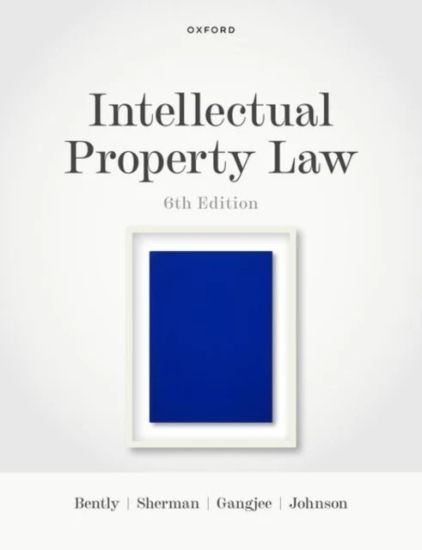
Intellectual Property Law

Intellectual Property Law

Lionel Bently; Brad Sherman; Dev Gangjee; Phillip Johnson

Oxford University Press
2022
nidottu

Halvin toimitettuna 49,80 €

Intellectual Property Law is the definitive textbook on the subject. The authors' all-embracing approach not only clearly sets out the law in relation to copyright, patents, trade marks, passing off, and confidentiality, but also takes account of a wide range of academic opinion enabling readers to explore and make informed judgements about key principles. The particularly clear and lively writing style ensures that even the most complex areas are lucid and comprehensible. Digital formats and resources The sixth edition is available for students and institutions to purchase in a variety of formats, and is supported by online resources. The e-book offers a mobile experience and convenient access along with functionality tools, navigation features and links that offer extra learning support: www.oxfordtextbooks.co.uk/ebooks
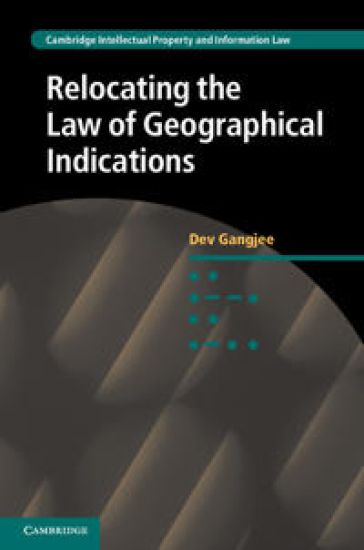
Relocating the Law of Geographical Indications

Relocating the Law of Geographical Indications

Dev Gangjee

Cambridge University Press
2015
pokkari
There is considerable variation in the nature, scope and institutional forms of legal protection for valuable geographical brands such as Champagne, Colombian coffee and Darjeeling tea. While regional products are increasingly important for producers, consumers and policy makers, the international legal regime under the TRIPS Agreement remains unclear. Adopting a historical approach, Dev Gangjee explores the rules regulating these valuable geographical designations within international intellectual property law. He traces the emergence of geographical indications as a distinct category while investigating the key distinguishing feature of the link between regional products and their places of origin. The research addresses long-standing puzzles, such as the multiplicity of regimes operating in this area; the recognition of the link between product and place and its current articulation in the TRIPS definition; the varying scope of protection; and the extent to which geographical indications ought to be treated as a category distinct from trade marks.
Relocating the Law of Geographical Indications

Relocating the Law of Geographical Indications

Dev Gangjee

Cambridge University Press
2012
sidottu
There is considerable variation in the nature, scope and institutional forms of legal protection for valuable geographical brands such as Champagne, Colombian coffee and Darjeeling tea. While regional products are increasingly important for producers, consumers and policy makers, the international legal regime under the TRIPS Agreement remains unclear. Adopting a historical approach, Dev Gangjee explores the rules regulating these valuable geographical designations within international intellectual property law. He traces the emergence of geographical indications as a distinct category while investigating the key distinguishing feature of the link between regional products and their places of origin. The research addresses long-standing puzzles, such as the multiplicity of regimes operating in this area; the recognition of the link between product and place and its current articulation in the TRIPS definition; the varying scope of protection; and the extent to which geographical indications ought to be treated as a category distinct from trade marks.