Kirjojen hintavertailu – 12 859 819 kirjaa ja 27 kauppaa

Kirjailija

Devery S. Anderson

Kirjat ja teokset yhdessä paikassa: 3 kirjaa, julkaisuja vuosilta 2017–2024, suosituimpiin kuuluu Emmett Till. Vertaile teosten hintoja ja tarkista saatavuus suomalaisista kirjakaupoista.

3 kirjaa

Kirjojen julkaisuvuodet: 2017–2024.

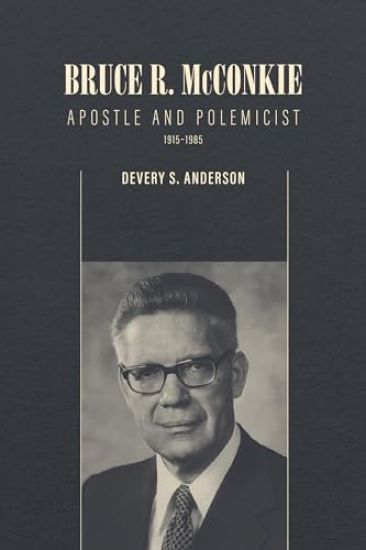
Bruce R. McConkie: Apostle and Polemicist, 1915-1985
Although he served as an apostle in the Church of Jesus Christ of Latter-day Saints for only twelve and a half years, Bruce R. McConkie's twenty-six years' service in the First Council of Seventy had already made him a household name within the church. Called to full-time church service at age thirty-one, McConkie quickly gained a reputation as a theologian and doctrinal teacher. He became a prolific writer, and his controversial book, Mormon Doctrine, remained a bestseller for decades. His writing style, dogmatic approach, and quickness to reprimand others he believed in error made him many enemies, while others endeared themselves to him because of those very traits. McConkie the man was far more complex than the serious and focused general authority most church members saw and heard at the pulpit. Those who knew him best experienced his profound sense of humor. His passion for jogging, rock hounding, and jewelry making occupied much of his free time. Those who witnessed his final address delivered days before his death felt compassion toward him, no matter how they had always viewed him as a writer, speaker, or leader. Truly, to understand Bruce R. McConkie one must look closely at the entire picture.
A Slow, Calculated Lynching

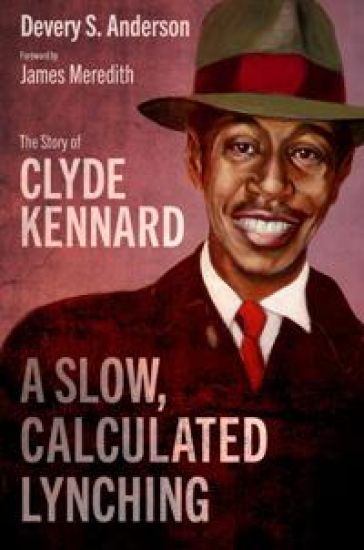
A Slow, Calculated Lynching

Devery S. Anderson; James Meredith

UNIVERSITY PRESS OF MISSISSIPPI
2023
sidottu
In the years following Brown v. Board of Education, countless Black citizens endured violent resistance and even death while fighting for their constitutional rights. One of those citizens, Clyde Kennard (1927–1963), a Korean War veteran and civil rights leader from Hattiesburg, Mississippi, attempted repeatedly to enroll at the all-white Mississippi Southern College—now the University of Southern Mississippi—in the late 1950s. In A Slow, Calculated Lynching: The Story of Clyde Kennard, Devery S. Anderson tells the story of a man who paid the ultimate price for trying to attend a white college during Jim Crow. Rather than facing conventional vigilantes, he stood opposed to the governor, the Mississippi State Sovereignty Commission, and other high-ranking entities willing to stop at nothing to deny his dreams. In this comprehensive and extensively researched biography, Anderson examines the relentless subterfuge against Kennard, including the cruelly successful attempts to frame him—once for a misdemeanor and then for a felony. This second conviction resulted in a sentence of seven years hard labor at Mississippi State Penitentiary, forever disqualifying him from attending a state-sponsored school. While imprisoned, he developed cancer, was denied care, then sadly died six months after the governor commuted his sentence. In this prolonged lynching, Clyde Kennard was robbed of his ambitions and ultimately his life, but his final days and legacy reject the notion that he was powerless. Anderson highlights the resolve of friends and fellow activists to posthumously restore his name. Those who fought against him, and later for him, link a story of betrayal and redemption, chronicling the worst and best in southern race relations. The redemption was not only a symbolic one for Kennard but proved healing for the entire state. He was gone, but countless others still benefit from Kennard’s legacy and the biracial, bipartisan effort he inspired.
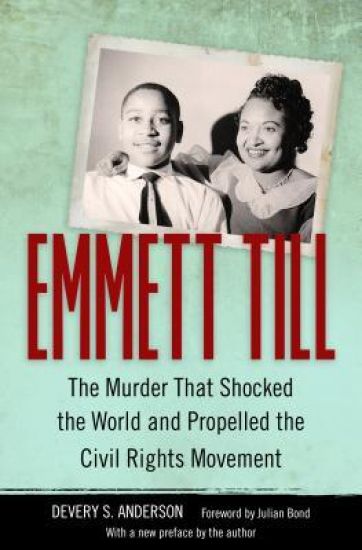
Emmett Till

Emmett Till

Devery S. Anderson; Julian Bond

University Press of Mississippi
2017
nidottu
Emmett Till: The Murder That Shocked the World and Propelled the Civil Rights Movement offers the first truly comprehensive account of the 1955 murder and its aftermath. It tells the story of Emmett Till, the fourteen-year-old African American boy from Chicago brutally lynched for a harmless flirtation at a country store in the Mississippi Delta. Anderson utilizes documents that had never been available to previous researchers, such as the trial transcript, long-hidden depositions by key players in the case, and interviews given by Carolyn Bryant to the FBI in 2004 (her first in fifty years), as well as other recently revealed FBI documents. Anderson also interviewed family members of the accused killers, most of whom agreed to talk for the first time, as well as several journalists who covered the murder trial in 1955. Till’s death and the acquittal of his killers by an all-white jury set off a firestorm of protests that reverberated all over the world and spurred on the civil rights movement. Like no other event in modern history, the death of Emmett Till provoked people all over the United States to seek social change. Anderson’s exhaustively researched book is also the basis for HBO’s mini-series produced by Jay-Z, Will Smith, Casey Affleck, Aaron Kaplan, James Lassiter, Jay Brown, Ty Ty Smith, John P. Middleton, Rosanna Grace, David B. Clark, and Alex Foster, which is currently in active development. For six decades the Till story has continued to haunt the South as the lingering injustice of Till’s murder and the aftermath altered many lives. Fifty years after the murder, renewed interest in the case led the Justice Department to open an investigation into identifying and possibly prosecuting accomplices of the two men originally tried. Between 2004 and 2005, the Federal Bureau of Investigation conducted the first real probe into the killing and turned up important information that had been lost for decades. Anderson covers the events that led up to this probe in great detail, as well as the investigation itself. This book will stand as the definitive work on Emmett Till for years to come. Incorporating much new information, the book demonstrates how the Emmett Till murder exemplifies the Jim Crow South at its nadir. The author accessed a wealth of new evidence. Anderson made a dozen trips to Mississippi and Chicago over a ten-year period to conduct research and interview witnesses and reporters who covered the trial. In Emmett Till Anderson corrects the historical record and presents this critical saga in its entirety.