Kirjojen hintavertailu – 12 859 829 kirjaa ja 27 kauppaa

Kirjailija

Dharminder Kumar

Kirjat ja teokset yhdessä paikassa: 4 kirjaa, julkaisuja vuodelta 2015, suosituimpiin kuuluu Practical Manual of Horticulture Crops: Vol.02. Vertaile teosten hintoja ja tarkista saatavuus suomalaisista kirjakaupoista.

4 kirjaa

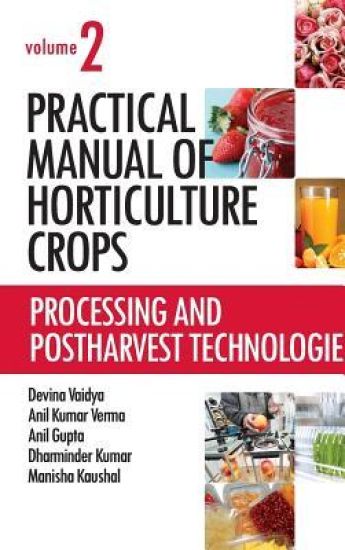
Practical Manual of Horticulture Crops: Vol.02

Practical Manual of Horticulture Crops: Vol.02

Devina Vaidya; Anil Kumar Verma; Anil Gupta; Dharminder Kumar; Manisha Kaushal

New India Publishing Agency
2015
nidottu
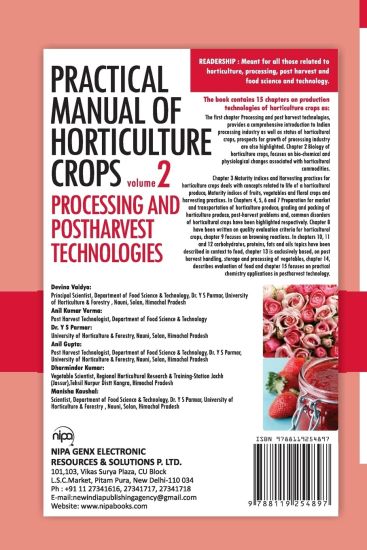
The book comprises a total of 15 chapters, each addressing a specific aspect of production technologies for horticulture crops. The first chapter delves into processing and post-harvest technologies and provides a comprehensive overview of the Indian processing industry as well as the current status of horticultural crops. This chapter also highlights the potential for growth in the processing industry. The second chapter focuses on the biology of horticulture crops and explores the biochemical and physiological changes associated with these commodities. The third chapter discusses maturity indices and harvesting practices for horticulture crops, covering concepts related to the life of a horticultural produce, maturity indices of fruits, vegetables, and floral crops, and harvesting practices. Chapters 4 through 7 then discuss preparation for market and transportation of horticulture produce, grading and packing of horticulture produce, post-harvest problems, and common disorders of horticultural crops, respectively. Chapter 8 focuses on quality evaluation criteria for horticultural crops, while chapter 9 delves into browning reactions. Chapters 10 through 12 describe carbohydrates, proteins, fats, and oils in the context of food. Chapter 13 is dedicated exclusively to post-harvest handling, storage, and processing of vegetables, while chapter 14 provides an overview of the evaluation of food. Finally, chapter 15 focuses on practical chemistry applications in postharvest technology. The authors of this book acknowledge that no publication can be considered perfect and welcome comments and suggestions for further improvement from readers.
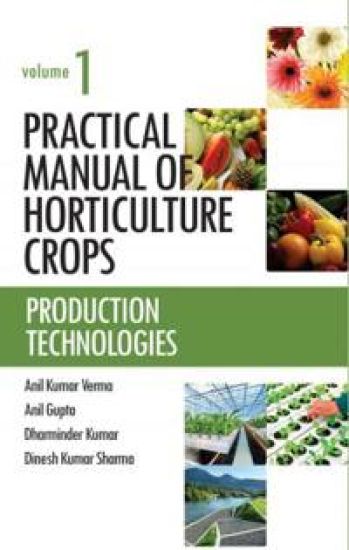
Practical Manual of Horticulture Crops: Vol.01

Practical Manual of Horticulture Crops: Vol.01

Anil Kumar Verma; Anil Gupta; Dharminder Kumar; Dinesh Kumar Sharma

New India Publishing Agency
2015
sidottu
The book comprises nineteen chapters that focus on the production technologies of horticultural crops, including: 1) Horticulture, 2) Orchard Designing & Planting Systems, 3) Orchard Floor Management, 4) Description of Fruit Crops, 5) Description of Vegetable Crops, 6) Nursery Raising Techniques in Fruit Crops, 7) Nursery Raising Techniques in Vegetable Crops, 8) Propagation Techniques for Horticulture Crops, 9) Canopy Management Techniques, 10) Leaf and Soil Sampling Techniques, 11) Integrated Nutrient Management (INM) in Vegetable Crops, 12) Field Preparation, Layout of Experimental Plot, and Calculation of Fertilizer Doses for Vegetable Crops, 13) Exotic Vegetables, 14) Hydroponics in Vegetable Cultivation, 15) Weed Management in Horticultural Crops, 16) Cultural Practices for Medicinal Plants, 17) Annuals and Their Management, 18) Flower Arrangements, and 19) Architectural Landscaping.
Practical Manual of Horticulture Crops: Vol.01

Practical Manual of Horticulture Crops: Vol.01

Anil Kumar Verma; Anil Gupta; Dharminder Kumar; Dinesh Kumar Sharma

New India Publishing Agency
2015
nidottu
The book provides a comprehensive overview of production technologies for horticulture crops, encompassing a total of 19 chapters. These chapters cover a range of topics, including: orchard design and planting systems, orchard floor management, descriptions of fruit and vegetable crops, nursery raising techniques for fruit and vegetable crops, propagation techniques for horticulture crops, canopy management techniques, leaf and soil sampling techniques, integrated nutrient management in vegetable crops, field preparation, layout of experimental plots, and calculation of fertilizer doses for vegetable crops, exotic vegetables, hydroponics in vegetable cultivation, weed management in horticultural crops, cultural practices for medicinal plants, annuals and their management, flower arrangements, and architectural landscaping.
Practical Manual of Horticulture Crops: Vol.02

Practical Manual of Horticulture Crops: Vol.02

Devina Vaidya; Anil Kumar Verma; Anil Gupta; Dharminder Kumar; Manisha Kaushal

New India Publishing Agency
2015
sidottu
The book under consideration comprises a total of 15 chapters, each focusing on a specific aspect of production technologies for horticultural crops. The first chapter provides a comprehensive introduction to the Indian processing industry, along with an overview of the status of horticultural crops in the country. Additionally, it highlights the prospects for the growth of the processing industry. The second chapter delves into the biology of horticultural crops, concentrating on the biochemical and physiological changes associated with these commodities. The third chapter discusses maturity indices and harvesting practices for horticultural crops, covering concepts related to the life of a horticultural produce, maturity indices of fruits, vegetables, and floral crops, and harvesting practices. Chapters four through seven focus on various aspects of preparing horticultural produce for market and transportation, grading and packing of horticultural produce, post-harvest problems, and common disorders of horticultural crops. The eighth chapter deals with quality evaluation criteria for horticultural crops, while the ninth chapter is centered on browning reactions. Chapters ten through twelve describe carbohydrates, proteins, fats, and oils in the context of food. Chapter thirteen is exclusively devoted to post-harvest handling, storage, and processing of vegetables, and chapter fourteen covers the evaluation of food. The final chapter focuses on practical chemistry applications in postharvest technology. It is essential to acknowledge that no book can be perfect, and the authors would appreciate any comments or suggestions for further improvement from readers.