Kirjojen hintavertailu – 12 903 725 kirjaa ja 27 kauppaa

Kirjailija

Diane F. Halpern

Kirjat ja teokset yhdessä paikassa: 11 kirjaa, julkaisuja vuosilta 1994–2022, suosituimpiin kuuluu Sex Differences in Cognitive Abilities. Vertaile teosten hintoja ja tarkista saatavuus suomalaisista kirjakaupoista.

11 kirjaa

Kirjojen julkaisuvuodet: 1994–2022.

Thought and Knowledge

Thought and Knowledge

Diane F. Halpern; Dana S. Dunn

TAYLOR FRANCIS LTD
2022
sidottu
Thought and Knowledge applies theory and research from the learning sciences to teach students the critical thinking skills that they need to succeed in today’s world. The text identifies, defines, discusses, and deconstructs contemporary challenges to critical thinking, from fake news, alternative facts, and deep fakes, to misinformation, disinformation, post-truth, and more. It guides students through the explosion of content on the internet and social media and enables them to become careful and critical evaluators as well as consumers. The text is grounded in psychological science, especially the cognitive sciences, and brought to life through humorous and engaging language and numerous practical and real-world examples and anecdotes. This edition has been streamlined with thoughtful consideration over what content to keep, what to cut, and how much new and current research to add. Critical thinking skills are presented in every chapter, empowering students to learn more efficiently, research more productively, and present logical, critical, and informed arguments. The skills are reviewed at the end of the chapter, and a complete list of skills with definitions and examples are included in the appendix. The text is supported by a companion website that features a robust set of instructor and student resources: www.routledge.com/cw/halpern. Thought and Knowledge can be used as a core text in critical thinking courses offered in departments of psychology, philosophy, English, or across the humanities and social sciences, or as a supplement in any course where critical thinking is emphasized.
Thought and Knowledge

Thought and Knowledge

Diane F. Halpern; Dana S. Dunn

TAYLOR FRANCIS LTD
2022
nidottu
Thought and Knowledge applies theory and research from the learning sciences to teach students the critical thinking skills that they need to succeed in today’s world. The text identifies, defines, discusses, and deconstructs contemporary challenges to critical thinking, from fake news, alternative facts, and deep fakes, to misinformation, disinformation, post-truth, and more. It guides students through the explosion of content on the internet and social media and enables them to become careful and critical evaluators as well as consumers. The text is grounded in psychological science, especially the cognitive sciences, and brought to life through humorous and engaging language and numerous practical and real-world examples and anecdotes. This edition has been streamlined with thoughtful consideration over what content to keep, what to cut, and how much new and current research to add. Critical thinking skills are presented in every chapter, empowering students to learn more efficiently, research more productively, and present logical, critical, and informed arguments. The skills are reviewed at the end of the chapter, and a complete list of skills with definitions and examples are included in the appendix. The text is supported by a companion website that features a robust set of instructor and student resources: www.routledge.com/cw/halpern. Thought and Knowledge can be used as a core text in critical thinking courses offered in departments of psychology, philosophy, English, or across the humanities and social sciences, or as a supplement in any course where critical thinking is emphasized.
Thinking Critically About Critical Thinking

Thinking Critically About Critical Thinking

Diane F. Halpern; Heidi R. Riggio

Routledge
2016
sidottu
A workbook for Thought & Knowledge, Fourth Edition by Diane F Halpern, Thinking Critically About Critical Thinking, Fourth Edition is filled with new exercises to reinforce learning and practice newly acquired skills. This workbook can be purchased in a student package with Thought & Knowledge or as a separate item.
Sex Differences in Cognitive Abilities

Sex Differences in Cognitive Abilities

Diane F. Halpern

Psychology Press Ltd
2011
nidottu
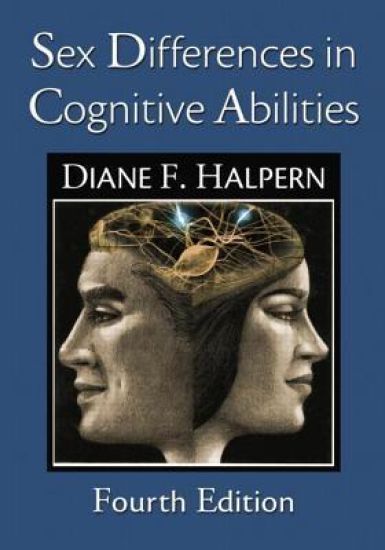
The fourth edition of Sex Differences in Cognitive Abilities critically examines the breadth of research on this complex and controversial topic, with the principal aim of helping the reader to understand where sex differences are found – and where they are not. Since the publication of the third edition, there have been many exciting and illuminating developments in our understanding of cognitive sex differences. Modern neuroscience has transformed our understanding of the mind and behavior in general, but particularly the way we think about cognitive sex differences. But neuroscience is still in its infancy and has often been misused to justify sex role stereotypes. There has also been the publication of many exaggerated and unreplicated claims regarding cognitive sex differences. Consequently, throughout the book there is recognition of the critical importance of good research; an amiable skepticism of the nature and strength of evidence behind any claim of sex difference; an appreciation of the complexity of the questions about cognitive sex differences; and the ability to see multiple sides of an issues, while also realizing that some claims are well-reasoned and supported by data and others are politicized pseudoscience. The author endeavors to present and interpret all the relevant data fairly, and in the process reveals how there are strong data for many different views. The book explores sex differences from many angles and in many settings, including the effect of different abilities and levels of education on sex differences, pre-existing beliefs or stereotypes, culture, and hormones. Sex differences in the brain are explored along with the stern caveat to "mind the gap" between brain structures and behaviors. Readers should come away with a new understanding of the way nature and nurture work together to make us unique individuals while also creating similarities and differences that are often (but not always) tied to our being female and male. Sex Differences in Cognitive Abilities, Fourth Edition, can be used as a textbook or reference in a range of courses and will inspire the next generation of researchers. Halpern engages readers in the big societal questions that are inherent in the controversial topic of whether, when , and how much males and females differ psychologically. It should be required reading for parents, teachers, and policy makers who want to know about the ways in which males and females are different and similar.
Sex Differences in Cognitive Abilities

Sex Differences in Cognitive Abilities

Diane F. Halpern

Psychology Press Ltd
2011
sidottu
The fourth edition of Sex Differences in Cognitive Abilities critically examines the breadth of research on this complex and controversial topic, with the principal aim of helping the reader to understand where sex differences are found - and where they are not. Since the publication of the third edition, there have been many exciting and illuminating developments in our understanding of cognitive sex differences. Modern neuroscience has transformed our understanding of the mind and behavior in general, but particularly the way we think about cognitive sex differences. But neuroscience is still in its infancy and has often been misused to justify sex role stereotypes. There has also been the publication of many exaggerated and unreplicated claims regarding cognitive sex differences. Consequently, throughout the book there is recognition of the critical importance of good research; an amiable skepticism of the nature and strength of evidence behind any claim of sex difference; an appreciation of the complexity of the questions about cognitive sex differences; and the ability to see multiple sides of an issues, while also realizing that some claims are well-reasoned and supported by data and others are politicized pseudoscience. The author endeavors to present and interpret all the relevant data fairly, and in the process reveals how there are strong data for many different views. The book explores sex differences from many angles and in many settings, including the effect of different abilities and levels of education on sex differences, pre-existing beliefs or stereotypes, culture, and hormones. Sex differences in the brain are explored along with the stern caveat to "mind the gap" between brain structures and behaviors. Readers should come away with a new understanding of the way nature and nurture work together to make us unique individuals while also creating similarities and differences that are often (but not always) tied to our being female and male. Sex Differences in Cognitive Abilities, Fourth Edition, can be used as a textbook or reference in a range of courses and will inspire the next generation of researchers. Halpern engages readers in the big societal questions that are inherent in the controversial topic of whether, when , and how much males and females differ psychologically. It should be required reading for parents, teachers, and policy makers who want to know about the ways in which males and females are different and similar.
Women at the Top

Women at the Top

Diane F. Halpern; Fanny Cheung

Wiley-Blackwell (an imprint of John Wiley Sons Ltd)
2008
sidottu
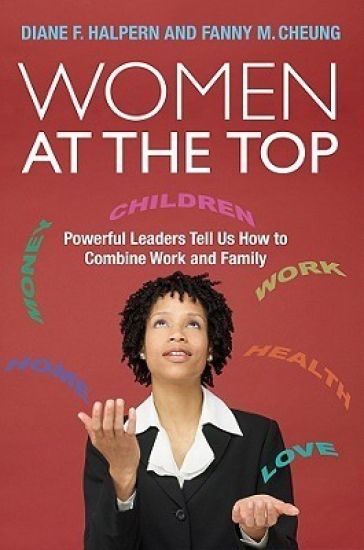
Using case studies of top-level women and research in the field, Women at the Top breaks new ground and offers new insight into how women can create dually-successful lives. explores the work histories, motivation, leadership styles, mentors, and family backgrounds of a diverse assortment of top-level womenincludes the case studies of the President of Old Navy/Gap, the Chairman of Deloitte and Touche, the VP of IBM operations, a Supreme Court Judge in China, President of Legislative Council in Hong Kong, several university presidents, and moreweighs the positive effects of multiple roles and positive and negative work-life spill overdiscusses strategies for success (e.g., scaling back, juggling), the need for social support, and the importance of cultural context
Thinking Critically About Critical Thinking

Thinking Critically About Critical Thinking

Diane F. Halpern; Heidi R. Riggio

Routledge Member of the Taylor and Francis Group
2002
nidottu
A workbook for Thought & Knowledge, Fourth Edition by Diane F Halpern, Thinking Critically About Critical Thinking, Fourth Edition is filled with new exercises to reinforce learning and practice newly acquired skills. This workbook can be purchased in a student package with Thought & Knowledge or as a separate item.
Thought and Knowledge

Thought and Knowledge

Diane F. Halpern

Psychology Press
2002
nidottu
This best-selling textbook, written by award-winning educator and past president of the APA, Diane Halpern, applies theory and research from the learning sciences to teach students the thinking skills they need to succeed in today's world. This new edition retains features from earlier editions that have helped its readers become better thinkers. A rigorous academic grounding based in cognitive psychology is presented in a clear writing style with a humorous tone and supported by numerous practical examples and anecdotes. Thought & Knowledge, Fourth Edition has been revised to help students meet the challenges of a global neighborhood and make meaningful conclusions form the overwhelming quantity of information now available at the click of a mouse. The skills learned with this text will help students learn more efficiently, research more productively, and present logical, informed arguments. New features include:*Template for Making Arguments. This is a crucial preparation tool for students in any subject area. For those planning on continuing to Graduate School, this feature is an essential reference. The Graduate Record Examination (GRE) now requires that all test takers write an argument on a contemporary topic.*Concept Maps provide students with strategies to clarify complex information and retain long-term knowledge. *Contemporary Examples, throughout the text, relate current events to the book discussions.*Explanations on How to Evaluate Information found on Web sites.*Revised Student Workbook. Thinking Critically About Critical Thinking, Fourth Edition is filled with new exercises to reinforce learning and practice newly acquired skills. This workbook can be purchased in a student package with the text or as a separate item. Thought & Knowledge, Fourth Edition is appropriate for use as a textbook in critical thinking courses offered in departments of psychology, philosophy, English, humanities, or as a supplement in any course where critical thinking is emphasized.
Critical Thinking Across the Curriculum

Critical Thinking Across the Curriculum

Diane F. Halpern

Routledge Member of the Taylor and Francis Group
1997
sidottu
Consider that many of the people who are alive today will be working at jobs that do not currently exist and that the explosion of information means that today's knowledge will quickly become outdated. As a result, two goals for education clearly emerge -- learning how to learn and how to think critically about information that changes at a rapid rate. We face a multitude of new challenges to our natural environment, difficult dilemmas concerning the use of weapons of mass destruction, political agendas for the distribution of scarce commodities and wealth, psychological problems of loneliness and depression, escalating violence, and an expanding elderly population. International in scope and in magnitude, these new problems strain resources and threaten the continuance of life on earth. To creatively and effectively attack these imminent problems, a well educated, thinking populace is essential. An abridged edition of Halpern's best-selling text, Critical Thinking Across the Curriculum is designed to help students enhance their thinking skills in every class. The skills discussed are needed in every academic area and setting -- both in and out of class. They are:determining cause;assessing likelihood and uncertainty;comprehending complex text;solving novel problems;making good decisions;evaluating claims and evidence; andthinking creatively. In this adaptation of her best-selling text, Diane Halpern applies the theories and research of cognitive psychology to the development of critical thinking and learning skills needed in the increasingly complex world in which we work and live. The book is distinguished by its clear writing style, humorous tone, many practical examples and anecdotes, and rigorous academic grounding. Everyday examples and exercises promote the transfer of critical thinking skills and dispositions to real-world settings and problems. The goal is to help readers recognize when and how to apply the thinking skills needed to analyze arguments, reason clearly, identify and solve problems, and make sound decisions. Also of importance, a general thinking skills framework ties the chapters together, but each is written so that it can "stand alone." This organization allows for maximum flexibility in the selection of topics and the order in which they are covered. This book is intended for use in any course emphasizing critical thinking as an approach to excellence in thinking and learning.
Critical Thinking Across the Curriculum

Critical Thinking Across the Curriculum

Diane F. Halpern

Routledge Member of the Taylor and Francis Group
1997
nidottu
Consider that many of the people who are alive today will be working at jobs that do not currently exist and that the explosion of information means that today's knowledge will quickly become outdated. As a result, two goals for education clearly emerge -- learning how to learn and how to think critically about information that changes at a rapid rate. We face a multitude of new challenges to our natural environment, difficult dilemmas concerning the use of weapons of mass destruction, political agendas for the distribution of scarce commodities and wealth, psychological problems of loneliness and depression, escalating violence, and an expanding elderly population. International in scope and in magnitude, these new problems strain resources and threaten the continuance of life on earth. To creatively and effectively attack these imminent problems, a well educated, thinking populace is essential. An abridged edition of Halpern's best-selling text, Critical Thinking Across the Curriculum is designed to help students enhance their thinking skills in every class. The skills discussed are needed in every academic area and setting -- both in and out of class. They are:determining cause;assessing likelihood and uncertainty;comprehending complex text;solving novel problems;making good decisions;evaluating claims and evidence; andthinking creatively. In this adaptation of her best-selling text, Diane Halpern applies the theories and research of cognitive psychology to the development of critical thinking and learning skills needed in the increasingly complex world in which we work and live. The book is distinguished by its clear writing style, humorous tone, many practical examples and anecdotes, and rigorous academic grounding. Everyday examples and exercises promote the transfer of critical thinking skills and dispositions to real-world settings and problems. The goal is to help readers recognize when and how to apply the thinking skills needed to analyze arguments, reason clearly, identify and solve problems, and make sound decisions. Also of importance, a general thinking skills framework ties the chapters together, but each is written so that it can "stand alone." This organization allows for maximum flexibility in the selection of topics and the order in which they are covered. This book is intended for use in any course emphasizing critical thinking as an approach to excellence in thinking and learning.
Changing College Classrooms

Changing College Classrooms

Diane F. Halpern

Jossey-Bass Inc.,U.S.
1994
sidottu
Changing College Classrooms provides useful ideas on the four hottest issues in higher education today: active learning, diversity, technology, and assessment. Every faculty member will find at least one chapter well worth reading. :? Wilbert J. McKeachie, emeritus research scientist, The Center for Research on Learning and Teaching