Kirjojen hintavertailu – 12 903 735 kirjaa ja 27 kauppaa

Kirjailija

Diane Salmon

Kirjat ja teokset yhdessä paikassa: 4 kirjaa, julkaisuja vuosilta 2001–2015, suosituimpiin kuuluu Using Concept Mapping to Foster Adaptive Expertise. Vertaile teosten hintoja ja tarkista saatavuus suomalaisista kirjakaupoista.

4 kirjaa

Kirjojen julkaisuvuodet: 2001–2015.

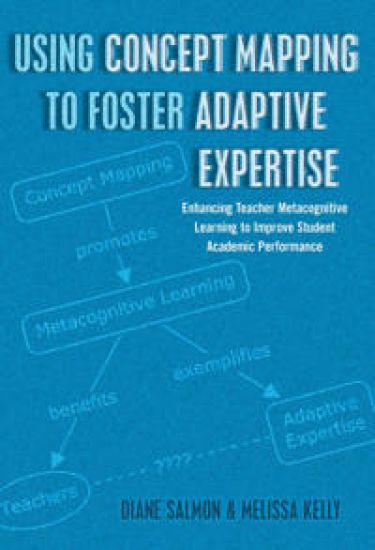
Using Concept Mapping to Foster Adaptive Expertise

Using Concept Mapping to Foster Adaptive Expertise

Diane Salmon; Melissa Kelly

Peter Lang Publishing Inc
2015
sidottu
Concept mapping is a powerful means to promote metacognitive learning in students and teachers alike. When teachers integrate concept mapping into their instructional planning, they clarify the big ideas, expose new conceptual relationships, and refine learning goals for their students. Salmon and Kelly provide a research-based framework and corresponding strategies to help teachers develop, critique, and revise their concept maps. In using this approach, teachers refine knowledge for teaching in order to expand their adaptive expertise and ultimately improve the academic performances of their students. Teacher candidates at both the undergraduate and graduate level can use this book to support their professional learning and planning for teaching. Teacher educators will find this text appropriate for courses that address learning, cognition, and instructional planning. In-service professionals can use the approach described here to support their own professional development through their practice. Administrators and coaches will find the volume a useful tool in fostering a professional learning community in their schools.
Using Concept Mapping to Foster Adaptive Expertise

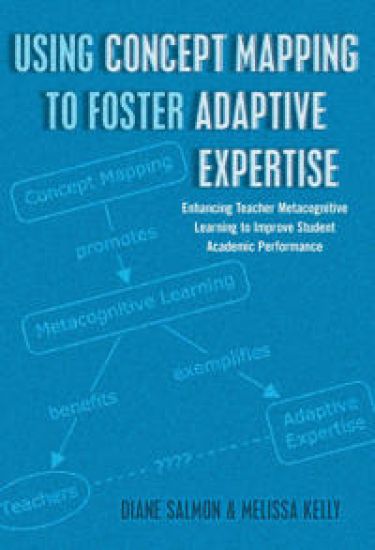
Using Concept Mapping to Foster Adaptive Expertise

Diane Salmon; Melissa Kelly

Peter Lang Publishing Inc
2014
nidottu
Concept mapping is a powerful means to promote metacognitive learning in students and teachers alike. When teachers integrate concept mapping into their instructional planning, they clarify the big ideas, expose new conceptual relationships, and refine learning goals for their students. Salmon and Kelly provide a research-based framework and corresponding strategies to help teachers develop, critique, and revise their concept maps. In using this approach, teachers refine knowledge for teaching in order to expand their adaptive expertise and ultimately improve the academic performances of their students. Teacher candidates at both the undergraduate and graduate level can use this book to support their professional learning and planning for teaching. Teacher educators will find this text appropriate for courses that address learning, cognition, and instructional planning. In-service professionals can use the approach described here to support their own professional development through their practice. Administrators and coaches will find the volume a useful tool in fostering a professional learning community in their schools.
Facilitating interpersonal Relationships in the Classroom

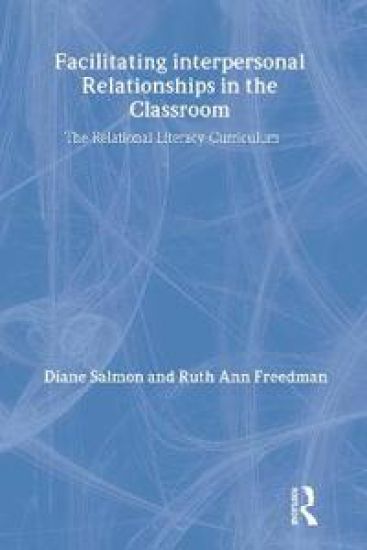
Facilitating interpersonal Relationships in the Classroom

Diane Salmon; Ruth Ann Freedman

Routledge Member of the Taylor and Francis Group
2001
nidottu
This volume is a guide to using the Relational Literacy Curriculum with children in grades 2-5. Based on developmental and social constructivist principles, this curriculum presents a conceptual framework and a method for enhancing children's understanding of interpersonal relationships in the classroom. The Relational Literacy Curriculum: *offers a powerful method for children to reflect on challenging interpersonal episodes and to discern constructive patterns of relating through discussion and role play; *provides a process that can serve as both a prevention tool and a vehicle for managing immediate conflict; *gives teachers a strong theoretical framework from which they can make principled decisions, and a flexible format for implementing it that they can adapt to meet the particular social needs of their classroom context; and *promotes teacher reflection and learning through the use of various observational tools. This book addresses the question of why it is important to study relationships in the elementary classroom; reviews the research and literature that inform the relational literacy curriculum; lays out the process of the curriculum; explains how the curriculum can be used to address real conflicts within the classroom community; and provides guiding principles for practice. It is a useful resource for classroom teachers, school psychologists, school counselors and social workers, and a valuable text for a range of courses, including classroom management, psycho-social interventions, child development, and early childhood education.
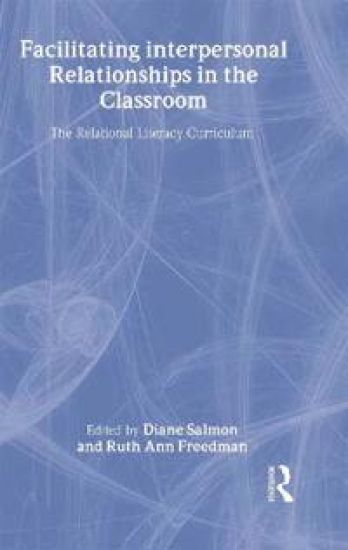
Facilitating interpersonal Relationships in the Classroom

Facilitating interpersonal Relationships in the Classroom

Diane Salmon; Ruth Ann Freedman

Routledge Member of the Taylor and Francis Group
2001
sidottu
This volume is a guide to using the Relational Literacy Curriculum with children in grades 2-5. Based on developmental and social constructivist principles, this curriculum presents a conceptual framework and a method for enhancing children's understanding of interpersonal relationships in the classroom. The Relational Literacy Curriculum: *offers a powerful method for children to reflect on challenging interpersonal episodes and to discern constructive patterns of relating through discussion and role play; *provides a process that can serve as both a prevention tool and a vehicle for managing immediate conflict; *gives teachers a strong theoretical framework from which they can make principled decisions, and a flexible format for implementing it that they can adapt to meet the particular social needs of their classroom context; and *promotes teacher reflection and learning through the use of various observational tools. This book addresses the question of why it is important to study relationships in the elementary classroom; reviews the research and literature that inform the relational literacy curriculum; lays out the process of the curriculum; explains how the curriculum can be used to address real conflicts within the classroom community; and provides guiding principles for practice. It is a useful resource for classroom teachers, school psychologists, school counselors and social workers, and a valuable text for a range of courses, including classroom management, psycho-social interventions, child development, and early childhood education.