Kirjojen hintavertailu – 12 903 725 kirjaa ja 27 kauppaa

Kirjailija

Dianne Draze

Kirjat ja teokset yhdessä paikassa: 16 kirjaa, julkaisuja vuodelta 2005, suosituimpiin kuuluu Design Studio: Integrating Art & Thinking (Grades 5-9). Vertaile teosten hintoja ja tarkista saatavuus suomalaisista kirjakaupoista.

16 kirjaa

Enrichment Units in Math

Enrichment Units in Math

Dianne Draze; Judy Leimbach

TAYLOR FRANCIS INC
2005
nidottu
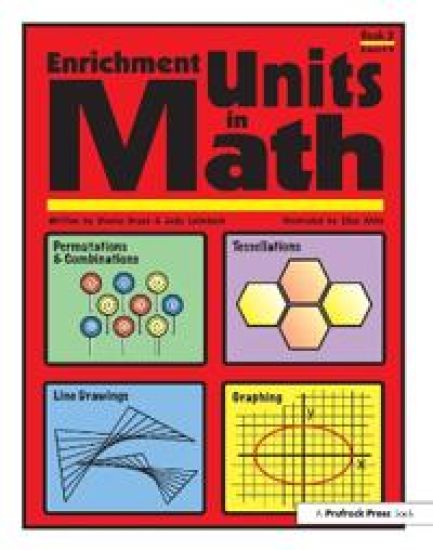
Go beyond the regular curriculum with these units to challenge your more able intermediate grade math students. With their ease of use, clear instruction, and motivating topics, these are the perfect enrichment activities for the regular math curriculum. This book contains four units that are structured so that students can easily develop an understanding of the topics on their own. The four topics are:permutations and combinations, tessellations, line drawings, and graphing. Each unit provides sequential activities that allow students to work through these motivating topics, whether they are working by themselves, in a small group, or in a whole-class setting. The units lend themselves easily to a math center arrangement with each student having an individual folder and checklist to record his or her progress. While they were designed to provide added challenge for students who have mastered the regular curriculum, some of the units can be used as supplements for whole-class instruction. The emphasis in these units is on promoting thinking, developing perseverance, expanding students' view of mathematics, enjoying a challenge, and keeping math students actively involved and enthused about math. This book will help you provide students with opportunities to explore mathematical ideas in ways that promote their intellectual growth and expand their views of mathematics. This is one of a three-book series. The other books cover the following topics: Enrichment Units in Math Book 1—attribute pattern blocks, tangrams, sets and Venn diagrams, and ancient Egyptian numbers; and Enrichment Units in Math Book 3—probability, topology, magic squares, and number characteristics. For other math units to extend the math curriculum and provide opportunities to work independently, see Math Extension UnitsBook 1 and Book 2. Grades 4-6
Enrichment Units in Math

Enrichment Units in Math

Dianne Draze

TAYLOR FRANCIS INC
2005
nidottu
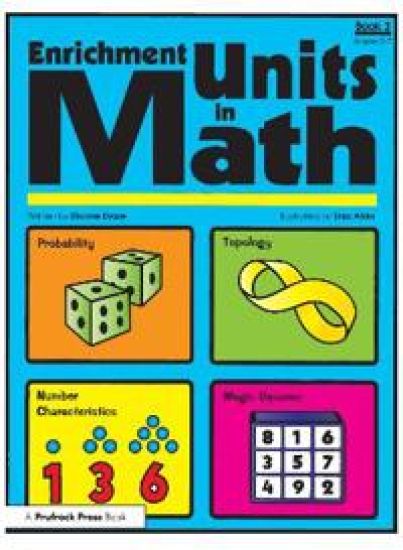
Go beyond the regular curriculum with these units to challenge your more able intermediate grade math students. With their ease of use, clear instruction, and motivating topics, these are the perfect enrichment activities for the regular math curriculum. This book contains four units that are structured so that students can easily develop an understanding of the topics on their own. The four topics are:probability, topology, magic squares, and number characteristics. Each unit provides sequential activities that allow students to work through these motivating topics, whether they are working by themselves, in a small group, or in a whole-class setting. The units lend themselves easily to a math center arrangement with each student having an individual folder and checklist to record his or her progress. While they were designed to provide added challenge for students who have mastered the regular curriculum, some of the units can be used as supplements for whole-class instruction. The emphasis in these units is on promoting thinking, developing perseverance, expanding students' view of mathematics, enjoying a challenge, and keeping math students actively involved and enthused about math. This book will help you provide students with opportunities to explore mathematical ideas in ways that promote their intellectual growth and expand their views of mathematics. This is one of a three-book series. For younger students, see Enrichment Units in Math Book 1—attribute pattern blocks, tangrams, sets and Venn diagrams, and ancient Egyptian numbers; and Enrichment Units in Math Book 2—permutations and combinations, tessellations, line drawings, and graphing. For other math units to extend the math curriculum and provide opportunities to work independently, see Math Extension UnitsBook 1 and Book 2. Grades 5-7
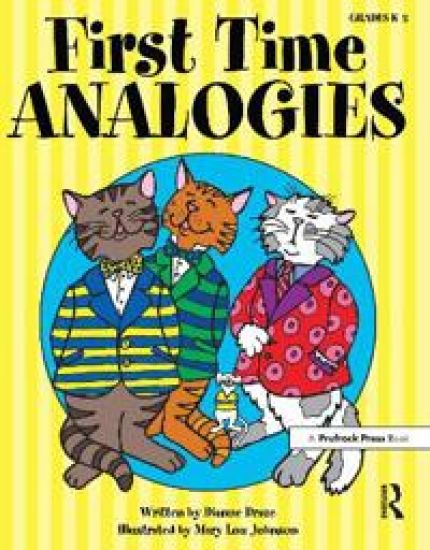
First Time Analogies

First Time Analogies

Dianne Draze

Prufrock Press
2005
nidottu
An analogy is a comparison between two things. It points out the similarities between two things that might be different in all other respects. Analogies cause us to think analytically about forms, uses, structures, and relationships. First Time Analogies is the ideal launching pad to start nonreaders on the road to real thinking experiences with these pictorial and symbolic analogies that are both challenging and motivating. The book is divided into four sections that let you introduce analogies in a developmental way. The levels are:recognizing relationships; choosing one item to complete the analogy; given two items, choosing two other items that have the same relationships; and pairing up four items to complete two related pairs. Exercises are presented on worksheets that require circling the correct answer, as well as cutting out pictures and pasting them in the correct spaces. Attractive illustrations will draw students into the engaging exercises. Although they think they are just solving fun puzzles, they will be doing serious thinking and building a basis for future experiences in critical thinking. This is the first in a series of books that introduce analogies at varying difficulties and formats. The other books are Analogies for Beginners, Analogies for the 21st Century, Thinking Through Analogies, and Advancing Though Analogies. Grades K-2
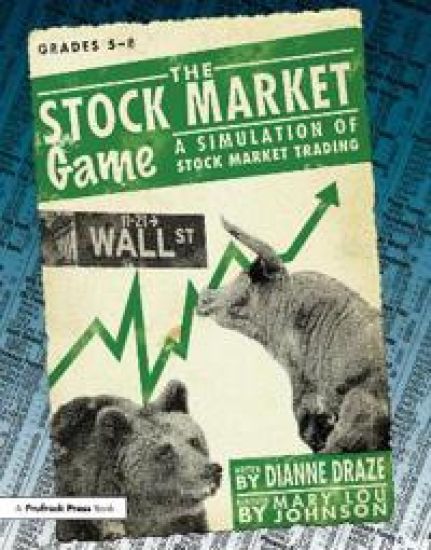
The Stock Market Game

The Stock Market Game

Dianne Draze

Prufrock Press
2005
nidottu
The stock market is in the news every day, and even people who do not personally trade securities or intend to make a fortune by trading stocks have an interest in knowing something about the stock market. By giving students an understanding of the stock market, we are preparing them to deal knowledgeably with an area of our society that has a vast effect on their lives. Whether or not they choose later in life to trade stocks on an individual basis, they will have the knowledge that will enable them to understand this aspect of the economy and how their personal economic pictures are affected by the larger economic landscape. The Stock Market Game is a fun, informative simulation game that provides the information and framework for students to learn about the economics and psychology of the stock market. This easy-to-use guide includes:information about all aspects of company ownership; information on stocks, stock prices, the stock market, buying and selling stocks, and forces that affect stock prices; a minisimulation that can be completed in 1 week; and a longer simulation that follows the real stock market for several months. All information is presented on reproducible pages, illustrated with examples, and followed by exercises that let students apply their knowledge. This motivating unit will give students insights they will carry with them into their adult lives. This combination curriculum guide/simulation has it all. All you have to do is add current stock prices from your newspaper or the Internet. For more information on business ownership, use the simulation Open for Business. Grades 5-8
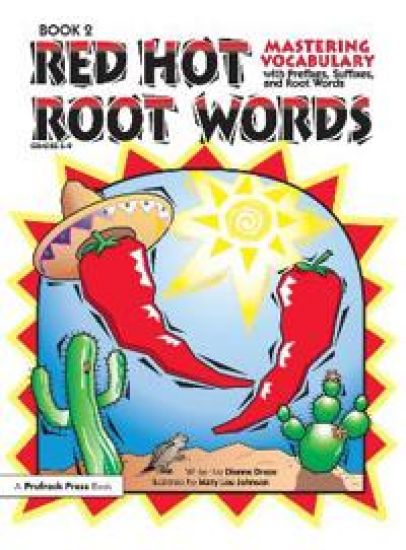
Red Hot Root Words

Red Hot Root Words

Dianne Draze

Prufrock Press
2005
nidottu
Help students improve their mastery of the English language and acquire the keys for understanding thousands of words by studying Greek and Latin prefixes, root words, and suffixes. This is one of the most complete, usable presentations of vocabulary development using word parts you will find. A knowledge of word parts gives students a head start on decoding words in reading and testing situations. This book, the second in a two-book series, contains three sections (prefixes, root words, and suffixes), but each section has the same format. Each of the lessons include:two to four prefixes, suffixes, or root words along with meanings and sample words; 10 new vocabulary words that use these word parts; definitions and sample sentences for each new word; and a one-page worksheet that presents a variety of ways to apply knowledge and expand understanding of the definitions and uses of the word parts. In addition to the extensive student section, this book includes considerable reference material to help the instructor. This includes:a comprehensive listing of prefixes, root words, and suffixes; their meanings and sample words; extra words to use with each lesson; open-ended worksheets that can be used with any lesson; and additional lesson ideas to supplement your word study. For younger students, use Red Hot Root Words, Book 1. Grades 6-9
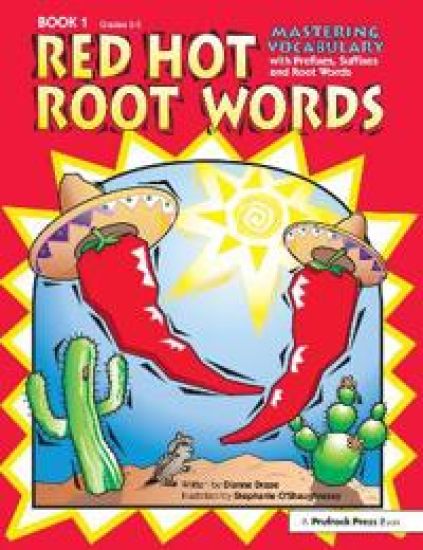
Red Hot Root Words

Red Hot Root Words

Dianne Draze

Prufrock Press
2005
nidottu
Help students improve their mastery of the English language and acquire the keys for understanding thousands of words by studying Greek and Latin word parts (prefixes, root words, and suffixes). This is one of the most complete, usable presentations of vocabulary development using word parts you will find. A knowledge of word parts gives students a head start on decoding words in reading and testing situations. This is the first book in the two-book series. Each of the well-developed lessons in this text includes:one to three word parts along with meanings and sample words, five vocabulary words that use the prefixes or root words, definitions and sample sentences for each of the five words, a practice exercise that lets students apply knowledge of the words and their meanings, and a one-page review worksheet for one or two lessons that presents more unique opportunities to work with the prefixes and root words and to see how they are combined with suffixes. In addition to the student pages, the teacher's information section includes:an extensive listing of the most common prefixes, root words, and suffixes; their meanings and sample words; additional words for each lesson; andlesson ideas to supplement the word being studied. For older students, use Red Hot Root Words, Book 2. Grades 3-5
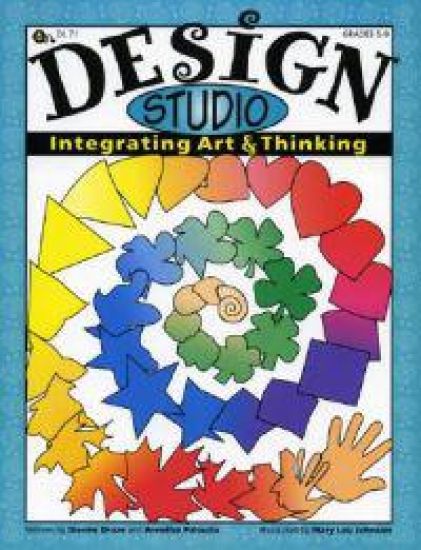
Design Studio: Integrating Art & Thinking (Grades 5-9)

Design Studio: Integrating Art & Thinking (Grades 5-9)

Dianne Draze; Annelise Palouda

Prufrock Press
2005
nidottu
Design is many things. More than a subject, it is a process. In the broadest sense, it is a way of thinking and solving problems. It is also a way of communicating, a process that uses both divergent and convergent thinking, and a way of selecting a solution that best fits the needs of the people involved. More than an art class, this book is also a course in thinking. Students learn how to create attractive designs using the techniques of unity, variety, repetition, movement, proportion, and more. Concise information is combined with unique projects that allow students to hone both their thinking and artistic skills. "Design Studio" presents information about several areas of design, with the main emphasis on graphic design. Graphic design is used as a vehicle for understanding all other areas of design and as an area for the application of the Creative Problem Solving process. While the largest part of the book is devoted to the principles of graphic design, an entire section presents the CPS process and provides practice using this process to solve design problems. Students are also given a glimpse of other areas of design (fashion, industrial, architectural, decorative, environmental, urban, computer, and interior) and are provided with projects for each area. "Design Studio" has a wide variety of hands-on projects, opportunities for thinking and doing, ways to combine art and thinking, and ways to teach art through real-life applications. With a creative attitude and basic art supplies, students can create great artwork.
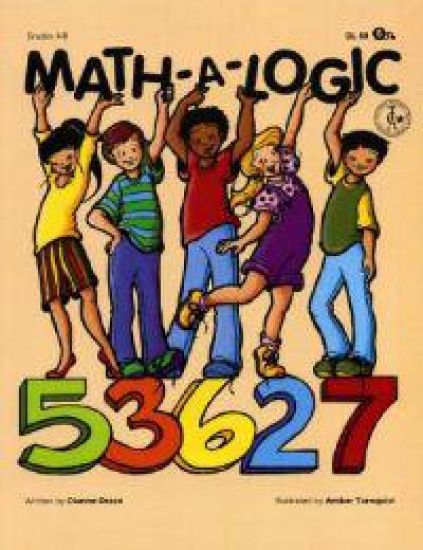
Math-a-Logic: Grades 4-8

Math-a-Logic: Grades 4-8

Dianne Draze

ROUTLEDGE
2005
nidottu
If you thought math was all numbers, then you're in for a pleasant surprise. The ability to reason logically is both a prerequisite for learning mathematics and a desired outcome of mathematics instruction. This award-winning text combines logical thinking with mathematical concepts and calculations. Grades 4-8
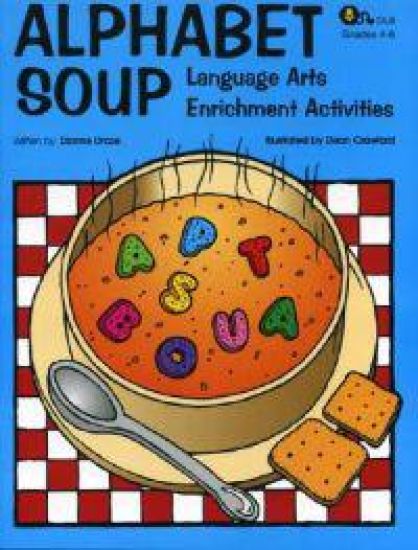
Alphabet Soup: Language Arts Enrichment Activities
Use these quick, ready-to-use activities to add an element of interest to your language arts program. Whether they are used to supplement the regular curriculum or to provide activities for home learning, these exercises will build students' abilities to use words with flexibility and originality. This long-time favorite is the perfect supplement for language arts or literature classrooms. It's packed with games and activities that draw young and inventive minds into word analysis, vocabulary building, and literary awareness. The purpose of this book is to create an awareness of words that goes beyond the mere phonetic analysis of words usually associated with reading and spelling instruction. As a result of doing the activities in this book, students should see words as vehicles for creating illusions, ways of expressing feelings, and means of communicating ideas. Improve writing, build thinking skills, and add an element of fun with this book. Serve a tantalizing dish of language experiences spiced with portions of thinking--serve an Alphabet Soup. Grades 4-6
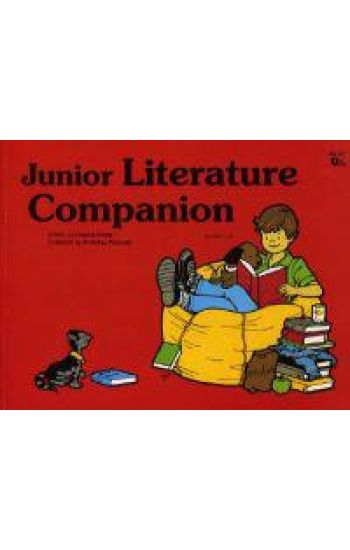
Junior Literature Companion

Junior Literature Companion

Dianne Draze

ROUTLEDGE
2005
nidottu
Here's a gold mine of timesaving reproducible worksheets to supplement any literature program. Junior Literature Companion helps students identify the elements of good literature and focus their thoughts about what they have read. The reproducible worksheets are organized according to: logs and journals--students can keep track of books they have read, record their new words and thoughts about their readings and predict what will happen in the story; setting--students identify the setting of the story; characters--activities help students identify the characters, describe the characters and apply knowledge to a variety of situations; plot and events--activities ask students to relate events of the story and record their thoughts about what happened; and general activities and personal opinion--worksheets ask for students' evaluations of various aspects of the books. This instructional tool will allow you to help students identify elements of good literature, focus their thoughts about what they have read, and relate readings to their own lives. This versatile guide offers open-ended worksheets that can be used with any book either as group exercises, literature units, or as individual book reports. For reading reporting activities for older students see Literature Companion, Literature Lab, and Creating Quality Literature Units. Grades 1-3
Clues Book 2

Clues Book 2

Dianne Draze

Prufrock Press
2005
nidottu
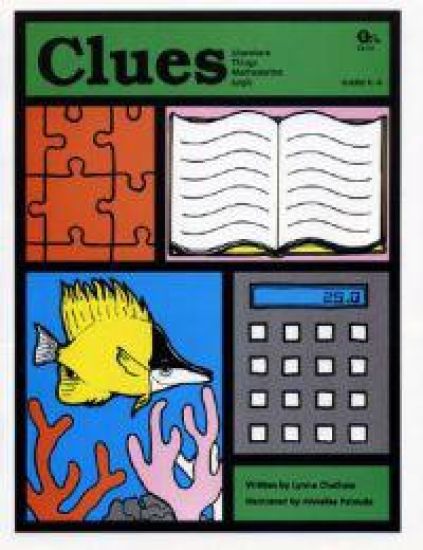
Students will love the challenge of solving these interest-grabbing puzzles. Armed with the clues (4-6 per puzzle), they'll have to pool their past knowledge, check reference material, and, most importantly, think in order to discover the person, place, or thing to which the clues refer. Clues progress from general to specific. Each exercise is a lesson in cultural or global literacy, as well as an opportunity to develop thinking and reference skills. You'll find a multitude of uses for these motivating riddles. Use them for team competition (or cooperation), weekly challenge, research, or to build thinking skills. These topics build a foundation of information that all literate people should know. Your students will enjoy using these puzzles to expand their knowledge of the world around them while they build important research and thinking skills. Book 1 in this series includes puzzles on: U. S. geography (cities, states, and land features); world geography (countries, cities, rivers, and mountains); landmarks and famous sites; and famous people (important people from all areas of human endeavors). Book 2 in this series includes puzzles on: literature (authors and literary works); things (such as blue whales, World War II, United Nations, and hydrogen); mathematics (using clues about place value and number characteristics to determine the correct number); and logic (deductive logic). Grades 4-8
Blueprints: A Guide for 16 Independent Study Projects
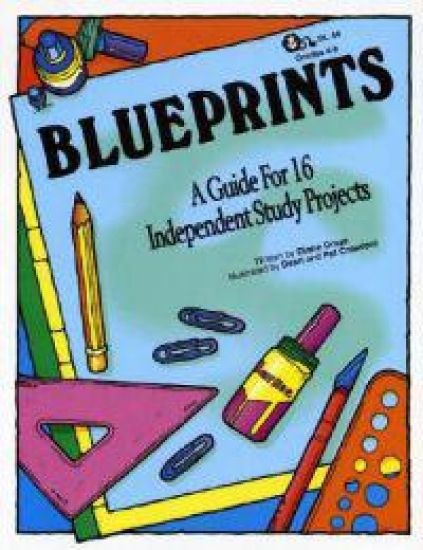
How often has it happened that your students have gotten halfway through a project and given up, abandoning the half-finished project? Students usually start a project with great interest and vision as to what the final project will be like. Sometime between the initial assignment and the final due date, however, frustration sets in. This often happens because students have not acquired the organizational skills to be able to break a project into smaller, manageable pieces and systematically tackle each little piece of the project one at a time. Now you can take the guesswork out of independent or assigned study projects. Blueprints provides complete step-by-step directions for 16 different projects,
Attribute Block - Sequences: Thinking Activities
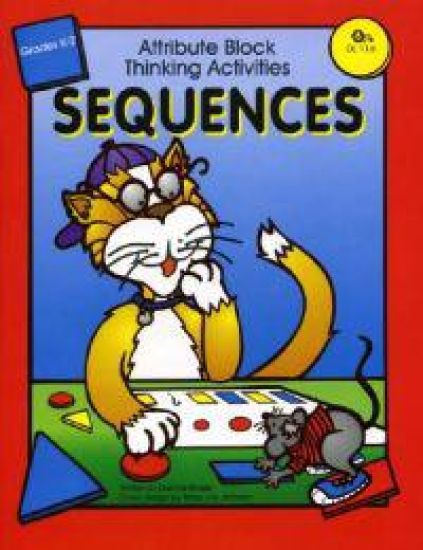
Attribute Blocks are manipulatives that have four different attributes: shape (circle, hexagon, square, and triangle); color (red, blue, and yellow); size (big and small); and thickness (thick and thin). The activities in this book teach young students how to make an analogy, or comparison, between attribute blocks. These easy-to-use cards are the perfect introduction to logical thinking for young learners. Students use attribute blocks to complete the patterns on the 32 full-color task cards. Each set progresses from easy to more difficult, making the activities perfect for learning centers and nonreaders. Use attribute blocks in your math class or as a part of your thinking skills program. If you are looking for a motivating, hands-on way to introduce your younger students to logical thinking, the two Attribute Block Thinking Activities books are just what you need. The other book in this series is Attribute Block - Sequences: Thinking Activities , which focuses on sequences. Simply put out the cards and a set of attribute blocks and let the thinking begin Grades K-3
Clues Book 1

Clues Book 1

Dianne Draze

Prufrock Press
2005
nidottu
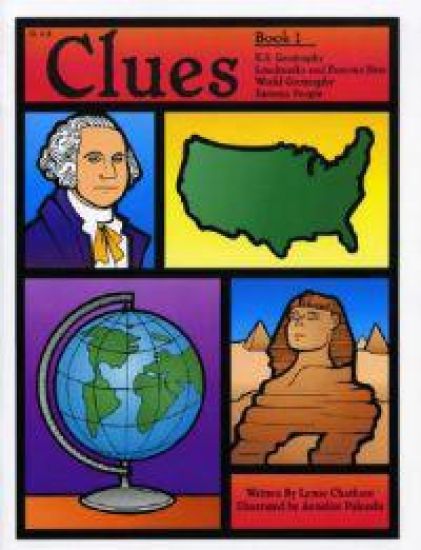
Students will love the challenge of solving these interest-grabbing puzzles. Armed with the clues (4-6 per puzzle), they'll have to pool their past knowledge, check reference material, and, most importantly, think in order to discover the person, place, or thing to which the clues refer. Clues progress from general to specific. Each exercise is a lesson in cultural or global literacy, as well as an opportunity to develop thinking and reference skills.
Inventions, Inventors and You

Inventions, Inventors and You

Dianne Draze

Prufrock Press
2005
nidottu
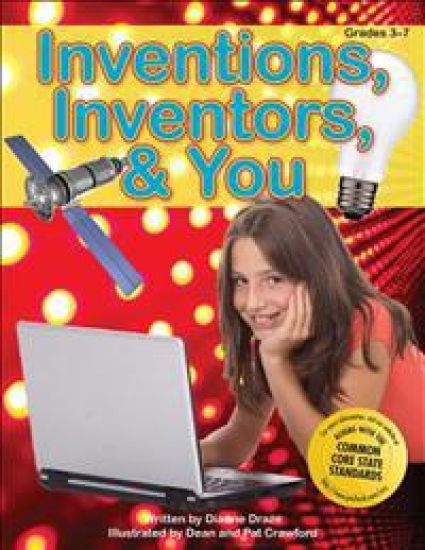
Inventions, Inventors, and You is a comprehensive unit that will not only acquaint students with significant inventions and inventors, but will also give them techniques for being more creative. Inventions, Inventors, and You takes invention out of the history books and brings it to life. This combination of research and creativity training allows students to explore how our lives have been affected by inventions while they build their own creative skills. Inventions, Inventors, and You offers something for every teaching and learning style. The teacher's section gives outlines for directed lessons, warm up ideas and guidelines for learning centers and bulletin boards, as well as pretest and invention reference lists. The student section includes reproducible worksheets that explore inventions, inventors, the inventive process, and 27 project ideas. These activities take your class through the entire inventive process with many opportunities for side trips. Use for a unit on creative thinking or on the history and social impact of inventions or to enhance the study of famous inventors. From a youngster's playful attempts to use objects in new ways, to the adult's efforts to solve everyday problems, we see the inventive mind analyzing at all times. If you're planning an invention convention, put this book on your must-have list Grades 3-7
Attribute Block - Analogies: Thinking Activities
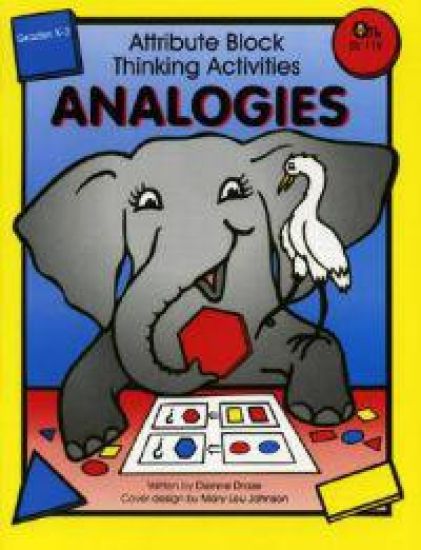
Attribute Blocks are manipulatives that have four different attributes: shape (circle, hexagon, square, and triangle); color (red, blue, and yellow); size (big and small); and thickness (thick and thin). The activities in this book teach young students how to make an analogy, or comparison, between attribute blocks. These easy-to-use cards are the perfect introduction to logical thinking for young learners. Students use attribute blocks to complete the patterns on the 32 full-color task cards. Each set progresses from easy to more difficult, making the activities perfect for learning centers and nonreaders. Use attribute blocks in your math class or as a part of your thinking skills program. If you are looking for a motivating, hands-on way to introduce your younger students to logical thinking, the two Attribute Block Thinking Activities books are just what you need. The other book in this series is Attribute Block - Sequences: Thinking Activities , which focuses on sequences. Simply put out the cards and a set of attribute blocks and let the thinking begin Grades K-3