Kirjojen hintavertailu – 12 903 725 kirjaa ja 27 kauppaa

Kirjailija

Dibya Prakash

Kirjat ja teokset yhdessä paikassa: 5 kirjaa, julkaisuja vuosilta 2014–2025, suosituimpiin kuuluu Radiation Safety Guide for Nuclear Medicine Professionals. Vertaile teosten hintoja ja tarkista saatavuus suomalaisista kirjakaupoista.

5 kirjaa

Kirjojen julkaisuvuodet: 2014–2025.

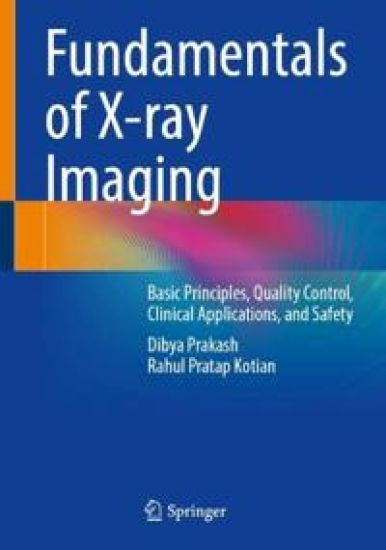
Fundamentals of X-ray Imaging

Fundamentals of X-ray Imaging

Dibya Prakash; Rahul Pratap Kotian

Springer Nature Switzerland AG
2025
sidottu
The book covers all X-ray modalities, including CT, mammography, fluoroscopy, dental radiography, and fusion imaging like PET-CT and SPECT-CT. It simplifies complex concepts for beginners while offering depth for advanced learners. Each chapter is engaging and addresses common questions from students and professionals. The book begins with radiation science basics, starting with “What is radiation?” and expanding through seven subsections to build a solid foundation. The chapter on X-ray tubes introduces essential concepts for understanding other modalities. Subsequent chapters explore the physics, operational principles, quality control, and safety of each modality. The fusion imaging section provides detailed insights into PET-CT and SPECT-CT quality assurance, enabling readers to perform these procedures independently. Radiation safety topics include specific guidance for female patients, female radiation workers, and faetal exposure. Chapters on paediatric care and global radiology department planning offer practical insights. Each chapter concludes with multiple-choice, short-answer, and long-answer questions to reinforce learning and aid exam preparation. Written in clear, accessible language, the book integrates hardware, quality control, and clinical applications into one volume, aligned with international curricula. This indispensable resource is ideal for radiography students, technologists, researchers and professionals seeking to enhance their knowledge and skills in medical imaging.
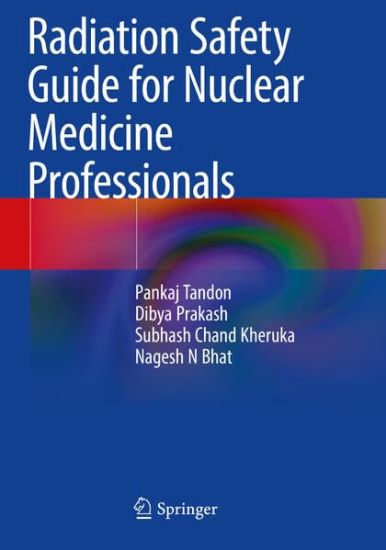
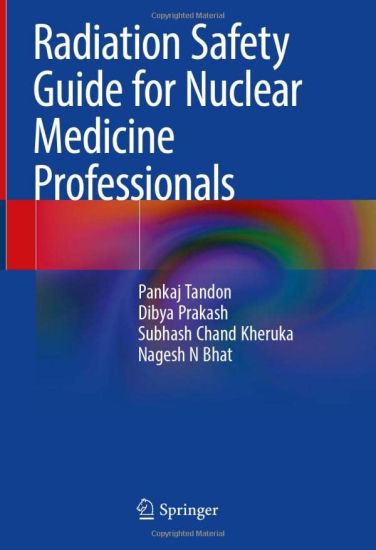
Radiation Safety Guide for Nuclear Medicine Professionals

Radiation Safety Guide for Nuclear Medicine Professionals

Pankaj Tandon; Dibya Prakash; Subhash Chand Kheruka; Nagesh N Bhat

SPRINGER VERLAG, SINGAPORE
2023
nidottu
The book covers all the radiation safety aspects while working with unsealed radionuclides. Radiation safety plays a significant role in routine nuclear medicine practices and is necessary to protect occupational workers, patients, members of the general public and the environment. A fair knowledge of radiation safety is expected from all nuclear medicine professionals. Chapters include basics of radiation physics, biological bases of radiation protection, planning and design of nuclear medicine facilities, cyclotron and high dose therapy facilities, radiation safety considerations in nuclear medicine, cyclotron while preparing radiopharmaceuticals. It also includes the working mechanism of radiation detectors, quality assurance of positron emission tomography (PET) and gamma camera, including single photon emission computed tomography (SPECT), emergency preparedness plan, nuclear medicine and CT dosimetry, transport regulations, the role of national regulatory authorities and radioactive waste management. The last chapter provides probable model questions asked in the radiological safety officer certification examination and includes 250 multiple-choice questions (MCQs), 100 true or false, 60 fill in the blanks, and 40 match the following questions. The book is written in a simple language for a better understanding of the occupational workers of any grade. It serves as reference material for nuclear medicine professionals on radiation safety, related to planning, quality assurance, dosimetry and various regulations pertaining to nuclear medicine. It is a ready reckoner for the students pursuing a degree/diploma in nuclear medicine and preparing for certification courses in radiation safety to understand the subject matter along with options to attempt practice questions.
Radiation Safety Guide for Nuclear Medicine Professionals

Radiation Safety Guide for Nuclear Medicine Professionals

Pankaj Tandon; Dibya Prakash; Subhash Chand Kheruka; Nagesh N Bhat

SPRINGER VERLAG, SINGAPORE
2022
sidottu
The book covers all the radiation safety aspects while working with unsealed radionuclides. Radiation safety plays a significant role in routine nuclear medicine practices and is necessary to protect occupational workers, patients, members of the general public and the environment. A fair knowledge of radiation safety is expected from all nuclear medicine professionals. Chapters include basics of radiation physics, biological bases of radiation protection, planning and design of nuclear medicine facilities, cyclotron and high dose therapy facilities, radiation safety considerations in nuclear medicine, cyclotron while preparing radiopharmaceuticals. It also includes the working mechanism of radiation detectors, quality assurance of positron emission tomography (PET) and gamma camera, including single photon emission computed tomography (SPECT), emergency preparedness plan, nuclear medicine and CT dosimetry, transport regulations, the role of national regulatory authorities and radioactive waste management. The last chapter provides probable model questions asked in the radiological safety officer certification examination and includes 250 multiple-choice questions (MCQs), 100 true or false, 60 fill in the blanks, and 40 match the following questions. The book is written in a simple language for a better understanding of the occupational workers of any grade. It serves as reference material for nuclear medicine professionals on radiation safety, related to planning, quality assurance, dosimetry and various regulations pertaining to nuclear medicine. It is a ready reckoner for the students pursuing a degree/diploma in nuclear medicine and preparing for certification courses in radiation safety to understand the subject matter along with options to attempt practice questions.
Nuclear Medicine

Nuclear Medicine

Dibya Prakash

Springer, India, Private Ltd
2016
nidottu
The book is a compilation of guidelines from various organizations such as Society of Nuclear Medicine & Molecular Imaging, European Association of Nuclear Medicine, American College of Radiology and International Atomic Energy Agency. The description of the procedures is simple, easy to understand and current. The aim of this book is:a) Nuclear medicine professionals can use this book as a quick reference about how a procedure is to be performed. The set of instructions given to patient before, during and after the procedure have also been included in each chapter. b) To educate general physicians about nuclear medicine procedures. The procedures are explained briefly with common indications and precautions. Normal and abnormal nuclear medicine images have also been included for quick comparison.c) To educate paramedical staff or healthcare professionals so that they send patients to nuclear medicine department after proper preparation.d) To educate patients who come for nuclear medicine procedure.e) To clarify apprehensions and doubts which arise in the mind of the patients.
Nuclear Medicine

Nuclear Medicine

Dibya Prakash

Springer, India, Private Ltd
2014
sidottu
The book is a compilation of guidelines from various organizations such as Society of Nuclear Medicine & Molecular Imaging, European Association of Nuclear Medicine, American College of Radiology and International Atomic Energy Agency. The description of the procedures is simple, easy to understand and current. The aim of this book is:a) Nuclear medicine professionals can use this book as a quick reference about how a procedure is to be performed. The set of instructions given to patient before, during and after the procedure have also been included in each chapter. b) To educate general physicians about nuclear medicine procedures. The procedures are explained briefly with common indications and precautions. Normal and abnormal nuclear medicine images have also been included for quick comparison.c) To educate paramedical staff or healthcare professionals so that they send patients to nuclear medicine department after proper preparation.d) To educate patients who come for nuclear medicine procedure.e) To clarify apprehensions and doubts which arise in the mind of the patients.