
Kirjojen hintavertailu – 12 903 725 kirjaa ja 27 kauppaa

Kirjailija

Diego Quiroga

Kirjat ja teokset yhdessä paikassa: 2 kirjaa, julkaisuja vuosilta 2019–2020, suosituimpiin kuuluu In the Footsteps of Darwin: Geoheritage, Geotourism and Conservation in the Galapagos Islands. Vertaile teosten hintoja ja tarkista saatavuus suomalaisista kirjakaupoista.

2 kirjaa

Kirjojen julkaisuvuodet: 2019–2020.

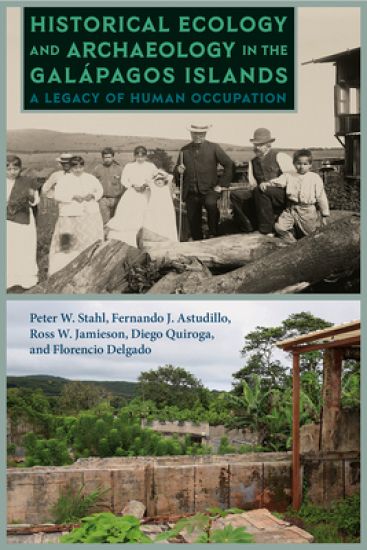
Historical Ecology and Archaeology in the Galápagos Islands

Historical Ecology and Archaeology in the Galápagos Islands

Peter W. Stahl; Fernando J. Astudillo; Ross W. Jamieson; Diego Quiroga; Florencio Delgado

University Press of Florida
2020
sidottu
The Galápagos Islands are one of the world's premiere nature attractions, home to unique ecosystems widely thought to be untouched and pristine. Historical Ecology and Archaeology in the Galápagos Islands reveals that the archipelago is not as isolated as many imagine, examining how centuries of human occupation have transformed its landscape. This book shows that the island chain has been a part of global networks since its discovery in 1535 and traces the changes caused by human colonization. Central to this history is the sugar plantation Hacienda El Progreso on San Cristóbal Island. Here, zooarchaeological and archaeobotanical evidence documents the introduction of exotic species and landscape transformations, and material evidence attests that inhabitants maintained connections to the outside world for consumer goods. Beyond illuminating the human history of the islands, the authors also look at the impact of visitors to Galápagos National Park today, raising questions about tourism's role in biological conservation, preservation, and restoration.
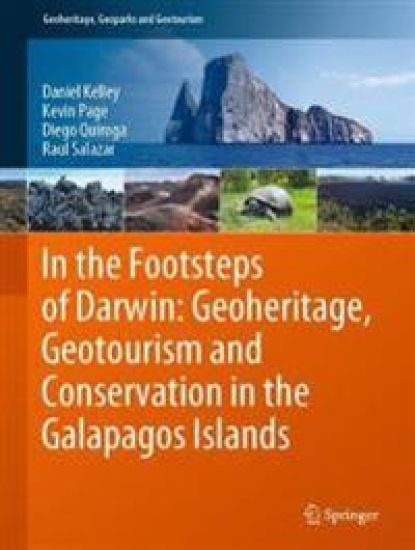
In the Footsteps of Darwin: Geoheritage, Geotourism and Conservation in the Galapagos Islands

In the Footsteps of Darwin: Geoheritage, Geotourism and Conservation in the Galapagos Islands

Daniel Kelley; Kevin Page; Diego Quiroga; Raul Salazar

Springer Nature Switzerland AG
2019
sidottu
This book provides the first-ever overview of and guide to the geological setting and related features of the famous, volcanically active Galapagos Islands, as well as an in-depth analysis of the setting’s relationship to the region’s unique and iconic ecology, and its conservation. Further, it provides an introduction to human settlement and activity on the islands, including the transition from subsistence to a fishing economy and more recently tourism, all in the context of increasingly restrictive conservation regulations. Importantly, the book also explores the development of the concept and practice of sustainable development across the islands as a framework for future economic development, pursuing an approach that reconciles the needs of the resident population with conservation of this fragile environment. The book is intended for a broad readership, from those engaged in geological and ecological studies, college and university educators and conservation practitioners, to more general visitors to the islands.