Kirjojen hintavertailu – 12 859 827 kirjaa ja 27 kauppaa

Kirjailija

Dienke Hondius

Kirjat ja teokset yhdessä paikassa: 4 kirjaa, julkaisuja vuosilta 2003–2017, suosituimpiin kuuluu Dutch New York Histories: Connecting African, Native American and Slavery Heritage. Vertaile teosten hintoja ja tarkista saatavuus suomalaisista kirjakaupoista.

4 kirjaa

Kirjojen julkaisuvuodet: 2003–2017.

Dutch New York Histories: Connecting African, Native American and Slavery Heritage
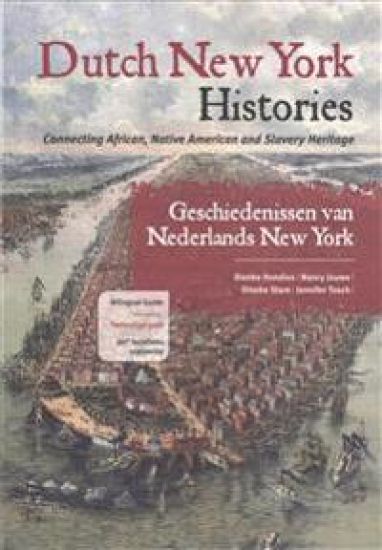
Did you know that the famous African American abolitionist Sojourner Truth was enslaved and spoke Dutch until the age of ten? Or that the Dutch brought enslaved Africans to North America in the merchant ships of the West India Company? This eye-opening guide traces the Dutch presence in New York city and state. The Dutch rule of New Amsterdam and New Netherland (1609-1664) was short, but it has had a lasting cultural impact. Dutch colonists, entering the rich American lands, had friendly and violent encounters with Native Americans. They traded and partnered with them, but also fought against them. Enslaved Africans built and formed New York, in farms and households. This bilingual guide invites you to visit many surprising locations of Dutch New York's histories of trade, treason, resistance, violence, survival, profit, loss, religious zeal, old rituals and new cultural forms. Discover a new layer of information about New York State, that includes the Hudson River Valley and the five boroughs of New York City.
Blackness in Western Europe

Blackness in Western Europe

Dienke Hondius

Routledge
2017
nidottu
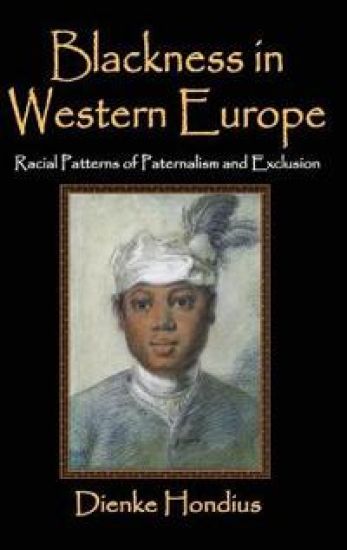
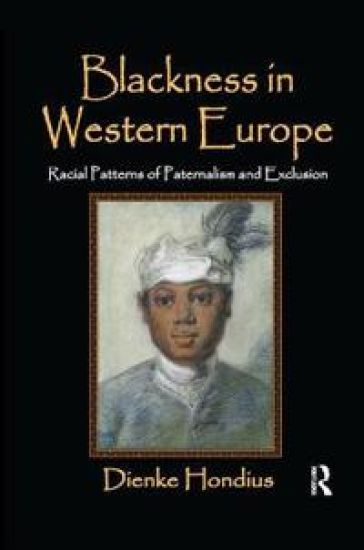
While the study of race relations in the United States continues to inspire and influence European thinking, Europeans have yet to confront their own history. To be black in Europe whether during the sixteenth century or today means sharing one crucial experience: being part of a small, but visible minority. European slave-owners, company directors, and investors in the distant past maintained an ocean-wide gap between themselves and the enslaved in the plantation colonies of the Caribbean. In the following centuries, this distance persisted. Even today, to be black in Europe often means to be one of a few black persons in a group. A racial pattern of exclusion has characterized European policy for more than four centuries. Dienke Hondius identifies ideas and attitudes toward "blackness," the concept of race as visible difference, developed in western Europe. She argues that racial discourses are generally dominated by paternalism a concept usually used to explain power structures that is often applied to the nineteenth century. Hondius identifies five patterns of paternalism that influenced Europe much earlier and iniated trends of imagery and perception. Taking a chronological and thematic approach, Hondius first focuses on southern European societies in the Early Modern period and moves to northwest European societies in the Modern period. Addressing religion, law, and science, she concludes with a synthesis of developments from the twentieth century to the present.
Blackness in Western Europe

Blackness in Western Europe

Dienke Hondius

AldineTransaction
2014
sidottu
While the study of race relations in the United States continues to inspire and influence European thinking, Europeans have yet to confront their own history. To be black in Europe—whether during the sixteenth century or today—means sharing one crucial experience: being part of a small, but visible minority. European slave-owners, company directors, and investors in the distant past maintained an ocean-wide gap between themselves and the enslaved in the plantation colonies of the Caribbean. In the following centuries, this distance persisted. Even today, to be black in Europe often means to be one of a few black persons in a group. A racial pattern of exclusion has characterized European policy for more than four centuries. Dienke Hondius identifies ideas and attitudes toward "blackness," the concept of race as visible difference, developed in western Europe. She argues that racial discourses are generally dominated by paternalism—a concept usually used to explain power structures that is often applied to the nineteenth century. Hondius identifies five patterns of paternalism that influenced Europe much earlier and iniated trends of imagery and perception. Taking a chronological and thematic approach, Hondius first focuses on southern European societies in the Early Modern period and moves to northwest European societies in the Modern period. Addressing religion, law, and science, she concludes with a synthesis of developments from the twentieth century to the present.
Return

Return

Dienke Hondius

Praeger Publishers Inc
2003
sidottu
A staff member at Ann Franke House, Hondius (Erasmus U., Rotterdam) investigates how Jews emerging from their hiding places or returning from concentration camps were welcomed back to their country, hometown, street, workplace, school, and circle of acquaintance. Drawing on archival research, memoir