

Kirjailija
Dilip K. Das
Kirjat ja teokset yhdessä paikassa: 21 kirjaa, julkaisuja vuosilta 1992–2024, suosituimpiin kuuluu Epidemic Narratives. Vertaile teosten hintoja ja tarkista saatavuus suomalaisista kirjakaupoista.
Nimi esiintyy myös muodoissa: Dilip K Das
21 kirjaa
Kirjojen julkaisuvuodet: 1992–2024.

Cross-Cultural Profiles of Policing
Dilip K. Das; Osman Dolu; Bonnie Mihalka
CRC Press Inc
2023
sidottu
While the police forces in democratic countries have certain similarities, their cultures, histories, and political priorities contribute to significant differences in police customs, behaviors, and procedures. Examining the differences and similarities in approaches from one nation to the next, Cross-Cultural Profiles of Policing engages in a comparative study of the police in Austria, France, Germany, Japan, and Switzerland. Written by Dilip K. Das, world-famous international police scholar, and Osman Dolu of the Turkish National Police, this comprehensive and highly detailed work demonstrates ways that police professionals and public policy makers can improve their own systems by tapping into the methodologies of successful policing protocols from other countries. This work is a product of street observations, ride-alongs, interviews, visits, and literature reviews collected over several years. In every case, experts from each respective country have verified the accuracy of the material. Organized into five sections covering each of the aforementioned countries, the text examines police organizational structures, leadership and supervision, police role and functions, public police projects, and training. Each section is similarly organized to allow for easy comparison from nation to nation. In each profile, an attempt has been made, based on the observational study and literature review, to examine— Levels of decentralization in police organizationsThe role of innovation in police procedurePolice functions beyond law enforcement and order maintenanceDegree of police involvement in projects and programs within the communityTypes of specialized training the police receive in developing the attitude, skills and values to serve and protect the publicThis unique work offers an excellent resource for those interested in comparative policing strategies and models. Readers will come to understand that while each of these democratic, affluent countries face different challenges, they all share some surprising similarities in their approaches to the age-old problem of crime.
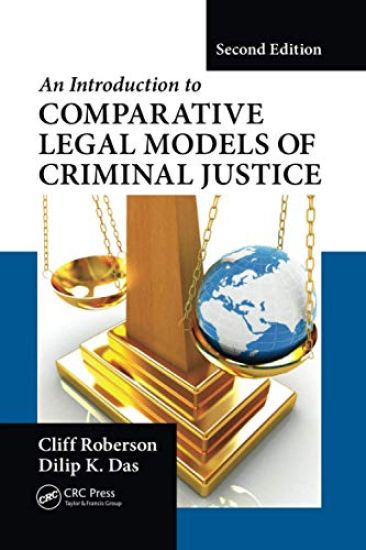
An Introduction to Comparative Legal Models of Criminal Justice
Cliff Roberson; Dilip K. Das
Routledge
2020
nidottu
Updated to reflect changes in the criminal justice systems in several countries, An Introduction to Comparative Legal Models of Criminal Justice, Second Edition explores and illustrates the idea that a country’s legal model determines the character of its police, corrections, and legal system. It focuses on how law shapes policing, including how it causes police to act as though they are above the law. Each chapter is designed as an independent unit of study. Along with updates to each chapter, other new additions to the second edition include:A list of learning objectives at the beginning of each chapterA summary at the end of each chapterClassroom exercisesA threefold increase to the number of photographsAn expanded discussion of the oldest known legal systemsAn extensive discussion on the rule of lawA discussion of United Nations actions to improve juvenile justiceIncreased attention to the role of the Organization of American StatesThorough and concise, An Introduction to Comparative Legal Models of Criminal Justice, Second Edition provides a text covering the different major legal models in the world that is ideal for a one-semester course.

This book approaches the subject of AIDS pedagogy by analysing the complex links between representation or discourse, ideology, power relations and practices of self, understood from the perspective of embodiment. While there is a fairly large amount of literature available on the social, economic, psychological and policy dimensions of the epidemic, there is virtually nothing on its cultural politics. As a critique of the national AIDS pedagogy, this book attempts to fill the gap. It addresses important issues in cultural studies, body studies, medical humanities, disease control policy and behaviour change communication strategies. This book will be of interest to researchers and students of culture studies and social sciences, especially social anthropology, community health, health management. and gender studies.

Police leaders possess a plethora of rich experiences and practical and theoretical knowledge that provides fascinating insights into the current state of policing around the world. While observers’ opinions of ongoing developments in policing are well known, it is rare to get an insider’s glimpse of how police leaders themselves assess these advances. Through in-depth and exceptionally thoughtful interviews with highly placed police leaders and administrators, Trends in Policing: Interviews with Police Leaders Across the Globe presents cross-cultural perspectives on the organizational structure, leadership, functions, public projects, training, culture, and societal context of police worldwide. A broad spectrum of police philosophies from over a dozen countriesThis elite group of leaders and the learned researchers who interview them address the fundamental contextual changes that add layers of complexity to police work. Covering an extensive range of topics, the interviews include the experiences, opinions, and preferences of men and women who individually and as a group possess a vast array of knowledge pertaining to the problems and prospects of policing. While examining current trends, they discuss the future role of police in a world in which policing issues transcend national borders. A fruitful collaboration between practitioners and academicsThrough discussions with those actively engaged in policing, this book bridges the gap between research and practice. While police leaders are not usually accustomed to reflecting and writing on their experiences, the thoughtful interview style of the researchers assists the practitioners in defining their views, forming a cohesive volume rich with the wisdom of experience and the context of analysis.

An Introduction to Comparative Legal Models of Criminal Justice
Cliff Roberson; Dilip K. Das
Productivity Press
2016
sidottu
Updated to reflect changes in the criminal justice systems in several countries, An Introduction to Comparative Legal Models of Criminal Justice, Second Edition explores and illustrates the idea that a country’s legal model determines the character of its police, corrections, and legal system. It focuses on how law shapes policing, including how it causes police to act as though they are above the law. Each chapter is designed as an independent unit of study. Along with updates to each chapter, other new additions to the second edition include:A list of learning objectives at the beginning of each chapterA summary at the end of each chapterClassroom exercisesA threefold increase to the number of photographsAn expanded discussion of the oldest known legal systemsAn extensive discussion on the rule of lawA discussion of United Nations actions to improve juvenile justiceIncreased attention to the role of the Organization of American StatesThorough and concise, An Introduction to Comparative Legal Models of Criminal Justice, Second Edition provides a text covering the different major legal models in the world that is ideal for a one-semester course.

The whirlwind of financial globalization has descended upon emerging market economies and rapid change has brought both benefits and problems upon a dynamic group of nations. This book examines the impact of ever increasing financial globalization on emerging market economies, both in the former communist countries of Eastern Europe and the developing world in general. This impressive volume covers themes and issues such as:*global capital flows and financial liberalization*global financial architecture*financial and macroeconomic instabilityFinancial Globalization and the Emerging Market Economies will be of interest to students and academics in many areas including international economics, international finance and international political economy. It will also provide a useful source of information for those who work in the financial industry at large.

Viruses have been linked to approximately 15 to 20% of all human tumours world-wide and their empire is expanding over the years. While histopathology and cytopathology have been utilised for decades to arrive at a tissue diagnosis of cancer, the advent of newer and more sophisticated ancillary tools have thrown light on the aetiology of neoplasia including virus as one of the causes. Whereas in occasional cancer, it is possible to observe the cytopathic effect of virus in cancer cells or their precursor lesions, in most malignancies there is so far no morphological clue to their viral aetiology. However, morphological diagnosis continues to be important for the management of malignancies and cytologic tools is a simple and largely non-invasive tool for collection of samples for various ancillary studies. This book deals with the classification of oncogenic viruses and the diagnostic tools utilised for the cytodiagnosis of cancers likely to be caused by these viruses. The role of cytology in diagnosis of malignancies caused by human papillomavirus (HPV) and human polyomaviruses is also discussed, as well as the malignacies caused by Epstein-Barr virus (EBV) and Kaposi sarcoma herpes virus (KSHV). The book concludes with a discussion of possible future developments in this field.

Like the ancient Roman god Janus, globalization has two faces, one benign and the other malign. In this comprehensive and authoritative book, Dilip K. Das fills a gap in the literature by examining both aspects of the contemporary phase of economic globalization. Because globalization has had both welfare-enhancing, propitious consequences as well as detrimental ones, it has become an acutely contentious subject matter among both scholarly and public policy-making communities. Contemporary globalization cannot be studied without a balanced treatment of both facets. The author provides precisely that, covering large thematic areas of the global economy and globalization through the channels of trade, financial flows, attention to newly emerging trends as well as historical perspective. Neither overly technical nor highly model-oriented, this accessible book will be of great interest to scholars, students and other readers interested in a broad and balanced view of globalization.

The economies of the People’s Republic of China and India are emerging-market economies, which account for more than a third of the global population. These two economies share many similarities in that they are large populous neighbours, who were regarded as abjectly poor countries until the 1980s and both are ancient cultures which has both advantages and disadvantages for economic development. However, their political systems are very different. While India is an open democratic society, China is a closed society run in an authoritarian manner by the Chinese Communist Party. This dissimilarity impacts on the economic decision making process in the two economies. This book is the first to systematically compare and contrast the two economies. It takes an objective and dispassionate view and delves into the constructive and favourable side as well as adverse and unfavourable side of the two economies. Written in a comprehensive and authoritative manner, it covers large areas of the two economies, including trade and financial sectors. It also includes other important relevant facets of the two economies.

Police leaders possess a plethora of rich experiences and practical and theoretical knowledge that provides fascinating insights into the current state of policing around the world. While observers’ opinions of ongoing developments in policing are well known, it is rare to get an insider’s glimpse of how police leaders themselves assess these advances. Through in-depth and exceptionally thoughtful interviews with highly placed police leaders and administrators, Trends in Policing: Interviews with Police Leaders Across the Globe presents cross-cultural perspectives on the organizational structure, leadership, functions, public projects, training, culture, and societal context of police worldwide. A broad spectrum of police philosophies from over a dozen countriesThis elite group of leaders and the learned researchers who interview them address the fundamental contextual changes that add layers of complexity to police work. Covering an extensive range of topics, the interviews include the experiences, opinions, and preferences of men and women who individually and as a group possess a vast array of knowledge pertaining to the problems and prospects of policing. While examining current trends, they discuss the future role of police in a world in which policing issues transcend national borders. A fruitful collaboration between practitioners and academicsThrough discussions with those actively engaged in policing, this book bridges the gap between research and practice. While police leaders are not usually accustomed to reflecting and writing on their experiences, the thoughtful interview style of the researchers assists the practitioners in defining their views, forming a cohesive volume rich with the wisdom of experience and the context of analysis.

This comprehensive and accessible book examines the evolution of the multilateral trade regime in the ever-changing global economic environment, particularly during the WTO era and the ongoing Doha Round. Professor Das explores how the creation of the multilateral trade regime, or the GATT/WTO system, has been fraught with difficulties. He describes the ways, by means of various rounds of negotiations, the multilateral trade regime has constantly adjusted itself to the new realities of the global economy. One glance at the recent history indicates that the evolution of the multilateral trade regime was far from even-handed and steady. The GATT/WTO system was repeatedly pushed to the brink of utter and ignominious disaster. Yet, as the author illustrates, the participating economies persevered. Consequently, the fabric of multilateral trade regime is stronger, its foundation deeper and its framework wider now than it was a generation ago. Unlike the GATT era, membership of the present trade regime is close to universal. The author concludes that of the two phases, the latter has turned out to be the more arduous, intricate and complex phase of evolution. Students and scholars of economics, international trade, international political economy and international relations will find this study of great interest. The definitions and explanations of terminology and advanced concepts make the book accessible to those without an extensive economic background.
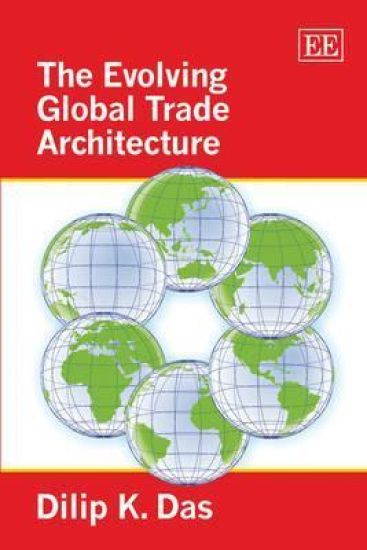
This comprehensive and accessible book examines the evolution of the multilateral trade regime in the ever-changing global economic environment, particularly during the WTO era and the ongoing Doha Round. Professor Das explores how the creation of the multilateral trade regime, or the GATT/WTO system, has been fraught with difficulties. He describes the ways, by means of various rounds of negotiations, the multilateral trade regime has constantly adjusted itself to the new realities of the global economy. One glance at the recent history indicates that the evolution of the multilateral trade regime was far from even-handed and steady. The GATT/WTO system was repeatedly pushed to the brink of utter and ignominious disaster. Yet, as the author illustrates, the participating economies persevered. Consequently, the fabric of multilateral trade regime is stronger, its foundation deeper and its framework wider now than it was a generation ago. Unlike the GATT era, membership of the present trade regime is close to universal. The author concludes that of the two phases, the latter has turned out to be the more arduous, intricate and complex phase of evolution. Students and scholars of economics, international trade, international political economy and international relations will find this study of great interest. The definitions and explanations of terminology and advanced concepts make the book accessible to those without an extensive economic background.
The economies of the People’s Republic of China and India are emerging-market economies, which account for more than a third of the global population. These two economies share many similarities in that they are large populous neighbours, who were regarded as abjectly poor countries until the 1980s and both are ancient cultures which has both advantages and disadvantages for economic development. However, their political systems are very different. While India is an open democratic society, China is a closed society run in an authoritarian manner by the Chinese Communist Party. This dissimilarity impacts on the economic decision making process in the two economies. This book is the first to systematically compare and contrast the two economies. It takes an objective and dispassionate view and delves into the constructive and favourable side as well as adverse and unfavourable side of the two economies. Written in a comprehensive and authoritative manner, it covers large areas of the two economies, including trade and financial sectors. It also includes other important relevant facets of the two economies.
This comprehensive book addresses one of the most important aspects of international trade, namely, regional trade and regional integration agreements (RIAs). The focus of intense global interest and debate over the last decade, RIAs have become an integral and enduring aspect of the multilateral trading regime. Dilip K. Das analyzes the latest trends, evaluates the pattern and gauges the progress of regional integration in the global economy over the post-war, and especially the contemporary, periods. At present approximately half of the world's trade is intra-RIA. Virtually all 146 members of the World Trade Organization are partners in at least one RIA, and several are part of two or more. While some economists believe that this proliferation of RIAs should be welcomed, others are less sanguine and emphasize the importance and primacy of multilateral trade liberalization. Dilip K. Das examines whether regionalism has a rightful place in a rapidly globalizing world economy. The role of RIAs in the global trading system is explored as well as their role in promoting economic development, their welfare implications and whether they adversely affect the global trading system. The principal foci of the book include the impact of RIAs' market access provisions and trade regulatory functions on international trade relations. Academics, researchers, and students in the areas of economics, international political economy, political science, international relations, regionalism, and business will find this timely volume of great interest.
The whirlwind of financial globalization has descended upon emerging market economies and rapid change has brought both benefits and problems upon a dynamic group of nations. This book examines the impact of ever increasing financial globalization on emerging market economies, both in the former communist countries of Eastern Europe and the developing world in general. This impressive volume covers themes and issues such as:*global capital flows and financial liberalization*global financial architecture*financial and macroeconomic instabilityFinancial Globalization and the Emerging Market Economies will be of interest to students and academics in many areas including international economics, international finance and international political economy. It will also provide a useful source of information for those who work in the financial industry at large.

What is the best management style for the police? Police Mission discusses the values and norms inherent in the American police mission, and examines how police respond to challenges that arise while attempting to uphold this mission. It reveals that the way officers are being trained in ethics and human relations are not effective as they could be, and argues that policing has to move towards a greater emphasis on human values, moral sensitivity, and discerning judgment. A large number of themes ranging from personnel management, occupational culture, and innovative experiments in US policing techniques are examined. Several organizational theories as well as examples of international policing efforts from England to Japan are also analyzed. An important contribution to police literature, this book will be a valuable aid to students of criminology as well as practitioners and researchers of police science.

Beginning with a detailed discussion of the World Trade Organisation and the Uruguay Round and its achievements, this book delves into the causal factors behind the failure to launch the new round of multilateral trade negotiations in Seattle in December 1999. Dilip K. Das tries to determine the precise point reached by the global trading system and map out a way forward, exploring the likely items to be included in the agenda for the new round of multilateral trade negotiations and provides contours for a post-Seattle global trading system. This book provides an excellent overview of the contemporary global trading system and will be very useful to advanced students and professional economists. It will also greatly benefit policy makers and active participants in trade and global diplomacy.
The Yen Appreciation and the International Economy
Dilip K. Das
New York University Press
1992
sidottu
Concurring with the decision of the G-5 countries to appreciate the yen during the Plaza accord was of momentous significance for Japan because this was the sharpest appreciation among the leading currencies in the recent past. Doubling the value of the currency in such a short time-span could have led to a stifling of the economy. Instead of being smothered, however, the Japanese economy-after the brief endaka recession-entered into the longest upswing of the business cycle of the postwar period. The primary focus of this book is the force of the post-appreciation Japanese economic expansion as it was felt by developing and industrialized countries. By 1989 the Japanese economy had emerged as the largest creditor nation, the largest giver of aid, and the largest economy making foreign investments. Becoming banker of the world, its banks and securities firms began to dominate international financial markets, and with 111 Japanese corporations in the Fortune 500 list for 1990, it also became an enormous corporate presence in the international economy.