Kirjojen hintavertailu – 12 859 826 kirjaa ja 27 kauppaa
Kirjailija
Dinah Maria Mulock Craik
Kirjat ja teokset yhdessä paikassa: 298 kirjaa, julkaisuja vuosilta 1993–2026, suosituimpiin kuuluu Olive. Vertaile teosten hintoja ja tarkista saatavuus suomalaisista kirjakaupoista.
A Noble Life - Vol. 1 is an unchanged, high-quality reprint of the original edition of 1866. Hansebooks is editor of the literature on different topic areas such as research and science, travel and expeditions, cooking and nutrition, medicine, and other genres. As a publisher we focus on the preservation of historical literature. Many works of historical writers and scientists are available today as antiques only. Hansebooks newly publishes these books and contributes to the preservation of literature which has become rare and historical knowledge for the future.
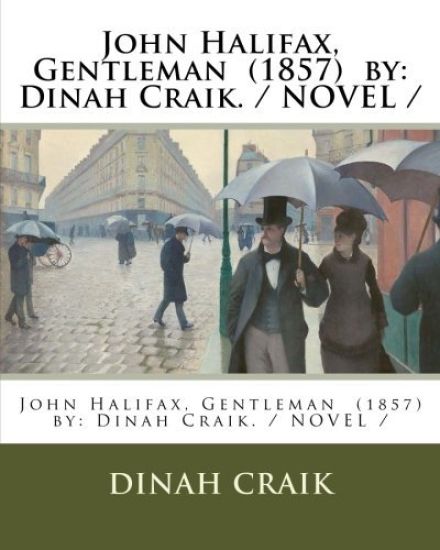
John Halifax, Gentleman is a novel by Dinah Craik, first published in 1856. Plot summary: The action is centred in the town of Tewkesbury, scarcely disguised by the fictional name Norton Bury, in Gloucestershire. The story is narrated by Phineas, a friend of the central character. John Halifax is an orphan, determined to make his way in the world through honest hard work. He is taken in by a tanner, Abel Fletcher, who is a Quaker, and thus meets Phineas, who is Abel's son. John eventually achieves success in business and love, and becomes a wealthy man.................. Dinah Maria Craik ( born Dinah Maria Mulock, also often credited as Miss Mulock or Mrs. Craik) (20 April 1826 - 12 October 1887) was an English novelist and poet. Life: Mulock was born at Stoke-on-Trent to Dinah and Thomas Mulock and raised in Newcastle-under-Lyme, Staffordshire, where her father was then minister of a small independent non-conformist congregation. Her childhood and early youth were much affected by his unsettled fortunes, but she obtained a good education from various quarters and felt called to be a writer. She came to London about 1846, much at the same time as two friends, Alexander Macmillan and Charles Edward Mudie. Introduced by Camilla Toulmin to Westland Marston, she rapidly made friends in London, and found great encouragement for the stories for the young. In 1865 she married George Lillie Craik a partner with Alexander Macmillan in the publishing house of Macmillan & Company, and nephew of George Lillie Craik. They adopted a foundling baby girl, Dorothy, in 1869. At Shortlands, near Bromley, Kent, while in a period of preparation for Dorothy's wedding, she died of heart failure on 12 October 1887, aged 61. Her last words were reported to have been: "Oh, if I could live four weeks longer but no matter, no matter " Her final book, An Unknown Country, was published by Macmillan in 1887, the year of her death. Dorothy married Alexander Pilkington in 1887 but they divorced in 1911 and she went on to marry Captain Richards of Macmine Castle. She and Alexander had just one son John Mulock Pilkington. John married Freda Roskelly and they had a son and daughter.
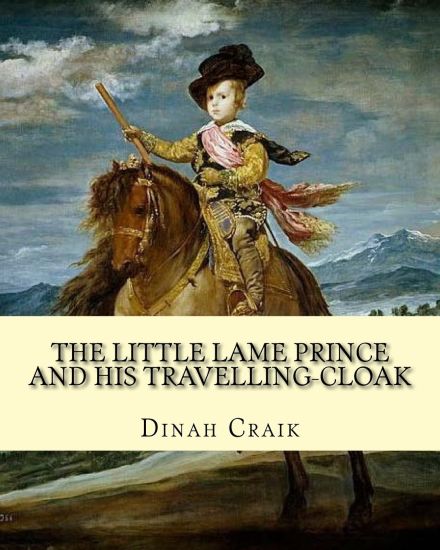
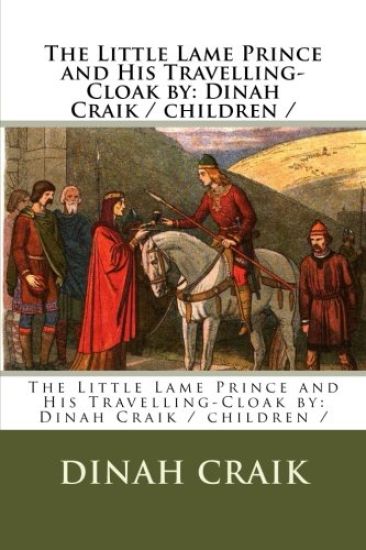
The Little Lame Prince and his Travelling Cloak (often published under its shorter title The Little Lame Prince) is a story for children written by Dinah Maria Mulock Craik and first published in 1875. In the story, the young Prince Dolor, whose legs are paralysed due to a childhood trauma, is exiled to a tower in a wasteland. As he grows older, a fairy godmother provides a magical travelling cloak so he can see, but not touch, the world. He uses this cloak to go on various adventures, and develops great wisdom and empathy in the process. Finally he becomes a wise and compassionate ruler of his own land. The author's style was to stimulate positive feelings in her young readers so that they would be motivated to adopt socially correct actions in whatever circumstances they encountered. She shows how imagination (mediated by the cloak) can lead to empathy and enlightened morality. However, some critics have found a deeper theme in this story, relating to the restricted lives of respectable middle-class British Victorian women that enforced helplessness... Plot On the day of Prince Dolor's baptism, there was a great procession. His well-to-do nurse was fiddling with her dress while holding the Prince and she dropped him and broke his legs. But she told no one. A fairy godmother appears to the Nurse and reveals she knows what happened. The Prince's Mother (the Queen) dies. The Prince's legs never grow strong. He cannot walk; he can only crawl with his arms. The King dies too. The Regent family moves into the castle (with lots of kids) and the Prince's Uncle rules the kingdom. Things are good throughout the land, but Prince Dolor is ignored. The new King sends Dolor away and tells everyone that Dolor died. Dolor is sent away to live in the lonely tower in the middle of a wasteland. There are no doors or windows in the tower. It is 100 ft tall. But he has lots of books and toys and maps. His only companion is his nurse. And a deaf mute Black Knight brings them food and things. The Nurse is a 'prisoner' too. They use a ladder to get up into the tower. The Black Knight visits once a month. The Prince likes to be quiet and look out the window at the lonely plains. He does his lessons and schoolwork. He loves books. He learns of the kingdom of Nomansland. But he feels that to read of things and never see them is sad. If only he could FLY he wished. And he wishes he had someone who would be nice to him. He was lonely. An old grey woman appears. She says I am your fairy godmother. Dolor asks, "Will you bring me a boy to play with?" She says no. But gives him a gift: A travelling cloak. When the nurse comes into the room to see who he was talking to, she disappears. The cloak looks like a poncho. He didn't know the magic powers it holds. One day he gets sick and his fairy godmother comes to visit. He asks her why he can't walk. She tells him he will never walk. He is sad. She asks where is your cloak? He had put it in the closet. She teaches him how to use it with the magic words and reminds him to open the skylight. When he says the magic words it grows bigger. At first he forgets the words that make it fly. And he forgets to open the skylight.......... Dinah Maria Craik ( born Dinah Maria Mulock, also often credited as Miss Mulock or Mrs. Craik) (20 April 1826 - 12 October 1887) was an English novelist and poet.
Dinah Maria Craik born Dinah Maria Mulock, also often credited as Miss Mulock or Mrs. Craik) (20 April 1826 - 12 October 1887) was an English novelist and poet. Mulock was born at Stoke-on-Trent to Dinah and Thomas Mulock and raised in Newcastle-under-Lyme, Staffordshire, where her father was then minister of a small independent non-conformist congregation. Her childhood and early youth were much affected by his unsettled fortunes, but she obtained a good education from various quarters and felt called to be a writer. She came to London about 1846, much at the same time as two friends, Alexander Macmillan and Charles Edward Mudie. Introduced by Camilla Toulmin to Westland Marston, she rapidly made friends in London, and found great encouragement for the stories for the young. In 1865 she married George Lillie Craik a partner with Alexander Macmillan in the publishing house of Macmillan & Company, and nephew of George Lillie Craik. They adopted a foundling baby girl, Dorothy, in 1869. At Shortlands, near Bromley, Kent, while in a period of preparation for Dorothy's wedding, she died of heart failure on 12 October 1887, aged 61. Her last words were reported to have been: "Oh, if I could live four weeks longer but no matter, no matter " Her final book, An Unknown Country, was published by Macmillan in 1887, the year of her death. Dorothy married Alexander Pilkington in 1887 but they divorced in 1911 and she went on to marry Captain Richards of Macmine Castle. She and Alexander had just one son John Mulock Pilkington. John married Freda Roskelly and they had a son and daughter.