Kirjojen hintavertailu – 12 859 829 kirjaa ja 27 kauppaa

Kirjailija

Dinesh Kumar Singh

Kirjat ja teokset yhdessä paikassa: 21 kirjaa, julkaisuja vuosilta 2012–2026, suosituimpiin kuuluu Phytochemistry and Pharmacology of Garlic (Allium sativum L.) Clove. Vertaile teosten hintoja ja tarkista saatavuus suomalaisista kirjakaupoista.

21 kirjaa

Kirjojen julkaisuvuodet: 2012–2026.

Phytochemistry and Pharmacology of Garlic (Allium sativum L.) Clove

Phytochemistry and Pharmacology of Garlic (Allium sativum L.) Clove

Dinesh Kumar Singh; Devesh Pratap Singh

TAYLOR FRANCIS LTD
2025
sidottu
The present book is an attempt to make a comprehensive overview on origin of garlic, history of garlic chemistry, garlic preparations and their use in folklore, health benefits of garlic, garlic as pesticide and its adverse effects. Seasonal Blurb: Garlic (Allium sativum) is used as a popular herbal alternative therapy. There is a lack of consolidated literature on the health benefits of garlic. The present book is an attempt to make a comprehensive overview on origin of garlic, history of garlic chemistry, garlic preparations and their use in folklore, health benefits of garlic, garlic as pesticide and its adverse effects. This book will provide a comprehensive compendium on health benefits of Garlic. Though it is a scientific research-based knowledge compilation, it will be also equally beneficial to science students as well as common people. Salient Features:· Focuses on origin and history of garlic, its botanical characterization and preparation· Discusses health benefits of garlic based on scientific studies, research and their applications· Deals with pesticidal, insecticidal, molluscicidal and nematocidal activities of garlic.· Elucidates the benefits of garlic in cardiovascular diseases, antidiabetic effect, anticancer potential, and antioxidant activity

Fasciolosis: Causes, Challenges and Controls

Fasciolosis: Causes, Challenges and Controls

Dinesh Kumar Singh; Vinay Kumar Singh; Raghubir Narayan Singh; Pradeep Kumar

SPRINGER VERLAG, SINGAPORE
2022
nidottu
This book provides an up-to-date review of fasciolosis, a disease caused by Fasciola hepatica and Fasciola gigantica, including its biology, transmission, epidemiology, host distribution, economic impact, and novel approaches for its diagnosis, treatment and prevention. It first offers a brief overview of the history of the disease, the genetic diversity of the parasite and its distribution, and the ecology of the vector snail, which belongs to the Lymnaeidae/Planorbidae family. It also examines the current strategies and novel approaches for controlling the parasite, diagnosing infections and vaccine development. Importantly, it highlights issues relating to the control of fasciolosis, including drug resistance, lack of effective diagnostics, and the parasite’s long-term survival strategies based on regulation and modulation of the host immune system. Lastly, it discusses the novel control snail vectors using bait formulations, and synergeticand phototherapy treatment with chlorophyllin, which does not kill the vector.
Fasciolosis: Causes, Challenges and Controls

Fasciolosis: Causes, Challenges and Controls

Dinesh Kumar Singh; Vinay Kumar Singh; Raghubir Narayan Singh; Pradeep Kumar

Springer Verlag, Singapore
2021
sidottu
This book provides an up-to-date review of fasciolosis, a disease caused by Fasciola hepatica and Fasciola gigantica, including its biology, transmission, epidemiology, host distribution, economic impact, and novel approaches for its diagnosis, treatment and prevention. It first offers a brief overview of the history of the disease, the genetic diversity of the parasite and its distribution, and the ecology of the vector snail, which belongs to the Lymnaeidae/Planorbidae family. It also examines the current strategies and novel approaches for controlling the parasite, diagnosing infections and vaccine development. Importantly, it highlights issues relating to the control of fasciolosis, including drug resistance, lack of effective diagnostics, and the parasite’s long-term survival strategies based on regulation and modulation of the host immune system. Lastly, it discusses the novel control snail vectors using bait formulations, and synergeticand phototherapy treatment with chlorophyllin, which does not kill the vector.
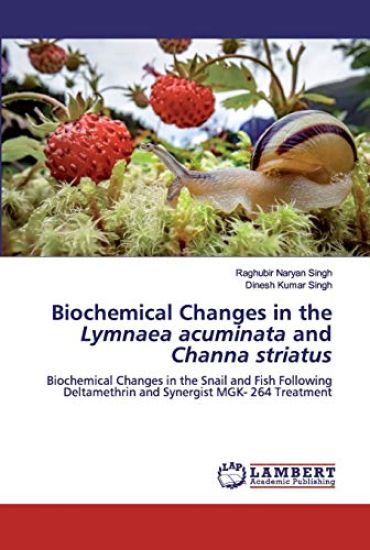
Biochemical Changes in the Lymnaea acuminata and Channa striatus

Biochemical Changes in the Lymnaea acuminata and Channa striatus

Raghubir Naryan Singh; Dinesh Kumar Singh

LAP Lambert Academic Publishing
2020
pokkari
The molluscicidal activity of Deltamethrin and Deltamethrin+MGK-264 is due to its effect on nerve membrane where it alters the configuration of membrane through the process of increased lipid peroxidation and simultaneous decrease in the levels of proteins, DNA, RNA and phospholipids and increase in the levels of amino acids. Experiments on fish demonstrate that the use of Deltamethrin or Deltamethrin+MGK-264 in aquatic environment is safe as it has very little effect on the fish Channa striatus which shares the same habitat with L. acuminata. Use of MGK-264 as synergist is also safe because independently it has no independent toxic effect even on L. acuminata.
Vegetable Crops

Vegetable Crops

Dinesh Kumar Singh; Harshwardhan Choudary

New India Publishing Agency
2012
nidottu
Vegetable crops, including underutilized varieties, seed spices, and edible mushrooms, are essential sources of genetic resources for improving the quality and productivity of crops. The Genetic Resources and Improvement of Vegetable Crops book, a compilation of research conducted by numerous scientists from prestigious institutions such as IIHR, IARI, GBUAT, TNAU, IIVR, CCSHAU, PAU, MPUAT, CSKKVV, and BCKV, provides an overview of the collection, characterization, conservation, and utilization of germplasm. This book emphasizes the importance of genetic resource management and its accomplishments in India and highlights the application of various biotechnological tools and techniques, including tissue culture, molecular markers, and bioinformatics, in the conservation and utilization of plant genetic resources. Additionally, it discusses biosafety regulations and intellectual property rights (IPR) issues. The book is an invaluable resource for teachers, researchers, students, and professionals in the field of plant genetic resources, providing them with the most recent advancements in genetic resource management and crop improvement.