Kirjojen hintavertailu – 12 859 828 kirjaa ja 27 kauppaa

Kirjailija

Ding-Geng (Din) Chen

Kirjat ja teokset yhdessä paikassa: 9 kirjaa, julkaisuja vuosilta 2010–2025, suosituimpiin kuuluu Clinical Trial Methodology. Vertaile teosten hintoja ja tarkista saatavuus suomalaisista kirjakaupoista.

9 kirjaa

Kirjojen julkaisuvuodet: 2010–2025.

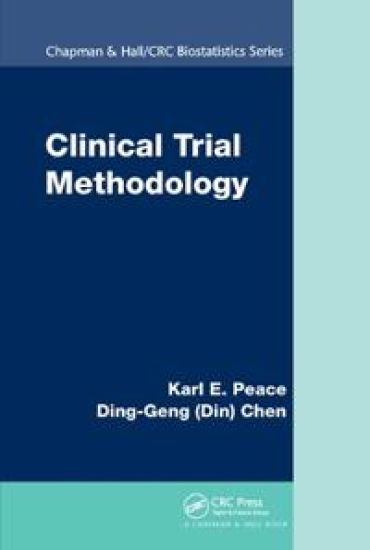
Clinical Trial Methodology

Clinical Trial Methodology

Karl E. Peace; Ding-Geng (Din) Chen

CRC Press
2020
nidottu
Now viewed as its own scientific discipline, clinical trial methodology encompasses the methods required for the protection of participants in a clinical trial and the methods necessary to provide a valid inference about the objective of the trial. Drawing from the authors’ courses on the subject as well as the first author’s more than 30 years working in the pharmaceutical industry, Clinical Trial Methodology emphasizes the importance of statistical thinking in clinical research and presents the methodology as a key component of clinical research. From ethical issues and sample size considerations to adaptive design procedures and statistical analysis, the book first covers the methodology that spans every clinical trial regardless of the area of application. Crucial to the generic drug industry, bioequivalence clinical trials are then discussed. The authors describe a parallel bioequivalence clinical trial of six formulations incorporating group sequential procedures that permit sample size re-estimation. The final chapters incorporate real-world case studies of clinical trials from the authors’ own experiences. These examples include a landmark Phase III clinical trial involving the treatment of duodenal ulcers and Phase III clinical trials that contributed to the first drug approved for the treatment of Alzheimer’s disease. Aided by the U. S. FDA, the U. S. National Institutes of Health, the pharmaceutical industry, and academia, the area of clinical trial methodology has evolved over the last six decades into a scientific discipline. This guide explores the processes essential for developing and conducting a quality clinical trial protocol and providing quality data collection, biostatistical analyses, and a clinical study report, all while maintaining the highest standards of ethics and excellence.
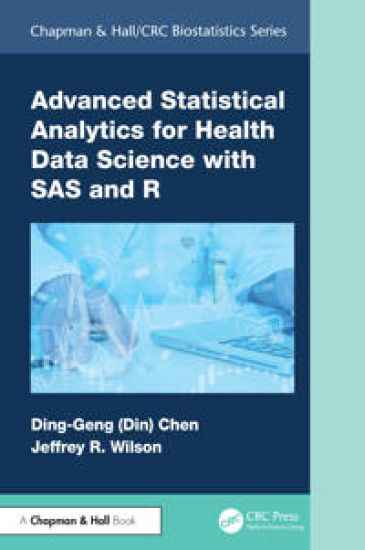
Advanced Statistical Analytics for Health Data Science with SAS and R

Advanced Statistical Analytics for Health Data Science with SAS and R

Ding-Geng (Din) Chen; Jeffrey Wilson

TAYLOR FRANCIS LTD
2025
sidottu
In recent years, there has been a growing emphasis on making statistical methods and analytics accessible to health data science researchers and students. Following the first book on “Statistical Analytics for Health Data Science with SAS and R” (2023, http://www.routledge.com/9781032325620), this book serves as a comprehensive reference for health data scientists, bridging fundamental statistical principles with advanced analytical techniques. By providing clear explanations of statistical theory and its application to real-world health data, we aim to equip researchers with the necessary tools to navigate the evolving landscape of health data science. Designed for advanced-level data scientists, this book covers a wide range of statistical methodologies, including models for longitudinal data with time-dependent covariates, multi-membership mixed-effects models, statistical modeling of survival data, Bayesian statistics, joint modeling of longitudinal and survival data, nonlinear regression, statistical meta-analysis, spatial statistics, structural equation modeling, latent growth curve modeling, causal inference and propensity score analysis. A key feature of this book is its emphasis on real-world applications. We integrate publicly available health datasets and provide case studies from a variety of health applications. These practical examples demonstrate how statistical methods can be applied to solve critical problems in health science. To support hands-on learning, we offer implementation guidance using SAS and R, ensuring that readers can replicate analyses and apply statistical techniques to their own research. Step-by-step computational examples facilitate reproducibility and deeper exploration of statistical models. By combining theoretical foundations with practical applications, this book empowers health data scientists to develop robust statistical solutions for complex health challenges. Whether working in academia, industry, or public health, readers will gain the expertise to advance data-driven decision-making and contribute to evidence-based health research.
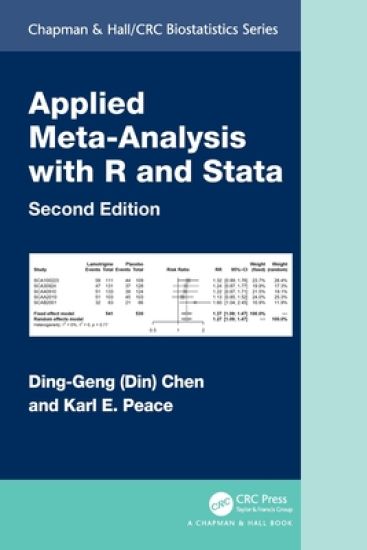
Applied Meta-Analysis with R and Stata

Applied Meta-Analysis with R and Stata

Ding-Geng (Din) Chen; Karl E. Peace

TAYLOR FRANCIS LTD
2022
nidottu
Review of the First Edition:The authors strive to reduce theory to a minimum, which makes it a self-learning text that is comprehensible for biologists, physicians, etc. who lack an advanced mathematics background. Unlike in many other textbooks, R is not introduced with meaningless toy examples; instead the reader is taken by the hand and shown around some analyses, graphics, and simulations directly relating to meta-analysis… A useful hands-on guide for practitioners who want to familiarize themselves with the fundamentals of meta-analysis and get started without having to plough through theorems and proofs.—Journal of Applied StatisticsStatistical Meta-Analysis with R and Stata, Second Edition provides a thorough presentation of statistical meta-analyses (MA) with step-by-step implementations using R/Stata. The authors develop analysis step by step using appropriate R/Stata functions, which enables readers to gain an understanding of meta-analysis methods and R/Stata implementation so that they can use these two popular software packages to analyze their own meta-data. Each chapter gives examples of real studies compiled from the literature. After presenting the data and necessary background for understanding the applications, various methods for analyzing meta-data are introduced. The authors then develop analysis code using the appropriate R/Stata packages and functions. What’s New in the Second Edition: Adds Stata programs along with the R programs for meta-analysis Updates all the statistical meta-analyses with R/Stata programs Covers fixed-effects and random-effects MA, meta-regression, MA with rare-event, and MA-IPD vs MA-SS Adds five new chapters on multivariate MA, publication bias, missing data in MA, MA in evaluating diagnostic accuracy, and network MASuitable as a graduate-level text for a meta-data analysis course, the book is also a valuable reference for practitioners and biostatisticians (even those with little or no experience in using R or Stata) in public health, medical research, governmental agencies, and the pharmaceutical industry.
Statistical Regression Modeling with R

Statistical Regression Modeling with R

Ding-Geng (Din) Chen; Jenny K. Chen

Springer Nature Switzerland AG
2022
nidottu
This book provides a concise point of reference for the most commonly used regression methods. It begins with linear and nonlinear regression for normally distributed data, logistic regression for binomially distributed data, and Poisson regression and negative-binomial regression for count data. It then progresses to these regression models that work with longitudinal and multi-level data structures. The volume is designed to guide the transition from classical to more advanced regression modeling, as well as to contribute to the rapid development of statistics and data science. With data and computing programs available to facilitate readers' learning experience, Statistical Regression Modeling promotes the applications of R in linear, nonlinear, longitudinal and multi-level regression. All included datasets, as well as the associated R program in packages nlme and lme4 for multi-level regression, are detailed in Appendix A. This book will be valuable in graduate courses on applied regression, as well as for practitioners and researchers in the fields of data science, statistical analytics, public health, and related fields.
Statistical Regression Modeling with R

Statistical Regression Modeling with R

Ding-Geng (Din) Chen; Jenny K. Chen

Springer Nature Switzerland AG
2021
sidottu

Halvin toimitettuna 163,70 €

This book provides a concise point of reference for the most commonly used regression methods. It begins with linear and nonlinear regression for normally distributed data, logistic regression for binomially distributed data, and Poisson regression and negative-binomial regression for count data. It then progresses to these regression models that work with longitudinal and multi-level data structures. The volume is designed to guide the transition from classical to more advanced regression modeling, as well as to contribute to the rapid development of statistics and data science. With data and computing programs available to facilitate readers' learning experience, Statistical Regression Modeling promotes the applications of R in linear, nonlinear, longitudinal and multi-level regression. All included datasets, as well as the associated R program in packages nlme and lme4 for multi-level regression, are detailed in Appendix A. This book will be valuable in graduate courses on applied regression, as well as for practitioners and researchers in the fields of data science, statistical analytics, public health, and related fields.
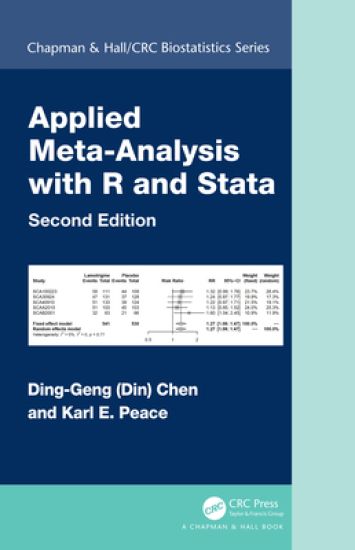
Applied Meta-Analysis with R and Stata

Applied Meta-Analysis with R and Stata

Ding-Geng (Din) Chen; Karl E. Peace

CRC Press
2021
sidottu
Review of the First Edition:The authors strive to reduce theory to a minimum, which makes it a self-learning text that is comprehensible for biologists, physicians, etc. who lack an advanced mathematics background. Unlike in many other textbooks, R is not introduced with meaningless toy examples; instead the reader is taken by the hand and shown around some analyses, graphics, and simulations directly relating to meta-analysis… A useful hands-on guide for practitioners who want to familiarize themselves with the fundamentals of meta-analysis and get started without having to plough through theorems and proofs.—Journal of Applied StatisticsStatistical Meta-Analysis with R and Stata, Second Edition provides a thorough presentation of statistical meta-analyses (MA) with step-by-step implementations using R/Stata. The authors develop analysis step by step using appropriate R/Stata functions, which enables readers to gain an understanding of meta-analysis methods and R/Stata implementation so that they can use these two popular software packages to analyze their own meta-data. Each chapter gives examples of real studies compiled from the literature. After presenting the data and necessary background for understanding the applications, various methods for analyzing meta-data are introduced. The authors then develop analysis code using the appropriate R/Stata packages and functions. What’s New in the Second Edition: Adds Stata programs along with the R programs for meta-analysis Updates all the statistical meta-analyses with R/Stata programs Covers fixed-effects and random-effects MA, meta-regression, MA with rare-event, and MA-IPD vs MA-SS Adds five new chapters on multivariate MA, publication bias, missing data in MA, MA in evaluating diagnostic accuracy, and network MASuitable as a graduate-level text for a meta-data analysis course, the book is also a valuable reference for practitioners and biostatisticians (even those with little or no experience in using R or Stata) in public health, medical research, governmental agencies, and the pharmaceutical industry.
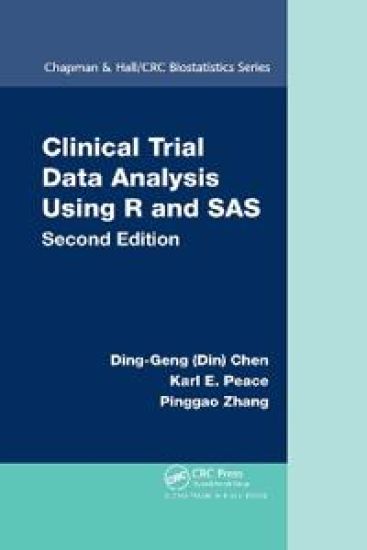
Clinical Trial Data Analysis Using R and SAS

Clinical Trial Data Analysis Using R and SAS

Ding-Geng (Din) Chen; Karl E. Peace; Pinggao Zhang

CRC Press
2020
nidottu
Review of the First Edition"The goal of this book, as stated by the authors, is to fill the knowledge gap that exists between developed statistical methods and the applications of these methods. Overall, this book achieves the goal successfully and does a nice job. I would highly recommend it …The example-based approach is easy to follow and makes the book a very helpful desktop reference for many biostatistics methods."—Journal of Statistical SoftwareClinical Trial Data Analysis Using R and SAS, Second Edition provides a thorough presentation of biostatistical analyses of clinical trial data with step-by-step implementations using R and SAS. The book’s practical, detailed approach draws on the authors’ 30 years’ experience in biostatistical research and clinical development. The authors develop step-by-step analysis code using appropriate R packages and functions and SAS PROCS, which enables readers to gain an understanding of the analysis methods and R and SAS implementation so that they can use these two popular software packages to analyze their own clinical trial data. What’s New in the Second Edition Adds SAS programs along with the R programs for clinical trial data analysis. Updates all the statistical analysis with updated R packages. Includes correlated data analysis with multivariate analysis of variance. Applies R and SAS to clinical trial data from hypertension, duodenal ulcer, beta blockers, familial andenomatous polyposis, and breast cancer trials. Covers the biostatistical aspects of various clinical trials, including treatment comparisons, time-to-event endpoints, longitudinal clinical trials, and bioequivalence trials.
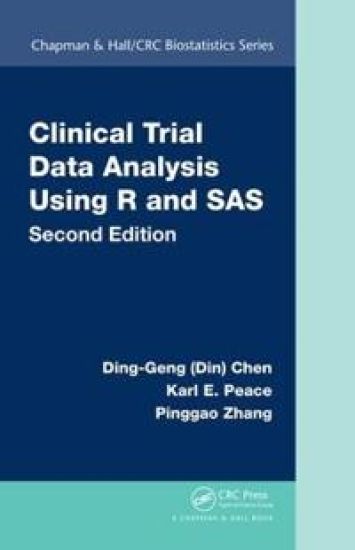
Clinical Trial Data Analysis Using R and SAS

Clinical Trial Data Analysis Using R and SAS

Ding-Geng (Din) Chen; Karl E. Peace; Pinggao Zhang

Productivity Press
2017
sidottu
Review of the First Edition"The goal of this book, as stated by the authors, is to fill the knowledge gap that exists between developed statistical methods and the applications of these methods. Overall, this book achieves the goal successfully and does a nice job. I would highly recommend it …The example-based approach is easy to follow and makes the book a very helpful desktop reference for many biostatistics methods."—Journal of Statistical SoftwareClinical Trial Data Analysis Using R and SAS, Second Edition provides a thorough presentation of biostatistical analyses of clinical trial data with step-by-step implementations using R and SAS. The book’s practical, detailed approach draws on the authors’ 30 years’ experience in biostatistical research and clinical development. The authors develop step-by-step analysis code using appropriate R packages and functions and SAS PROCS, which enables readers to gain an understanding of the analysis methods and R and SAS implementation so that they can use these two popular software packages to analyze their own clinical trial data. What’s New in the Second Edition Adds SAS programs along with the R programs for clinical trial data analysis. Updates all the statistical analysis with updated R packages. Includes correlated data analysis with multivariate analysis of variance. Applies R and SAS to clinical trial data from hypertension, duodenal ulcer, beta blockers, familial andenomatous polyposis, and breast cancer trials. Covers the biostatistical aspects of various clinical trials, including treatment comparisons, time-to-event endpoints, longitudinal clinical trials, and bioequivalence trials.
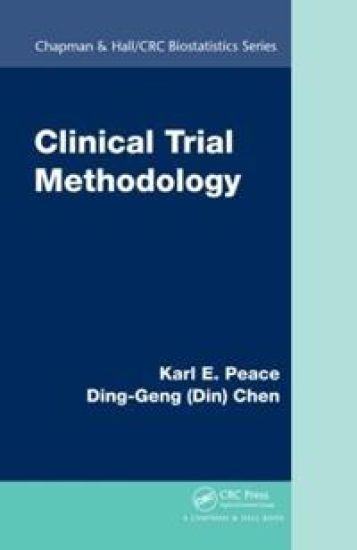
Clinical Trial Methodology

Clinical Trial Methodology

Karl E. Peace; Ding-Geng (Din) Chen

Chapman Hall/CRC
2010
sidottu
Now viewed as its own scientific discipline, clinical trial methodology encompasses the methods required for the protection of participants in a clinical trial and the methods necessary to provide a valid inference about the objective of the trial. Drawing from the authors’ courses on the subject as well as the first author’s more than 30 years working in the pharmaceutical industry, Clinical Trial Methodology emphasizes the importance of statistical thinking in clinical research and presents the methodology as a key component of clinical research. From ethical issues and sample size considerations to adaptive design procedures and statistical analysis, the book first covers the methodology that spans every clinical trial regardless of the area of application. Crucial to the generic drug industry, bioequivalence clinical trials are then discussed. The authors describe a parallel bioequivalence clinical trial of six formulations incorporating group sequential procedures that permit sample size re-estimation. The final chapters incorporate real-world case studies of clinical trials from the authors’ own experiences. These examples include a landmark Phase III clinical trial involving the treatment of duodenal ulcers and Phase III clinical trials that contributed to the first drug approved for the treatment of Alzheimer’s disease. Aided by the U. S. FDA, the U. S. National Institutes of Health, the pharmaceutical industry, and academia, the area of clinical trial methodology has evolved over the last six decades into a scientific discipline. This guide explores the processes essential for developing and conducting a quality clinical trial protocol and providing quality data collection, biostatistical analyses, and a clinical study report, all while maintaining the highest standards of ethics and excellence.