

Kirjailija
Dionne Brand
Kirjat ja teokset yhdessä paikassa: 20 kirjaa, julkaisuja vuosilta 2000–2027, suosituimpiin kuuluu Small Life. Vertaile teosten hintoja ja tarkista saatavuus suomalaisista kirjakaupoista.
20 kirjaa
Kirjojen julkaisuvuodet: 2000–2027.

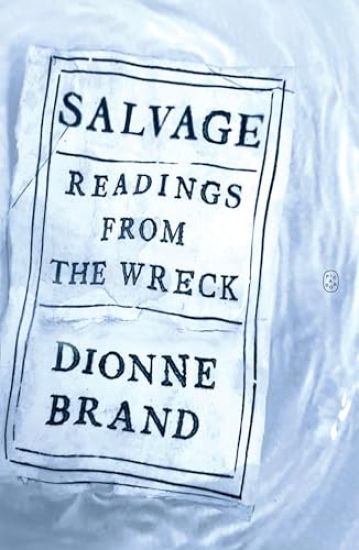
One of Literary Hub's most anticipated books of 2024. Winner of the 2025 OCM Bocas Prize for Caribbean Literature. Dionne Brand explores English and American literature, and the colonial aesthetic that shaped her sense of self and the world, of what was possible and what was not. In Salvage: Readings from the Wreck, Dionne Brand's first major book of nonfiction since her classic A Map to the Door of No Return, the acclaimed poet and novelist offers a bracing look at the intersections of reading and life, and what remains in the wreck of empire. Blending literary criticism and autobiography-as-artifact, Brand reads Aphra Behn's Oroonoko, Daniel Defoe's Robinson Crusoe, and Jane Austen's Mansfield Park, among other still widely studied works, to explore encounters with colonial, imperialist, and racist tropes from the seventeenth to the nineteenth centuries--tropes that continue in new forms today. Brand vividly shows how contemporary practices of reading and writing are shaped by the narrative structures of these and related works, and explores how, in the face of this, one writes a narrative of Black life that attends to its own consciousness and expression. With the power and eloquence of a great poet coupled with the rigor of a deep and subtle thinker, Brand reveals how she learned to read the literature of two empires, British and American, in an anticolonial light--in order to survive, and in order to live. This is the library, the wreck, and the potential for salvage she offers us now, in a brilliant, groundbreaking, and essential work.
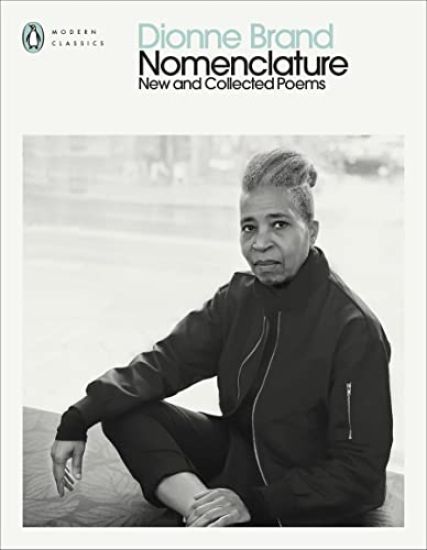
An immense achievement, comprising a decades-long career - new and collected poetry from one of Canada's most honoured and significant poetsSpanning almost four decades, Dionne Brand's poetry has given rise to whole new grammars and vocabularies. With a profound alertness that is attuned to this world and open to some other, possibly future, time and place, Brand's ongoing labours of witness and imagination speak directly to where and how we live and reach beyond those worlds, their enclosures, and their violences. Nomenclature: New and Collected Poems begins with a new long poem, the titular "Nomenclature for the Time Being," in which Dionne Brand's diaspora consciousness dismantles our quotidian disasters. In addition to this searing new work, Nomenclature collects eight volumes of Brand's poetry published between 1982 and 2010 and includes a critical introduction by the literary scholar and theorist Christina Sharpe. Nomenclature: New and Collected Poems, features the searching and centering cantos of Primitive Offensive; the sharp musical conversations of Winter Epigrams and Epigrams to Ernesto Cardenal in Defense of Claudia; the documentary losses of revolutions in Chronicles of the Hostile Sun, in which "The street was empty/with all of us standing there." No Language Is Neutral connects language, coloniality, and sexuality. Land to Light On explores intimacies and disaffections with nationality and the nation-state, while in thirsty a cold-eyed flâneur surveys the workings of the city. In Inventory, written during the Gulf Wars, the poet is "the wars' last and late night witness," her job not to soothe but to "revise and revise this bristling list/hourly." Ossuaries' futurist speaker rounds out the collection, and threads multiple temporal worlds - past, present, and future. This masterwork displays Dionne Brand's ongoing body of thought - trenchant, lyrical, absonant, discordant, and meaning-making. Nomenclature: New and Collected Poems is classic and living, a record of one of the great writers of our age.

Trenchant, lyrical and breathtaking in its cinematic sweep, the first UK poetry publication by the Canadian national treasureDionne Brand's poetry makes scalar leaps from the 'eroding present' and the 'intimacy of history' to 'unknown galaxies' and 'as yet / unarmed moons'. With a consciousness that is attuned to this world and open to some other, possibly future, time and place, Brand's ongoing labours of witness and imagination speak directly to where and how we live and reach beyond those worlds, their enclosures, and their violences. Brand is, in other words, a poet engagé, and hers is a poetics of liberation; she does not 'write toward anything called justice, but against tyranny'. With a critical introduction by scholar and theorist Christina Sharpe, Nomenclature is the searing new volume spanning a decades-long career, from 1982-2022, and gathering the new and collected poems of one of Canada's most honoured, significant and bestselling poets. Here, Dionne Brand bears powerful witness to the seemingly unending wars, the ascendance of fundamentalisms and the nameless casualties of the current era, but also to the rich textures of human life and human feeling that, in the face of this world's violences, endure and flourish. It is a masterwork, classic and living, and a record of one of the great writers of our age.
A Map to the Door of No Return: Notes to Belonging
Dionne Brand
Vintage Books Canada
2023
nidottu
Halvin toimitettuna 26,60 €
"One enters a room and history follows; one enters a room and history precedes. History is already seated in the chair in the empty room when one arrives." Now entering its third decade in print, Dionne Brand's groundbreaking A Map to the Door of No Return has emerged as a modern classic, a disquisition on 'being' in the Black diaspora. "This book is a world, a triumph of art and thought, a compass for the ages." --David Chariandy Since its first publication in 2001, Dionne Brand's groundbreaking disquisition on being in the Black diaspora, A Map to the Door of No Return, has emerged as a modern classic. The door, in Brand's iconic schema, represents the point of rupture where the ancestors of the Black diaspora departed one world for another: the place where all names were forgotten, and all beginnings recast. "This door," writes Brand, "is not mere physicality. It is a spiritual location. . . . Since leaving was never voluntary, return was, and still may be, an intention, however deeply buried. There is as it says no way in; no return." Through shards of history, memoir, lyrical investigation, and the unwritten experience of so many descendants of those who passed through the door, Brand constructs a map of this indelible region, culminating in an enduring expression, both definitive and seeking, of what it is to live, think, and create in the wake of colonization. With a new preface by the author, and a moving afterword by Saidiya Hartman.
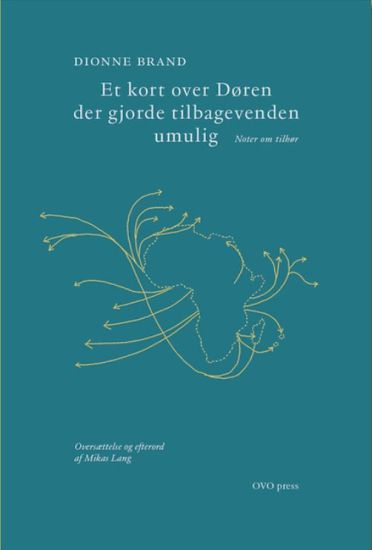
Hvor kommer jeg fra? Hvad vil det sige at høre til? Disse enkle, men overvældende spørgsma°l er udgangspunktet for Dionne Brands Et kort over Døren der gjorde tilbagevenden umulig – et poetisk hybridværk, som undersøger sorthed, nærmere bestemt den sorte diasporas fornemmelser af tilhør og hjem. Bogen er en ba°de essayistisk, selvbiografisk og poetisk meditation over Døren. Døren, som pa° e´n gang er en ræk- ke fysiske steder, slaveforterne langs Afrikas vestkyst, og en metafor for sted, det væld af symbolske og psykiske processer, der forvandlede afrikanere til sorte, til slaver, i den sa°- kaldt nye verden. Dionne Brand trækker pa° kartografi, barndomsminder, rejser, revolution og litteratur i sin uafrystelige undersøgelse af de skiftende grænser for hjem og nation.“En af de bedste udforskninger af sorthed, jeg har læst – og helt sikkert den smukkeste.” – Mikas Lang
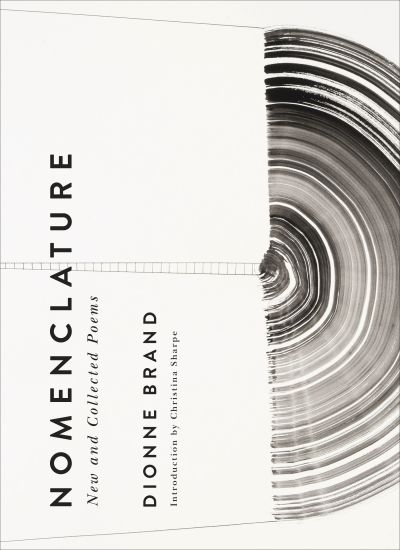
Spanning almost four decades, Dionne Brand’s poetry has given rise to whole new grammars and vocabularies. With a profound alertness that is attuned to this world and open to some other, possibly future, time and place, Brand’s ongoing labors of witness and imagination speak directly to where and how we live and reach beyond those worlds, their enclosures, and their violences. Nomenclature: New and Collected Poems begins with a new long poem, the titular Nomenclature for the Time Being, in which Dionne Brand’s diaspora consciousness dismantles our quotidian disasters. In addition to this searing new work, Nomenclature collects eight volumes of Brand’s poetry published between 1982 and 2010 and includes a critical introduction by the literary scholar and theorist Christina Sharpe. Nomenclature: New and Collected Poems features the searching and centering cantos of Primitive Offensive; the sharp musical conversations of Winter Epigrams and Epigrams to Ernesto Cardenal in Defense of Claudia; and the documentary losses of revolutions in Chronicles of the Hostile Sun, in which “The street was empty/with all of us standing there.” No Language Is Neutral reads language, coloniality, and sexuality as a nexus. Land to Light On writes intimacies and disaffections with nation, while in thirsty a cold-eyed flÂneur surveys the workings of the city. In Inventory, written during the Gulf Wars, the poet is “the wars’ last and late night witness,” her job is not to soothe but to “revise and revise this bristling list/hourly.” Ossuaries’ futurist speaker rounds out the collection and threads multiple temporal worlds-past, present, and future. This masterwork displays Dionne Brand’s ongoing body of thought-trenchant, lyrical, absonant, discordant, and meaning-making. Nomenclature: New and Collected Poems is classic and living, a record of one of the great writers of our age.
The Blue Clerk: Ars Poetica in 59 Versos
Dionne Brand
DUKE UNIVERSITY PRESS
2022
nidottu
Halvin toimitettuna 22,90 €
On a lonely wharf a clerk in an ink-blue coat inspects bales and bales of paper that hold a poet's accumulated left-hand pages--the unwritten, the withheld, the unexpressed, the withdrawn, the restrained, the word-shard. In The Blue Clerk renowned poet Dionne Brand stages a conversation and an argument between the poet and the Blue Clerk, who is the keeper of the poet's pages. In their dialogues--which take shape as a series of haunting prose poems--the poet and the clerk invoke a host of writers, philosophers, and artists, from Jacob Lawrence, Lola Kiepja, and Walter Benjamin to John Coltrane, Josephine Turalba, and Jorge Luis Borges. Through these essay poems, Brand explores memory, language, culture, and time while intimately interrogating the act and difficulty of writing, the relationship between the poet and the world, and the link between author and art. Inviting the reader to engage with the resonant meanings of the withheld, Brand offers a profound and moving philosophy of writing and a wide-ranging analysis of the present world.

Laurier Poetry Pack #5
Dionne Brand; Paul Dutton; Gary Barwin; Al Purdy; Fred Wah; Louise Bernice Halfe
WILFRID LAURIER UNIVERSITY PRESS
2021
muu
A bundle of Laurier Poetry books for course use that includes Fierce Departures (Dionne Brand); Sonosyntactics (Paul Dutton); The More Easily Kept Illusions (Al Purdy); False Laws of Narrative (Fred Wah0; and Sohkeyihta (Louise Bernice Halfe).

Inspired by her childhood in Trinidad, acclaimed poet and writer Dionne Brand conjures the world of the Caribbean in her first book of poetry for children. The sounds and smells of market day, the blazing sun, the joyful beat of much-awaited rain and a girl who dares to do better. These are just some of the stories and characters brought into focus in this captivating collection of poems. Originally published in 1979, these poems are an eloquent, unsparing tribute to the lives of the Caribbean people and the power of nature. Simple chants and schoolyard skipping songs alongside more sophisticated poems reveal a place of beauty and hardship where life moves in harmony with the elements. With vibrant collage paintings and poignant line drawings by Eugenie Fernandes, Earth Magic will cast a spell over readers of all ages.

Laurier Poetry Pack #4
Al Purdy; Dionne Brand; Paul Dutton; Fred Wah; Rachel Zolf
Wilfrid Laurier University Press
2020
muu
Laurier Poetry Pack #4 consists of 5 volumes from the Laurier Poetry series. Volumes contained in Laurier Poetry Pack #4: 9780889204904 The More Easily Kept Illusions; 9781554580385 Fierce Departures; 9781771121323 Sonosyntactics; 9781554580460 The False Laws of Narrative; 9781771124119 Social Poesis.
An Autobiography of the Autobiography of Reading
Dionne Brand
University of Alberta Press (CA)
2020
pokkari
Halvin toimitettuna 20,80 €
The geopolitics of empire had already prepared me for this…coloniality constructs outsides and insides—worlds to be chosen, disturbed, interpreted, and navigated—in order to live something like a real self. Internationally acclaimed poet and novelist Dionne Brand reflects on her early reading of colonial literature and how it makes Black being inanimate. She explores her encounters with colonial, imperialist, and racist tropes; the ways that practices of reading and writing are shaped by those narrative structures; and the challenges of writing a narrative of Black life that attends to its own expression and its own consciousness.
On a lonely wharf a clerk in an ink-blue coat inspects bales and bales of paper that hold a poet's accumulated left-hand pages-the unwritten, the withheld, the unexpressed, the withdrawn, the restrained, the word-shard. In The Blue Clerk renowned poet Dionne Brand stages a conversation and an argument between the poet and the Blue Clerk, who is the keeper of the poet's pages. In their dialogues-which take shape as a series of haunting prose poems-the poet and the clerk invoke a host of writers, philosophers, and artists, from Jacob Lawrence, Lola Kiepja, and Walter Benjamin to John Coltrane, Josephine Turalba, and Jorge Luis Borges. Through these essay poems, Brand explores memory, language, culture, and time while intimately interrogating the act and difficulty of writing, the relationship between the poet and the world, and the link between author and art. Inviting the reader to engage with the resonant meanings of the withheld, Brand offers a profound and moving philosophy of writing and a wide-ranging analysis of the present world.
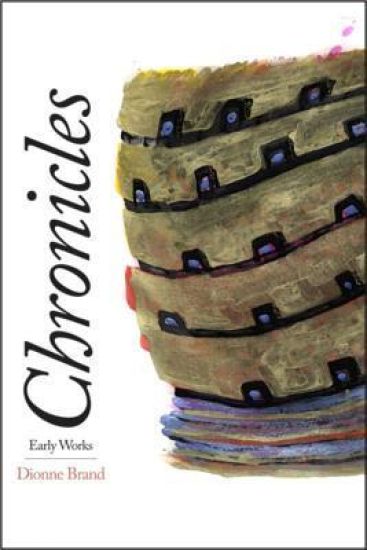
One of Canada's most distinguished poets, Dionne Brand explores and chronicles how history shapes human existence, in particular the lives of those ruptured and scattered by New World slaveries and modern crises. This republication of three early volumes presents a view of the trajectory of her poetic journey. Read retrospectively, the earlier work is haunting, a testament to a historical moment in which change seemed possible, even imminent, a belief nourished by the various social movements that galvanized a generation. Individually and as a whole, Brand's work charts a collective as well as a personal journey, delving into the burdens of history and the fugitive, contingent, dynamic, and mutable geographies of the African diaspora. She locates herself within matrices of language, place, gender, sexuality, and politics and maps what she calls the ""murmurous genealogy"" of her city, Toronto, and the denizen-citizenship of the contemporary global.
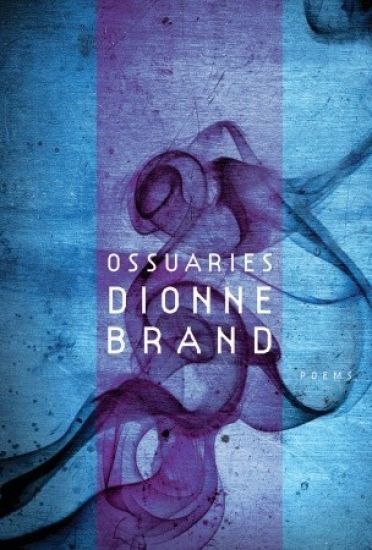
Dionne Brand's hypnotic, urgent long poem - her first book of poetry in four years, is about the bones of fading cultures and ideas, about the living museums of spectacle where these bones are found. At the centre of Ossuaries is the narrative of Yasmine, a woman living an underground life, fleeing from past actions and regrets, in a perpetual state of movement. She leads a solitary clandestine life, crossing borders actual (Algiers, Cuba, Canada), and timeless. Cold-eyed and cynical, she contemplates the periodic crises of the contemporary world. This is a work of deep engagement, sensuality, and ultimate craft from an essential observer of our time and one of the most accomplished poets writing today.
The selections in Fierce Departures, drawn from Dionne Brand's work since 1997, delineate with searing eloquence how history marks and dislocates peoples of the African diaspora, how nations, concretely and conceptually, fail to create safe haven, and how human desire persists nevertheless. Through a widening canvas, Brand unfolds the (im)possibilities of belonging for those whom history has dispossessed. Yet she also shows how Canada, and in particular Toronto, remade by those who alight on it, is a place of contingency. Known for her linguistic intensity and lyric brilliance, Brand consoles through the beauty of her work and disturbs with its uncompromising demand for ethical witness. In her introduction, editor Leslie C. Sanders traces the evolution of Brand's poetic concerns and changing vision. In particular, she observes Brand's complex use of landscape and language to delineate the ethical and emotional issues around the desire for place. She argues that Brand reformulates Northrop Frye's question ""Where is here?,"" disturbing and expanding the national imaginary. As afterword, Brand has selected passages from her evocative collection of essays A Map to the Door of No Return. Read as an ars poetica, the passages summon the presences of those whose lives are circumscribed by the histories the poet narrates as her own.
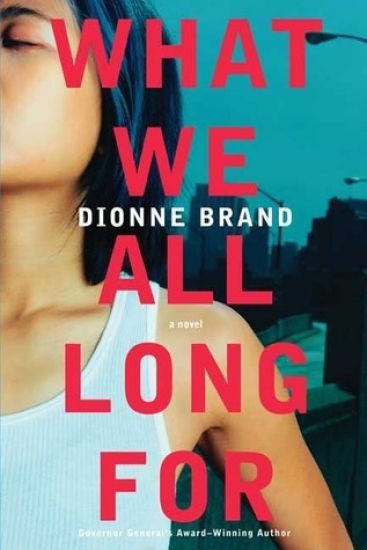
What We All Long For
Dionne Brand
Saint Martin's Griffin,U.S.
2009
nidottu
Halvin toimitettuna 25,60 €
Dionne Brand powerfully delves into uncharted aspects of urban life, the bittersweetness of youth, and secrets families try to hide. Tuyen is an aspiring artist and the daughter of Vietnamese parents who've never recovered from losing one of their children while in the rush to flee Vietnam in the 1970s. She rejects her immigrant family's hard-won lifestyle, and instead lives in a rundown apartment with friends--each of whom is grappling with their own familial complexities and heartache. In turns thrilling and heartbreaking, Tuyen's lost brother--who has since become a criminal in the Thai underworld--journeys to Toronto to find his long-lost family. As Quy's arrival nears, tensions build, friendships are tested, and an unexpected encounter will forever alter the lives of Tuyen and her friends. Gripping at times, heartrending at others, "What We All Long For" is an ode to a generation of longing and identity, and to the rhythms and pulses of a city and its burgeoning, questioning youth.
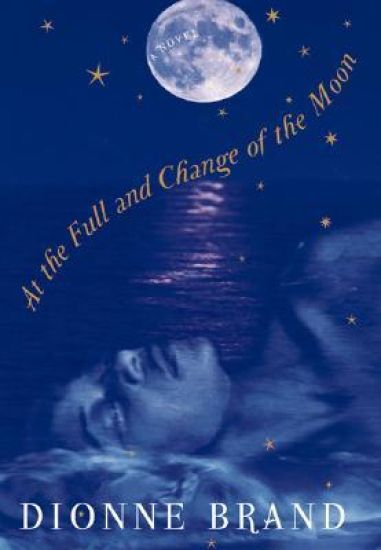
The progeny of a woman who survived a mass suicide of slaves on the island of Trinidad in 1824 spreads out across the globe, participating in 150 years of violence and struggle, two world wars, and the dangerous underworld of the Caribbean. Reprint.
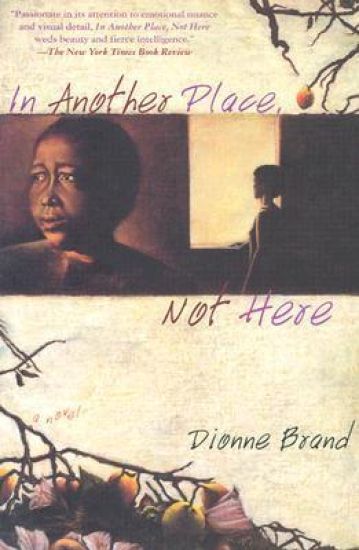
When two contemporary Caribbean women just happen to meet, an instant friendship and understanding forms as a yearning for each other's life takes them to the next stage in their own worlds.