Kirjojen hintavertailu – 12 903 724 kirjaa ja 27 kauppaa

Kirjailija

Dipesh Chakrabarty

Kirjat ja teokset yhdessä paikassa: 25 kirjaa, julkaisuja vuosilta 2000–2025, suosituimpiin kuuluu Klima og historie. Vertaile teosten hintoja ja tarkista saatavuus suomalaisista kirjakaupoista.

25 kirjaa

Kirjojen julkaisuvuodet: 2000–2025.

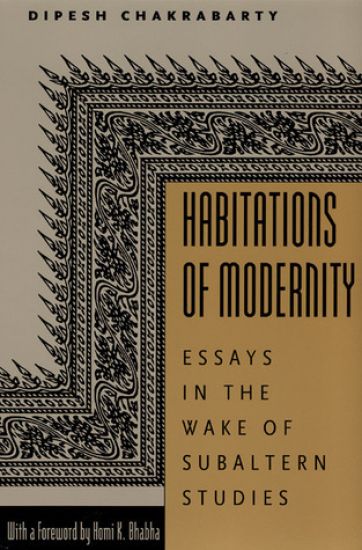
Habitations of Modernity

Habitations of Modernity

Dipesh Chakrabarty

University of Chicago Press
2002
nidottu
In Habitations of Modernity, Dipesh Chakrabarty explores the complexities of modernism in India and seeks principles of humaneness grounded in everyday life that may elude grand political theories. The questions that motivate Chakrabarty are shared by all postcolonial historians and anthropologists; How do we think about the legacy of the European Enlightenment in lands far from Europe in geography or history? How can we envision ways of being modern that speak to what is shared around the world, as well as to cultural diversity? How do we resist the tendency to justify the violence accompanying triumphalist moments of modernity? Chakrabarty pursues these issues in a series of closely linked essays, ranging from a history of the influential Indian series Subaltern Studies to examinations of specific cultural practices in modern India, such as the use of khadi - Gandhian style of dress - by male politicians and the politics of civic consciousness in public spaces. He concludes with considerations of the ethical dilemmas that arise when one writes on behalf of social justice projects.
Habitations of Modernity

Habitations of Modernity

Dipesh Chakrabarty

University of Chicago Press
2002
sidottu
In Habitations of Modernity, Dipesh Chakrabarty explores the complexities of modernism in India and seeks principles of humaneness grounded in everyday life that may elude grand political theories. The questions that motivate Chakrabarty are shared by all postcolonial historians and anthropologists; How do we think about the legacy of the European Enlightenment in lands far from Europe in geography or history? How can we envision ways of being modern that speak to what is shared around the world, as well as to cultural diversity? How do we resist the tendency to justify the violence accompanying triumphalist moments of modernity? Chakrabarty pursues these issues in a series of closely linked essays, ranging from a history of the influential Indian series Subaltern Studies to examinations of specific cultural practices in modern India, such as the use of khadi - Gandhian style of dress - by male politicians and the politics of civic consciousness in public spaces. He concludes with considerations of the ethical dilemmas that arise when one writes on behalf of social justice projects.

Cosmopolitanism

Cosmopolitanism

Dipesh Chakrabarty; Homi K. Bhabha; Sheldon Pollock; Carol A. Breckenridge

Duke University Press
2000
pokkari
This text addresses the question of whether cosmopolitanism - ways of thinking, feeling and acting beyond one's particular society - is simply the universalism of a Western particular.
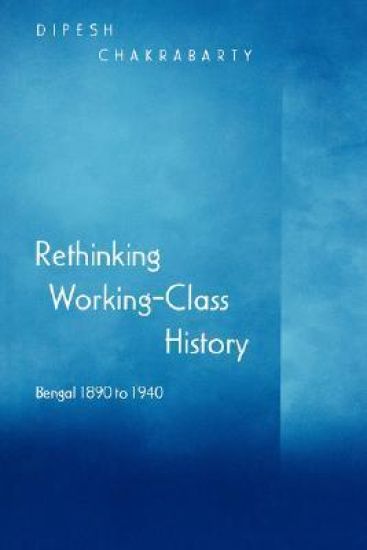
Rethinking Working-Class History

Rethinking Working-Class History

Dipesh Chakrabarty

Princeton University Press
2000
pokkari
Dipesh Chakrabarty combines a history of the jute-mill workers of Calcutta with a fresh look at labor history in Marxist scholarship. Opposing a reductionist view of culture and consciousness, he examines the milieu of the jute-mill workers and the way it influenced their capacity for class solidarity and "revolutionary" action from 1890 to 1940. Around and within this empirical core is built his critique of emancipatory narratives and their relationship to such Marxian categories as "capital," "proletariat," or "class consciousness." The book contributes to currently developing theories that connect Marxist historiography, post-structuralist thinking, and the traditions of hermeneutic analysis. Although Chakrabarty deploys Marxian arguments to explain the political practices of the workers he describes, he replaces universalizing Marxist explanations with a sensitive documentary method that stays close to the experience of workers and their European bosses. He finds in their relationship many elements of the landlord/tenant relationship from the rural past: the jute-mill workers of the period were preindividualist in consciousness and thus incapable of participating consistently in modern forms of politics and political organization.
Klima og historie

Klima og historie

Dipesh Chakrabarty

Cappelen Damm akademisk
nidottu
Dipesh Chakrabarty (f. 1948) er historiker med India og subalterne studier som spesialfelt. Han ble kjent som postkolonial tenker med den svært innflytelsesrike boken Provincionalizing Europe (2000). Siden 2000-tallet har hans tenkning tatt utgangspunkt i de utfordringene klimakrisen gir både politikk og humanistisk forskning. Denne boken samler kjernetekster fra Chakrabartys forfatterskap om klima og historie. Det er den første oversettelsen av hans forfatterskap til norsk, og kommer med et nyskrevet forord ved forfatteren. Et sentralt poeng er at etablerte forestillinger om historie, modernitet og globalisering kommer til kort i møte med klimakrisen. Chakrabarty utforsker hva det innebærer for historievitenskapen å ta inn over seg antropocen – en ny geologisk epoke der mennesket endrer jordkloden som system og griper inn i evolusjonen og livsforholdene til andre arter. Planetens naturhistorie har tidligere fungert som en nøytral bakgrunn for menneskets historie, men klimakrisen gjør det nødvendig å heve blikket fra det globale til det planetære. En ny historietenkning må gå i dialog med andre humanvitenskaper for å revurdere selve menneskeforståelsen og gi historiefagets teori en kritisk nytolkning – samtidig som den forholder seg til postkolonialismens innsikter og modernitetens idéer om sosial rettferdighet og frihet. Klima og historie er oversatt av Anders Dunker. Etterordet er skrevet av Tony Sandset og John Ødemark.