Kirjojen hintavertailu – 12 859 818 kirjaa ja 27 kauppaa

Kirjailija

Divya Dwivedi

Kirjat ja teokset yhdessä paikassa: 5 kirjaa, julkaisuja vuosilta 2018–2024, suosituimpiin kuuluu Indian Philosophy, Indian Revolution. Vertaile teosten hintoja ja tarkista saatavuus suomalaisista kirjakaupoista.

5 kirjaa

Kirjojen julkaisuvuodet: 2018–2024.

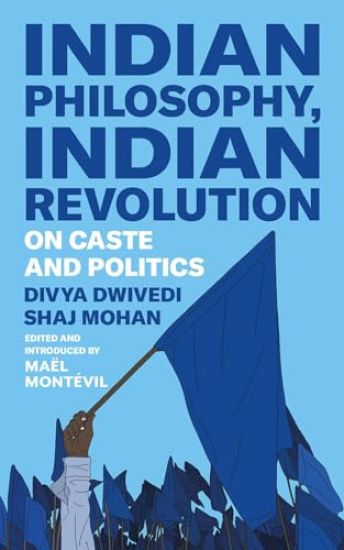
Indian Philosophy, Indian Revolution

Indian Philosophy, Indian Revolution

Divya Dwivedi; Shaj Mohan

C HURST CO PUBLISHERS LTD
2024
sidottu
In their brave and challenging book, grounded in political science and the Continental philosophical tradition, Divya Dwivedi and Shaj Mohan engage with the resurgence of upper-caste supremacism in India and its justification via the legacy of ‘the Aryan doctrine’ and Hindu nationalism. Their essays were written from 2016 to 2023, when India’s democratic institutions were subverted and caste-based oppression overflowed into public space—killing and menacing the lower castes of all religions, minorities, women, students and the media. This book chronicles the ascending oppression of democracy in India, a veritable biography of authoritarianism. Dwivedi and Mohan reject simplistic accounts of India’s politics as the opposition between ‘Hindu majoritarian nationalism’ and ‘the religious minorities’, or between ‘Hindu fundamentalism’ and ‘religious pluralism’. They propose instead a genuinely transformative account of Indian politics, grounded in political philosophy and in the lower- caste majority position What does revolution mean where the constitutional promise of equality is betrayed daily by the millennia- old inequality of caste? What does politics mean where religion serves as the justification for descent- based enslavement and indignity? Revolution has only one sense in India, the annihilation of caste; and ‘citizen’ has only one sense, the people of the state shedding caste and racism.

Gandhi and Philosophy

Gandhi and Philosophy

Shaj Mohan; Divya Dwivedi; Jean-Luc Nancy

Bloomsbury Academic
2020
nidottu
Gandhi and Philosophy presents a breakthrough in philosophy by foregrounding modern and scientific elements in Gandhi’s thought, animating the dazzling materialist concepts in his writings and opening philosophy to the new frontier of nihilism. This scintillating work breaks with the history of Gandhi scholarship, removing him from the postcolonial and Hindu-nationalist axis and disclosing him to be the enemy that the philosopher dreads and needs. Naming the congealing systematicity of Gandhi’s thoughts with the Kantian term hypophysics, Mohan and Dwivedi develop his ideas through a process of reason that awakens the possibilities of concepts beyond the territorial determination of philosophical traditions. The creation of the new method of criticalisation - the augmentation of critique - brings Gandhi’s system to its exterior and release. It shows the points of intersection and infiltration between Gandhian concepts and such issues as will, truth, violence, law, anarchy, value, politics and metaphysics and compels us to imagine Gandhi’s thought anew.
Gandhi and Philosophy

Gandhi and Philosophy

Shaj Mohan; Divya Dwivedi; Jean-Luc Nancy

Bloomsbury Academic
2018
sidottu
Gandhi and Philosophy presents a breakthrough in philosophy by foregrounding modern and scientific elements in Gandhi’s thought, animating the dazzling materialist concepts in his writings and opening philosophy to the new frontier of nihilism. This scintillating work breaks with the history of Gandhi scholarship, removing him from the postcolonial and Hindu-nationalist axis and disclosing him to be the enemy that the philosopher dreads and needs. Naming the congealing systematicity of Gandhi’s thoughts with the Kantian term hypophysics, Mohan and Dwivedi develop his ideas through a process of reason that awakens the possibilities of concepts beyond the territorial determination of philosophical traditions. The creation of the new method of criticalisation - the augmentation of critique - brings Gandhi’s system to its exterior and release. It shows the points of intersection and infiltration between Gandhian concepts and such issues as will, truth, violence, law, anarchy, value, politics and metaphysics and compels us to imagine Gandhi’s thought anew.
Narratology and Ideology

Narratology and Ideology

Divya Dwivedi

Ohio State University Press
2018
sidottu
Narratology and Ideology: Negotiating Context, Form, and Theory in Postcolonial Narratives, edited by Divya Dwivedi, Henrik Skov Nielsen, and Richard Walsh, brings together many of the most prominent figures in the interface between narratology and postcolonial criticism. While narrative theory has for some time recognized the importance of context in the analysis of fiction, this recognition has not quickly translated into substantial work in fields like postcolonialism, where situated questions of value and ideology have been brought to the fore. Postcolonial criticism, on the other hand, has often neglected the formal qualities of fiction in preference for ideological thematic interpretations, precisely because of the suspect legacy of formalism. The volume, then, stages a meeting between these two fields, negotiating both narratological and postcolonialist concerns by addressing specific features of narrative form and technique in the ideological analysis of key postcolonial texts. The thirteen essays in Narratology and Ideology offer compelling readings of individual novels, with a focus upon South Asian literature, that provide a cumulative case study on the value of postcolonial narratology. The essays show not only how narrative theory can be productively applied in service of postcolonial criticism but also how such attention to postcolonial fictions can challenge and refine our theoretical understanding of narrative.