Kirjojen hintavertailu – 12 859 819 kirjaa ja 27 kauppaa

Kirjailija

Dmitri Trenin

Kirjat ja teokset yhdessä paikassa: 12 kirjaa, julkaisuja vuosilta 2004–2022, suosituimpiin kuuluu Should We Fear Russia?. Vertaile teosten hintoja ja tarkista saatavuus suomalaisista kirjakaupoista.

12 kirjaa

Kirjojen julkaisuvuodet: 2004–2022.

Getting Russia Right

Getting Russia Right

Dmitri Trenin

Carnegie Endowment for International Peace
2022
nidottu
In the early 1990s, Russia seemed on the brink of fully shedding its authoritarian and communist past. It made significant progress through engaging the world community as an emerging market democracy, a returning friend and neighbor to Europe and the West, and a strategic partner of the United States. The ensuing fifteen years of Russian history have witnessed several booms, such as the buoyancy provided by high oil revenues, and busts that resulted in retrenchment and centralization of power. What is the real Russia? Is the nation going in the wrong direction and becoming a threat-in-waiting, or is it moving along, and even forward, in a familiar three-steps-forward and two-steps-back pattern? In Getting Russia Right, Dmitri Trenin sheds new light on our understanding of contemporary Russia, providing Western audiences with an insider's explanation of how the country has arrived at its current position and how the United States and Europe can deal with it more productively. Trenin looks beyond Russia's famous leaders to the economic and cultural spaces outside the Kremlin where promising changes are taking place. Russia is probably not going to join the West, but it is on a path toward becoming Western; capitalist even if not democratic; European in terms of civilization, rather than as part of the EU; and gradually more Western than pro-U. S. Insightful and optimistic, Getting Russia Right offers policymakers, students, and stakeholders in the U. S.-Russia relationship an understanding of what Russia is —and is not. Russia will matter in the foreseeable future, and Trenin's innovative and objective analysis provides an understanding that is crucial to rebuilding relationships among the world's key players.
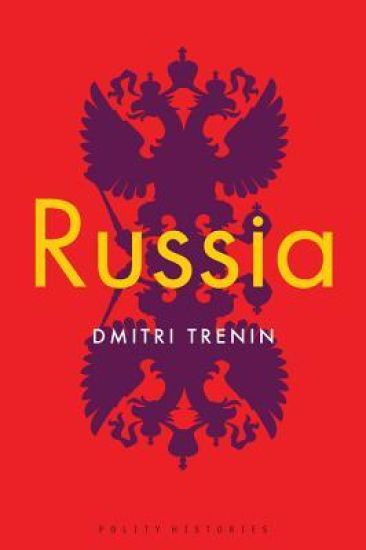
Russia

Russia

Dmitri Trenin

Polity Press
2019
nidottu
Over the past century alone, Russia has lived through great achievements and deepest misery; mass heroism and mass crime; over-blown ambition and near-hopeless despair – always emerging with its sovereignty and its fiercely independent spirit intact. In this book, leading Russia scholar Dmitri Trenin accompanies readers on Russia’s rollercoaster journey from revolution to post-war devastation, perestroika to Putin’s stabilization of post-Communist Russia. Explaining the causes and the meaning of the numerous twists and turns in contemporary Russian history, he offers a vivid insider’s view of a country through one of its most trying and often tragic periods. Today, he cautions, Russia stands at a turning point – politically, economically and socially – its situation strikingly reminiscent of the Russian Empire in its final years. For the Russian Federation to avoid a similar demise, it must learn the lessons of its own history.
Russia

Russia

Dmitri Trenin

Polity Press
2019
sidottu
Over the past century alone, Russia has lived through great achievements and deepest misery; mass heroism and mass crime; over-blown ambition and near-hopeless despair – always emerging with its sovereignty and its fiercely independent spirit intact. In this book, leading Russia scholar Dmitri Trenin accompanies readers on Russia’s rollercoaster journey from revolution to post-war devastation, perestroika to Putin’s stabilization of post-Communist Russia. Explaining the causes and the meaning of the numerous twists and turns in contemporary Russian history, he offers a vivid insider’s view of a country through one of its most trying and often tragic periods. Today, he cautions, Russia stands at a turning point – politically, economically and socially – its situation strikingly reminiscent of the Russian Empire in its final years. For the Russian Federation to avoid a similar demise, it must learn the lessons of its own history.
What Is Russia Up To in the Middle East?
The eyes of the world are on the Middle East. Today, more than ever, this deeply-troubled region is the focus of power games between major global players vying for international influence. Absent from this scene for the past quarter century, Russia is now back with gusto. Yet its motivations, decision-making processes and strategic objectives remain hard to pin down. So just what is Russia up to in the Middle East? In this hard-hitting essay, leading analyst of Russian affairs Dmitri Trenin cuts through the hyperbole to offer a clear and nuanced analysis of Russia's involvement in the Middle East and its regional and global ramifications. Russia, he argues, cannot and will not supplant the U. S. as the leading external power in the region, but its actions are accelerating changes which will fundamentally remake the international system in the next two decades.
Should We Fear Russia?

Should We Fear Russia?

Dmitri Trenin

Polity Press
2016
nidottu
Since the outbreak of the Ukraine crisis, there has been much talk of a new Cold War between the West and Russia. Under Putin’s authoritarian leadership, Moscow is widely seen as volatile, belligerent and bent on using military force to get its way. In this incisive analysis, top Russian foreign and security policy analyst Dmitri Trenin explains why the Cold War analogy is misleading. Relations between the West and Russia are certainly bad and dangerous but - he argues - they are bad and dangerous in new ways; crucial differences which make the current rivalry between Russia, the EU and the US all the more fluid and unpredictable. Unpacking the dynamics of this increasingly strained relationship, Trenin makes a compelling case for handling Russia with pragmatism and care rather than simply giving into fear.
Should We Fear Russia?

Should We Fear Russia?

Dmitri Trenin

Polity Press
2016
sidottu
Since the outbreak of the Ukraine crisis, there has been much talk of a new Cold War between the West and Russia. Under Putin’s authoritarian leadership, Moscow is widely seen as volatile, belligerent and bent on using military force to get its way. In this incisive analysis, top Russian foreign and security policy analyst Dmitri Trenin explains why the Cold War analogy is misleading. Relations between the West and Russia are certainly bad and dangerous but - he argues - they are bad and dangerous in new ways; crucial differences which make the current rivalry between Russia, the EU and the US all the more fluid and unpredictable. Unpacking the dynamics of this increasingly strained relationship, Trenin makes a compelling case for handling Russia with pragmatism and care rather than simply giving into fear.
End of Eurasia

End of Eurasia

Dmitri Trenin

Carnegie Endowment for International Peace
2016
nidottu
Ten years after the breakup of the Soviet Union, the issue of Russia's international identity still remains largely unresolved. In this thought-provoking book, Dmitri Trenin argues that Russia must join the West by becoming integrated with the European Union and by building an alliance with the United States. He delineates the political, economic, demographic, religious, and strategic challenges that Russia faces in relation to neighboring countries —in Eastern Europe, along the Baltic Sea, around the Caspian Sea, in Central Asia, and in the Far East. Trenin suggests that Russia's time as the region's dominant leader is over, and that Russia and Eurasia will no longer share the same geopolitical objectives.
Russian Security Strategy Under Putin: U.S. and Russian Perspectives - U.S. Interests in the New Eurasia - Russia's Threat Perception and Strategic Posture
The two papers grouped together here were delivered at the Strategic Studies Institute's annual strategy conference for 2007. As the theme of the conference was global security challenges to the United States and proceeded on a region by region basis, these papers were delivered during the session devoted to security challenges issuing from what is now called Eurasia, i.e., to a large degree the former Soviet Union. The authors illustrate the degree to which great power rivalry in Eurasia has become a major security issue and source of growing Russo-American tensions. Whereas Dr. R. Craig Nation lays out some of the fundamental macro-strategic issues of this rivalry and U. S. goals in Eurasia, as well as the consequences of Russian resistance to Western and American pressures, Dr. Dmitri Trenin emphasizes the growing intensity of Russian threat perceptions.
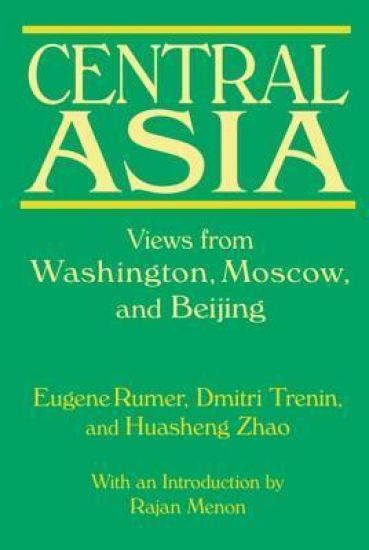
Central Asia: Views from Washington, Moscow, and Beijing

Central Asia: Views from Washington, Moscow, and Beijing

Eugene B. Rumer; Dmitri Trenin; Huasheng Zhao

Routledge
2007
nidottu
The disintegration of the Soviet Union in 1991 rapidly and irrevocably transformed Central Asia's political landscape. This region of five sovereign states with a population of some fifty million people quickly became a major focus of interest and influence for competing poles of power. The eminent contributors to this volume offer a four-part analysis of the region's new importance in world affairs. Rajan Menon examines the place of Central Asia in a global perspective. Eugene Rumer considers the perspective of the post-9/11 United States. Dimitri Trenin looks at the region from the standpoint of traditional hegemon Russia. Huasheng Zhao provides the view from economic superpower-in-the-making China.
Central Asia: Views from Washington, Moscow, and Beijing

Central Asia: Views from Washington, Moscow, and Beijing

Eugene B. Rumer; Dmitri Trenin; Huasheng Zhao

Routledge
2007
sidottu
The disintegration of the Soviet Union in 1991 rapidly and irrevocably transformed Central Asia's political landscape. This region of five sovereign states with a population of some fifty million people quickly became a major focus of interest and influence for competing poles of power. The eminent contributors to this volume offer a four-part analysis of the region's new importance in world affairs. Rajan Menon examines the place of Central Asia in a global perspective. Eugene Rumer considers the perspective of the post-9/11 United States. Dimitri Trenin looks at the region from the standpoint of traditional hegemon Russia. Huasheng Zhao provides the view from economic superpower-in-the-making China.
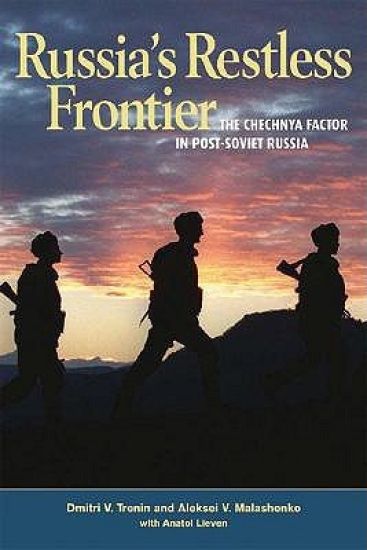
Russia™s Restless Frontier

Russia™s Restless Frontier

Dmitri Trenin; Alesksei Malashenko; Anatol Lieven

Carnegie Endowment for International Peace
2004
nidottu
The conflict in Chechnya, going through its low- and high-intensity phases, has been doggedly accompanying Russia's development. In the last decade, the Chechen war was widely covered, both in Russia and in the West. While most books look at the causes of the war, explain its zigzag course, and condemn the brutalities and crimes associated with it, this book is different. Its focus lies beyond the Caucasus battlefield. In Russia's Restless Frontier, Dmitri Trenin and Aleksei Malashenko examine the implications of the war with Chechnya for Russia's post-Soviet evolution. Considering Chechnya's impact on Russia's military, domestic politics, foreign policy, and ethnic relations, the authors contend that the Chechen factor must be addressed before Russia can continue its development.