Kirjojen hintavertailu – 12 903 724 kirjaa ja 27 kauppaa

Kirjailija

Dmitry Foshin

Kirjat ja teokset yhdessä paikassa: 4 kirjaa, julkaisuja vuosilta 2020–2026, suosituimpiin kuuluu Data Engineering with Azure Databricks. Vertaile teosten hintoja ja tarkista saatavuus suomalaisista kirjakaupoista.

4 kirjaa

Kirjojen julkaisuvuodet: 2020–2026.

Data Engineering with Azure Databricks

Data Engineering with Azure Databricks

Dmitry Foshin; Dmitry Anoshin; Tonya Chernyshova; Sergii Volodarskyi

PACKT PUBLISHING LIMITED
2026
nidottu
Master end-to-end data engineering on Azure Databricks. From data ingestion and Delta Lake to CI/CD and real-time streaming, build secure, scalable, and performant data solutions with Spark, Unity Catalog, and ML tools. Key Features Build scalable data pipelines using Apache Spark and Delta Lake Automate workflows and manage data governance with Unity Catalog Learn real-time processing and structured streaming with practical use cases Implement CI/CD, DevOps, and security for production-ready data solutions Explore Databricks-native ML, AutoML, and Generative AI integration Book Description"Data Engineering with Azure Databricks" is your essential guide to building scalable, secure, and high-performing data pipelines using the powerful Databricks platform on Azure. Designed for data engineers, architects, and developers, this book demystifies the complexities of Spark-based workloads, Delta Lake, Unity Catalog, and real-time data processing. Beginning with the foundational role of Azure Databricks in modern data engineering, you’ll explore how to set up robust environments, manage data ingestion with Auto Loader, optimize Spark performance, and orchestrate complex workflows using tools like Azure Data Factory and Airflow. The book offers deep dives into structured streaming, Delta Live Tables, and Delta Lake’s ACID features for data reliability and schema evolution. You’ll also learn how to manage security, compliance, and access controls using Unity Catalog, and gain insights into managing CI/CD pipelines with Azure DevOps and Terraform. With a special focus on machine learning and generative AI, the final chapters guide you in automating model workflows, leveraging MLflow, and fine-tuning large language models on Databricks. Whether you're building a modern data lakehouse or operationalizing analytics at scale, this book provides the tools and insights you need. What you will learn Set up a full-featured Azure Databricks environment Implement batch and streaming ingestion using Auto Loader Optimize Spark jobs with partitioning and caching Build real-time pipelines with structured streaming and DLT Manage data governance using Unity Catalog Orchestrate production workflows with jobs and ADF Apply CI/CD best practices with Azure DevOps and Git Secure data with RBAC, encryption, and compliance standards Use MLflow and Feature Store for ML pipelines Build generative AI applications in Databricks Who this book is forThis book is for data engineers, solution architects, cloud professionals, and software engineers seeking to build robust and scalable data pipelines using Azure Databricks. Whether you're migrating legacy systems, implementing a modern lakehouse architecture, or optimizing data workflows for performance, this guide will help you leverage the full power of Databricks on Azure. A basic understanding of Python, Spark, and cloud infrastructure is recommended.
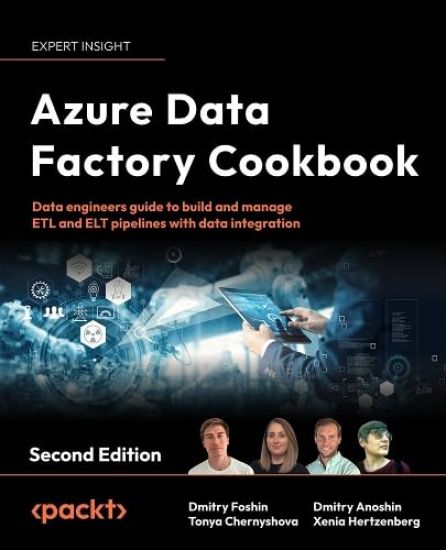
Azure Data Factory Cookbook

Azure Data Factory Cookbook

Dmitry Foshin; Tonya Chernyshova; Dmitry Anoshin; Xenia Ireton

PACKT PUBLISHING LIMITED
2024
nidottu
Data Engineers guide to solve real-world problems encountered while building and transforming data pipelines using Azure's data integration tool Key Features Solve real-world data problems and create data-driven workflows with ease using Azure Data Factory Build an ADF pipeline that operates on pre-built ML model and Azure AI Get up and running with Fabric Data Explorer and extend ADF with Logic Apps and Azure functions Book DescriptionThis new edition of the Azure Data Factory book, fully updated to reflect ADS V2, will help you get up and running by showing you how to create and execute your first job in ADF. There are updated and new recipes throughout the book based on developments happening in Azure Synapse, Deployment with Azure DevOps, and Azure Purview. The current edition also runs you through Fabric Data Factory, Data Explorer, and some industry-grade best practices with specific chapters on each. You’ll learn how to branch and chain activities, create custom activities, and schedule pipelines, as well as discover the benefits of cloud data warehousing, Azure Synapse Analytics, and Azure Data Lake Gen2 Storage. With practical recipes, you’ll learn how to actively engage with analytical tools from Azure Data Services and leverage your on-premises infrastructure with cloud-native tools to get relevant business insights. You'll familiarize yourself with the common errors that you may encounter while working with ADF and find out the solutions to them. You’ll also understand error messages and resolve problems in connectors and data flows with the debugging capabilities of ADF. By the end of this book, you’ll be able to use ADF with its latest advancements as the main ETL and orchestration tool for your data warehouse projects. What you will learn Build and Manage data pipelines with ease using the latest version of ADF Configure, load data, and operate data flows with Azure Synapse Get up and running with Fabric Data Factory Working with Azure Data Factory and Azure Purview Create big data pipelines using Databricks and Delta tables Integrate ADF with commonly used Azure services such as Azure ML, Azure Logic Apps, and Azure Functions Learn industry-grade best practices for using Azure Data Factory Who this book is forThis book is for ETL developers, data warehouse and ETL architects, software professionals, and anyone else who wants to learn about the common and not-so-common challenges faced while developing traditional and hybrid ETL solutions using Microsoft's Azure Data Factory. You’ll also find this book useful if you are looking for recipes to improve or enhance your existing ETL pipelines. Basic knowledge of data warehousing is a prerequisite.
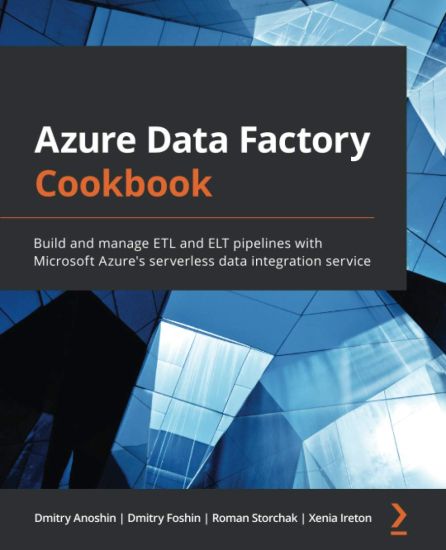
Azure Data Factory Cookbook

Azure Data Factory Cookbook

Dmitry Anoshin; Dmitry Foshin; Roman Storchak; Xenia Ireton

Packt Publishing Limited
2020
nidottu
Solve real-world data problems and create data-driven workflows for easy data movement and processing at scale with Azure Data FactoryKey FeaturesLearn how to load and transform data from various sources, both on-premises and on cloudUse Azure Data Factory’s visual environment to build and manage hybrid ETL pipelinesDiscover how to prepare, transform, process, and enrich data to generate key insightsBook DescriptionAzure Data Factory (ADF) is a modern data integration tool available on Microsoft Azure. This Azure Data Factory Cookbook helps you get up and running by showing you how to create and execute your first job in ADF. You’ll learn how to branch and chain activities, create custom activities, and schedule pipelines. This book will help you to discover the benefits of cloud data warehousing, Azure Synapse Analytics, and Azure Data Lake Gen2 Storage, which are frequently used for big data analytics. With practical recipes, you’ll learn how to actively engage with analytical tools from Azure Data Services and leverage your on-premise infrastructure with cloud-native tools to get relevant business insights. As you advance, you’ll be able to integrate the most commonly used Azure Services into ADF and understand how Azure services can be useful in designing ETL pipelines. The book will take you through the common errors that you may encounter while working with ADF and show you how to use the Azure portal to monitor pipelines. You’ll also understand error messages and resolve problems in connectors and data flows with the debugging capabilities of ADF. By the end of this book, you’ll be able to use ADF as the main ETL and orchestration tool for your data warehouse or data platform projects. What you will learnCreate an orchestration and transformation job in ADFDevelop, execute, and monitor data flows using Azure SynapseCreate big data pipelines using Azure Data Lake and ADFBuild a machine learning app with Apache Spark and ADFMigrate on-premises SSIS jobs to ADFIntegrate ADF with commonly used Azure services such as Azure ML, Azure Logic Apps, and Azure FunctionsRun big data compute jobs within HDInsight and Azure DatabricksCopy data from AWS S3 and Google Cloud Storage to Azure Storage using ADF's built-in connectorsWho this book is forThis book is for ETL developers, data warehouse and ETL architects, software professionals, and anyone who wants to learn about the common and not-so-common challenges faced while developing traditional and hybrid ETL solutions using Microsoft's Azure Data Factory. You’ll also find this book useful if you are looking for recipes to improve or enhance your existing ETL pipelines. Basic knowledge of data warehousing is expected.