Kirjojen hintavertailu – 12 859 828 kirjaa ja 27 kauppaa

Kirjailija

Domenico Ribatti

Kirjat ja teokset yhdessä paikassa: 30 kirjaa, julkaisuja vuosilta 2009–2024, suosituimpiin kuuluu Morphofunctional Aspects of Tumor Microcirculation. Vertaile teosten hintoja ja tarkista saatavuus suomalaisista kirjakaupoista.

30 kirjaa

Kirjojen julkaisuvuodet: 2009–2024.

The Chick Embryo Chorioallantoic Membrane in the Study of Angiogenesis and Metastasis
As pointed out by Auerbach in 1991 "Perhaps the most consistent limitation to progress in angiogenesis research has been the availability of simple, reliable, reproducible, quantitative assays of the angiogenesis response." In vitro angiogenesis assays, based on endothelial cell cultures or tissue explant, focus on isolated endothelial cell functions (e.g., endothelial cell proliferation, migration, or invasion) and do not examine the coordination of cell functions required for a successful angiogenic response (Jain et al., 1997; Auerbach et al., 2000). Although in vitro angiogenesis assays have been useful for identi cation of potential molecular targets to block endothelial cell responses and preliminary screening of novel pharmacological agents, they frequently cannot be correlated with in vivo angiogenesis measurements. This is most likely the result of the c- plex and multiple cellular mechanism evoked during new blood vessel formation in vivo. In vitro assays cannot be considered conclusive and the activity of a compound must be con rmed in other assays of increasing complexity, including in vivo assays of angiogenesis, angiogenic-dependent tumor growth, and metastasis.
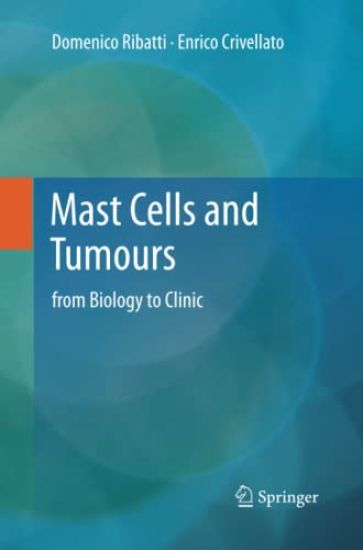
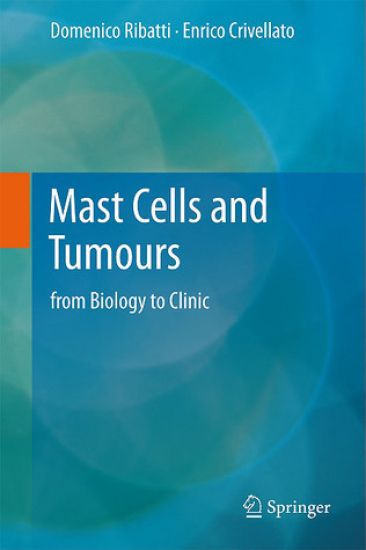
Mast Cells and Tumours

Mast Cells and Tumours

Domenico Ribatti; Enrico Crivellato

Springer
2014
nidottu
Mast cells are versatile, tissue-homing secretory cells, which were first described by Paul Ehrlich in 1878. Mast cells have long been implicated in the pathogenesis of allergic reactions and certain protective responses to parasites. Their functional role, however, has been discovered to be increasingly complex and multifarious. Mast cells have been implicated in various cell-mediated immune reactions, being found in tissues from multiple disease sites, and as a component of the host reaction to bacteria, parasite, and even virus infections. They have also been shown to participate to angiogenic and tissue repair processes after injury. The importance of a possible functional link between chronic inflammation and cancer has long been recognized. As most tumours contain inflammatory cell infiltrates, which often include plentiful mast cells, the question as to the possible contribution of mast cells to tumour development has progressively been emerged. In this book, the general biology of these cells, their development, anatomical distribution and phenotype as well as their secretory products will first be discussed. The biology of tumour cells, their structural and molecular characteristics, the specificity of the tumour microenvironment and the development of a vascular network in the tumour context will be analyzed. The involvement of mast cells in tumour biology and tumour fate will then be considered, with particular emphasis on the capacity of these cells to stimulate tumour growth by promoting angiogenesis and lymphangiogenesis. The last chapter suggest that mast cells may serve as a novel therapeutic target for cancer treatment.
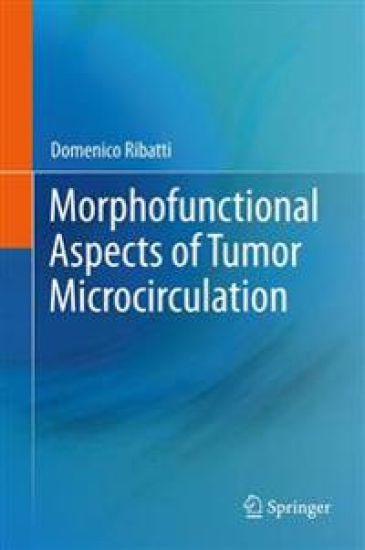
Morphofunctional Aspects of Tumor Microcirculation
Blood vessels of tumors display many structural and functional abnormalities. Their unusual leakiness, potential for rapid growth and remodeling, and expression of distinctive surface molecules mediate the dissemination of tumor cells in the bloodstream and maintain the tumor microenvironment. Like normal blood vessels, they consist of endothelial cells, mural cells and their enveloping basement membrane. Common features, irrespective of their origin, size and growth pattern, are absent hierarchy, formation of large-caliber sinusoidal vessels, markedly heterogeneous density, increased permeability, decreased and abnormal pericyte-endothelial cell adhesion, irregular basement membrane structure, and the incorporation of bone-marrow-derived endothelial progenitor cells in the microvasculature. A number of specific tumor endothelial markers have been identified, as well as chromosomal abnormalities. These markers may be used to deliver drugs specifically and selectively to the tumor microvasculature.
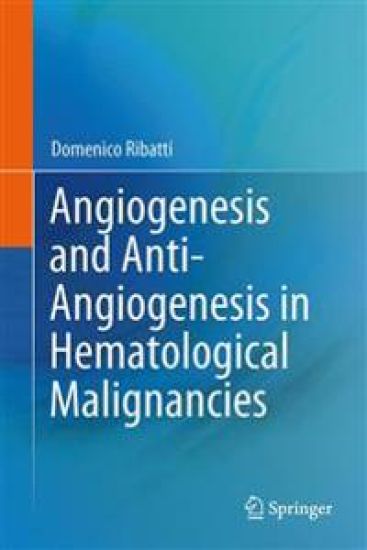
Angiogenesis and Anti-Angiogenesis in Hematological Malignancies
It has been generally accepted that angiogenesis is involved in the pathogenesis of hematological malignancies, like acute and chronic leukemia, lymphoma, myelodysplastic syndromes, myeloproliferative neoplasms and multiple myeloma. The extent of angiogenesis in the bone marrow has been correlated with disease burden, prognosis and treatment outcome. Reciprocal positive and negative interactions between tumor cells and bone marrow stromal cells, namely hematopoietic stem cells, fibroblasts, osteoblasts/osteoclasts, endothelial cells, endothelial progenitor cells, T cells, macrophages and mast cells, mediated by an array of cytokines, receptors and adhesion molecules, modulate the angiogenic response in hematological tumors. More recently, it has been emphasized the pro-angiogenic role of the so called “vascular niche”, indicating a site rich in blood vessels where endothelial cells and mural cells such as pericytes and smooth muscle cells create a microenvironment that affects the behavior of several stem and progenitor cells, in hematological malignancies.
Morphofunctional Aspects of Tumor Microcirculation
Blood vessels of tumors display many structural and functional abnormalities. Their unusual leakiness, potential for rapid growth and remodeling, and expression of distinctive surface molecules mediate the dissemination of tumor cells in the bloodstream and maintain the tumor microenvironment. Like normal blood vessels, they consist of endothelial cells, mural cells and their enveloping basement membrane. Common features, irrespective of their origin, size and growth pattern, are absent hierarchy, formation of large-caliber sinusoidal vessels, markedly heterogeneous density, increased permeability, decreased and abnormal pericyte-endothelial cell adhesion, irregular basement membrane structure, and the incorporation of bone-marrow-derived endothelial progenitor cells in the microvasculature. A number of specific tumor endothelial markers have been identified, as well as chromosomal abnormalities. These markers may be used to deliver drugs specifically and selectively to the tumor microvasculature.
Mast Cells and Tumours

Mast Cells and Tumours

Domenico Ribatti; Enrico Crivellato

Springer
2011
sidottu
Mast cells are versatile, tissue-homing secretory cells, which were first described by Paul Ehrlich in 1878. Mast cells have long been implicated in the pathogenesis of allergic reactions and certain protective responses to parasites. Their functional role, however, has been discovered to be increasingly complex and multifarious. Mast cells have been implicated in various cell-mediated immune reactions, being found in tissues from multiple disease sites, and as a component of the host reaction to bacteria, parasite, and even virus infections. They have also been shown to participate to angiogenic and tissue repair processes after injury. The importance of a possible functional link between chronic inflammation and cancer has long been recognized. As most tumours contain inflammatory cell infiltrates, which often include plentiful mast cells, the question as to the possible contribution of mast cells to tumour development has progressively been emerged. In this book, the general biology of these cells, their development, anatomical distribution and phenotype as well as their secretory products will first be discussed. The biology of tumour cells, their structural and molecular characteristics, the specificity of the tumour microenvironment and the development of a vascular network in the tumour context will be analyzed. The involvement of mast cells in tumour biology and tumour fate will then be considered, with particular emphasis on the capacity of these cells to stimulate tumour growth by promoting angiogenesis and lymphangiogenesis. The last chapter suggest that mast cells may serve as a novel therapeutic target for cancer treatment.
History of Research on Tumor Angiogenesis
In 1971, J. Folkman published in the “New England Journal of Medicine” a hypothesis that tumor growth is angiogenesis-dependent. Folkman introduced the concept that tumors probably secrete diffusible molecules that could stimulate the growth of new blood vessels toward the tumor and that the resulting tumor neovascularization could conceivably be prevented or interrupted by angiogenesis inhibitors. Solid and haematological tumors consist of an avascular and a subsequent vascular phase. Assuming that this depends on the release of angiogenic factors, acquisition of angiogenic capability can be seen as an expression of progression from neoplastic transformation to tumor growth and metastasis. Beginning in the 1980’s, the biopharmaceutical industry began exploiting the field of antiangiogenesis for creating new therapeutic compounds for modulating new blood vessels in tumor growth. In 2004, Avastin (Bevacizumab), a humanized anti-VEGF monoclonal antibody, was the first angiogenesis inhibitor approved by the Food and Drug Administration for the treatment of colorectal cancer. At present, it has been estimated that over 20,000 cancer patients worldwide have received experimental form of antiangiogenic therapy. This book offers a historical account of the relevant literature. It also emphasizes the crucial and paradigmatic role of angiogenesis as a biological process and the significance of antiangiogenic approach for the treatment of tumors.
The Chick Embryo Chorioallantoic Membrane in the Study of Angiogenesis and Metastasis
As pointed out by Auerbach in 1991 "Perhaps the most consistent limitation to progress in angiogenesis research has been the availability of simple, reliable, reproducible, quantitative assays of the angiogenesis response." In vitro angiogenesis assays, based on endothelial cell cultures or tissue explant, focus on isolated endothelial cell functions (e.g., endothelial cell proliferation, migration, or invasion) and do not examine the coordination of cell functions required for a successful angiogenic response (Jain et al., 1997; Auerbach et al., 2000). Although in vitro angiogenesis assays have been useful for identi cation of potential molecular targets to block endothelial cell responses and preliminary screening of novel pharmacological agents, they frequently cannot be correlated with in vivo angiogenesis measurements. This is most likely the result of the c- plex and multiple cellular mechanism evoked during new blood vessel formation in vivo. In vitro assays cannot be considered conclusive and the activity of a compound must be con rmed in other assays of increasing complexity, including in vivo assays of angiogenesis, angiogenic-dependent tumor growth, and metastasis.
Protagonists of Medicine

Protagonists of Medicine

Domenico Ribatti

Springer
2010
sidottu
The study of medical history is interesting in itself and may help to modify the view sometimes expressed that medical students and doctors are lacking in culture of any sort. Moreover, some historical perspective is often advantageous when one is considering the multitude of advances that are now taking place in the theory and practice of medicine. This book, containing a series of collected papers concerning immunology and pathology and vascular biology and angiogenesis, drives us through scientific milestones in the history of medicine in the course of the past two centuries and highlights the contribution of pioneering scientists whose discoveries have paved the way to many researchers working in the fields of cell biology, developmental biology, immunology, pathology, and oncology. This book will serve as a resource for scientists, historians of medicine and philosophers of science and medicine.
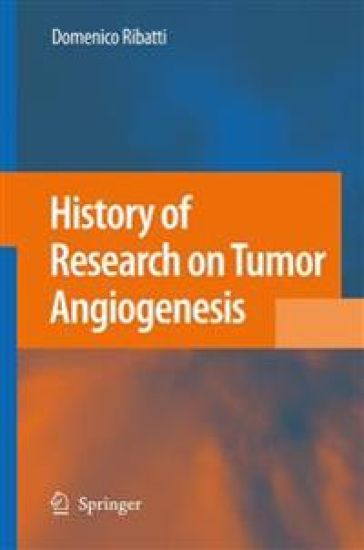
History of Research on Tumor Angiogenesis

History of Research on Tumor Angiogenesis

Domenico Ribatti

Springer-Verlag New York Inc.
2009
sidottu
In 1971, J. Folkman published in the “New England Journal of Medicine” a hypothesis that tumor growth is angiogenesis-dependent. Folkman introduced the concept that tumors probably secrete diffusible molecules that could stimulate the growth of new blood vessels toward the tumor and that the resulting tumor neovascularization could conceivably be prevented or interrupted by angiogenesis inhibitors. Solid and haematological tumors consist of an avascular and a subsequent vascular phase. Assuming that this depends on the release of angiogenic factors, acquisition of angiogenic capability can be seen as an expression of progression from neoplastic transformation to tumor growth and metastasis. Beginning in the 1980’s, the biopharmaceutical industry began exploiting the field of antiangiogenesis for creating new therapeutic compounds for modulating new blood vessels in tumor growth. In 2004, Avastin (Bevacizumab), a humanized anti-VEGF monoclonal antibody, was the first angiogenesis inhibitor approved by the Food and Drug Administration for the treatment of colorectal cancer. At present, it has been estimated that over 20,000 cancer patients worldwide have received experimental form of antiangiogenic therapy. This book offers a historical account of the relevant literature. It also emphasizes the crucial and paradigmatic role of angiogenesis as a biological process and the significance of antiangiogenic approach for the treatment of tumors.