Kirjojen hintavertailu – 12 859 819 kirjaa ja 27 kauppaa

Kirjailija

Dominic Johnson

Kirjat ja teokset yhdessä paikassa: 10 kirjaa, julkaisuja vuosilta 2012–2021, suosituimpiin kuuluu Reza Abdoh. Vertaile teosten hintoja ja tarkista saatavuus suomalaisista kirjakaupoista.

10 kirjaa

Kirjojen julkaisuvuodet: 2012–2021.

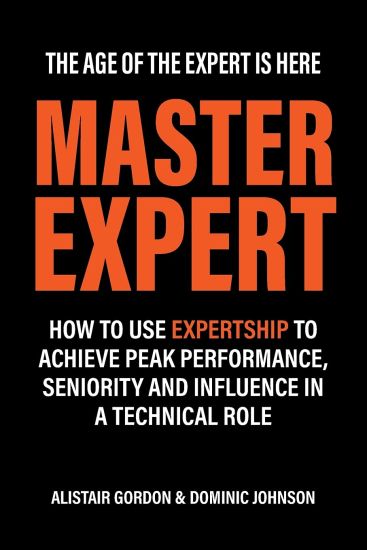
Master Expert

Master Expert

Alistair Gordon; Dominic Johnson

Expertship Press
2021
pokkari
Do you have a complex technical job, like a software developer, scientist, lawyer, engineer, policy writer, economist or medical researcher? Master Expert is your guide to every business skill you need to succeed. 740 pages and 50 chapters of toolkits, ideas, checklists, and new processes to help you surmount every one of the challenges faced by senior technical specialists: How do I pitch my ideas to make sense commercially and strategically? How do I understand my organisation's commercial context? How do I prioritise and engage stakeholders? How do I recalibrate failing relationships? How do I coach and delegate, and make my expertise understood by non-technical colleagues? How do I manage upward, talk to boards, and convince doubters? How do I manage my energy, workload and priorities day to day? How do I get better at presenting, intelligence gathering and networking? How do I understand where my skills are weak, and how to plan to improve them? Why Master Expert? It's time technical specialists like yourself got the same deal as managers. From the very first day a new manager starts work, they're given a LOT of help. A career ladder. Appraisals, Mentoring. Networking. Capability frameworks. Support, connections - they're trained to deal with whatever business problems come along. Technical people don't get that kind of support. It's time they did. Master Expert details how to evaluate the performance of technical specialists, and includes a capability framework to understand your own, or your team's, progress toward Master Expert status. The authors, Alistair Gordon and Dominic Johnson, have been coaching developers, scientists, lawyers, engineers, policy writers, economists, medical researchers and other technical specialists for close to ten years now, and this book distils everything they've learned. Learn more at expertship.com

Reza Abdoh

Reza Abdoh

Charlie Fox; Dominic Johnson; Hilton Als; Tobi Haslett

Hatje Cantz
2021
nidottu
Over a brief, twelve-year career, the Iranian director and playwright Reza Abdoh broke all of the conventions of American theater, pushing actors and audiences past their limits to create hallucinatory, at times nightmarish, dreamscapes shot through with humor, song, and an unlikely spirituality. His productions addressed the bitter political realities of his time— the systemic devaluation of black life, governmental indifference to the AIDS crisis, sexual repression, genocide in Europe, and war in the Middle East—with harrowing eloquence. Just before his death he ordered that his plays should never be performed again. Profusely illustrated, the catalogue contains new essays on the influence and reception of Abdoh’s works in theater, film, and video, published and unpublished interviews with the director, and conversations with his friends and colleagues, as well as scripts of his plays and contemporary reviews.
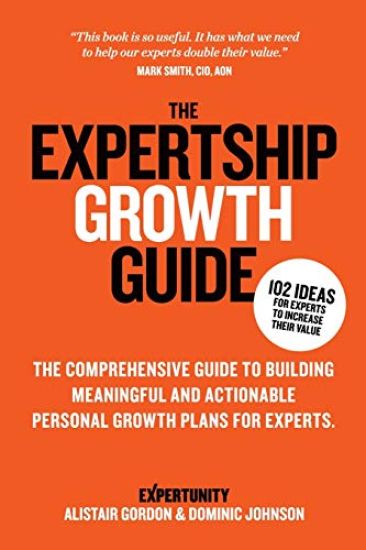
The Expertship Growth Guide: The comprehensive guide to building meaningful and actionable personal growth plans for experts
We believe this is the first guide of its kind ever published. It is designed by experts for experts, to help them actively build their capability. It assists experts in becoming the very best experts they can by helping them craft meaningful and actionable Personal Growth Plans. It contains 102 growth opportunities - initiatives which, when put into action, position experts, no matter what their expert domain, to have greater impact and influence, and add more value. GROWTH FOR EXPERTSMany of those using this book will have participated in one of Expertunity's growth programs for experts around the world. So, you'll understand about the concept of the Expertship Model, and the process by which you should develop your Personal Growth Plan using our template. It is however designed to be a standalone tool, so we have included chapters at the beginning of this Guide explaining these concepts. If you know about them already you can jump straight over them. If you're new to the concept you can read about how Expertship is for experts what leadership is to leaders. THE EXPERTSHIP MODELThe Expertship Model is a result of years of research and testing and is acknowledged as one of the leading capability frameworks for experts. Experts from places as far afield as Las Vegas, New York, London, New Delhi, Singapore, Sydney and Auckland use the model. These experts operatein a wide variety of expert domains -IT, law, HR, Engineering, Sales, Finance, Risk and Science. THE EXPERTSHIP360This Guide is best used in conjunction with a feedback tool, such as the Expertship360. Recipients of a 360 report get valuable feedback from a range of their stakeholders, and thus can determine which capabilities are their strengths to be built upon, and which capabilities present opportunities for significantly more value to be added. The growth initiatives listed in this Guide are organised by capability area. A GUIDE FOR MANAGERS OF EXPERTS, TOOSome readers may lead a team or division of experts. You might be responsible for helping them identify and satisfy their development needs. This Guide represents the latest thinking on how to motivate and get the best value from your experts. You may be receiving it as an accompaniment to Expertunity's Leader of Experts program. TOP EXPERTS COMBINE TECHNICAL AND ENTERPRISE SKILLSExperts face many challenges that are unique to them. Many challenges are resolved by deploying technical skills - skills which experts have typically been trained in many times over the years. In fact, usually nearly all of an experts' capability development has been in these technical areas. However, the very best experts combine these technical skills with what we refer to as enterprise skills. These are the additional skills - such as business acumen, change agility, stakeholder management, and personal impact - which enable experts to deploy their technical skills best. Many experts have missed out on training in these skills, and the arrival of Expertship programs seeks to restore this imbalance. You can find out about all of our Expertship services at http: //www.expertunity.global/ Of course, we would love to hear your feedback on how we can continue to improve this Guide. Please let us know how you found it helpful, and how you think we could make it easier to use. We would also love to hear your success stories putting these growth initiatives to work. Our website provides you with a direct line of contact with the authors. Good luck with your personal growth plan
Unlimited Action

Unlimited Action

Dominic Johnson

Manchester University Press
2018
sidottu
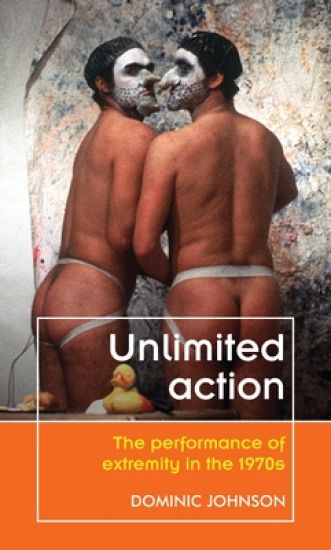
Unlimited action concerns the limits imposed upon art and life, and the means by which artists have exposed, refused, or otherwise reshaped the horizon of aesthetics and of the practice of art, by way of performance art. It examines the ‘performance of extremity’ as practices at the limits of the histories of performance and art, in performance art’s most fertile and prescient decade, the 1970s. Dominic Johnson recounts and analyses game-changing performance events by six artists: Kerry Trengove, Ulay, Genesis P-Orridge, Anne Bean, the Kipper Kids, and Stephen Cripps. Through close encounters with these six artists and their works, and a broader contextual milieu of artists and works, Johnson articulates a counter-history of actions in a new narrative of performance art in the 1970s, to rethink and rediscover the history of contemporary art and performance.
Unlimited Action

Unlimited Action

Dominic Johnson

Manchester University Press
2018
nidottu
Unlimited action concerns the limits imposed upon art and life, and the means by which artists have exposed, refused, or otherwise reshaped the horizon of aesthetics and of the practice of art, by way of performance art. It examines the ‘performance of extremity’ as practices at the limits of the histories of performance and art, in performance art’s most fertile and prescient decade, the 1970s. Dominic Johnson recounts and analyses game-changing performance events by six artists: Kerry Trengove, Ulay, Genesis P-Orridge, Anne Bean, the Kipper Kids, and Stephen Cripps. Through close encounters with these six artists and their works, and a broader contextual milieu of artists and works, Johnson articulates a counter-history of actions in a new narrative of performance art in the 1970s, to rethink and rediscover the history of contemporary art and performance.
God Is Watching You

God Is Watching You

Dominic Johnson

Oxford University Press Inc
2016
sidottu
"And, behold, I, even I, do bring a flood of waters upon the earth, to destroy all flesh, wherein is the breath of life, from under heaven; and every thing that is in the earth shall die." The Flood that God used to destroy the sinful race of man on the earth in Genesis 6:17 crystalizes--in its terrifying, dramatic, simplicity--the universally recognized concept of payback. For millennia human civilization has relied on such beliefs to create a moral order that threatens divine punishment on people who commit crimes or other bad deeds, while promising rewards-abstract or material-for those who do good. Today, while secularism and unbelief are at an all-time high, this almost superstitious willingness to believe in karma persists. We find ourselves imagining what our parents, spouse, or boss would think of our thoughts and actions, even if they are miles away and will never find out. We often feel that we are being monitored. We talk of eyes burning into the backs of our heads, the walls listening, a sense that someone or something is out there, observing our every move, aware of our thoughts and intentions. God Is Watching You is an exploration of this belief as it has developed over time and how it has shaped the course of human evolution. Dominic Johnson explores questions such as: How has a concern for supernatural consequences affected the way human society has changed, how we live today, and how we will live in the future? Does it expand or limit the potential for local, regional and global cooperation today? How will the current decline in religious belief (at least in many western countries) affect selfishness and society in the future? And what, if anything, is replacing our ancient concerns for supernatural punishment as the means to temper self-interest and promote cooperation? In short, do we still need God? Drawing on new research from anthropology, evolutionary biology, experimental psychology, and neuroscience, Johnson presents a new theory of supernatural punishment that offers fresh insight on the origins and evolution of not only religion, but human cooperation and society. He shows that belief in supernatural reward and punishment is no quirk of western or Christian culture, but a ubiquitous part of human nature that spans geographical regions, cultures, and human history.
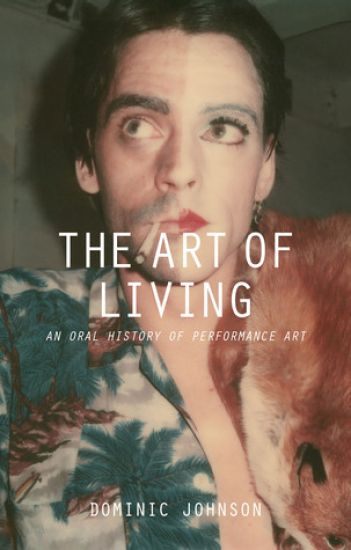
The Art of Living

The Art of Living

Dominic Johnson

Red Globe Press
2015
nidottu
Across a series of twelve in-depth interviews with a diverse range of major artists, Dominic Johnson presents a new oral history of performance art. From uses of body modification and physical extremity, to the creation of all-encompassing personae, to performance pieces lasting months or years, these artists have provoked and explored the vital limits between art and life. Their discussions with Johnson give us a glimpse of their artistic motivations, preoccupations, processes, and contexts. Despite the diversity of art forms and experiences featured, common threads weave between the interviews: love, friendship, commitment, death and survival. Each interview is preceded by an overview of the artist's work, and the volume itself is introduced by a thoughtful critical essay on performance art and oral history. The conversational tone of the interviews renders complex ideas and theoretical propositions accessible, making this an ideal book for students of Theatre and Performance, as well as for artists, scholars and general readers.
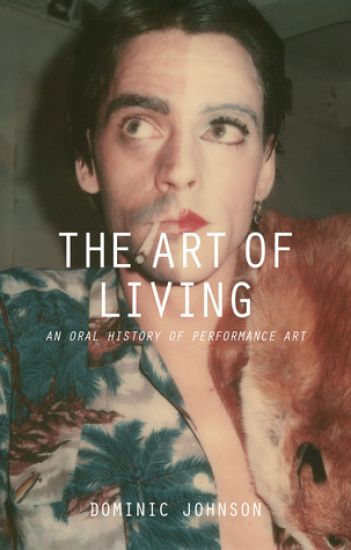
The Art of Living

The Art of Living

Dominic Johnson

Red Globe Press
2015
sidottu
Across a series of twelve in-depth interviews with a diverse range of major artists, Dominic Johnson presents a new oral history of performance art. From uses of body modification and physical extremity, to the creation of all-encompassing personae, to performance pieces lasting months or years, these artists have provoked and explored the vital limits between art and life. Their discussions with Johnson give us a glimpse of their artistic motivations, preoccupations, processes, and contexts. Despite the diversity of art forms and experiences featured, common threads weave between the interviews: love, friendship, commitment, death and survival. Each interview is preceded by an overview of the artist's work, and the volume itself is introduced by a thoughtful critical essay on performance art and oral history. The conversational tone of the interviews renders complex ideas and theoretical propositions accessible, making this an ideal book for students of Theatre and Performance, as well as for artists, scholars and general readers.
Glorious Catastrophe

Glorious Catastrophe

Dominic Johnson

Manchester University Press
2013
nidottu
Glorious catastrophe presents a detailed critical analysis of the work of Jack Smith from the early 1960s until his AIDS-related death in 1989. Dominic Johnson argues that Smith’s work offers critical strategies for rethinking art’s histories after 1960. Heralded by peers as well as later generations of artists, Smith is an icon of the New York avant-garde. Nevertheless, he is conspicuously absent from dominant histories of American culture in the 1960s, as well as from narratives of the impact that decade would have on coming years. Smith poses uncomfortable challenges to cultural criticism and historical analysis, which Glorious catastrophe seeks to uncover. The first critical analysis of Smith’s practices across visual art, film, performance and writing, the study employs extensive, original archival research carried out in Smith’s personal papers, and unpublished interviews with friends and collaborators. It will be essential reading for students and scholars interested in the life and art of Jack Smith, and the greater histories that he interrupts, including those of experimental arts practices and the development of sexual cultures.
Theatre and The Visual

Theatre and The Visual

Dominic Johnson

Red Globe Press
2012
nidottu
Theatre & the Visual argues that theatre studies' preoccupation with problems arising from textual analysis has compromised a fuller, political consideration of the visual. Johnson examines the spectator's role in the theatre, exploring pleasure, difficulty and spectacle, to consider the implications for visual experience in the theatre.