Kirjojen hintavertailu – 12 903 725 kirjaa ja 27 kauppaa

Kirjailija

Dominic Legge

Kirjat ja teokset yhdessä paikassa: 4 kirjaa, julkaisuja vuosilta 2016–2024, suosituimpiin kuuluu The Trinitarian Christology of St Thomas Aquinas. Vertaile teosten hintoja ja tarkista saatavuus suomalaisista kirjakaupoista.

4 kirjaa

Kirjojen julkaisuvuodet: 2016–2024.

The Passion of Love in Thomas Aquinas's Summa Theolgiae

The Passion of Love in Thomas Aquinas's Summa Theolgiae

Joseph Gordon; Dominic Legge

THE CATHOLIC UNIVERSITY OF AMERICA PRESS
2024
nidottu
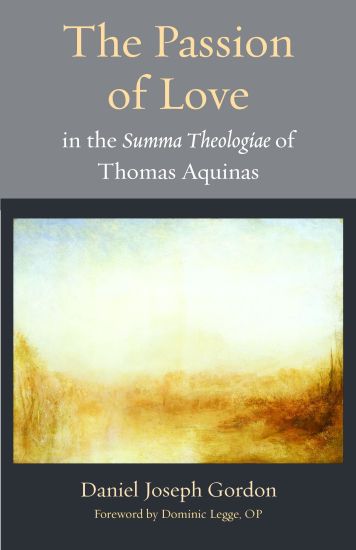
This book is an introduction to three questions on love according to St. Thomas Aquinas (Summa Theologiae I–II, qq. 26–28). These three questions reflect on the nature of love (q. 26), the causes of love (q. 27), and the effects of love (q. 28). It is thus an introduction to the entire phenomenon of love, both as a bodily passion and an act of the will. The purpose is to present the Thomistic and broadly scholastic account of human and divine love from a philosophical and theological perspective. It aims to be a theological and philosophical study of the topic, useful both for a graduate/professional audience, as part of an undergraduate or graduate course, and perhaps for the educated reader. The thesis of the book is that, contrary to contemporary conceptions, not all loves are created equal. Some loves perfect us and some loves corrupt us. The worth of a love depends on its object and end. St. Thomas thus presents an objective and teleological account of human and divine love that is of philosophical and theological interest. The method is broadly exegetical, presenting a careful reading of the text and supplying the philosophical and theological background which the text of Aquinas assumes. The scope of the work is limited to three questions (ST I–II, qq. 26–28). References to interpretative disputes of Aquinas and references to further resources in the secondary literature will be mostly limited to the footnotes, making the body of the text accessible to more readers.
The Passion of Love in Thomas Aquinas's Summa Theolgiae

The Passion of Love in Thomas Aquinas's Summa Theolgiae

Joseph Gordon; Dominic Legge

THE CATHOLIC UNIVERSITY OF AMERICA PRESS
2023
nidottu
This book is an introduction to three questions on love according to St. Thomas Aquinas (Summa Theologiae I–II, qq. 26–28). These three questions reflect on the nature of love (q. 26), the causes of love (q. 27), and the effects of love (q. 28). It is thus an introduction to the entire phenomenon of love, both as a bodily passion and an act of the will. The purpose is to present the Thomistic and broadly scholastic account of human and divine love from a philosophical and theological perspective. It aims to be a theological and philosophical study of the topic, useful both for a graduate/professional audience, as part of an undergraduate or graduate course, and perhaps for the educated reader. The thesis of the book is that, contrary to contemporary conceptions, not all loves are created equal. Some loves perfect us and some loves corrupt us. The worth of a love depends on its object and end. St. Thomas thus presents an objective and teleological account of human and divine love that is of philosophical and theological interest. The method is broadly exegetical, presenting a careful reading of the text and supplying the philosophical and theological background which the text of Aquinas assumes. The scope of the work is limited to three questions (ST I–II, qq. 26–28). References to interpretative disputes of Aquinas and references to further resources in the secondary literature will be mostly limited to the footnotes, making the body of the text accessible to more readers.
The Trinitarian Christology of St Thomas Aquinas

The Trinitarian Christology of St Thomas Aquinas

Dominic Legge

Oxford University Press
2018
nidottu

Halvin toimitettuna 43,90 €

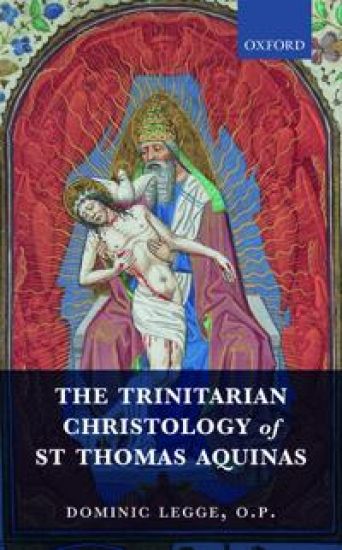
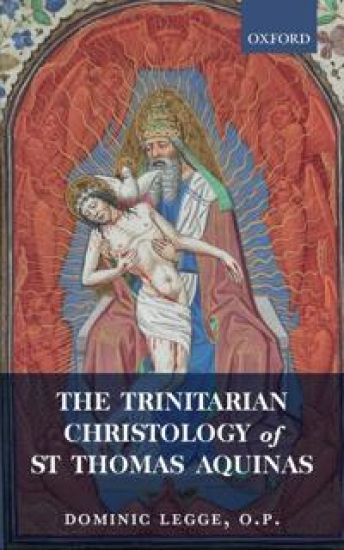
The Trinitarian Christology of St Thomas Aquinas brings to light the Trinitarian riches in Thomas Aquinas's Christology. Dominic Legge, O. P, disproves Karl Rahner's assertion that Aquinas divorces the study of Christ from the Trinity, by offering a stimulating re-reading of Aquinas on his own terms, as a profound theologian of the Trinitarian mystery of God as manifested in and through Christ. Legge highlights that, for Aquinas, Christology is intrinsically Trinitarian, in its origin and its principles, its structure, and its role in the dispensation of salvation. He investigates the Trinitarian shape of the incarnation itself: the visible mission of the Son, sent by the Father, implicating the invisible mission of the Holy Spirit to his assumed human nature. For Aquinas, Christ's humanity, at its deepest foundations, incarnates the very personal being of the divine Son and Word of the Father, and hence every action of Christ reveals the Father, is from the Father, and leads back to the Father. This study also uncovers a remarkable Spirit Christology in Aquinas: Christ as man stands in need of the Spirit's anointing to carry out his saving work; his supernatural human knowledge is dependent on the Spirit's gift; and it is the Spirit who moves and guides him in every action, from Nazareth to Golgotha.
The Trinitarian Christology of St Thomas Aquinas

The Trinitarian Christology of St Thomas Aquinas

Dominic Legge

Oxford University Press
2016
sidottu
The Trinitarian Christology of St Thomas Aquinas brings to light the Trinitarian riches in Thomas Aquinas's Christology. Dominic Legge, O. P, disproves Karl Rahner's assertion that Aquinas divorces the study of Christ from the Trinity, by offering a stimulating re-reading of Aquinas on his own terms, as a profound theologian of the Trinitarian mystery of God as manifested in and through Christ. Legge highlights that, for Aquinas, Christology is intrinsically Trinitarian, in its origin and its principles, its structure, and its role in the dispensation of salvation. He investigates the Trinitarian shape of the incarnation itself: the visible mission of the Son, sent by the Father, implicating the invisible mission of the Holy Spirit to his assumed human nature. For Aquinas, Christ's humanity, at its deepest foundations, incarnates the very personal being of the divine Son and Word of the Father, and hence every action of Christ reveals the Father, is from the Father, and leads back to the Father. This study also uncovers a remarkable Spirit Christology in Aquinas: Christ as man stands in need of the Spirit's anointing to carry out his saving work; his supernatural human knowledge is dependent on the Spirit's gift; and it is the Spirit who moves and guides him in every action, from Nazareth to Golgotha.