Kirjojen hintavertailu – 12 859 828 kirjaa ja 27 kauppaa

Kirjailija

Dominic Smith

Kirjat ja teokset yhdessä paikassa: 15 kirjaa, julkaisuja vuosilta 2007–2026, suosituimpiin kuuluu The Last Painting of Sara De Vos. Vertaile teosten hintoja ja tarkista saatavuus suomalaisista kirjakaupoista.

15 kirjaa

Kirjojen julkaisuvuodet: 2007–2026.

Bridging Benjamin Volume 68

Bridging Benjamin Volume 68

Dominic Smith

UNIVERSITY OF MINNESOTA PRESS
2026
nidottu
Walter Benjamin reimagined through the forgotten power of radio Philosopher and cultural critic Walter Benjamin (1892–1940) has long been recognized for his influence on the fields of literature, film, media studies, critical legal theory, and philosophy. Bringing fresh attention to an often-overlooked aspect of his oeuvre, Bridging Benjamin examines the dozens of radio broadcasts he produced, primarily for children, between 1927 and 1933. Delivered after the academic rejection of his notoriously complex Trauerspiel, these shows became a testing ground for Benjamin's developing ideas and experimental pedagogy. Though they were cast off as inconsequential by both Benjamin and his contemporaries, Dominic Smith reveals the broadcasts to be a fruitful site for a novel, "derailed" interpretation of Benjamin's larger body of work. Reading Benjamin's radio production as a dynamic site of philosophical experimentation, Smith uses it as a channel and amplifier for three integral but underappreciated aspects of Benjamin's work: his philosophies of technology, place, and education. Showing how he used broadcast media to explore the increasing "virtualization" of place in networked society, Bridging Benjamin encourages an embrace of Benjamin in contrast to his divisive historical counterparts in the philosophy of technology, such as Martin Heidegger and Carl Schmitt. Interpreting Benjamin's broadcasts as a form of peripatetic thinking - deeply embedded in place, yet mobile and mediated - Bridging Benjamin offers a compelling model for reassessing attachments to the technologies and practices shaping our contemporary worlds. Retail e-book files for this title are screen-reader friendly.

Bridging Benjamin Volume 68

Bridging Benjamin Volume 68

Dominic Smith

UNIVERSITY OF MINNESOTA PRESS
2026
sidottu
Walter Benjamin reimagined through the forgotten power of radio Philosopher and cultural critic Walter Benjamin (1892–1940) has long been recognized for his influence on the fields of literature, film, media studies, critical legal theory, and philosophy. Bringing fresh attention to an often-overlooked aspect of his oeuvre, Bridging Benjamin examines the dozens of radio broadcasts he produced, primarily for children, between 1927 and 1933. Delivered after the academic rejection of his notoriously complex Trauerspiel, these shows became a testing ground for Benjamin's developing ideas and experimental pedagogy. Though they were cast off as inconsequential by both Benjamin and his contemporaries, Dominic Smith reveals the broadcasts to be a fruitful site for a novel, "derailed" interpretation of Benjamin's larger body of work. Reading Benjamin's radio production as a dynamic site of philosophical experimentation, Smith uses it as a channel and amplifier for three integral but underappreciated aspects of Benjamin's work: his philosophies of technology, place, and education. Showing how he used broadcast media to explore the increasing "virtualization" of place in networked society, Bridging Benjamin encourages an embrace of Benjamin in contrast to his divisive historical counterparts in the philosophy of technology, such as Martin Heidegger and Carl Schmitt. Interpreting Benjamin's broadcasts as a form of peripatetic thinking - deeply embedded in place, yet mobile and mediated - Bridging Benjamin offers a compelling model for reassessing attachments to the technologies and practices shaping our contemporary worlds. Retail e-book files for this title are screen-reader friendly.
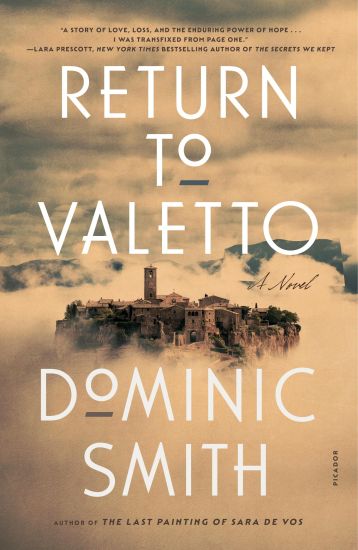
Return to Valetto

Return to Valetto

Dominic Smith

Picador/Farrar Straus and Giroux
2024
nidottu

Halvin toimitettuna 21,40 €

Winner of the Texas Institute of Letters Jesse H. Jones Award for FictionA Best Book of the Year: BookPageA Must-Read: The New York Post and The Christian Science Monitor"A story of love, loss, and the enduring power of hope. I was transfixed from page one." ―Lara Prescott, New York Times bestselling author of The Secrets We Kept From the bestselling author of The Last Painting of Sara de Vos, Dominic Smith's Return to Valetto tells of a nearly abandoned Italian village, the family that stayed, and long-buried secrets from World War II. On a hilltop in Umbria sits Valetto. Once a thriving village that survived centuries of earthquakes and landslides and became a hub of resistance and refuge during World War II, it has since been nearly abandoned, as residents sought better lives elsewhere. Only ten remain, including the widows Serafino--three eccentric sisters and their steely centenarian mother--who live quietly in their medieval villa. Then their nephew and grandson, Hugh, a historian, returns. But someone else has arrived before him, laying claim to the cottage where Hugh spent his childhood summers. The unwelcome guest is the captivating and no-nonsense Elisa Tomassi, who asserts that the family patriarch, Aldo Serafino, a resistance fighter whom her own family harbored, gave the cottage to them in gratitude. But like so many threads of history, this revelation unravels a secret--a betrayal, a disappearance, and an unspeakable act of violence--that has affected Valetto across generations. Who will answer for the crimes of the past? Dominic Smith's Return to Valetto is a riveting journey into one family's dark past, a page-turning excavation of the ruins of history, and a probing look at our commitment to justice in a fragile world. It is also a deeply human and transporting testament to the possibility of love and understanding across gaps of all kinds--even time.
Return to Valetto

Return to Valetto

Dominic Smith

Farrar, Straus and Giroux
2023
sidottu
Winner of the Texas Institute of Letters Jesse H. Jones Award for FictionA Best Book of the Year: BookPageA Must-Read: The New York Post and The Christian Science Monitor"A story of love, loss, and the enduring power of hope. I was transfixed from page one." ―Lara Prescott, New York Times bestselling author of The Secrets We Kept From the bestselling author of The Last Painting of Sara de Vos, Dominic Smith's Return to Valetto tells of a nearly abandoned Italian village, the family that stayed, and long-buried secrets from World War II. On a hilltop in Umbria sits Valetto. Once a thriving village that survived centuries of earthquakes and landslides and became a hub of resistance and refuge during World War II, it has since been nearly abandoned, as residents sought better lives elsewhere. Only ten remain, including the widows Serafino--three eccentric sisters and their steely centenarian mother--who live quietly in their medieval villa. Then their nephew and grandson, Hugh, a historian, returns. But someone else has arrived before him, laying claim to the cottage where Hugh spent his childhood summers. The unwelcome guest is the captivating and no-nonsense Elisa Tomassi, who asserts that the family patriarch, Aldo Serafino, a resistance fighter whom her own family harbored, gave the cottage to them in gratitude. But like so many threads of history, this revelation unravels a secret--a betrayal, a disappearance, and an unspeakable act of violence--that has affected Valetto across generations. Who will answer for the crimes of the past? Dominic Smith's Return to Valetto is a riveting journey into one family's dark past, a page-turning excavation of the ruins of history, and a probing look at our commitment to justice in a fragile world. It is also a deeply human and transporting testament to the possibility of love and understanding across gaps of all kinds--even time.
The Electric Hotel

The Electric Hotel

Dominic Smith

Picador USA
2020
nidottu
A sweeping work of historical fiction from the New York Times-bestselling author Dominic Smith, The Electric Hotel is a spellbinding story of art and love. For more than thirty years, Claude Ballard has been living at the Hollywood Knickerbocker Hotel. A French pioneer of silent films who started out as a concession agent for the Lumi re brothers, the inventors of cinema, Claude now spends his days foraging for mushrooms in the hills of Los Angeles and taking photographs of runaways and the striplings along Sunset Boulevard. But when a film history student comes to interview Claude about The Electric Hotel--the lost masterpiece that bankrupted him and ended the career of his muse, Sabine Montrose--the past comes surging back. In his run-down hotel suite, the ravages of the past are waiting to be excavated: celluloid fragments in desperate need of restoration, as well as Claude's memories of the woman who inspired and beguiled him. The Electric Hotel is a portrait of a man entranced by the magic of moviemaking, a luminous romance, and a whirlwind trip through early cinema. Sit back, relax, and enjoy the show.
The Electric Hotel

The Electric Hotel

Dominic Smith

Allen Unwin
2020
nidottu

Halvin toimitettuna 17,90 €

From the award-winning author of the acclaimed bestseller The Last Painting of Sara de Vos comes a radiant new novel tracing the intertwined fates of a silent film director and his muse. The Electric Hotel winds through the nascent days of cinema in Paris and Fort Lee, New Jersey - America's first movie town - and the battlefields of Belgium during World War I. A sweeping work of historical fiction, it shimmers between past and present as it tells the story of the rise and fall of a prodigious film studio and one man's doomed obsession with all that passes in front of the viewfinder. For nearly half a century, Claude Ballard has been living at the Hollywood Knickerbocker Hotel. A French pioneer of silent films, who started out as a concession agent for the Lumière brothers, the inventors of cinema, Claude now spends his days taking photographs of Sunset Boulevard. But when a film-history student comes to interview Claude about The Electric Hotel - the lost masterpiece that bankrupted him and ended the career of his muse, Sabine Montrose - the past comes surging back. In his run-down hotel suite, the ravages of the past are waiting to be excavated: celluloid fragments and reels in desperate need of restoration, and Claude's memories of the woman who inspired and beguiled him. The Electric Hotel is a portrait of a man entranced by the magic of movie-making, a luminous romance and a whirlwind trip through the heady, endlessly inventive days of early cinema.
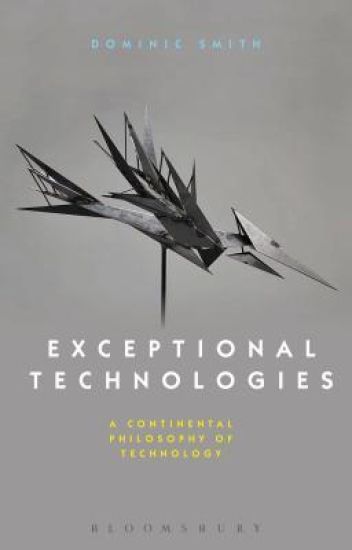
Exceptional Technologies

Exceptional Technologies

Dominic Smith

Bloomsbury Academic
2018
nidottu
A discussion of the rapidly growing field, from a thinker at the forefront of research at the interface of technology and the humanities, this is a must-read for anyone interested in contemporary developments in Continental philosophy and philosophy of technology. Philosophy of technology regularly draws on key thinkers in the Continental tradition, including Husserl, Heidegger, and Foucault. Yet because of the problematic legacy of the ‘empirical turn’, it often criticizes ‘bad’ continental tendencies - lyricism, pessimism, and an outdated view of technology as an autonomous, transcendental force. This misconception is based on a faulty image of Continental thought, and in addressing it Smith productively redefines our concept of technology. By closely engaging key texts, and by examining ‘exceptional technologies’ such as imagined, failed, and impossible technologies that fall outside philosophy of technology’s current focus, this book offers a practical guide to thinking about and using continental philosophy and philosophy of technology. It outlines and enacts three key characteristics of philosophy as practiced in the continental tradition: close reading of the history of philosophy; focus on critique; and openness to other disciplinary fields. Smith deploys the concept of exceptional technologies to provide a novel way of widening discussion in philosophy of technology, navigating the relationship between philosophy of technology and Continental philosophy; the history of both these fields; the role of imagination in relation to technologies; and the social function of technologies themselves.
Exceptional Technologies

Exceptional Technologies

Dominic Smith

Bloomsbury Academic
2018
sidottu
A discussion of the rapidly growing field, from a thinker at the forefront of research at the interface of technology and the humanities, this is a must-read for anyone interested in contemporary developments in Continental philosophy and philosophy of technology. Philosophy of technology regularly draws on key thinkers in the Continental tradition, including Husserl, Heidegger, and Foucault. Yet because of the problematic legacy of the ‘empirical turn’, it often criticizes ‘bad’ continental tendencies - lyricism, pessimism, and an outdated view of technology as an autonomous, transcendental force. This misconception is based on a faulty image of Continental thought, and in addressing it Smith productively redefines our concept of technology. By closely engaging key texts, and by examining ‘exceptional technologies’ such as imagined, failed, and impossible technologies that fall outside philosophy of technology’s current focus, this book offers a practical guide to thinking about and using continental philosophy and philosophy of technology. It outlines and enacts three key characteristics of philosophy as practiced in the continental tradition: close reading of the history of philosophy; focus on critique; and openness to other disciplinary fields. Smith deploys the concept of exceptional technologies to provide a novel way of widening discussion in philosophy of technology, navigating the relationship between philosophy of technology and Continental philosophy; the history of both these fields; the role of imagination in relation to technologies; and the social function of technologies themselves.
The Last Painting of Sara de Vos

The Last Painting of Sara de Vos

Dominic Smith

Allen Unwin
2017
nidottu
In the 1600s Sara de Vos loses her young daughter suddenly to illness. In her grief, she secretly begins painting a dark landscape of a girl watching a group of ice skaters from the edge of a wood. In 1950s New York, Martijn de Groot has At the Edge of a Wood hanging above his bed. Though it is a dark, peculiar painting, he holds it dear and when it is stolen, he is bereft. In Brooklyn, struggling art student Ellie Shipley accepts a commission to paint an intricate forgery of the painting, not realising that her decision will come to haunt her successful academic career. Gorgeously written, brilliantly conceived and executed, filled with tension and revelation, The Last Painting of Sara de Vos is one of those rare books that stops time as you read it. This is a novel you will want to revisit for the sheer pleasure of watching a master at work.
The Last Painting of Sara De Vos

The Last Painting of Sara De Vos

Dominic Smith

Picador USA
2017
nidottu
Amsterdam, 1631: Sara de Vos becomes the first woman to be admitted as a master painter to the city's Guild of St. Luke. Though women do not paint landscapes (they are generally restricted to indoor subjects), a wintry outdoor scene haunts Sara: She cannot shake the image of a young girl from a nearby village, standing alone beside a silver birch at dusk, staring out at a group of skaters on the frozen river below. Defying the expectations of her time, she decides to paint it. New York City, 1957: The only known surviving work of Sara de Vos, At the Edge of a Wood, hangs in the bedroom of a wealthy Manhattan lawyer, Marty de Groot, a descendant of the original owner. It is a beautiful but comfortless landscape. The lawyer's marriage is prominent but comfortless, too. When a struggling art history grad student, Ellie Shipley, agrees to forge the painting for a dubious art dealer, she finds herself entangled with its owner in ways no one could predict. Sydney, 2000: Now a celebrated art historian and curator, Ellie Shipley is mounting an exhibition in her field of specialization: female painters of the Dutch Golden Age. When it becomes apparent that both the original At the Edge of a Wood and her forgery are en route to her museum, the life she has carefully constructed threatens to unravel entirely and irrevocably.
Paediatrics at a Glance

Paediatrics at a Glance

Lawrence Miall; Mary Rudolf; Dominic Smith

John Wiley Sons Inc
2016
nidottu
Paediatrics at a Glance provides an introduction to paediatrics and the problems encountered in child health as they present in primary, community and secondary care, from birth through to adolescence. Thoroughly updated to reflect changes in understanding of childhood illness over the last 5 years, the 4th edition of this best-selling textbook diagrammatically summarises the main differential diagnoses for each presenting symptom, while accompanying text covers important disorders and conditions as well as management information. Paediatrics at a Glance:• Is an accessible, user-friendly guide to the entire paediatric curriculum• Features expanded coverage of psychological issues and ethics in child health• Includes more on advances in genetics, screening and therapy of childhood illness• Contains new videos of procedures and concepts on the companion website• Includes a brand new chapter on Palliative Care - an emerging area in the specialty• Features full colour artwork throughout• Includes a companion website at www.ataglanceseries.com/paediatrics featuring interactive self-assessment case studies, MCQs, videos of the procedures and concepts covered in the book, and links to online resourcesPaediatrics at a Glance is the ideal companion for anyone about to start a paediatric attachment or module and will appeal to medical students, junior doctors and GP trainees as well as nursing students and other health professionals.
A Rainbow Warrior's Way: The Return Of Quetzalcoatl

A Rainbow Warrior's Way: The Return Of Quetzalcoatl

Dominic Smith

Createspace Independent Publishing Platform
2008
nidottu
A young man's journey of awakening, after travelling amidst many paths. A book of insights to a broader more grand picture of life. Fantasy, fact, or fiction, even Albert Einstein stated "truth is sometimes stranger than fiction". To which he was also known for his reverence for the imagination. Imagin
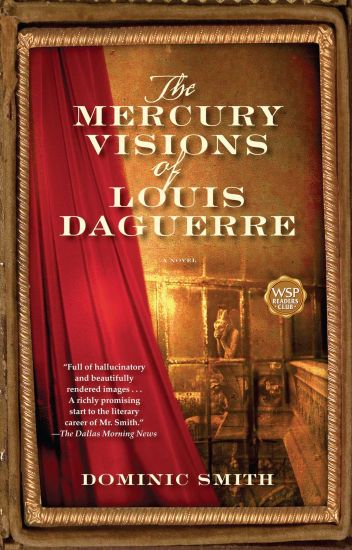
The Mercury Visions of Louis Daguerre

The Mercury Visions of Louis Daguerre

Dominic Smith

Atria Books
2007
nidottu
The debut novel from the New York Times bestselling author of The Last Painting of Sara de Vos reimagines the life of Louis Daguerre, the inventor of photography, who becomes convinced that the world is going to end when his mind unravels due to mercury poisoning. He is determined to reconnect with the only woman he has ever loved before the End comes. Louis Daguerre's story is set against the backdrop of a Paris prone to bohemian excess and social unrest. Poets and dandies debate art and style in the cafes while students and rebels fill the garrets with revolutionary talk and gun smoke. It is here, amid this strange and beguiling setting, that Louis Daguerre sets off to capture his doomsday subjects. Louis enlists the help of the womanizing poet Charles Baudelaire, known to the salon set as the "Prince of Clouds" and a jaded but beautiful prostitute named Pigeon. Together they scour the Paris underworld for images worthy of Daguerre's list. But Louis is also confronted by a chance to reunite with the only woman he's ever loved. Half a lifetime ago, Isobel Le Fournier kissed Louis Daguerre in a wine cave outside of Orleans. The result was a proposal, a rejection, and a misunderstanding that outlasted three kings and an emperor. Now, in the countdown to his apocalypse, Louis wants to understand why he has carried the memory of that kiss for so long.