Kirjojen hintavertailu – 12 903 725 kirjaa ja 27 kauppaa
Kirjailija
Dominique Janicaud
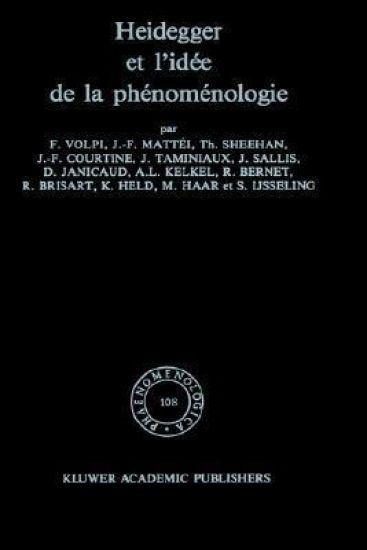
Kirjat ja teokset yhdessä paikassa: 13 kirjaa, julkaisuja vuosilta 1970–2015, suosituimpiin kuuluu Heidegger et l'idée de la phénoménologie. Vertaile teosten hintoja ja tarkista saatavuus suomalaisista kirjakaupoista.
F. Volpi; J.-F. Mattéi; T. Sheehan; J.-F. Courtine; J. Taminiaux; J. Sallis; Dominique Janicaud; A.L. Kelkel; Rudolf Bernet; R. Brisart; K. Held; M. Haar; J.C. IJsseling
Dominique Janicaud claimed that every French intellectual movement—from existentialism to psychoanalysis—was influenced by Martin Heidegger. This translation of Janicaud's landmark work, Heidegger en France, details Heidegger's reception in philosophy and other humanistic and social science disciplines. Interviews with key French thinkers such as Françoise Dastur, Jacques Derrida, Éliane Escoubas, Jean Greisch, Philippe Lacoue-Labarthe, Jean-Luc Marion, and Jean-Luc Nancy are included and provide further reflection on Heidegger's relationship to French philosophy. An intellectual undertaking of authoritative scope, this work furnishes a thorough history of the French reception of Heidegger's thought.
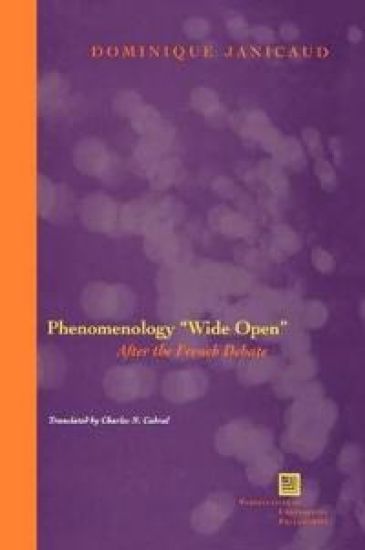
This book follows up the developments in phenomenology discussed in Phenomenology and the "Theological Turn": The French Debate, attempting to establish what potentialities in the phenomenological method exist at present.
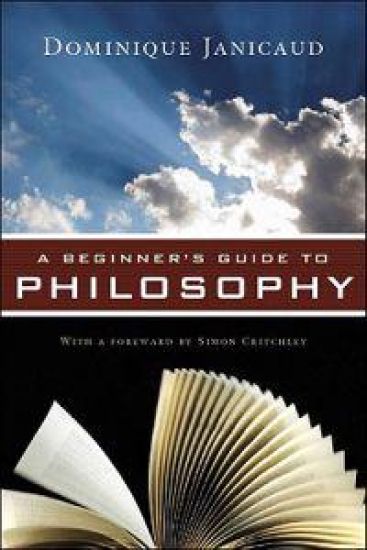
The ideal introduction history of western philosophy: An illuminating discourse on the major thinkers, from Plato to Descartes to Nietzsche. A small marvel, A Beginner's Guide to Philosophy provides an instructive and delightful introduction to philosophy. Despite its brevity, this beginner's guide covers a vast range of authors and topics. The reader will find discussions of ancient and modern philosophy, beginning with the pre-Socratic thinkers, before moving on to Plato and Aristotle. The narrative then proceeds to an elegant survey of modern philosophers: Descartes, Nietzche, Kant, and Hegel. At the end of this poignant yet practical intellectual journey, Dominique Janicaud at last addresses the problems that have occupied thinkers through the ages: the existence of God, the meaning of life, human nature, and the question of freedom.
The potential to clone, augment, and repair human beings is pushing the very concept of the human to its limit. Fantasies and metaphors of a supposedly monstrous and inhuman future increasingly dominate films, art and popular culture. On the Human Condition is an invigorating and fascinating exploration of where the idea of the human stands today. Given the damage human beings have inflicted on each other and their environment throughout history, should we embrace humanism or try and overcome it? Dominique Janicaud explores these urgent questions and more. He argues that whilst we need to avoid apocalyptic talk of a post human condition, as embodied in technology such as cloning, we should neither fall back on a conservative humanism nor become technophobic. Drawing on illuminating examples such as genetic engineering, the novel Frankenstein, the legendary debate between Sartre and Heidegger over humanism, and the work of Primo Levi, Domnique Janicaud also explores the role of fantasy in understanding the human condition and asks where the line lies between the human, inhuman and the superhuman.
The potential to clone, augment, and repair human beings is pushing the very concept of the human to its limit. Fantasies and metaphors of a supposedly monstrous and inhuman future increasingly dominate films, art and popular culture. On the Human Condition is an invigorating and fascinating exploration of where the idea of the human stands today. Given the damage human beings have inflicted on each other and their environment throughout history, should we embrace humanism or try and overcome it? Dominique Janicaud explores these urgent questions and more. He argues that whilst we need to avoid apocalyptic talk of a post human condition, as embodied in technology such as cloning, we should neither fall back on a conservative humanism nor become technophobic. Drawing on illuminating examples such as genetic engineering, the novel Frankenstein, the legendary debate between Sartre and Heidegger over humanism, and the work of Primo Levi, Domnique Janicaud also explores the role of fantasy in understanding the human condition and asks where the line lies between the human, inhuman and the superhuman.
This book follows up the developments in phenomenology discussed in Phenomenology and the "Theological Turn": The French Debate, attempting to establish what potentialities in the phenomenological method exist at present.
La promenade, c'est mener plus loin les pas, et aussi la pensee, selon la tradition antique. Cet essai montre que toute promenade n'est pas philosophique, et que pourtant, se promener recele une dimension de decision et de liberte. Certaines promenades sont liees au lieu, au travail de la memoire ou de l'imagination, d'autres plongent dans l'immemorial, la solitude, l'immensite et la mort.
Phenomenology and the "Theological Turn" brings together the debate over Janicaud's critique of the "theological turn" represented by the works of Emmanuel Levinas, Paul Ricœur, Jean-Luc Marion, Jean-François Courtine, Jean-Louis Chrétien, and Michel Henry.
Phenomenology and the "Theological Turn" brings together the debate over Janicaud's critique of the "theological turn" represented by the works of Emmanuel Levinas, Paul Ricœur, Jean-Luc Marion, Jean-François Courtine, Jean-Louis Chrétien, and Michel Henry.
Janicaud clarifies the project of "overcoming" metaphysics, a project that Heidegger himself recognized as open to innumerable misunderstandings, and Mattei inquires into the major Heideggerian texts produced between 1935 and 1969 to detect the cosmic figure of the Geviert, the initial Fourfold where "earth and sky, the divine ones and the mortals" gather." Philosophy has come to an end" claimed Heidegger in the final posthumously published interview he granted to Der Spiegel. The goal of Janicaud's chapters ("Overcoming Metaphysics?," "Heideggeriana," "Metamorphosis of the Undecidable," and the dialogue "Heidegger in New York") first of all is to clarify the project of "overcoming" metaphysics, a project that Heidegger himself recognized as open to innumerable misunderstandings. Is it really possible to surmount metaphysics, not by transgressing it, but by means of a patient elucidation of its key concepts? In the effort to underscore the originality of his own enterprise, doesn't Heidegger tend to project too harsh a dichotomy between the forgetfulness of Being and its authentic recollection? By raising these questions, Janicaud suggests that Heidegger himself does not elude the objections that he directs toward the great metaphysical thinkers. The final recourse to dialogue in the midst of twentieth-century New York—a landscape intentionally "different" from one expectedly Heideggerian—intends to hint at another possibility than the indefinite deconstruction of metaphysical texts. It suggests new ways for thoughtful meditation and a new cast for action. At the center of the book, Mattei evokes the "Heideggerian Chiasmus or the Setting-apart of Philosophy." Through an inquiry into the major Heideggerian texts produced between 1935 and 1969 and inspired by Holderlin's poetry, Mattei gradually detects the cosmic figure of the Geviert, the initial Fourfold where "earth and sky, the divine ones and the mortals" gather. Such a community, whose meaning Heidegger is the only one to decipher in our times, silently conforms to an archaic philosophy. The cosmic game of the Geviert also evokes, for Heidegger, the path of the Tao in the Chinese tradition. In this epoch characterized by the destruction of ontology, the two paths in which East and West meet may grant us moderns the hope one day of "dwelling" in the world.
Hegel n'a de cesse de souligner l'enracinement de la modernite dans la culture hellenique: la Grece apparait en effet comme premiere patrie de l'Esprit, c'est la que l'homme a commence a etre chez soi . Que ce soit dans le domaine esthetique (invention d'une religion de l'art) ou ethique (invention de la Cite comme ideal republicain), la Grece est pensee par Hegel comme une etape majeure de l'histoire entendue comme developpement d'une rationalite immanente. Pour autant, Hegel n'a rien d'un idolatre. L'hellenisme des debuts, de rigueur a l'epoque, cede rapidement le pas a une integration au sein d'une philosophie de l'absolu comme processus, comme realisation de soi-meme: la figure grecque est alors pensee dans ses limites et dans son necessaire depassement. Mais doit-on s'en tenir la, a la necessite de ce depassement? Si la Grece fait office d'ideal esthetique et, dans une moindre mesure, ethique, elle est aussi a l'origine meme de la philosophie, elle est le foyer de procedures de pensee dont la philosophie semble etre, a jamais, tributaire. Des lors, le privilege grec semble en mesure de deborder la portee que le systeme avait su lui menager. Le destin de la Grece, c'est alors non seulement d'etre transcendee par le flux historique, mais aussi de representer ce principe dont le destin est accomplissement, et ceci a travers la philosophie hegelienne elle-meme. En croisant demarche genetique et approche systematique, cette etude nous propose plus qu'une mise en ordre interne au systeme, la mise en lumiere d'un veritable impense de la pensee hegelienne.