Kirjojen hintavertailu – 12 903 725 kirjaa ja 27 kauppaa

Kirjailija

Don Baker

Kirjat ja teokset yhdessä paikassa: 10 kirjaa, julkaisuja vuosilta 1994–2025, suosituimpiin kuuluu Preacher, Politician, Patriot. Vertaile teosten hintoja ja tarkista saatavuus suomalaisista kirjakaupoista.

10 kirjaa

Kirjojen julkaisuvuodet: 1994–2025.

Korean New Religions

Korean New Religions

Don Baker

Cambridge University Press
2025
pokkari
Korea has an unusually diverse religious culture. In the north, Juche, which has taken on religious overtones, monopolizes articulations of beliefs and values as well as ritual practice. In the south, no single religion dominates, with over half saying that they have no specific religious affiliation. The remainder report being Protestant, Buddhist, and Catholic. Smaller in number but nonetheless noticeable are members of Korea's many home-grown new religious movements. Reflecting South Korea's religious diversity, some of those new religions have Buddhist roots, some have Christian origins, some draw on Confucian beliefs and practices, and some have emerged from Indigenous religious traditions such as shamanism. This Element examines the most noticeable of Korea's new religions to discover what they can tell us about distinctive traits of religion in Korea, and how Koreans have responded to the challenge posed by modernity to their traditional beliefs and values.
Korean New Religions

Korean New Religions

Don Baker

Cambridge University Press
2025
sidottu
Korea has an unusually diverse religious culture. In the north, Juche, which has taken on religious overtones, monopolizes articulations of beliefs and values as well as ritual practice. In the south, no single religion dominates, with over half saying that they have no specific religious affiliation. The remainder report being Protestant, Buddhist, and Catholic. Smaller in number but nonetheless noticeable are members of Korea's many home-grown new religious movements. Reflecting South Korea's religious diversity, some of those new religions have Buddhist roots, some have Christian origins, some draw on Confucian beliefs and practices, and some have emerged from Indigenous religious traditions such as shamanism. This Element examines the most noticeable of Korea's new religions to discover what they can tell us about distinctive traits of religion in Korea, and how Koreans have responded to the challenge posed by modernity to their traditional beliefs and values.
An Influencer's World

An Influencer's World

Caroline Baker; Don Baker

UNIVERSITY OF IOWA PRESS
2023
nidottu
What is the influencer lifestyle? How do influencers win their fight for relevance and create a brand that catches fire, while still leading an authentic, healthy life? Influencing is a business built around likes and hate, which can take a huge psychological toll on those who choose to play the game. An Influencer’s World pulls back the curtain and shines a light on the often-misunderstood realities of this dynamic industry. Featuring dozens of interviews with trending influencers, CEOs, leading industry insiders, brands, mental health professionals, and celebrities, this book provides an unconventional look at both the business side of influencing and the personal lives of influencers and creators. INTERVIEWEES INCLUDE: Isabella Avila (17.7m on TikTok) Jacques Bastien (cofounder, SHADE) Mark Cuban (8.6m on Twitter) Mary Fitzgerald (1.8m on Instagram) GloZell Green (4.6m on YouTube) Tim Karsliyev (1.7m on Instagram) Kevin Kreider (431k on Instagram) Max Levine (cofounder, Amp Studios) Cindy Pham (468k on YouTube) Michael Schweiger (CEO, Central Entertainment Group) LaToya Shambo (CEO/founder, Black Girl Digital) Joshua Suarez (14.4m on TikTok)
A Korean Confucian’s Advice on How to Be Moral

A Korean Confucian’s Advice on How to Be Moral

Don Baker

UNIVERSITY OF HAWAI'I PRESS
2023
sidottu
Tasan Chong Yagyong (1762–1836) is one of the most creative thinkers Korea has ever produced, one of the country’s first Christians, and a leading scholar in Confucian philosophy. Born in a staunchly Neo-Confucian society, in his early twenties he encountered writings by Catholic missionaries in China and was fascinated. However, when he later learned that the Catholic Church condemned the Confucian practice of placing a spirit tablet on a family altar to honor past generations, he left the small Catholic community he had helped found and ostensibly returned to the Neo-Confucian fold. Nevertheless, the Christian ideas he studied in his youth influenced his thinking for the rest of his life, stimulating him to look at Neo-Confucianism with a critical eye and suggest new solutions to problems Confucian scholars had been addressing for centuries. A Korean Confucian’s Advice on How to Be Moral is an annotated translation of Tasan’s commentaries on the Confucian classic Zhongyong (usually translated as The Doctrine of the Mean) in which he applies both Confucianism and Christianity to the question of how to best develop a moral character. Written as a dialogue with King Chongjo, (r. 1776–1800) these texts reveal how Tasan interpreted his Confucian tradition, particularly its understanding of how human beings could cultivate morality, while the king’s questions illustrate the mainstream Neo-Confucianism Tasan was reacting against. Tasan challenged the non-theistic standard, insisting that living a moral life is not easy and that we need to be motivated to exert the effort necessary to overcome our selfish tendencies. He had abandoned his faith by the time he wrote these commentaries but, influenced by Catholic works and determined to find a more effective way to live a moral life than non-theistic Neo-Confucianism provided, Tasan constructed a Confucian philosophy of moral improvement centered on belief in God. This translation, helpfully annotated for context and analysis, is an exploration of early Korean engagement with the West and a powerful guide to all those interested in Confucianism, Christianity, and morality.

Catholics and Anti-Catholicism in Choson Korea

Catholics and Anti-Catholicism in Choson Korea

Don Baker; Franklin Rausch

University of Hawai'i Press
2018
nidottu
Korea's first significant encounter with the West occurred in the last quarter of the eighteenth century when a Korean Catholic community emerged on the peninsula. Decades of persecution followed, resulting in the deaths of thousands of Korean Catholics. Don Baker provides an invaluable analysis of late-Choson (1392–1897) thought, politics, and society to help readers understand the response of Confucians to Catholicism and of Korean Catholics to years of violent harassment. His analysis is informed by two remarkable documents expertly translated with the assistance of Franklin Rausch and annotated here for the first time: an anti-Catholic essay written in the 1780s by Confucian scholar Ahn Chongbok (1712–1791) and a firsthand account of the 1801 anti-Catholic persecution by one of its last victims, the religious leader Hwang Sayong (1775–1801). Confucian assumptions about Catholicism are revealed in Ahn's essay, Conversation on Catholicism. The work is based on the scholar's exchanges with his son-in-law, who joined the small group of Catholics in the 1780s. Ahn argues that Catholicism is immoral because it puts more importance on the salvation of one's soul than on what is best for one's family or community. Conspicuously absent from his Conversation is the reason behind the conversions of his son-in-law and a few other young Confucian intellectuals. Baker examines numerous Confucian texts of the time to argue that, in the late eighteenth century, Korean Confucians were tormented by a growing concern over human moral frailty. Some among them came to view Catholicism as a way to overcome their moral weakness, become virtuous, and, in the process, gain eternal life. These anxieties are echoed in Hwang's Silk Letter, in which he details for the bishop in Beijing his persecution and the decade preceding it. He explains why Koreans joined (and some abandoned) the Catholic faith and their devotion to the new religion in the face of torture and execution. Together the two texts reveal much about not only Korean beliefs and values of two centuries ago, but also how Koreans viewed their country and their king as well as China and its culture.
Catholics and Anti-Catholicism in Choson Korea

Catholics and Anti-Catholicism in Choson Korea

Don Baker; Franklin Rausch

University of Hawai'i Press
2017
sidottu
Korea’s first significant encounter with the West occurred in the last quarter of the eighteenth century when a Korean Catholic community emerged on the peninsula. Decades of persecution followed, resulting in the deaths of thousands of Korean Catholics. Don Baker provides an invaluable analysis of late-Choson (1392–1897) thought, politics, and society to help readers understand the response of Confucians to Catholicism and of Korean Catholics to years of violent harassment. His analysis is informed by two remarkable documents expertly translated with the assistance of Franklin Rausch and annotated here for the first time: an anti-Catholic essay written in the 1780s by Confucian scholar Ahn Chongbok (1712–1791) and a firsthand account of the 1801 anti-Catholic persecution by one of its last victims, the religious leader Hwang Sayong (1775–1801). Confucian assumptions about Catholicism are revealed in Ahn’s essay, Conversation on Catholicism. The work is based on the scholar’s exchanges with his son-in-law, who joined the small group of Catholics in the 1780s. Ahn argues that Catholicism is immoral because it puts more importance on the salvation of one’s soul than on what is best for one’s family or community. Conspicuously absent from his Conversation is the reason behind the conversions of his son-in-law and a few other young Confucian intellectuals. Baker examines numerous Confucian texts of the time to argue that, in the late eighteenth century, Korean Confucians were tormented by a growing concern over human moral frailty. Some among them came to view Catholicism as a way to overcome their moral weakness, become virtuous, and, in the process, gain eternal life. These anxieties are echoed in Hwang’s Silk Letter, in which he details for the bishop in Beijing his persecution and the decade preceding it. He explains why Koreans joined (and some abandoned) the Catholic faith and their devotion to the new religion in the face of torture and execution. Together the two texts reveal much about not only Korean beliefs and values of two centuries ago, but also how Koreans viewed their country and their king as well as China and its culture.
Korean Spirituality

Korean Spirituality

Don Baker

University of Hawai'i Press
2008
sidottu
Korea has one of the most dynamic and diverse religious cultures of any nation on earth. Koreans are highly religious, yet no single religious community enjoys dominance. Buddhists share the Korean religious landscape with both Protestant and Catholic Christians as well as with shamans, Confucians, and practitioners of numerous new religions. As a result, Korea is a fruitful site for the exploration of the various manifestations of spirituality in the modern world. At the same time, however, the complexity of the country's religious topography can overwhelm the novice explorer. Emphasizing the attitudes and aspirations of the Korean people rather than ideology, Don Baker has written an accessible aid to navigating the highways and byways of Korean spirituality. He adopts a broad approach that distinguishes the different roles that folk religion, Buddhism, Confucianism, Christianity, and indigenous new religions have played in Korea in the past and continue to play in the present while identifying commonalities behind that diversity to illuminate the distinctive nature of spirituality on the Korean peninsula.
Korean Spirituality

Korean Spirituality

Don Baker

University of Hawai'i Press
2008
nidottu
Korea has one of the most dynamic and diverse religious cultures of any nation on earth. Koreans are highly religious, yet no single religious community enjoys dominance. Buddhists share the Korean religious landscape with both Protestant and Catholic Christians as well as with shamans, Confucians, and practitioners of numerous new religions. As a result, Korea is a fruitful site for the exploration of the various manifestations of spirituality in the modern world. At the same time, however, the complexity of the country's religious topography can overwhelm the novice explorer. Emphasizing the attitudes and aspirations of the Korean people rather than ideology, Don Baker has written an accessible aid to navigating the highways and byways of Korean spirituality. He adopts a broad approach that distinguishes the different roles that folk religion, Buddhism, Confucianism, Christianity, and indigenous new religions have played in Korea in the past and continue to play in the present while identifying commonalities behind that diversity to illuminate the distinctive nature of spirituality on the Korean peninsula.
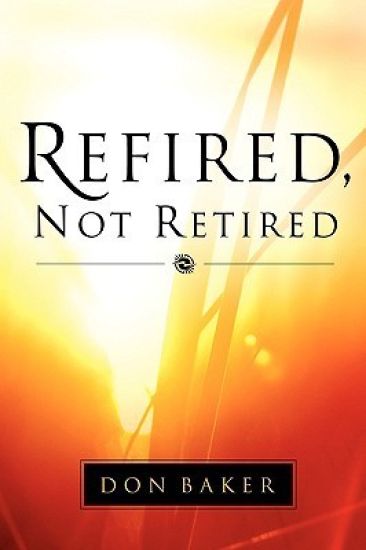
Refired, Not Retired

Refired, Not Retired

Don Baker

Xulon Press
2004
pokkari
Baker's autobiography recounts his boyhood in rural South Dakota in the 1930s and his search for meaning, which led to amazing revelations from God. He found that anyone can experience closeness with God, and he urges the reader to Rgo for it!
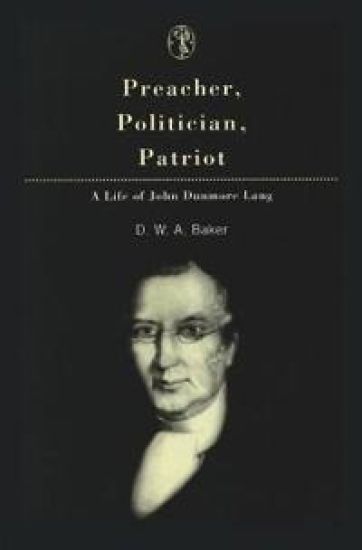
Preacher, Politician, Patriot

Preacher, Politician, Patriot

Don Baker

Melbourne University Press
1994
pokkari
John Dunmore Lang had a finger in most pies in colonial New South Wales. He arrived in 1823, a young Presbyterian minister in search of a pulpit. Fifty years later his funeral befitted a founding father not only of the Presbyterian Church in Australia but of the nation itself. He established the Scots Church and his own secondary school, the Australian College. He was a populist politician whose republican and democrat leanings strengthened during a quarter-century in the Legislative Council. He ran three newspapers. He circled the globe eight times; one of his many missions was to recruit clerics, along with respectable tradesmen and small farmers from the British Islesandmdash;anywhere but Papist Ireland. He wrote a book or two during most voyages. And that is not the half of it. Volatile and vindictive, Lang loved a fight, answered only to God and was never still. Towards the end of a life peppered with church rifts, he was locked out of the very church he had built. The financial dealings of this fierce preacher of moral rectitude were labyrinthine and shady. They twice landed him in gaolandmdash;as did a willingness to libel opponents. Yet he was a hero to ordinary workers and a perceptive critic of the treatment of Aboriginal people. Lang is a problematic giant from our colonial past. Don Baker, his cool, authoritative, gently ironic biographer, considers him 'almost as large a figure as he claimed to be'.