Kirjailija
Don Brown
Kirjat ja teokset yhdessä paikassa: 56 kirjaa, julkaisuja vuosilta 2001–2026, suosituimpiin kuuluu Odd Boy Out: Young Albert Einstein. Vertaile teosten hintoja ja tarkista saatavuus suomalaisista kirjakaupoista.
56 kirjaa
Kirjojen julkaisuvuodet: 2001–2026.
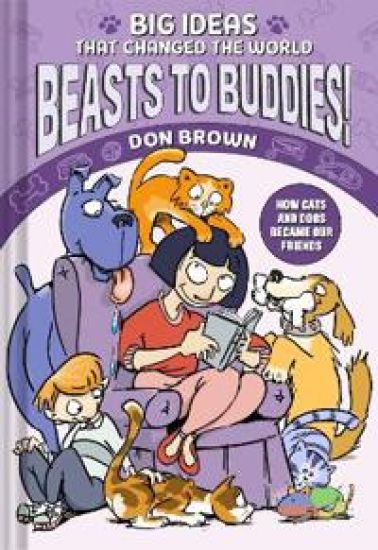
A new addition to the popular Big Ideas That Changed the World series, this entertaining nonfiction graphic novel from award winner Don Brown explores the fascinating science and history behind pets—from wild animals to our best friends Beasts to Buddies tells the history of dogs and cats, an evolving journey through the ages, from the wild to the mild—narrated by Bummer and Lazarus, a couple of stray dogs who captured the hearts of San Franciscans in the 1860s. Acclaimed author-illustrator Don Brown takes readers on a journey through history and around the world, from the evolution and taming of wolves 40,000-20,000 years ago, to the revered cats of ancient Egypt, to the birth of the barnyard, and to the present day, when pets are part of our families. Full of fascinating facts and key developments in the domestication of animals, Brown demonstrates the many ways that pets have shaped humankind, like protection, herding, and emotional support, and even saving lives. A middle-grade graphic novel series perfect for the classroom, this full-color book includes a timeline, endnotes, and a bibliography. Big Ideas That Changed the World is a graphic novel series that celebrates the hard-won succession of ideas that ultimately changed the world. Humor, drama, and art unite to tell the story of events, discoveries, and ingenuity over time that led humans to come up with a big idea and then make it come true. More from the Big Ideas That Changed the World series: Rocket to the Moon! (#1) Machines That Think! (#2) A Shot in the Arm! (#3) We the People! (#4) All Charged Up! (#5) It’s About Time! (#6) Keep It Clean! (#7)

Fever Year: The Killer Flu of 1918: A Graphic Novel
Don Brown
Clarion Books
2026
nidottu
Halvin toimitettuna 20,20 €
This entertaining graphic novel from award winner Dan Brown will get kids talking, since it's all about the history of dealing with poop, pee, and dirty hands. Part of the Big Ideas That Changed the World graphic novel series, this full-color book is appropriate for the classroom and includes a timeline, endnotes, and a bibliography. In 1895, an engineer named George Waring was appointed New York City’s first commissioner of street cleaning. His task? To make a city with millions of people livable. Narrated by Waring, Keep It Clean! explores the concept of public health, which means ensuring clean water and adequate sewage disposal for everyone, and covers topics such as personal hygiene, sewer systems, and chemical water treatment. Acclaimed author-illustrator Don Brown takes readers on a journey through history and around the world, from Greek, Roman, and Aztec aqueducts and the dawn of bathing (including social public bathing in Japan and religious bathing ceremonies in Machu Picchu) to the invention of soap in the Middle East, the first use of flush toilets approximately 4,000 years ago, and the first toilets used in outer space—a Big Idea when you consider that early astronauts on Apollo 11 had none! Full of facts and colorful historical figures, Brown chronicles both historical mishaps—like rivers full of human waste and King Henry VI’s notorious basement of poop—and monumental scientific breakthroughs including Louis Pasteur and Robert Koch’s discovery of the link between microbes (germs) and disease. Brown also highlights how social classes became divided not only by wealth and culture but also by smell, and calls attention to modern-day health crises. Today, nearly two billion people around the world live without clean water and about 3.6 billion people—nearly half of the world’s population—live without proper sanitation. Breaking down concepts in an accessible, kid-friendly way, this nonfiction graphic novel shows why “keeping it clean” is vitally important whether it’s a city, town, home, or person. Big Ideas That Changed the World is a graphic novel series that celebrates the hard-won succession of ideas that ultimately changed the world. Humor, drama, and art unite to tell the story of events, discoveries, and ingenuity over time that led humans to come up with a big idea and then make it come true. More from the Big Ideas That Changed the World series:Rocket to the Moon! (#1)Machines That Think! (#2)A Shot in the Arm! (#3)We the People! (#4)All Charged Up! (#5)It’s About Time! (#6)
Award-winning author/illustrator Don Brown explores the history of rocket building in this installment of the Big Ideas That Changed the World graphic novel series. “That’s one small step for man, one giant leap for mankind.” On July 20, 1969, Neil Armstrong said those iconic words when Apollo 11 landed on the moon. But it wasn’t just one man who got us to the moon—there was a whole team of people, plus centuries of discoveries and technologies that came before that made it possible. From ancient Chinese rockets to the first steps on the moon, Rocket to the Moon! Reveals which “bombs bursting in air” inspired the writer of “The Star-Spangled Banner,” why the Russians wanted to launch a dog into Earth’s atmosphere, and how exactly astronauts are able to go to the bathroom while in a rocket far off in space! Big Ideas That Changed the World is a graphic novel series that celebrates the hard-won succession of ideas that ultimately changed the world. Humor, drama, and art unite to tell the story of events, discoveries, and ingenuity over time that led humans to come up with a big idea and then make it come true. Big Ideas That Changed the World series:Rocket to the Moon! (#1)Machines That Think! (#2)A Shot in the Arm! (#3)We the People! (#4)All Charged Up! (#5)
83 Days in Mariupol: A War Diary
Don Brown
HARPERCOLLINS PUBLISHERS INC
2025
nidottu
Halvin toimitettuna 19,90 €
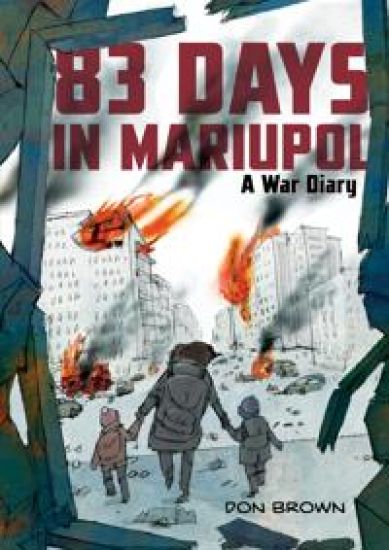
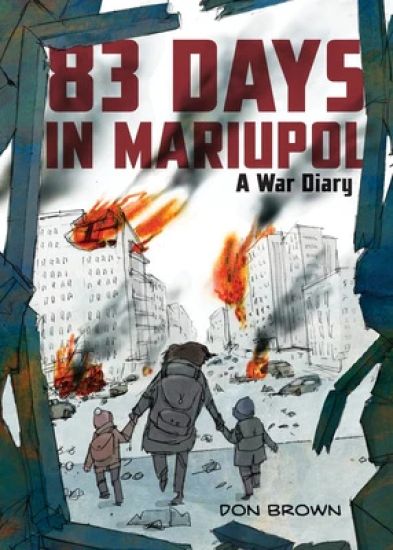
A young adult graphic novel that captures the complexities of the war in Ukraine, focusing on the siege of Mariupol (Feb ’22 – May ’22) and the brave people who stayed to defend their city against Russian forces as well as the resulting effects on global politics. A city ruined. In once quiet residential streets, two armies battle, driving people into cellars and basements with little food or water. No lights or heat. Dwindling medical supplies. Shells and bullets deliver cruel, random death to the young and old, men, women, and children. This is Mariupol, a Ukrainian city and early target of Russia’s invasion of Ukraine. Bordering Russian-occupied territory, the coastal city seemed doomed to a defeat that would come within days, if not hours. Could Mariupol, and Ukraine, survive? As Russian rockets threatened the city, Ukrainians resisted, and with a heroic combination of sacrifice and bravery, the besieged city endured . . . for months. But it all came at a steep cost. With compassion and his keen journalist’s eye, Sibert Honor creator Don Brown illuminates the horrors of Mariupol and the depredations of its people not seen in the city since World War II. He also shows that outside of Mariupol, the city’s agonies were mirrored by similar events occurring in towns and cities across Ukraine.83 Days in Mariupol reminds us that the bloody defiance shown at the Alamo, Dunkirk, Leningrad, and Thermopylae isn’t confined to the past but has a violent, modern presence. It is the story of senseless destruction, patriotism, and grit against long odds—a brutal battle whose consequences still reverberate across Ukraine and continue to reshape the global political landscape. Read more books by Don Brown:Run and Hide: How Jewish Youth Escaped the Holocaust In the Shadow of the Fallen Towers: The Seconds, Minutes, Hours, Days, Weeks, Months, and Years after the 9/11 AttacksFever Year: The Killer Flu of 1918The Unwanted: Stories of the Syrian Refugees
Award-winning author-illustrator Don Brown explores the science of time in It’s About Time!, part of the Big Ideas That Changed the World graphic novel series In It’s About Time!, narrator Albert Einstein takes kids through time—literally. Measuring time is explored, from the stone circles and giant pyramids of ancient cultures to hourglasses and sundials to early time pieces and watches to atomic clocks. This fun and fast-moving graphic novel for young readers explains why there are 12 months a year, 24 hours in a day, 60 minutes in an hour, and 60 seconds in a minute. And seven days in the week. From Stonehenge to Greenwich Mean Time to James Hutton’s Deep Time, the book helps kids understand the passage of time, and why sometimes it seems so slow and other times way, way too fast. Also includes: Time Timeline, Who was Albert Einstein?, endnotes, and a bibliography. Big Ideas That Changed the World is a graphic novel series that celebrates the hard-won succession of ideas that ultimately changed the world. Humor, drama, and art unite to tell the story of events, discoveries, and ingenuity over time that led humans to come up with a big idea and then make it come true. Big Ideas That Changed the World series:Rocket to the Moon! (#1)Machines That Think! (#2)A Shot in the Arm! (#3)We the People! (#4)All Charged Up! (#5)It’s About Time! (#6)
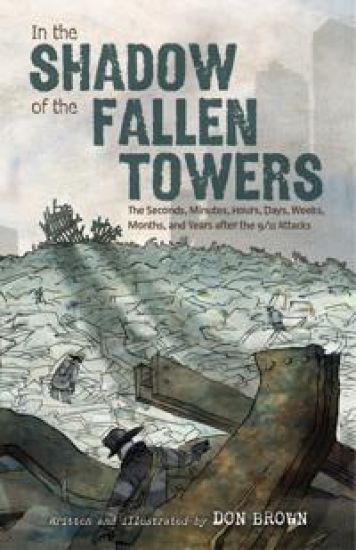
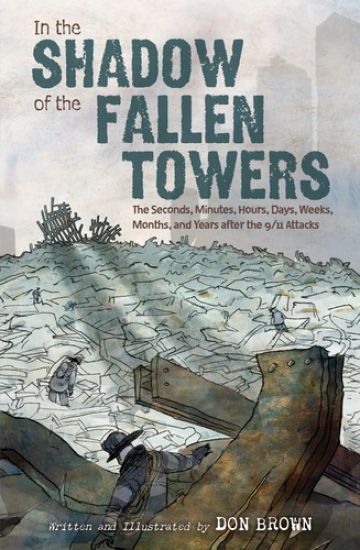
Excellence in Nonfiction for Young Adults FinalistA graphic novel chronicling the immediate aftermath and rippling effects of one of the most impactful days in modern history: September 11, 2001. From the Sibert Honor– and YALSA Award–winning creator behind The Unwanted and Drowned City. The consequences of the terrorist attack on the World Trade Center in New York City, both political and personal, were vast, and continue to reverberate today. Don Brown brings his journalistic eye and attention to moving individual stories to help teens contextualize what they already know about the day, as well as broaden their understanding of the chain of events that occurred in the attack’s wake. Profound, troubling, and deeply moving, In the Shadow of the Fallen Towers bears witness to our history—and the ways it shapes our future. Read more books by Don Brown:83 Days in Mariupol: A War DiaryRun and Hide: How Jewish Youth Escaped the Holocaust Fever Year: The Killer Flu of 1918The Unwanted: Stories of the Syrian Refugees
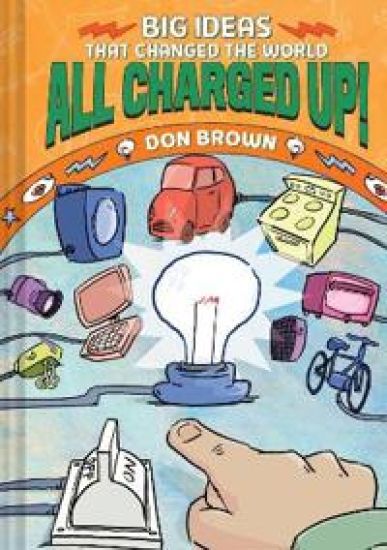
Award-winning author-illustrator Don Brown explores the history of electricity in this installment of the Big Ideas That Changed the World series. In 600 BCE, the Greek mathematician Thales observed a seemingly strange phenomenon: amber, when rubbed with a cloth, had the ability to attract lightweight objects like feathers, straw, and leaves. He had unknowingly discovered an electric charge. His experiments wouldn’t be picked back up until about 2,000 years later, when another curious mind, inspired by the Greek word for amber (elektron), declared the rubbed object to have an invisible power: electricity. From phones to light bulbs to electric cars, electricity is something we can’t live without today. Narrated by Jagadish Chandra Bose, a Bengali pioneer in radio technology from the previous century, All Charged Up! is the fascinating story of both tireless experimentation and accidental discovery, of inspiring human progress and dramatic scientific rivalries. Full of facts and colorful historical figures, this nonfiction graphic novel highlights key inventors and breakthroughs, through the earliest discoveries to the Age of Electricity to today, including: Musschenbroek’s Leyden jar, which proved that electricity could be stored; founding father Benjamin Franklin’s famous experiment using a kite as a lightning rod (don’t try this at home!); a fierce competition between two Italian scientists that resulted in the first battery (and inspired Mary Shelley’s Frankenstein); and Nikola Tesla and Thomas Edison’s War of the Currents; uses of wind and solar energy, and many more. Breaking down concepts like atoms, current, electromagnetism in a kid-friendly, accessible way, acclaimed author-illustrator Don Brown demonstrates how our world became plugged in and connected by electricity. Big Ideas That Changed the World is a graphic novel series that celebrates the hard-won succession of ideas that ultimately changed the world. Humor, drama, and art unite to tell the story of events, discoveries, and ingenuity over time that led humans to come up with a big idea and then make it come true.
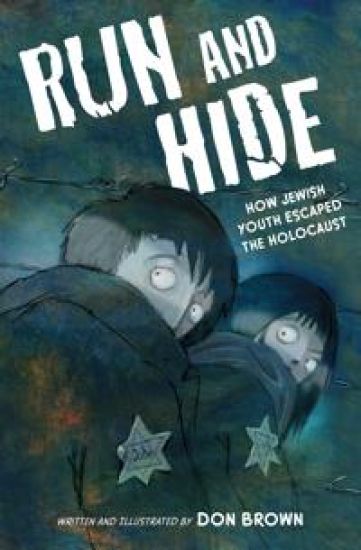
A gripping nonfiction graphic novel that follows the stories of Jewish children, separated from their parents, who escaped the horrors of the Holocaust. From the Sibert Honor and YALSA Award–winning creator behind The Unwanted, Drowned City, and others. In the tightening grip of Hitler’s power, towns, cities, and ghettoes were emptied of Jews. Unless they could escape, Jewish children would not be spared their deadly fate in the Holocaust, a tragedy of unfathomable depth. Only 11% of the Jewish children living in Europe before 1939 survived the Second World War. Run and Hide tells the stories of these children, forced to leave their homes and families, as they escaped certain horror. Some children flee to England by train. Others are hidden from Nazis, sometimes in plain sight. Some are secreted away in attics and farmhouses. Still others make miraculous escapes, cresting over the snow-covered Pyrenees mountains to safety. Acclaimed nonfiction storyteller Don Brown brings his expertise for journalistic reporting to the deeply felt personal narratives of Jewish children who survived against overwhelming odds. Read more books by Don Brown:83 Days in Mariupol: A War DiaryIn the Shadow of the Fallen Towers: The Seconds, Minutes, Hours, Days, Weeks, Months, and Years after the 9/11 AttacksFever Year: The Killer Flu of 1918The Unwanted: Stories of the Syrian Refugees
83 Days in Mariupol: A War Diary
Don Brown
HARPERCOLLINS PUBLISHERS INC
2023
sidottu
Halvin toimitettuna 23,60 €
A young adult graphic novel that captures the complexities of the war in Ukraine, focusing on the siege of Mariupol (Feb ’22 – May ’22) and the brave people who stayed to defend their city against Russian forces as well as the resulting effects on global politics. A city ruined. In once quiet residential streets, two armies battle, driving people into cellars and basements with little food or water. No lights or heat. Dwindling medical supplies. Shells and bullets deliver cruel, random death to the young and old, men, women, and children. This is Mariupol, a Ukrainian city and early target of Russia’s invasion of Ukraine. Bordering Russian-occupied territory, the coastal city seemed doomed to a defeat that would come within days, if not hours. Could Mariupol, and Ukraine, survive? As Russian rockets threatened the city, Ukrainians resisted, and with a heroic combination of sacrifice and bravery, the besieged city endured . . . for months. But it all came at a steep cost. With compassion and his keen journalist’s eye, Sibert Honor creator Don Brown illuminates the horrors of Mariupol and the depredations of its people not seen in the city since World War II. He also shows that outside of Mariupol, the city’s agonies were mirrored by similar events occurring in towns and cities across Ukraine.83 Days in Mariupol reminds us that the bloody defiance shown at the Alamo, Dunkirk, Leningrad, and Thermopylae isn’t confined to the past but has a violent, modern presence. It is the story of senseless destruction, patriotism, and grit against long odds—a brutal battle whose consequences still reverberate across Ukraine and continue to reshape the global political landscape. Read more books by Don Brown:Run and Hide: How Jewish Youth Escaped the Holocaust In the Shadow of the Fallen Towers: The Seconds, Minutes, Hours, Days, Weeks, Months, and Years after the 9/11 AttacksFever Year: The Killer Flu of 1918The Unwanted: Stories of the Syrian Refugees
The book you are now holding is a literary artifact, essentially faithful to the original text of Don Browns' hand-written manuscript. Keep in mind that Don's manuscript was composed "then." Don's China, during the 1930s/'1940s, had been wracked by decades-long warfare. Subsequent revolution brought sweeping social and jolting political alignments that demanded "restructuring" to reflect their new "socialist cultural reality." Such was the case in post-bellum China under the newly ascendent Communist government. Control of language became an important feature. In 1979, the People's Republic of China replaced the long-used and familiar 19th century Wade-Giles system of romanizing--i.e. transcribing, transliterating and pronouncing standard Mandarin Chinese into English using the familiar Roman alphabet. Proper nouns denoting once-familiar cities, regions and geographic locations were arbitrarily reassigned the new Pin Yin notation; as a result they no longer correspond with today's maps and charts. "Peking" became "Bejing." "Tinsing" became "Quing Dao." We've included the original Wade-Giles spellings followed by the contemporary Pin Yin pronunciations. Additionally, contemporary graphic and digital media communication styles differ. Once widely applied forms of diacritical punctuation--used as pronunciation keys in the transliteration of foreign languages in popular media are rarely used, if at all. In an effort to facilitate following Don's wide-ranging sea-going career, additional page-below footnotes have been used to provide context items and events specific to Don's narrative. Follow Don's wartime geographic locations along China's contemporary coastlines depicted by today's 21st Century cartography on page 122.
Award-winning author Don Brown explores the history of democracy in the United States in this installment of the Big Ideas That Changed the World series The Greek word democracy comes from demos (people) and kratos (rule)—meaning “the people hold power.” In this timely graphic novel, acclaimed author-illustrator Don Brown explores the history of democracy—from civilization’s beginnings as hunter-gatherers to the birth of monarchies and vast empires, and from the earliest republics to our present-day government. Narrated by Abigail Adams, We the People! explores how Athenian and Greek assemblies inspired our legislative and judiciary branches; how Enlightenment ideals of reason, toleration, and human progress shaped our founding fathers’ thinking; how Mali’s Manden Charter and England’s Magna Carta influenced our Bill of Rights; and how the Haudenosaunee (Iroquois) Confederacy directly shaped the US Constitution. Explaining the fundamentals of democracy—liberty, equality, and justice for all—in a kid-friendly way, We the People! is a powerful reminder that power rests in the people’s hands. Big Ideas That Changed the World is a graphic novel series that celebrates the hard-won succession of ideas that ultimately changed the world. Humor, drama, and art unite to tell the story of events, discoveries, and ingenuity over time that led humans to come up with a big idea and then make it come true.
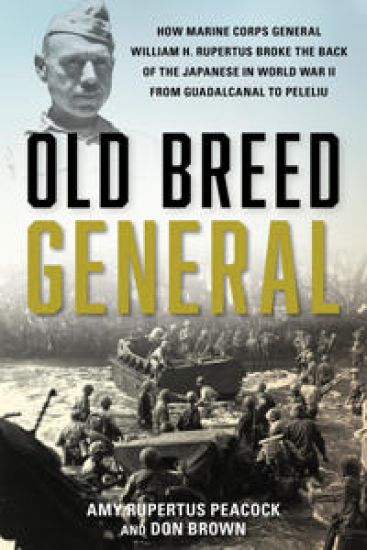
Marine general William Rupertus is best known today for writing the Corps’ Rifleman’s Creed, which begins, “This is my rifle. There are many like it, but this one is mine”—which has been made famous by films such as Full Metal Jacket and Jarhead. Rupertus was one of the outstanding Marines of the twentieth century, standing alongside men such as Smedley Butler, Chesty Puller, and Arthur Vandegrift, but he hasn’t yet received his due. Rupertus “made his bones” in the USMC’s “savage wars of peace” before World War II: Haiti for three years after World War I, China in 1929 (where he lost his wife and children to Spanish flu) and again in 1937 (where he witnessed the beginning of Japan’s war against China that turned into the Pacific War of World War II). In World War II, Rupertus commanded during four important battles: Tulagi and Henderson Field during the Guadalcanal campaign; the Battle of Cape Gloucester; and Peleliu. It was a series of blistering battles—and ultimately victories—that helped break the back of the Japanese and pave the way for American victory. In the course of these battles, Rupertus became the Patton of the Pacific—ruthless in war, always on the attack, merciless against the enemy, undefeated in battles—even as he proved himself very much like Eisenhower, suavely diplomatic and able to balance war with politics. These skills allowed Rupertus to crush the enemy in the malaria-infested jungles of the Pacific and personally escort Eleanor Roosevelt on her tour of the Pacific. Old Breed General is the biography of Rupertus and the story of the Marines at war in the Pacific. This is an American story of love, loss, shock, horror, tragedy, and triumph that focuses on Rupertus and the 1st Marine Division in World War II, but which resonates through the 1st, to Chosin in Korea and James Mattis’s command in Iraq.
Tap into an ancient cellular survival program to optimize health and longevity. Understanding Life will help curious people understand how life might have originated, how metabolism evolved, and what the implications are for health, aging, and disease. Every cell in your body is a descendant of free-living organisms that developed on our planet billions of years ago. Even with the passage of that much time, your cells harbor powerful survival programs inherited from the first primitive unicellular creatures. Learn what this program is, how it evolved, and how you can use it to be healthier and live longer. We now know that our cells tend to overreact to mild stresses, and that activating these response programs increases our ability to handle whatever the universe throws at us. Humans were made to move, change, and adapt. We are the species that walked out of Africa and spread to every corner of the globe. Our ancestors survived blazing deserts and long periods of hunger on great journeys full of uncertainty. Over the millennia, our cells, tissues, and bodies have learned to interpret these discomforts as purpose. To nature, a lack of challenges is a powerful signal that we are no longer needed. The key takeaway is this: make yourself uncomfortable. Hike in the snow. Run in the rain. Laugh at the comedy of life and cry during times of sorrow. Climb a mountain, bathe in a hot spring, shiver in an icy river. Explore your world to its fullest and embrace change and uncertainty. We are the kin of mighty explorers who sacrificed the comforts of hearth and home for the thrill of discovery. We settle into our rocking chairs at our peril. You were meant for greater things.
*A NATIONAL BESTSELLER!*The New York Post calls The Last Fighter Pilot a "must-read" book. From April to August of 1945, Captain Jerry Yellin and a small group of fellow fighter pilots flew dangerous bombing and strafe missions out of Iwo Jima over Japan. Even days after America dropped the atomic bombs on Hiroshima on August 6 and Nagasaki on August 9, the pilots continued to fly. Though Japan had suffered unimaginable devastation, the emperor still refused to surrender. Bestselling author Don Brown (Treason) sits down with Yelllin, now ninety-three years old, to tell the incredible true story of the final combat mission of World War II. Nine days after Hiroshima, on the morning of August 14th, Yellin and his wingman 1st Lieutenant Phillip Schlamberg took off from Iwo Jima to bomb Tokyo. By the time Yellin returned to Iwo Jima, the war was officially over—but his young friend Schlamberg would never get to hear the news. The Last Fighter Pilot is a harrowing first-person account of war from one of America's last living World War II veterans.
Big Game Transplanting Evaluation; 1950
Faye Morrison 1917- Couey; Don Brown; Montana Fish and Game Commission Wil
Hassell Street Press
2021
nidottu
In the Shadow of the Fallen Towers: The Seconds, Minutes, Hours, Days, Weeks, Months, and Years After the 9/11 Attacks: A Graphic Novel
Don Brown
Clarion Books
2021
sidottu
Halvin toimitettuna 28,40 €
Excellence in Nonfiction for Young Adults FinalistA graphic novel chronicling the immediate aftermath and rippling effects of one of the most impactful days in modern history: September 11, 2001. From the Sibert Honor- and YALSA Award-winning creator behind The Unwanted and Drowned City. The consequences of the terrorist attack on the World Trade Center in New York City, both political and personal, were vast, and continue to reverberate today. Don Brown brings his journalistic eye and attention to moving individual stories to help teens contextualize what they already know about the day, as well as broaden their understanding of the chain of events that occurred in the attack's wake. Profound, troubling, and deeply moving, In the Shadow of the Fallen Towers bears witness to our history--and the ways it shapes our future.
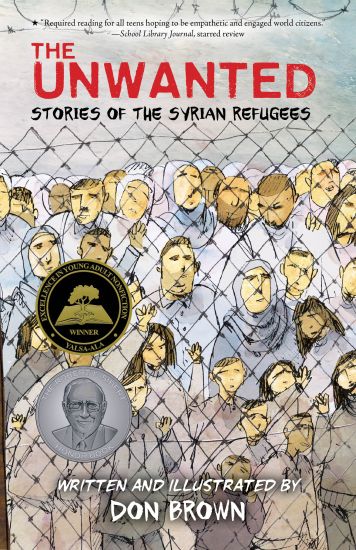
Sibert Honor Medalist · New York Public Library Best of 2018 · The Horn Book Fanfare 2018 · Kirkus Reviews Best Books of 2018 · YALSA Excellence in Nonfiction Winner In the tradition of two-time Sibert Honor winner Don Brown's critically acclaimed full-color nonfiction graphic novels The Great American Dust Bowl and Drowned City, The Unwanted is a timely and eye-opening exploration of the ongoing Syrian refugee crisis, exposing the harsh realities of living in, and trying to escape, a war zone. AGES: 7 plus AUTHOR: Don Brown is the YALSA excellence in nonfiction and Sibert Honor award-winning author and illustrator of many nonfiction graphic novels for teens and picture book biographies. He has been widely praised for his resonant storytelling and his delicate watercolour paintings that evoke the excitement, humour, pain, and joy of lives lived with passion. School Library Journal has called him "a current pacesetter who has put the finishing touches on the standards for storyographies." He lives in New York with his family.
Older Than Dirt: A Wild but True History of Earth
Don Brown; Michael Perfit
Houghton Mifflin Books for Children
2021
nidottu
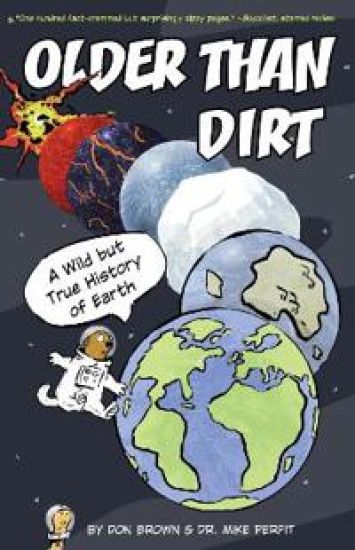
Almost 14.5 billion years ago, it all started with a BIG BANG and what began as a cloud of gas, dust, and rock eventually took shape and bloomed into a molten sphere. Battered by asteroid collisions, ice ages, and shifting tectonic plates, our fledgling planet finally pushed forth continents. But if you think the earth has calmed down since then - think again! Geological activity continues to sculpt the earth's landscape, sometimes with terrible consequences for its inhabitants: earthquakes, volcanoes, and tsunamis. In this one-of-a-kind, wild, but true history of Earth, the Sibert Honor medalist Don Brown takes on big concepts with humor and ease. AGES: 8 to 12 AUTHORS: Don Brown is the YALSA excellence in nonfiction and Sibert Honor award-winning author and illustrator of many nonfiction graphic novels for teens and picture book biographies. He has been widely praised for his resonant storytelling and his delicate watercolour paintings that evoke the excitement, humour, pain, and joy of lives lived with passion. School Library Journal has called him "a current pacesetter who has put the finishing touches on the standards for storyographies." He lives in New York with his family. Dr. Michael Perfit is Professor and Chair of Geological Sciences at the University of Florida where he has worked since 1982. He has authored or co-authored more than 100 peer-reviewed technical papers and articles in professional scientific publications and has been a principal investigator on numerous research grants from the National Science Foundation and NOAA. He has participated on over 20 oceanographic research cruises and served as co-chief scientist on several more. While at the University of Florida he has received several awards for excellence in teaching at the University of Florida and was the Flint Term Professor in 1999-2000. He has also enjoyed adjunct academic appointments at the Australian National University, Cornell University, University of Tasmania, and the Institut du Physique du Globe, Paris.