Kirjojen hintavertailu – 12 903 725 kirjaa ja 27 kauppaa

Kirjailija

Don D. Fowler

Kirjat ja teokset yhdessä paikassa: 9 kirjaa, julkaisuja vuosilta 2006–2020, suosituimpiin kuuluu Tracking Ancient Footsteps. Vertaile teosten hintoja ja tarkista saatavuus suomalaisista kirjakaupoista.

9 kirjaa

Kirjojen julkaisuvuodet: 2006–2020.

Tracking Ancient Footsteps

Tracking Ancient Footsteps

Don D. Fowler; Phil R. Geib; W. James Judge; Ricky R. Lightfoot; Sarah H. Schlanger; Lynne Sebastian; Mark D. Varien

Washington State University Press
2006
pokkari
Tracking Ancient Footsteps celebrates William D. Lipe's five-decade career in Southwestern and conservation archaeology. From the arid expanses of Glen Canyon, the Red Rock Plateau, and Cedar Mesa in Utah, to the relatively lush Dolores Valley and Mesa Verde regions of Colorado, Lipe participated in the key projects defining much of what is known today about the ancient Native American past in the Southwest. And, in 1974, he provided a timely definition for "public archaeology" that influences researchers and land managers to the present time. In Tracking Ancient Footsteps, nine of his close colleagues share their experiences, providing a chronology of one man's life intersecting with our understanding of Southwestern Prehistory, the role of government land-holding agencies, and the archaeological profession as a whole.
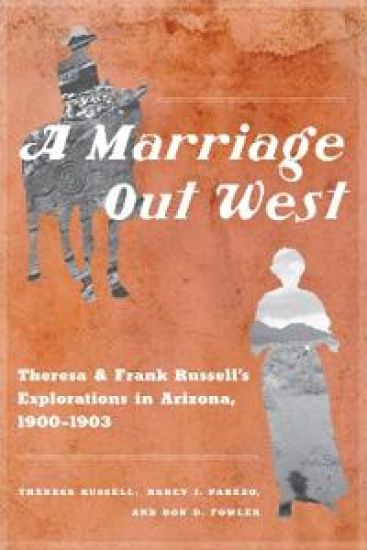
A Marriage Out West

A Marriage Out West

Theresa Russell; Nancy J. Parezo; Don D. Fowler

University of Arizona Press
2020
nidottu
A Marriage Out West is an intimate biographical account of two fascinating figures of twentieth-century archaeology. Frances Theresa Peet Russell, an educator, married Harvard anthropologist Frank Russell in June 1900. They left immediately on a busman's honeymoon to the Southwest. Their goal was twofold: to travel to an arid environment to quiet Frank's tuberculosis and to find archaeological sites to support his research. During their brief marriage, the Russells surveyed almost all of Arizona Territory, traveling by horse over rugged terrain and camping in the back of a Conestoga wagon in harsh environmental conditions. Nancy J. Parezo and Don D. Fowler detail the grit and determination of the Russells' unique collaboration over the course of three field seasons. Delivering the first biographical account of Frank Russell's life, this book brings detail to his life and work from childhood until his death in 1903. Parezo and Fowler analyze the important contributions Theresa and Frank made to the bourgeoning field of archaeology and Akimel O'odham (Pima) ethnography. They also offer never-before-published information on Theresa's life after Frank's death and her subsequent career as a professor of English literature and philosophy at Stanford University. In 1906 Theresa Russell published In Pursuit of a Graveyard: Being the Trail of an Archaeological Wedding Journey, a twelve-part serial in Out West magazine. Theresa's articles constituted an experiential narrative based on field journals and remembrances of life in the northern Southwest. The work offers both a biography and a seasonal field narrative that emphasized personal experiences rather than traditional scientific field notes. Included in A Marriage Out West, Theresa's writing provides an invaluable participant's perspective of early 1900s American archaeology and ethnography and life out West.
Cultural Resource Management in the Great Basin 1986–2016

Cultural Resource Management in the Great Basin 1986–2016

Alice M. Baldrica; Patricia A. DeBunch; Don D. Fowler

University of Utah Press,U.S.
2019
nidottu
Cultural Resource Management (CRM) refers to the discovery, evaluation, and preservation of culturally significant sites, focusing on but not limited to archaeological and historical sites of significance. CRM stems from the National Historic Preservation Act, passed in 1966. In 1986, archaeologists reviewed the practice of CRM in the Great Basin. They concluded that it was mainly a system of finding, flagging, and avoiding— a means of keeping sites and artifacts safe. Success was measured by counting the number of sites recorded and acres surveyed. This volume provides an updated review some thirty years later. The product of a 2016 symposium, its measures are the increase in knowledge obtained through CRM projects and the inclusion of tribes, the general public, industry, and others in the discovery and interpretation of Great Basin prehistory and history. Revealing both successes and shortcomings, it considers how CRM can face the challenges of the future. Chapters offer a variety of perspectives, covering highway archaeology, inclusion of Native American tribes, and the legacy of the NHPA, among other topics.
The Glen Canyon Archeological Survey, Part 1: University of Utah Anthropological Papers, Department of Anthropology, No. 39, May, 1959
The Glen Canyon Archeological Survey, Part 1 is a scholarly publication that is part of the University of Utah Anthropological Papers series. Written by Don D. Fowler, an anthropologist and archeologist, the book details the findings of an archeological survey conducted in Glen Canyon, Utah in the late 1950s. The survey was undertaken to document and analyze the prehistoric Native American cultures that inhabited the area, and the book provides a comprehensive overview of the archeological sites and artifacts that were discovered during the survey. The book is aimed at academics and researchers in the field of anthropology and archeology, and provides detailed descriptions of the methodology used in the survey, as well as detailed analyses of the cultural and historical significance of the findings. The publication is an important contribution to the field of archeology and provides valuable insights into the prehistoric cultures that once inhabited the Glen Canyon region. Additional Contributors Include Robert H. Lister, Dee Ann Suhn And Ted Weller. Edited By Charles E. Dibble. Glen Canyon Series No. 6. This scarce antiquarian book is a facsimile reprint of the old original and may contain some imperfections such as library marks and notations. Because we believe this work is culturally important, we have made it available as part of our commitment for protecting, preserving, and promoting the world's literature in affordable, high quality, modern editions, that are true to their original work.
Anthropology Goes to the Fair

Anthropology Goes to the Fair

Nancy J. Parezo; Don D. Fowler

University of Nebraska Press
2009
pokkari
World's fairs and industrial expositions constituted a phenomenally successful popular culture movement during the nineteenth and twentieth centuries. In addition to the newest technological innovations, each exposition showcased commercial and cultural exhibits, entertainment concessions, national and corporate displays of wealth, and indigenous peoples from the colonial empires of the host country. As scientists claiming specialized knowledge about indigenous peoples, especially American Indians, anthropologists used expositions to promote their quest for professional status and authority. Anthropology Goes to the Fair takes readers through the 1904 Louisiana Purchase Exposition to see how anthropology, as conceptualized by W J McGee, the first president of the American Anthropological Association, showcased itself through programs, static displays, and living exhibits for millions of people "to show each half of the world how the other half lives." More than two thousand Native peoples negotiated and portrayed their own agendas on this world stage. The reader will see how anthropology itself was changed in the process.
Anthropology Goes to the Fair

Anthropology Goes to the Fair

Nancy J. Parezo; Don D. Fowler

University of Nebraska Press
2007
sidottu
World's fairs and industrial expositions constituted a phenomenally successful popular culture movement during the nineteenth and twentieth centuries. In addition to the newest technological innovations, each exposition showcased commercial and cultural exhibits, entertainment concessions, national and corporate displays of wealth, and indigenous peoples from the colonial empires of the host country. As scientists claiming specialized knowledge about indigenous peoples, especially American Indians, anthropologists used expositions to promote their quest for professional status and authority. Anthropology Goes to the Fair takes readers through the 1904 Louisiana Purchase Exposition to see how anthropology, as conceptualized by W J McGee, the first president of the American Anthropological Association, showcased itself through programs, static displays, and living exhibits for millions of people "to show each half of the world how the other half lives." More than two thousand Native peoples negotiated and portrayed their own agendas on this world stage. The reader will see how anthropology itself was changed in the process.