Kirjojen hintavertailu – 12 859 828 kirjaa ja 27 kauppaa

Kirjailija

Don L. Hofsommer

Kirjat ja teokset yhdessä paikassa: 13 kirjaa, julkaisuja vuosilta 2000–2025, suosituimpiin kuuluu Electric Interurbans and the American People. Vertaile teosten hintoja ja tarkista saatavuus suomalaisista kirjakaupoista.

13 kirjaa

Kirjojen julkaisuvuodet: 2000–2025.

Electric Interurbans and the American People

Electric Interurbans and the American People

H. Roger Grant; Don L. Hofsommer

Indiana University Press
2016
sidottu
One of the most intriguing yet neglected pieces of American transportation history, electric interurban railroads were designed to assist shoppers, salesmen, farmers, commuters, and pleasure-seekers alike with short distance travel. At a time when most roads were unpaved and horse and buggy travel were costly and difficult, these streetcar-like electric cars were essential to economic growth. But why did interurban fever strike so suddenly and extensively in the Midwest and other areas? Why did thousands of people withdraw their savings to get onto what they believed to be a "gravy train?" How did officials of competing steam railroads respond to these challenges to their operations? H. Roger Grant explores the rise and fall of this fleeting form of transportation that started in the early 1900s and was defunct just 30 years later. Perfect for railfans, Electric Interurbans and the American People is a comprehensive contribution for those who love the flanged wheel.
Missouri Railroads

Missouri Railroads

Don L. Hofsommer; Carlos Arnaldo Schwantes

INDIANA UNIVERSITY PRESS
2025
sidottu
Missouri Railroads: A Modern Crossroads 1921-2023 delves into the rich history of Missouri's railroads during their second century. From the roaring 1920s, when opulent "Limited" passenger trains crisscrossed the state, to the tumultuous times of the Great Depression and World War II, this book captures the essence of an era. As the postwar years unfolded, Missouri's railroads faced realignments and challenges. The mid-twentieth century witnessed shifts in routes, technologies, and passenger preferences. Against this backdrop, the book explores how the railroads adapted in the face of uncertainty. Stunning historical images—over 100 in color—breathe life into this transformative period and bring the story to the present day. Missouri Railroads goes beyond the history of a single state and its railroads to illustrate Missouri's vital role in shaping American railroading. These railroad companies mirrored national trends, yet each twist and turn carries a distinct local flavor. Authors Don L. Hofsommer and Carlos A. Schwantes weave a captivating narrative that celebrates Missouri's contribution to the broader American story.
The Iowa Route

The Iowa Route

Don L. Hofsommer

Indiana University Press
2015
sidottu
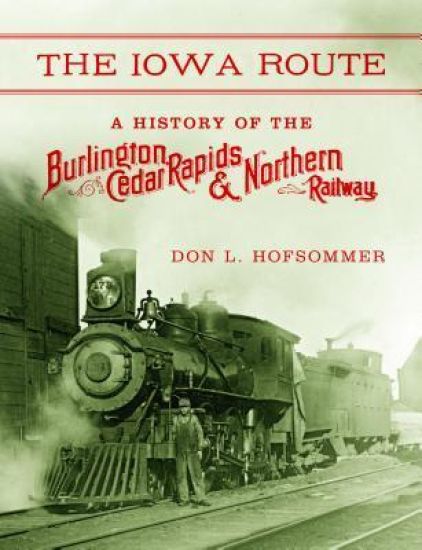
The Burlington, Cedar Rapids & Northern Railway was an important part of the commercial life of the upper Midwest during the age of railways. Don L. Hofsommer uses the BC&N as the vehicle for his investigation of the birth, evolution, and disappearance of an important regional carrier, offering an inside look at the struggles of a small railway to stay relevant while railroad empires were being built. More than a bit player, the BC&N might have become even more important had plans gone forward to utilize its rails in a campaign to reach the Pacific. The struggle of the Cedar Rapids road and its corporate ancestors to place Minneapolis–St. Paul and St. Louis in competition with Chicago via a north/south route forms a major part of the book's narrative, and the book also offers a history of the company's three-state service territory (Iowa, Minnesota, South Dakota) from the dawn of the age of railways into the 20th century. The book includes more than 200 photographs selected from Hofsommer's extensive library of historic photographs documenting the history of the BC&N Railway.
Steel Trails of Hawkeyeland

Steel Trails of Hawkeyeland

Don L. Hofsommer

Indiana University Press
2005
sidottu
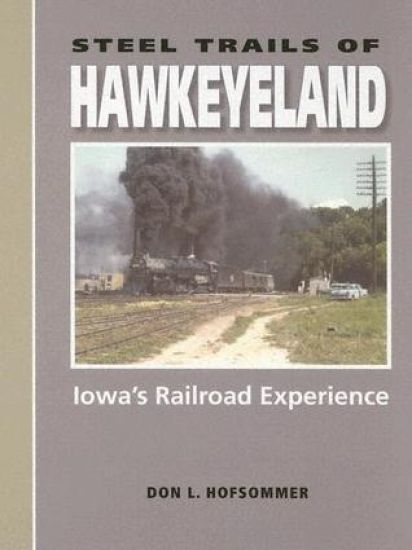
"Steel Trails of Hawkeyeland offers a comprehensive examination of railroads in Iowa from the introduction of the iron horse to the present. It is more than a study of a single, albeit significant American state. Hofsommer superbly relates local events to the national picture. His is a 'one-of-a-kind' volume." —H. Roger Grant, author of Follow the Flag: A History of the Wabash Railroad Company In the time of jet airplanes and interstate highways, the Internet and e-commerce, it is difficult to comprehend and appreciate the impact that railroads had on Iowa's landscape—in terms not just of transportation service and economic development, but of political, social, and cultural linkage as well. Railroads helped to define the character of America, and that certainly was the case in Iowa. Pioneer lines penetrated the interior from established Mississippi River communities during the state's early railroad era, and later opened up huge tracts for agricultural opportunity as well as urban development. A wide-ranging survey of Iowa's railroad experience, Steel Trails of Hawkeyeland offers a snapshot of a fascinating and critically important element in the state's history, and emphasizes the tight symbiotic relationship between Iowa and its railways. Packed with more than 250 photographs, this is a thorough and engaging book.
The Tootin' Louie

The Tootin' Louie

Don L. Hofsommer

University of Minnesota Press
2004
nidottu
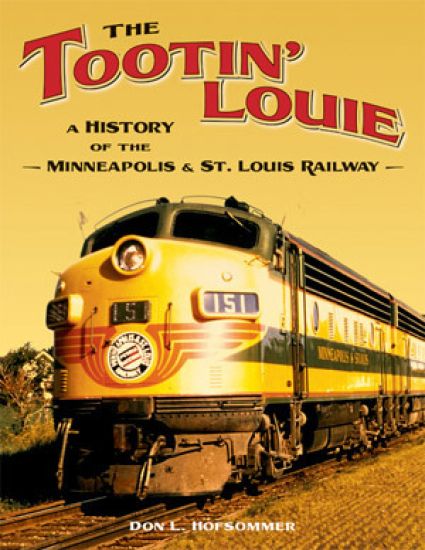
The Minneapolis & St. Louis Railway (M&StL), affectionately known as the Tootin' Louie, was founded in 1870 to serve a Minneapolis business community threatened by powerful railway interests emerging from both Chicago and Milwaukee. Although its goal of providing a direct rail artery to St. Louis proved elusive, the M&StL became a 1,600-mile road that supplied essential freight and passenger carriage to the Midwest over its ninety-year existence. In The Tootin' Louie, railroad historian Don L. Hofsommer offers a comprehensive biography of the Minneapolis & St. Louis Railway and its Minnesota, Iowa, South Dakota, and Illinois service areas from the dawn of the steamcar civilization into the post-World War II era. Incorporating an extraordinary collection of primary research documents, including station records and dispatchers' reports, Hofsommer brings the M&StL to life by vividly portraying the lives and times of the people involved in the railroad. His conversational style allows the reader to virtually see the workers, hear their stories, and sense their disappointments. The Tootin' Louie showcases the human dimension of railroading, emphasizing that the M&StL was long-lived primarily due to the loyalty of the communities and companies it served. Also a chronicle of business in the upper Midwest, this book reveals how the M&StL carried flour, lumber, even movie reels and beer between states and was often transportation for family reunions and other recreational excursions. Deeply connected to the Upper Midwest, the railroad company prospered and suffered with the communities it served. Essential reading for railway buffs and transportation historians nationwide, The Tootin' Louie is the ultimate guide to the M&StL and its place in an era of economic, social, and industrial change.
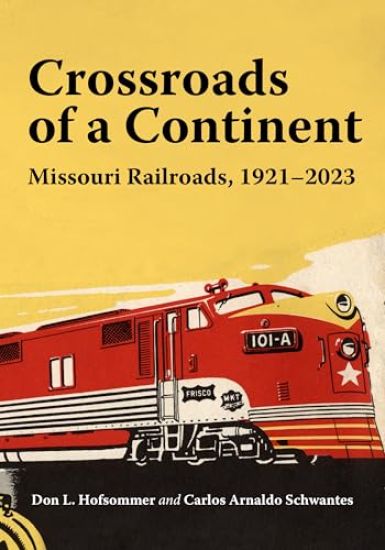
Crossroads of a Continent

Crossroads of a Continent

Peter A. Hansen; Carlos Arnaldo Schwantes; Don L. Hofsommer

INDIANA UNIVERSITY PRESS
2022
sidottu
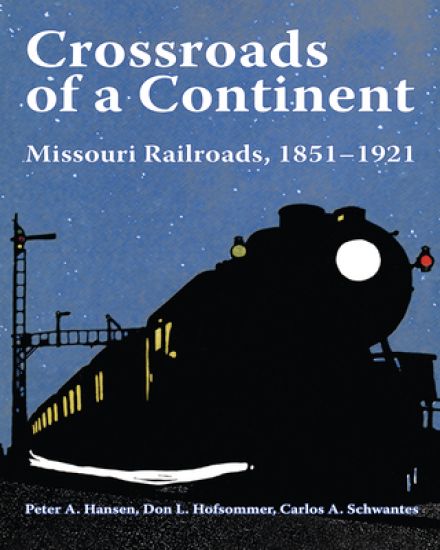
Crossroads of a Continent: Missouri Railroads, 1851-1921 tells the story of the state's railroads and their vital role in American history. Missouri and St. Louis, its largest city, are strategically located within the American Heartland. On July 4, 1851, when the Pacific Railroad of Missouri began construction in St. Louis, the city took its first step to becoming a major hub for railroads. By the 1920s, the state was crisscrossed with railways reaching toward all points of the compass. Authors Peter A. Hansen, Don L. Hofsommer, and Carlos Arnaldo Schwantes explore the history of Missouri railroads through personal, absorbing tales of the cutthroat competition between cities and between railroads that meant the difference between prosperity and obscurity, the ambitions and dreams of visionaries Fred Harvey and Arthur Stilwell, and the country's excitement over the St. Louis World's Fair of 1904. Beautifully illustrated with over 100 color images of historical railway ephemera, Crossroads of a Continent is an engaging history of key American railroads and of Missouri's critical contribution to the American story.
John H. Burdakin

John H. Burdakin

Don L. Hofsommer

Michigan State University Press
2015
sidottu
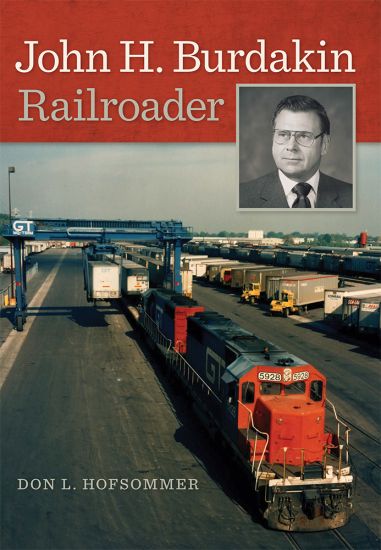
Genuinely talented and successful managers in any field—business, government, military, academia—are scarce. John Howard Burdakin was a happy exception to the norm. This engaging biography examines Burdakin’s life in the railroad industry—at Pennsylvania Railroad, Penn Central, and finally at Grand Trunk Corporation—during a tumultuous time in the transportation business and underscores his core principles and how he employed them in the management of people and property. Some contemporary observers may consider Burdakin’s often conservative style as quite out of date, but a more sober assessment reveals that his approach has utility in any time and in any field. An excellent resource for leadership professionals, this study focuses on Burdakin’s career in management, ever stressing his foundational convictions—how he came by them, how he employed those principles as a manager, and how they were understood by those who worked for him or with him. Through teamwork, trust, hard work, honesty, diligence, and integrity, Burdakin would become respected as one of the railroad industry’s brightest guiding lights.
Minneapolis and the Age of Railways

Minneapolis and the Age of Railways

Don L. Hofsommer

University of Minnesota Press
2012
nidottu
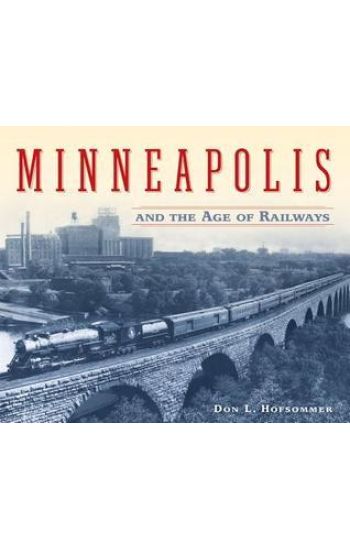
With the recent revitalization of the Minneapolis Warehouse District and the surge in construction of condominiums and other buildings near the banks of the Mississippi, the landscape of the city seems to change almost daily. Not so long ago, however, this newly desirable area was blanketed by railroads serving the lumber and flour mills and other industries powered by the enormous Falls of St. Anthony. In Minneapolis and the Age of Railways, Don Hofsommer presents Minneapolis from the 1860s into the 1950s, when railroads served as a unique link between city and countryside. Rails carried wheat and helped make Minneapolis the flour milling capital of the world; brought logs to Minneapolis to be processed into lumber that built towns and farms across the prairies; and delivered coal and all manner of manufactured goods and merchandise to Minneapolis, to its vast hinterland to the north and west, and beyond to the Rockies and the Pacific, making the growth of America’s northern heartland possible. Railroads also provided efficient, long-distance transportation for hundreds of thousands of people who traveled via Minneapolis. The Milwaukee Road and Great Northern passenger terminals in Minneapolis were vibrant places-the heart of the city-pumping passengers, mail, and express parcels into the nation’s steel-rail cardiovascular system. Illustrated with more than 200 period photographs and maps detailing the city and the tracks that crossed it, this remarkable book reflects a time not so long ago when the locomotive dominated the landscape and set the tempo for the nation-the age of railways.
The Minneapolis & St. Louis Railway

The Minneapolis & St. Louis Railway

Don L. Hofsommer

University of Minnesota Press
2009
nidottu
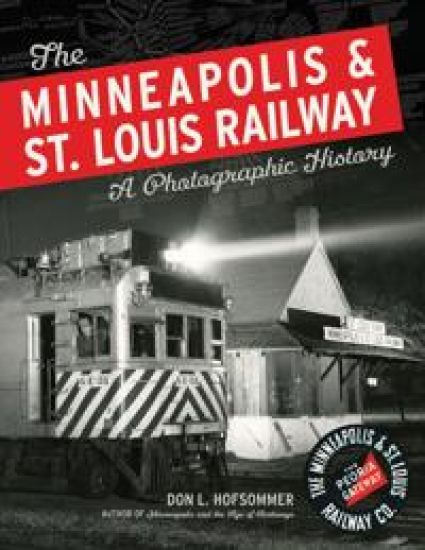
The ultimate pictorial history of the midwestern railway M&StLIn this photographic history of the Minneapolis & St. Louis Railway (M&StL), railroad historian Don L. Hofsommer revives the memory of a storied regional railroad. The Minneapolis & St. Louis Railway was created on May 26, 1870, by a group of Minnesota investors interested in establishing a railroad connection between Minneapolis and the agricultural regions to the south. While not flashy, the M&StL served Minnesota, Iowa, South Dakota, and Illinois over nine decades and was essential in opening new territory, providing freight as well as passenger carriage, and employing thousands of people. Rich in illustrations, this is not just a chronicle of a railroad but also a story and a record of a way of life in the rural upper Midwest. A must-have for readers who fondly remember the Tootin' Louie as well as rail fans, history buffs, and model railroaders in general.
Rails to the North Star

Rails to the North Star

Richard S. Prosser; Don L. Hofsommer

University of Minnesota Press
2008
nidottu
“Railroads were the country’s first big business providing the nation’s vital cardiovascular system, setting the tempo of life everywhere. All of it was reflected locally. . . . Rails to the North Star is a masterful catalog of data, a treasure-house of useful information, offering ‘one-stop shopping’ in a field central to Minnesota’s history. All aboard!” -Don L. Hofsommer In the 1960s, Richard S. Prosser prepared Rails to the North Star, the first work to trace the routes of Minnesota’s railways. From the first land grants for the construction of railroads in Minnesota in 1857, to the height of the street railways of the 1920s, to the consolidation of railroad companies in the 1960s, the work captures all facets of Minnesota’s railroad development. Much has changed since then, but rail lines still traverse Minnesota’s landscape. Featuring a section of redrafted full-color maps, Rails to the North Star is a primary resource on the history of railroads in Minnesota. Richard S. Prosser (1930–2005) was a railroad enthusiast who grew up near the Milwaukee Road in south Minneapolis. Don L. Hofsommer is professor of history at St. Cloud State University. He is the author of several books, including Minneapolis and the Age of Railways (Minnesota, 2005).
The Hook and Eye

The Hook and Eye

Don L. Hofsommer

University of Minnesota Press
2005
sidottu
Fearing the rapacious power of Chicago's railroad system in the mid-1900s, Iowa Central Railway supporters fought for a north-south route across the state that would link Minneapolis and St. Paul with St. Louis. Such a route would put the needs of Iowa's citizens first and provide transportation for the state's agricultural and industrial trade. Analyzing the origins, growth, and eventual dismantling of the Iowa Central Railway, which traversed the state from Ackley to Zearing and Mason City to Marshalltown, Don Hofsommer examines how this unremarkable, "plain vanilla" railway was an example of the life cycle of the American railroad industry. The Hook & Eye demonstrates its symbiotic relationship with its customers. Born in ambition but never rising far above its obscure origins, the Iowa Central eventually fell to outside competition from railroads based in greater metropolitan areas and was made part of the Minneapolis & St. Louis Railway in 1912. Drawing the story from station records, annual reports, newspaper articles, and interviews with former employees, The Hook & Eye brings both the industry and human sides of railroading into sharp and memorable view. Don L. Hofsommer is a native Iowan and professor of history at St. Cloud State University.
The Quanah Route

The Quanah Route

Don L. Hofsommer

Texas A M University Press
2000
nidottu
The Iron Horse forever changed the American West, from a wild frontier to a network of scattered settlements tied together by steel rails. Behind the romantic image of the galloping Iron Horse, however, lies a rich history of American business activity. Railway giants have dominated this history, but small companies such as the Quanah, Acme & Pacific Railway Company (QA&P), a short line that operated in four counties of northwestern Texas from near the turn of the century into the 1980s, had just as great an impact in their areas of operation as the giants did on the national scene. The QA&P developed in an era when railroads were tightly regulated by the Railroad Commission of Texas and the federal Interstate Commerce Commission. The in-depth historical analysis of an American short line railroad presented here is in essence the study of all such carriers in the era before deregulation. Fully illustrated with photographs and memorabilia, this volume covers the Quanah Route's birth, valiant struggle for life, and eventual demise in a changing regulatory and competitive environment. This then is a history not only of a railroad but also of its service area, particularly during one of the last great railroad construction booms, which took place in West Texas during the 1920s. Through the years of the QA&P's life, energetic men such as Sam Lazarus and Charles Sommer juggled political and financial concerns against the changing times, Lazarus making the deal by which the QA&P became a subsidiary of the St. Louis-San Francisco (Frisco) road. In the end, the "good roads movement," trucking industry, and growing American passion for the private automobile spelled the end of the railroads' golden age as the prime carrier of passengers and products. As traced by Don L. Hofsommer in the full archives of the QA&P, the history of this short line railroad embodies the pulse and pathos of a place through the changing times of the twentieth century.