Kirjojen hintavertailu – 12 873 102 kirjaa ja 26 kauppaa
Kirjailija
Don McCullin
Kirjat ja teokset yhdessä paikassa: 10 kirjaa, julkaisuja vuosilta 2002–2025, suosituimpiin kuuluu Life, Death and Everything in Between. Vertaile teosten hintoja ja tarkista saatavuus suomalaisista kirjakaupoista.
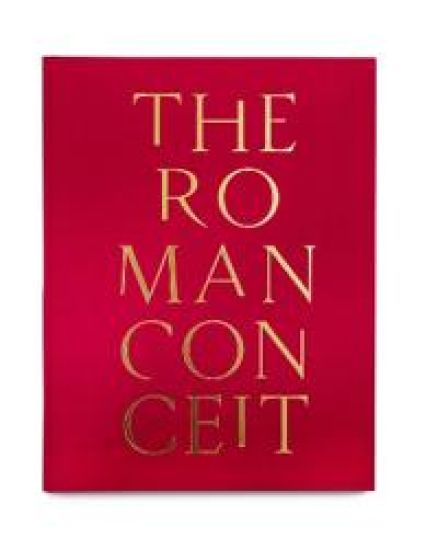
Life, Death and Everything in Between presents key photographs by Don McCullin. The book aims to be neither a retrospective nor definitive publication, but to present a selection of images valued by McCullin with the benefits of both hindsight and wisdom, encapsulating his prolific, varied and ongoing career. The book opens with McCullin’s documentary photographs made in London in the 1950s, followed by reportage made in conflicts across Europe, Africa, the Middle East and South-East Asia. More recent photographs in the book link the legacy of the Roman Empire in the Mediterranean and the latest, previously unpublished landscapes made near his home in Somerset.
McCullin’s has been creating still life arrangements in his garden shed at home in Somerset since the early 1980s. Each still life has been lyrically constructed with the natural—cut flowers (lilies, fox-gloves, gladioli), fruit or fungi—often presented alongside beloved mementos of his travels; a bronze dragon from the orient, a junk shop vase, a Hindu goddess. He arranges disparate inanimate objects with fruits and flowers as a kind of shrine to pay respect to the idea of transience versus permanence. These self-styled altars act as a homage to beauty, to the changing seasons and the fleeting passage of time. The landscapes in the book are gathered from throughout McCullin’s career—from early photographs of the Industrial North of the UK, to India, Africa and more recent images taken closer to home. Shot to enhance a metallic light, lowering skies and the denuded trees; there can be a sense of foreboding and desolation in the landscapes, as if the photographer were contemplating the aftermath of a battle scene. Vast eternities are suggested in his expanses of desert sand and biblical drama in his silver-edged cloudscapes. Any figures in the frame are incidental and merely contribute to the composition—a departure from the human-focused documentary work for which McCullin became known.
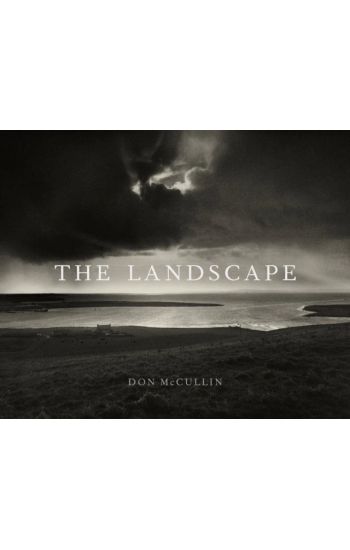
'The veteran war photographer [Don McCullin] has turned his lens to more peaceful scenes... for his latest book, The Landscape. The images carry a dramatic feel and a preference for stormy skies that reveal an intimacy with conflict and destruction.' Guardian After a career spanning sixty years, Sir Don McCullin, once a witness to conflict across the globe, has become one of the great landscape photographers of our time. McCullin’s pastoral view is far from idyllic. Though the woods and stream close to his house in Somerset have offered some respite, he has not sought out the quiet corners of rural England. He is drawn, instead, to the drama of approaching storms. He has an acute sense of how the emptiness of his immediate landscape echoes a wider tone of disquiet. McCullin is based in the geographical centre of southern England. The presence of sacred mounds, hill forts, ancient roads and the nearby monuments of the prehistoric era have shaped his sense of nationhood. But down on the Somerset Levels, he has tramped through the flooded lowlands. The imagery of his home county, ravaged by storms, inevitably projects the associations of a battlefield, or, at least, the views of one intimate with scenes of war. He is not alone in his preference for darkened clouds over clear skies. McCullin’s West Country is not far removed from the East Anglia of Constable’s Dedham Vale two centuries earlier. His knowledge of his historical predecessors places him deep in a Romantic tradition. His experience as a traveller reinforces the sense of a man on the edge of civilisation under siege. Nowhere is this more apparent than in his repeated views of the glories of Palmyra and of the destruction of this ancient Syrian city. The Landscape is the last in a long series of books published by Jonathan Cape, which encompasses the entirety of McCullin’s working life.
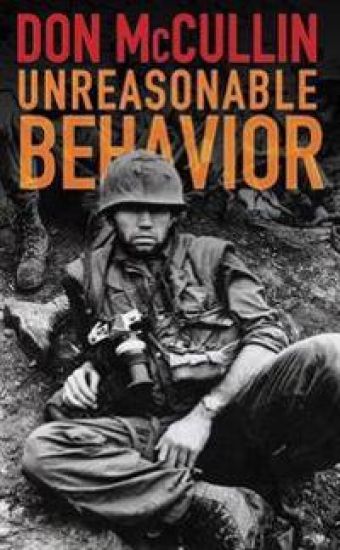
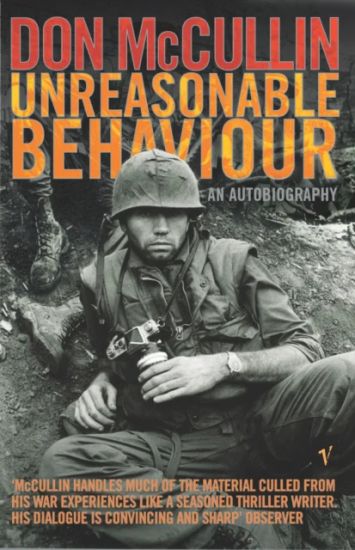
From the construction of the Berlin Wall through every major conflict of his adult lifetime up to the Syrian Civil War, photographer Don McCullin has left a trail of iconic images. Revised and updated after twenty-five years, Unreasonable Behavior traces the life and career of one of the top photojournalists of the twentieth century and beyond. Born in London in 1935, McCullin worked as a photographer's assistant in the RAF during the Suez Crisis. His early association with a North London gang led to the first publication of his pictures. As an overseas correspondent for the Sunday Times Magazine beginning in 1966, McCullin soon became a new kind of hero, taking a generation of readers beyond the insularity of post-war domestic life through the lens of his Nikon camera. He captured the realities of war in Biafra, the Congo, Vietnam, Cambodia, and the human tragedy of famine and cholera on the Bangladesh border and later, the AIDs epidemic in Sub-Saharan Africa. McCullin now spends his days in a Somerset village, where he photographs the landscape and arranges still-lifes. Harrowing and poignant, Unreasonable Behavior is an extraordinary account of a witness who triumphed over the memories that could have destroyed him.
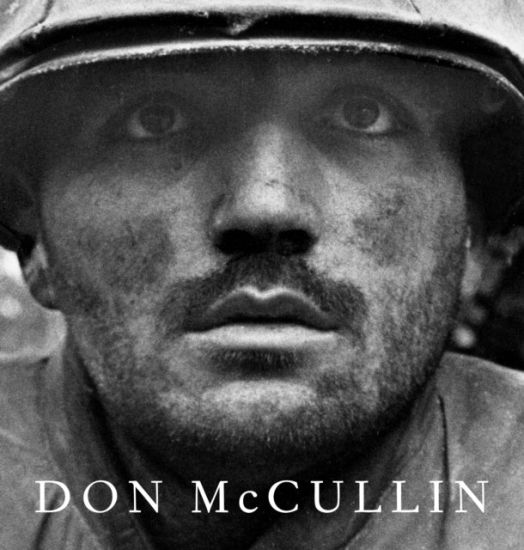
The updated retrospective published for McCullin's 80th birthday. Contains 40 new unpublished photographs and a new introduction â?? the definitive edition. McCullinâ??s reputation has long been established as one of the greatest photographers of conflict in the last century.
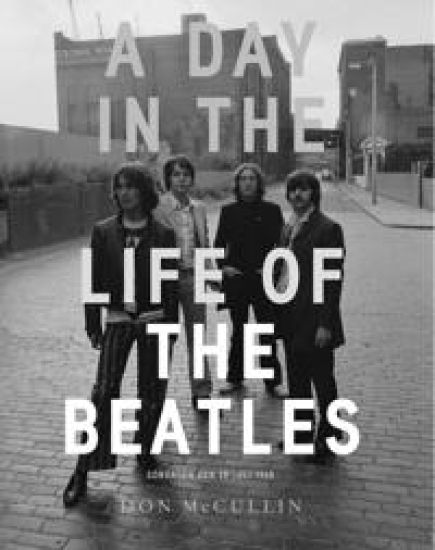
Sommaren 1968 stod Beatles på höjden av sin internationella berömmelse efter att året innan ha släppt "Sgt Pepper's Lonely Hearts Club Band". Nu var bandet mitt uppe i inspelningsarbetet med det "The White Album". Oskuldens tid var förbi och de fyra bandmedlemmarna hade blivit globala ikoner för världens unga. Söndagen den 28 juli 1968 följde Don McCullin - en av världens mest kända fotografer, Beatles från morgon till kväll. McCullin tog flera hundra bilder denna enda dag på olika platser i London. Fotograferingen avslutades hemma hos Paul McCartney i St. John's Wood. Detta är ett unikt bilddokument från den mytomspunna dag som i historieskrivningen kring Beatles har blivit känd som "The Mad Day Out". Bilderna har blivit legendariska men de allra flesta har aldrig publicerats - förrän nu. Boken innehåller nästan hundra bilder i såväl svartvitt som färg.
No other photographer in modern times has recorded war and its aftermath as widely and unsparingly as Don McCullin. After a childhood in London during the Blitz, and after the hardships of evacuation, McCullin feels his life has indeed been shaped by war. From the building of the Berlin Wall at the height of the Cold War to El Salvador and Kurdistan, McCullin has covered the major conflicts of the last fifty years, with the notable exception of the Falklands, for which he was denied access. His pictures from the Citadel in Hue and in the ruins of Beirut are among the most unflinching records of modern war. The publication of many of his greatest stories in the Sunday Times magazine did much to raise the consciousness of a generation, even if he himself now fears that photographs cannot prevent history from repeating itself. The brutality of conflict returns over and over again. McCullin here voices his despair. McCullin recounts the course of his professional life in a series of devastating texts on war, the events and the power of photography. The conclusion of the book marks McCullin’s retreat to the Somerset landscape surrounding his home, where the dark skies over England remind him yet again of images of war. Despite the sense of belonging and even contentment, for him there is no final escape.
Don McCullin's view of England is rooted in his wartime childhood and growing up around Finsbury Park in the fifties. His first published photograph was a picture of a gang from his neighbourhood, which appeared in a newspaper after a local murder; McCullin always balanced his anger at the unacceptable face of the nation with tenderness or compassion. In England combines some of his greatest work with an entirely new body of photographs. McCullin sees his home country with its perpetual social gulf between the affluent and the desperate in mind. He continues in the same black and white tradition as he did between foreign assignments for the Sunday Times in the sixties and seventies, when his view of a deprived Britain seemed as dark as the conflict zones from which he'd just escaped. This book marks his return to the cities and landscape he knew as a young photographer. At a time when we might believe the world has changed beyond our imagination, McCullin shows us a view of England where the line between the wealthy and the deprived is as defined as ever. This time he adds wry humour to his lyricism, as if the nation is as absurd as it is tragic.
McCullin grew up in London during the aftermath of World War II. He has spent a large part of his life photographing wars in the Middle East, Africa and Asia. In this book he writes of the deprivation of his childhood and the much greater misery and horror he has witnessed during his career.