Kirjojen hintavertailu – 12 903 724 kirjaa ja 27 kauppaa

Kirjailija

Don Mitchell

Kirjat ja teokset yhdessä paikassa: 17 kirjaa, julkaisuja vuosilta 1996–2023, suosituimpiin kuuluu Liftoff. Vertaile teosten hintoja ja tarkista saatavuus suomalaisista kirjakaupoista.

17 kirjaa

Kirjojen julkaisuvuodet: 1996–2023.

The Begging Question

The Begging Question

Erik Hansson; Don Mitchell

University of Nebraska Press
2023
sidottu
Begging, thought to be an inherently un-Swedish phenomenon, became a national fixture in the 2010s as homeless Romanian and Bulgarian Roma EU citizens arrived in Sweden seeking economic opportunity. People without shelter were forced to use public spaces as their private space, disturbing aesthetic and normative orders, creating anxiety among Swedish subjects and resulting in hate crimes and everyday racism. Parallel with Europe’s refugee crisis in the 2010s, the “begging question” peaked. The presence of the media’s so-called EU migrants caused a crisis in Swedish society along political, juridical, moral, and social lines due to the contradiction embodied in the Swedish authorities’ denial of social support to them while simultaneously seeking to maintain the nation’s image as promoting welfare, equality, and antiracism. In The Begging Question Erik Hansson argues that the material configurations of capitalism and class society are not only racialized but also unconsciously invested with collective anxieties and desires. By focusing on Swedish society’s response to the begging question, Hansson provides insight into the dialectics of racism. He shrewdly deploys Marxian economics and Lacanian psychoanalysis to explain how it became possible to do what once was thought impossible: criminalize begging and make fascism politically mainstream, in Sweden. What Hansson reveals is not just an insight into one of the most captivating countries on earth but also a timely glimpse into what it means to be human.
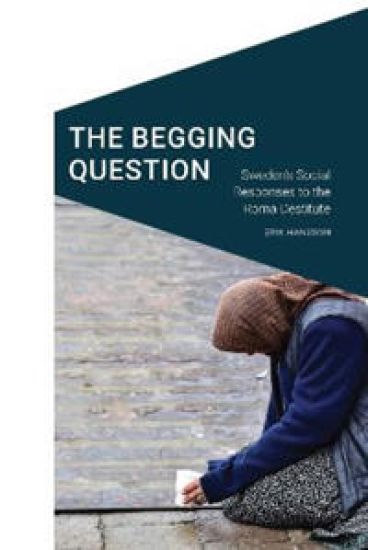
The Begging Question

The Begging Question

Erik Hansson; Don Mitchell

University of Nebraska Press
2023
pokkari
Begging, thought to be an inherently un-Swedish phenomenon, became a national fixture in the 2010s as homeless Romanian and Bulgarian Roma EU citizens arrived in Sweden seeking economic opportunity. People without shelter were forced to use public spaces as their private space, disturbing aesthetic and normative orders, creating anxiety among Swedish subjects and resulting in hate crimes and everyday racism. Parallel with Europe’s refugee crisis in the 2010s, the “begging question” peaked. The presence of the media’s so-called EU migrants caused a crisis in Swedish society along political, juridical, moral, and social lines due to the contradiction embodied in the Swedish authorities’ denial of social support to them while simultaneously seeking to maintain the nation’s image as promoting welfare, equality, and antiracism. In The Begging Question Erik Hansson argues that the material configurations of capitalism and class society are not only racialized but also unconsciously invested with collective anxieties and desires. By focusing on Swedish society’s response to the begging question, Hansson provides insight into the dialectics of racism. He shrewdly deploys Marxian economics and Lacanian psychoanalysis to explain how it became possible to do what once was thought impossible: criminalize begging and make fascism politically mainstream, in Sweden. What Hansson reveals is not just an insight into one of the most captivating countries on earth but also a timely glimpse into what it means to be human.

Shibai

Shibai

Don Mitchell

Saddle Road Press
2020
pokkari
In Japanese culture, shibai means "drama," or "play," but in Hawaiian slang it means "smokescreen," "bullshit," "gaslighting." In this uncategorizable work, Don Mitchell weaves together the brutal 1969 murder of his friend, Harvard graduate student Jane Britton, with harassment by law enforcement and the media, the language and culture of the Nagovisi people of Bougainville, the Big Island of Hawai'i and the high barrens of its dormant volcano Mauna Kea, ultra running and walking, and the New York milieus of Buffalo and Ithaca. The unforgettable Jane Britton threads through the book, along with one of the suspects, the State Police detective who eventually solved the case, and Becky Cooper, an investigative journalist in whose book about Jane's murder Mitchell is a continuing presence. Addressing himself in the second person, Mitchell explores how memory and meaning shapeshift, the way facts can shatter long-held perceptions about one's self and others, and how love and connection transcend time and culture. Mitchell creates a fascinating meld of fiction and nonfiction, past and present, speculation and discovery that excavates layers of truth, of error . . . and of shibai.
Mean Streets

Mean Streets

Don Mitchell

University of Georgia Press
2020
pokkari
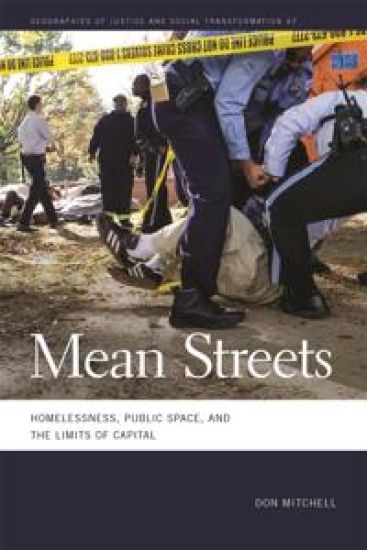
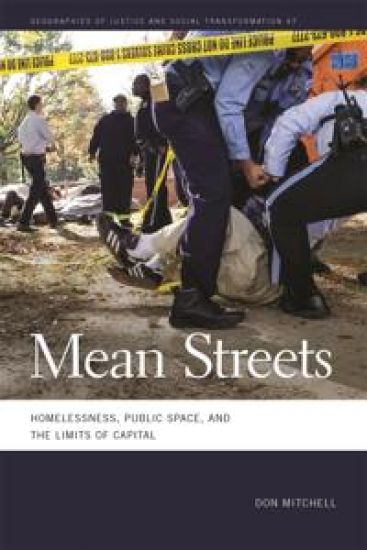
The problem of homelessness in America underpins the definition of an American city: what it is, who it is for, what it does, and why it matters. And the problem of the American city is epitomized in public space. Mean Streets offers, in a single, sustained argument, a theory of the social and economic logic behind the historical development, evolution, and especially the persistence of homelessness in the contemporary American city. By updating and revisiting thirty years of research and thinking on this subject, Don Mitchell explores the conditions that produce and sustain homelessness and how its persistence relates to the way capital works in the urban built environment. He also addresses the historical and social origins that created the boundary between public and private. Consequently, he unpacks the structure, meaning, and governance of urban public space and its uses. Mitchell traces his argument through two sections: a broadly historical overview of how homelessness has been managed in public spaces, followed by an exploration of recent Supreme Court jurisprudence that expands our national discussion. Beyond the mere regulation of the homeless and the poor, homelessness has metastasized more recently, Mitchell argues, to become a general issue that affects all urbanites.
Mean Streets

Mean Streets

Don Mitchell

University of Georgia Press
2020
sidottu
The problem of homelessness in America underpins the definition of an American city: what it is, who it is for, what it does, and why it matters. And the problem of the American city is epitomized in public space. Mean Streets offers, in a single, sustained argument, a theory of the social and economic logic behind the historical development, evolution, and especially the persistence of homelessness in the contemporary American city. By updating and revisiting thirty years of research and thinking on this subject, Don Mitchell explores the conditions that produce and sustain homelessness and how its persistence relates to the way capital works in the urban built environment. He also addresses the historical and social origins that created the boundary between public and private. Consequently, he unpacks the structure, meaning, and governance of urban public space and its uses. Mitchell traces his argument through two sections: a broadly historical overview of how homelessness has been managed in public spaces, followed by an exploration of recent Supreme Court jurisprudence that expands our national discussion. Beyond the mere regulation of the homeless and the poor, homelessness has metastasized more recently, Mitchell argues, to become a general issue that affects all urbanites.
Law of Contract (Third Edition): A Series of Lectures Prepared for CAPE Law Students in Anguilla

Law of Contract (Third Edition): A Series of Lectures Prepared for CAPE Law Students in Anguilla

Stanley E. Reid; Don Mitchell

Createspace Independent Publishing Platform
2018
nidottu
A series of lectures prepared for CAPE(R) Law Students in Anguilla. The text forms part of a series of books prepared from a compilation of lectures written by Justice Don Mitchell (Retd) and Stanley E Reid. It is primarily for use by students in Anguilla who are undertaking advanced law studies in preparation for the CAPE(R) examinations. All lectures are prepared in accordance with the current CAPE(R) syllabus for law. In this Series: Law of Tort Law of Contract Law of Real Property. Criminal Law Principles of Public Law Caribbean Legal Systems
Law of Tort (Third Edition): A Series of Lectures Prepared for Cape Law Students in Anguilla

Law of Tort (Third Edition): A Series of Lectures Prepared for Cape Law Students in Anguilla

Stanley E. Reid; Don Mitchell

Createspace Independent Publishing Platform
2018
nidottu
A series of lectures prepared for CAPE(R) Law Students in Anguilla. The text forms part of a series of books prepared from a compilation of lectures written by Justice Don Mitchell (Retd) and Stanley E Reid. It is primarily for use by students in Anguilla who are undertaking advanced law studies in preparation for the CAPE(R) examinations. All lectures are prepared in accordance with the current CAPE(R) syllabus for law. In this Series: Law of TortLaw of ContractLaw of Real Property. Criminal LawPrinciples of Public LawCaribbean Legal Systems
Law of Real Property (Third Edition): A Series of Lectures Prepared for CAPE Law Students in Anguilla

Law of Real Property (Third Edition): A Series of Lectures Prepared for CAPE Law Students in Anguilla

Stanley E. Reid; Don Mitchell

Createspace Independent Publishing Platform
2018
nidottu
A series of lectures prepared for CAPE(R) Law Students in Anguilla. The text forms part of a series of books prepared from a compilation of lectures written by Justice Don Mitchell (Retd) and Stanley E Reid. It is primarily for use by students in Anguilla who are undertaking advanced law studies in preparation for the CAPE(R) examinations. All lectures are prepared in accordance with the current CAPE(R) syllabus for law. In this Series: Law of Tort Law of Contract Law of Real Property. Criminal Law Principles of Public Law Caribbean Legal Systems
Bossart: America's Forgotten Rocket Scientist

Bossart: America's Forgotten Rocket Scientist

Don Mitchell

Mental Landscape, LLC
2016
nidottu
Born in Belgium, Karel Jan Bossart moved to America and worked with brilliant and colorful aircraft designers in the 1930s. After the Second World War, he developed the first American intercontinental ballistic missile, employing radical innovations in design. Initially skeptical, the US Air Force embraced his plan after they realized that the Soviet Union was close to completing a similar weapon system.
They Saved the Crops

They Saved the Crops

Don Mitchell

University of Georgia Press
2012
pokkari
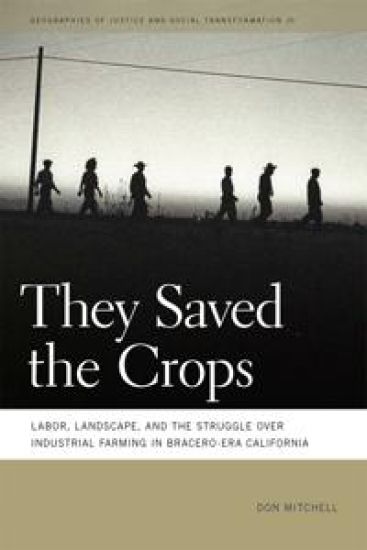
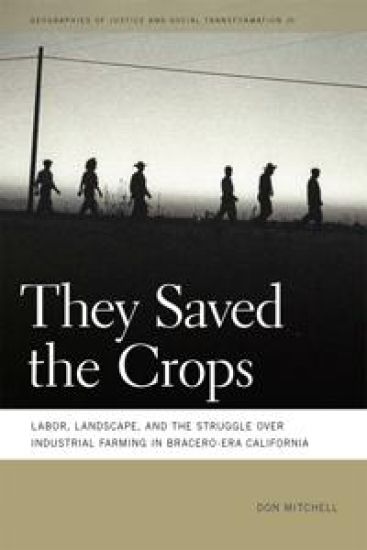
At the outset of World War II, California agriculture seemed to be on the cusp of change. Many Californians, reacting to the ravages of the Great Depression, called for a radical reorientation of the highly exploitative labor relations that had allowed the state to become such a productive farming frontier. But with the importation of the first braceros—“guest workers” from Mexico hired on an “emergency” basis after the United States entered the war—an even more intense struggle ensued over how agriculture would be conducted in the state. Esteemed geographer Don Mitchell argues that by delineating the need for cheap, flexible farm labor as a problem and solving it via the importation of relatively disempowered migrant workers, an alliance of growers and government actors committed the United States to an agricultural system that is, in important respects, still with us. They Saved the Crops is a theoretically rich and stylistically innovative account of grower rapaciousness, worker militancy, rampant corruption, and bureaucratic bias. Mitchell shows that growers, workers, and officials confronted a series of problems that shaped—and were shaped by—the landscape itself. For growers, the problem was finding the right kind of labor at the right price at the right time. Workers struggled for survival and attempted to win power in the face of economic exploitation and unremitting violence. Bureaucrats tried to harness political power to meet the demands of, as one put it, “the people whom we serve.” Drawing on a deep well of empirical materials from archives up and down the state, Mitchell’s account promises to be the definitive book about California agriculture in the turbulent decades of the mid-twentieth century.
They Saved the Crops

They Saved the Crops

Don Mitchell

University of Georgia Press
2012
sidottu
At the outset of World War II, California agriculture seemed to be on the cusp of change. Many Californians, reacting to the ravages of the Great Depression, called for a radical reorientation of the highly exploitative labor relations that had allowed the state to become such a productive farming frontier. But with the importation of the first braceros—“guest workers” from Mexico hired on an “emergency” basis after the United States entered the war—an even more intense struggle ensued over how agriculture would be conducted in the state. Esteemed geographer Don Mitchell argues that by delineating the need for cheap, flexible farm labor as a problem and solving it via the importation of relatively disempowered migrant workers, an alliance of growers and government actors committed the United States to an agricultural system that is, in important respects, still with us. They Saved the Crops is a theoretically rich and stylistically innovative account of grower rapaciousness, worker militancy, rampant corruption, and bureaucratic bias. Mitchell shows that growers, workers, and officials confronted a series of problems that shaped—and were shaped by—the landscape itself. For growers, the problem was finding the right kind of labor at the right price at the right time. Workers struggled for survival and attempted to win power in the face of economic exploitation and unremitting violence. Bureaucrats tried to harness political power to meet the demands of, as one put it, “the people whom we serve.” Drawing on a deep well of empirical materials from archives up and down the state, Mitchell’s account promises to be the definitive book about California agriculture in the turbulent decades of the mid-twentieth century.
Liftoff

Liftoff

Don Mitchell

National Geographic Books
2006
nidottu
War hero, test pilot, American astronaut, and U. S. Senator--for John Glenn, serving his country has always been a joyous adventure. How does a boy from a small Ohio town grow up to become one of the most enduring heroes in American history? Young readers find out as they follow his inspiring story from his schoolboy days in New Concord, Ohio, to his adventures as a highly decorated Marine Corps pilot in both World War II and the Korean War, a test pilot, one of the seven Mercury astronauts and the first American to orbit Earth, a successful businessman, a U. S. Senator, and, at the age of 77, the oldest human being in space. Don Mitchell skillfully weaves highlights from John Glenn's extraordinary life with inspirational quotes and dynamic images to create an intimate portrait of a man whose challenge to young people everywhere is to become dedicated "to a purpose larger than themselves." This superbly illustrated book follows the life trajectory of a very focused, highly competitive man, driven by a sense of duty to his country and an innate sense of obligation towards others. Readers will find themselves inspired to "liftoff" to new heights of achievement.
Liftoff: A Photobiography of John Glenn

Liftoff: A Photobiography of John Glenn

Don Mitchell

NATIONAL GEOGRAPHIC KIDS
2006
sidottu
War hero, test pilot, American astronaut, and U. S. Senator--for John Glenn, serving his country has always been a joyous adventure. How does a boy from a small Ohio town grow up to become one of the most enduring heroes in American history? Young readers find out as they follow his inspiring story from his schoolboy days in New Concord, Ohio, to his adventures as a highly decorated Marine Corps pilot in both World War II and the Korean War, a test pilot, one of the seven Mercury astronauts and the first American to orbit Earth, a successful businessman, a U. S. Senator, and, at the age of 77, the oldest human being in space. Don Mitchell skillfully weaves highlights from John Glenn's extraordinary life with inspirational quotes and dynamic images to create an intimate portrait of a man whose challenge to young people everywhere is to become dedicated "to a purpose larger than themselves." This superbly illustrated book follows the life trajectory of a very focused, highly competitive man, driven by a sense of duty to his country and an innate sense of obligation towards others. Readers will find themselves inspired to "liftoff" to new heights of achievement.
The Right to the City

The Right to the City

Don Mitchell

Guilford Publications
2003
nidottu
Includes a 2014 Postscript addressing Occupy Wall Street and other developments. Efforts to secure the American city have life-or-death implications, yet demands for heightened surveillance and security throw into sharp relief timeless questions about the nature of public space, how it is to be used, and under what conditions. Blending historical and geographical analysis, this book examines the vital relationship between struggles over public space and movements for social justice in the United States. Don Mitchell explores how political dissent gains meaning and momentum--and is regulated and policed--in the real, physical spaces of the city. A series of linked cases provides in-depth analyses of early twentieth-century labor demonstrations, the Free Speech Movement and the history of People's Park in Berkeley, contemporary anti-abortion protests, and efforts to remove homeless people from urban streets.
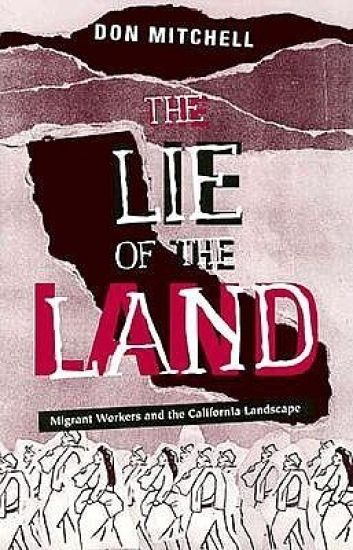
Lie of the Land

Lie of the Land

Don Mitchell

University of Minnesota Press
1996
nidottu
A hard-hitting look at the story behind California's famous scenery. The beauty of the California landscape is integral to its place in the imagination of generations of people around the world. In The Lie of the Land, geographer Don Mitchell looks at the human costs associated with this famous scenery. Through an account of the labor history of the state, Mitchell examines the material and ideological struggles over living and working conditions that played a large part in the construction of the contemporary California landscape. The Lie of the Land examines the way the California landscape was built on the backs of migrant workers, focusing on migratory labor and agribusiness before World War II. The book relates the historical geography of California to the processes of labor that made it, discussing not only significant strikes but also on the everyday existence of migrant workers in the labor camps, fields, and “Hoovervilles” where they lived. Mitchell places class struggle at the heart of social development, demonstrating concretely how farm workers affected their social and material environment, as well as exploring how farm owners responded to their workers’ efforts to improve their living and working conditions. Mitchell also places “reformers” in context, revealing the actual nature of their role in relation to migrant workers’ efforts-that of undermining the struggle for genuine social change. In addition, this volume captures the significance of the changing composition of the agricultural workforce, particularly in racial terms, as the class struggle evolved over a period of decades. Mitchell has written a narrative history that describes the intimate connection between landscape representations and the material form of geography. The Lie of the Land places people squarely in the middle of the landscapes they inhabit, shedding light on the complex and seemingly contradictory interactions between progressive state agents, radical workers, and California growers as they seek to remake the land in their own image.