Kirjojen hintavertailu – 12 859 824 kirjaa ja 27 kauppaa

Kirjailija

Donald E. Graves

Kirjat ja teokset yhdessä paikassa: 14 kirjaa, julkaisuja vuosilta 1995–2024, suosituimpiin kuuluu Blood and Steel. Vertaile teosten hintoja ja tarkista saatavuus suomalaisista kirjakaupoista.

Nimi esiintyy myös muodoissa: Donald E Graves

14 kirjaa

Kirjojen julkaisuvuodet: 1995–2024.

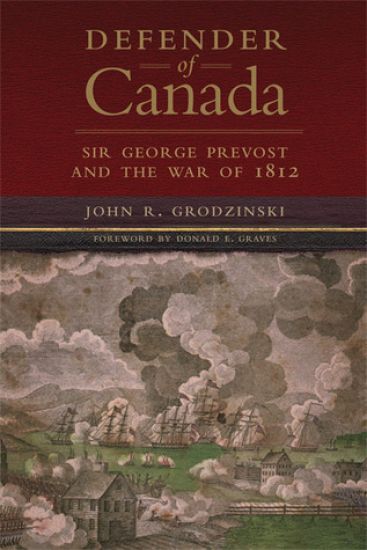
Defender of Canada Volume 40

Defender of Canada Volume 40

Tanya Grodzinski; Donald E. Graves

UNIVERSITY OF OKLAHOMA PRESS
2024
nidottu
When war broke out between Great Britain and the United States in 1812, Sir George Prevost, captain general and governor in chief of British North America, was responsible for defending a group of North American colonies that stretched as far as the distance from Paris to Moscow. He also commanded one of the largest British overseas forces during the Napoleonic Wars. Defender of Canada, the first book-length examination of Prevost’s career, offers a reinterpretation of the general’s military leadership in the War of 1812. Historian John R. Grodzinski shows that Prevost deserves far greater credit for the successful defense of Canada than he has heretofore received. Earlier accounts portrayed Prevost as overly cautious and attributed the preservation of Canada to other officers, but Grodzinski challenges these assumptions and restores the general to his rightful place as British North America’s key military figure during the War of 1812. Grodzinski shows that Prevost’s strategic insight enabled him to enact a practicable defense despite scarce resources and to ably integrate naval power into his defensive plans. Prevost’s range of responsibilities in British North America were daunting. They included overseeing joint endeavors with Indian allies, managing logistical matters, monitoring naval construction and personnel needs, supervising colonial governments, and commanding the defense of Canada. Tasked with protecting an extensive and complex territory, Prevost employed a mix of soldiers, sailors, locally raised forces, and indigenous people in taking advantage of the American military’s weaknesses to defeat most of its plans. Following his recall to Britain in 1815 after the defeat at the Battle of Plattsburgh, Prevost would have been court-martialed had he not died unexpectedly. In carefully examining the charges leveled against Prevost, Grodzinski shows the general to have preserved the integrity of Canada, allowing diplomats to ensure its continued existence.
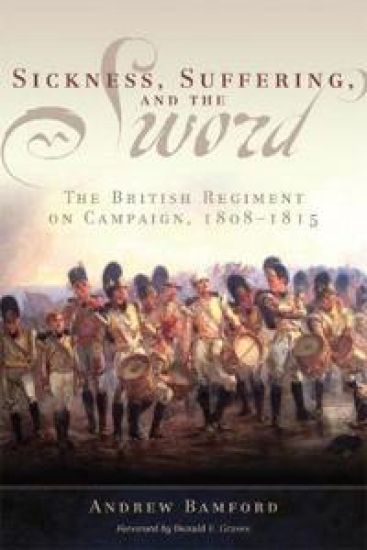
Sickness, Suffering, and the Sword

Sickness, Suffering, and the Sword

Andrew Bamford; Donald E. Graves

University of Oklahoma Press
2021
nidottu
Although an army’s success is often measured in battle outcomes, its victories depend on strengths that may be less obvious on the field. In Sickness, Suffering, and the Sword, military historian Andrew Bamford assesses the effectiveness of the British Army in sustained campaigning during the Napoleonic Wars. In the process, he offers a fresh and controversial look at Britain’s military system, showing that success or failure on campaign rested on the day-to-day experiences of regimental units rather than the army as a whole. Bamford draws his title from the words of Captain Moyle Sherer, who during the winter of 1816-1817 wrote an account of his service during the Peninsular War: “My regiment has never been very roughly handled in the field. . . But, alas! What between sickness, suffering, and the sword, few, very few of those men are now in existence.” Bamford argues that those daily scourges of such often-ignored factors as noncombat deaths and equine strength and losses determined outcomes on the battlefield. In the nineteenth century, the British Army was a collection of regiments rather than a single unified body, and the regimental system bore the responsibility of supplying manpower on that field. Between 1808 and 1815, when Britain was fighting a global conflict far greater than its military capabilities, the system nearly collapsed. Only a few advantages narrowly outweighed the army’s increasing inability to meet manpower requirements. This book examines those critical dynamics in Britain’s major early-nineteenth-century campaigns: the Peninsular War (1808-1814), the Walcheren Expedition (1809), the American War (1812-1815), and the growing commitments in northern Europe from 1813 on. Drawn from primary documents, Bamford’s statistical analysis compares the vast disparities between regiments and different theatres of war and complements recent studies of health and sickness in the British Army.
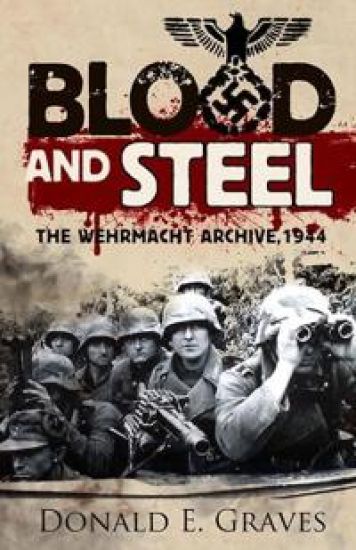
Blood and Steel

Blood and Steel

Donald E. Graves

Frontline Books
2014
sidottu
Ordered by Hitler 'to hold, or to die' and to fight 'to the last grenade and round', the German army was a formidable opponent during the 1944 Normandy campaign. This book depicts the experience of that army in Normandy through its own records and documentation. The Wehrmacht Archive is an informative and colourful collection of translated original orders, diaries, letters, after action reports, and even jokes, as well as Allied technical evaluations of weapons, vehicles and equipment and transcripts of prisoner of war interrogations. You will also learn from official documents about the Germans' efforts to cope with Allied air and artillery superiority, create new tactical methods for all arms and maintain discipline in the face of overwhelming odds.
Defender of Canada

Defender of Canada

John R. Grodzinski; Donald E. Graves

University of Oklahoma Press
2013
sidottu
When war broke out between Great Britain and the United States in 1812, Sir George Prevost, captain general and governor in chief of British North America, was responsible for defending a group of North American colonies that stretched as far as the distance from Paris to Moscow. He also commanded one of the largest British overseas forces during the Napoleonic Wars. Defender of Canada, the first book-length examination of Prevost's career, offers a reinterpretation of the general's military leadership in the War of 1812. Historian John R. Grodzinski shows that Prevost deserves far greater credit for the successful defense of Canada than he has heretofore received. Earlier accounts portrayed Prevost as overly cautious and attributed the preservation of Canada to other officers, but Grodzinski challenges these assumptions and restores the general to his rightful place as British North America's key military figure during the War of 1812. Grodzinski shows that Prevost's strategic insight enabled him to enact a practicable defense despite scarce resources and to ably integrate naval power into his defensive plans. Prevost's range of responsibilities in British North America were daunting. They included overseeing joint endeavors with Indian allies, managing logistical matters, monitoring naval construction and personnel needs, supervising colonial governments, and commanding the defense of Canada. Tasked with protecting an extensive and complex territory, Prevost employed a mix of soldiers, sailors, locally raised forces, and indigenous people in taking advantage of the American military's weaknesses to defeat most of its plans. Following his recall to Britain in 1815 after the defeat at the Battle of Plattsburgh, Prevost would have been court-martialed had he not died unexpectedly. In carefully examining the charges leveled against Prevost, Grodzinski shows the general to have preserved the integrity of Canada, allowing diplomats to ensure its continued existence.
Sickness, Suffering, and the Sword

Sickness, Suffering, and the Sword

Andrew Bamford; Donald E. Graves

University of Oklahoma Press
2013
sidottu
Although an army's success is often measured in battle outcomes, its victories depend on strengths that may be less obvious on the field. In Sickness, Suffering, and the Sword, military historian Andrew Bamford assesses the effectiveness of the British Army in sustained campaigning during the Napoleonic Wars. In the process, he offers a fresh and controversial look at Britain's military system, showing that success or failure on campaign rested on the day-to-day experiences of regimental units rather than the army as a whole. Bamford draws his title from the words of Captain Moyle Sherer, who during the winter of 1816-1817 wrote an account of his service during the Peninsular War: ""My regiment has never been very roughly handled in the field. . . But, alas! What between sickness, suffering, and the sword, few, very few of those men are now in existence."" Bamford argues that those daily scourges of such often-ignored factors as noncombat deaths and equine strength and losses determined outcomes on the battlefield. In the nineteenth century, the British Army was a collection of regiments rather than a single unified body, and the regimental system bore the responsibility of supplying manpower on that field. Between 1808 and 1815, when Britain was fighting a global conflict far greater than its military capabilities, the system nearly collapsed. Only a few advantages narrowly outweighed the army's increasing inability to meet manpower requirements. This book examines those critical dynamics in Britain's major early-nineteenth-century campaigns: the Peninsular War (1808-1814), the Walcheren Expedition (1809), the American War (1812-1815), and the growing commitments in northern Europe from 1813 on. Drawn from primary documents, Bamford's statistical analysis compares the vast disparities between regiments and different theatres of war and complements recent studies of health and sickness in the British Army.
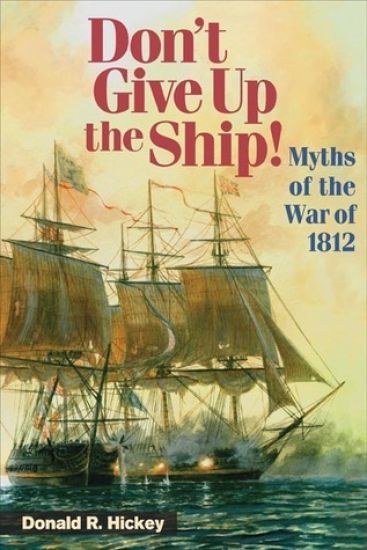
Don't Give Up the Ship!

Don't Give Up the Ship!

Donald R. Hickey; Donald E Graves

University of Illinois Press
2007
nidottu
No longer willing to accept naval blockades, the impressment of American seamen, and seizures of American ships and cargos, the United States declared war on Great Britain. The aim was to frighten Britain into concessions and, if that failed, to bring the war to a swift conclusion with a quick strike at Canada. But the British refused to cave in to American demands, the Canadian campaign ended in disaster, and the U. S. government had to flee Washington, D. C., when it was invaded and burned by a British army. By all objective measures, the War of 1812 was a debacle for the young republic, and yet it was celebrated as a great military triumph. The American people believed they had won the war and expelled the invader. Oliver H. Perry became a military hero, Francis Scott Key composed what became the national anthem and commenced a national reverence for the flag, and the U. S. S. Constitution, "Old Ironsides," became a symbol of American invincibility. Every aspect of the war, from its causes to its conclusion, was refashioned to heighten the successes, obscure the mistakes, and blur embarrassing distinctions, long before there were mass media or public relations officers in the Pentagon. In this entertaining and meticulously researched book by America's leading authority on the War of 1812, Donald R. Hickey dispels the many misconcep-tions that distort our view of America's second war with Great Britain. Embracing military, naval, political, economic, and diplomatic analyses, Hickey looks carefully at how the war was fought between 1812 and 1815, and how it was remembered thereafter. Was the original declaration of war a bluff? What were the real roles of Canadian traitor Joseph Willcocks, Mohawk leader John Norton, pirate Jean Laffite, and American naval hero Lucy Baker? Who killed the Shawnee chief Tecumseh and who shot the British general Isaac Brock? Who actually won the war, and what is its lasting legacy? Hickey peels away fantasies and embellishments to explore why cer-tain myths gained currency and how they contributed to the way that the United States and Canada view themselves and each other.
Fix Bayonets!

Fix Bayonets!

Donald E Graves

Robin Brass Studio
2007
sidottu
Thomas Pearson, a country parson's son, was commissioned in the 23rd Foot, Royal Welch Fusiliers, in 1796. In a career spanning 47 years he fought on three continents, was wounded five times, received two battlefield promotions and achieved the rank of general. Fix Bayonets! follows this hard-biting soldier in the deserts of Egypt, the dikes of the Netherlands, the jungles of the West Indies, the mountains of Spain and the wilderness of America. Through Pearson's true-life adventures we learn about war, wine, women and song in a fascinating epoch and meet a cast of famous and infamous characters, including King George III, Napoleon, the Duke of Wellington, James Madison, Winfield Scott, Marshal Soult, Lord Nelson and Major General William (Auld Grog Willie) Stewart. The centrepiece is a detailed account of the bloody battle of Albuera in 1811. Albuera was the high point of Pearson's career - he went into it as a junior major in his brigade and came out as the brigade commander because he was the only officer above the rank of captain still standing.
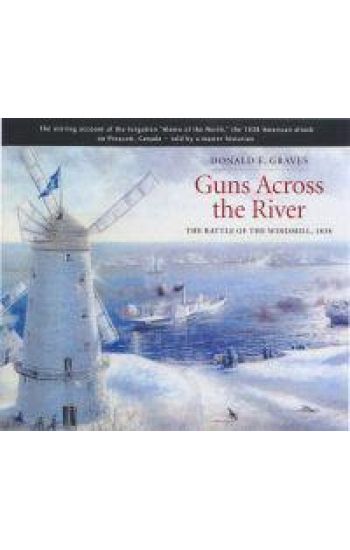
Guns Across the River

Guns Across the River

Donald E. Graves

Spellmount Publishers Ltd
2001
nidottu
The story of the 1838 American invasion of Canada at Prescott by the "Patriot Hunters", a secret terrorist organization. This book explores the background of the political unrest in Canada and the rise of the "Patriot Hunters" on the American side of the border. One of the most ambitious expeditions was the attack in November 1838, when 250 members of the "Patriot Hunters", armed to the teeth, sailed down the St Lawrence River and landed near Prescott, Ontario, where they occupied a stone windmill. It took five days of bloody fighting by British regular troops and Canadian militia to crush this invasion and capture the invaders. The prisoners were taken to Fort Henry at Kingston, where there was a mass trial, resulting in 11 executions and 40 deportations to Australian penal colonies. It describes the comic-opera Hunter flotilla that sailed down the St Lawrence and gives a detailed, minute-by-minute reconstruction of the military action, told from both sides.
Fighting for Canada

Fighting for Canada

Donald E Graves

Spellmount Publishers Ltd
2001
nidottu
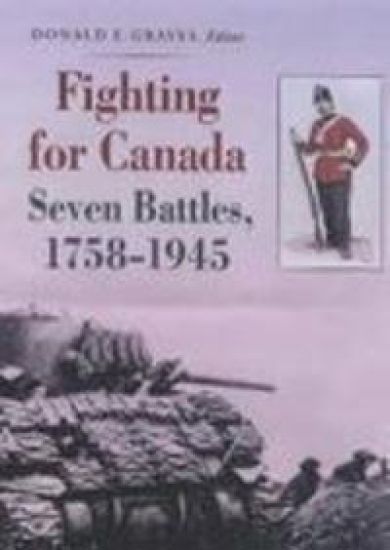
This text studies seven battles fought in defence of Canada or by Canadian soldiers fighting overseas, between the period 1758 to 1945. The emphasis throughout is on the tactical level of war, where personal leadership, training and experience dictate life or death.
Field of Glory

Field of Glory

Donald E Graves

Robin Brass Studio
2000
nidottu
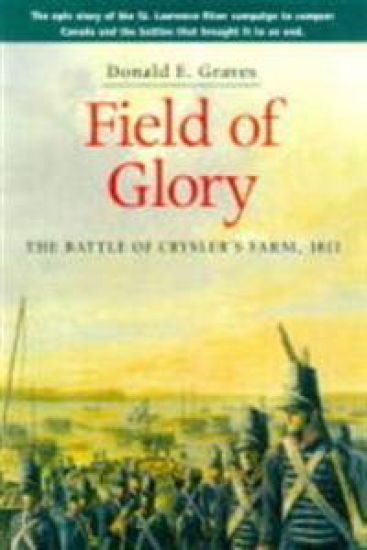
In the autumn of 1813, the United States staged the largest military operation of the War of 1812. Two armies, one marching north from Lake Champlain through swamp and forest, the other sailing down the St. Lawrence River in a flotilla of 300 small boats, invaded Canada -- their objective, the city of Montreal. The fears of the people of British North America were laid to rest when outnumbered British, Canadian and native troops won two important military victories -- the Battle of Chateauguay and, above all, the Battle of Crysler's Farm, fought on a muddy field beside the St Lawrence River. The Battle of Crysler's Farm is commemorated today by the Battle of Crysler's Farm Memorial and Visitor Centre beside the St Lawrence River at Upper Canada Village, near Morrisburg, Ontario.
Field of Glory

Field of Glory

Donald E. Graves

Spellmount Publishers Ltd
1999
nidottu
This is a story of the massive offensive of two American armies and of two battles. It includes comprehensive appendices covering weapons and weapons performance, and lists of medals and their recipients.
Red Coats & Grey Jackets

Red Coats & Grey Jackets

Donald E. Graves

Dundurn Group Ltd
1996
pokkari
"… the definitive analysis of the battle of Chippawa. Donald Graves establishes its historical background, describes the opposing armies, brings them into battle, and assesses the results, without wasting a word yet his account of the battle combines high colour and exact detail. You find yourself alternately in the generals’ boots and the privates’ brogans, in all the smoke, shock and uproar of a short-range, stand-up fire fight." - John Elting, author of Swords Around a Throne: Napoleon’s Grande Armee
South Albertas

South Albertas

Donald E. Graves

Spellmount Publishers Ltd
1995
sidottu
This is a detailed and lavish wartime history of the 29th Canadian Armored Recce Regiment - the South Albertas. Tasked with closing the Falaise Gap in August 1944, they are one of the most famous Canadian units.