Kirjailija
Donald G. Bloesch
Kirjat ja teokset yhdessä paikassa: 23 kirjaa, julkaisuja vuosilta 1987–2014, suosituimpiin kuuluu The Hermeneutics of Ultimacy. Vertaile teosten hintoja ja tarkista saatavuus suomalaisista kirjakaupoista.
Nimi esiintyy myös muodoissa: Donald G Bloesch
23 kirjaa
Kirjojen julkaisuvuodet: 1987–2014.
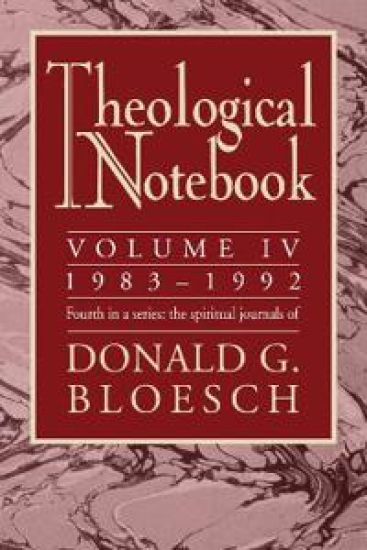
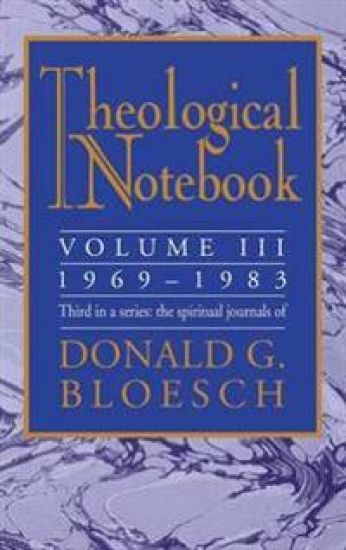
This notebook--a spiritual journal by noted evangelical theologian Donald Bloesch--covers a range of subjects, including sin and sainthood, heresy and orthodoxy, the church and the sacraments, marriage and celibacy, failure and success, despair and hope. Bloesch's lucid, concise writing style polishes and illuminates the gems of his thought. The result is a scintillating collection of precision and depth--a treasury of theological reflection. Donald G. Bloesch was Professor Emeritus at Dubuque Theological Seminary in Dubuque, Iowa. His other books include Essentials of Evangelical Theology, Is the Bible Sexist?, and The Future of Evangelical Christianity.
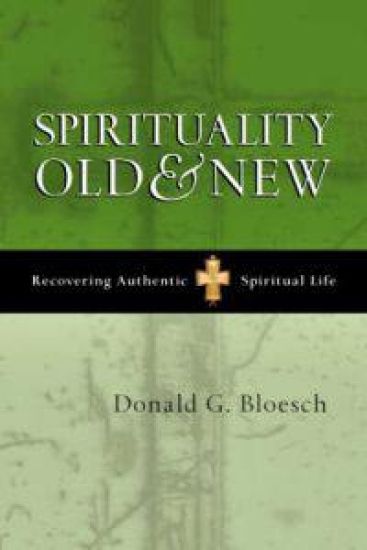
Donald Bloesch surveys the history of Christian thinking on the nature of the spiritual life. In his own charitable, ecumenical yet evangelical way he provides incisive guidance toward a genuine Christian spirituality that is firmly rooted in biblical faith and fully aware of the positive contributions of various streams of Christian tradition, while critically engaging the current plethora of options being offered today.
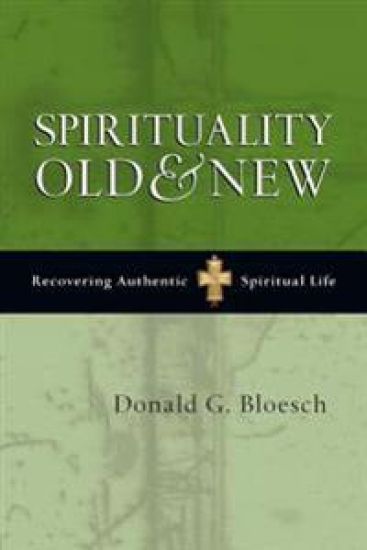
Donald Bloesch surveys this history of Christian thinking on the nature of the spiritual life. In his own charitable, ecumenical yet evangelical way he provides incisive guidance toward a genuine Christian spirituality that is firmly rooted in biblical faith and fully aware of the positive contributions of various streams of Christian tradition, while critically engaging the current plethora of options being offered today.
Wrestling with biblical texts that often take metaphorical form, Bloesch avoids rationalistic reductionism as well as timid agnosticism. While he acknowledges mystery and even paradox, Bloesch finds biblical revelation much more than sufficient to illuminate the central truths of a Christian hope articulated throughout the history of the church. The Last Things is not just a review of past Christian eschatology but a fresh articulation of the grace and glory of God yet to be consummated. The triumph of the grace of Jesus Christ and the dawning of hope beckon us to reach out in the power of the Spirit to receive that blessed future and the promise to renew the life of the church universal today.
With his customary encyclopedic reach and epigrammatic style, Donald Bloesch turns his attention to the hotly disputed, yet absolutely crucial, subject of the person and work of Jesus Christ. He brings a much-needed clarity to the current christological debate, which, as Hans Kung noted, "has persisted since the dawn of the modern age and] has not yet been resolved." Drawing on more than forty years of devoted study, Donald Bloesch now brings a much-needed clarity to the discussion. Well apprised of the most recent developments, yet grounded in his own deep Reformed faith, Bloesch goes beneath current reconstructions of the Jesus of history to probe underlying issues of theological method, models of salvation, the plausibility of miracles, the language of faith and the doctrine of sin. As Bloesch declares, "Christology constitutes the heart of theology, since it focuses on God's work of salvation in the historical figure Jesus of Nazareth, and the bearing that this has on the history of humankind. To know the nature of God we must see his face in Jesus Christ." This important book is a vital exercise in seeing Jesus Christ faithfully and truthfully."
This wide-ranging and in-depth reflection on the presence, reality and ministry of the Holy Spirit serves as a landmark guide to those seeking a faithful theological understanding of the Holy Spirit as well as those searching for a renewing and empowering hope for the church of Jesus Christ.
The doctrine of God is receiving renewed and vigorous attention in theology. Even a cursory examination of recent scholarship reveals what leading evangelical theologian Donald Bloesch describes as "a mounting controversy over the concept of God." God is variously portrayed as vulnerable (Jurgen Moltmann, Clark Pinnock), as lover (Norman Pittenger, Ronald Goetz), as friend (Alfred North Whitehead, Sallie McFague) and as empowerer (Rosemary Radford Ruether). Bloesch agrees that many of these proposals have some biblical merit. But what is lacking, he argues, "is a strong affirmation of the holiness and almightiness of God." So in this volume, while Bloesch offers cogent criticisms of the classical view of God, he skillfully seeks to hold in faithful tension "the polarities that are reflected in God's nature and activity--his majesty as well as his vulnerability, his sovereignty as well as his grace, his wholly otherness as well as his unsurpassable closeness, his holiness as well as his love."
Voted one of Christianity Today's 1995 Books of the Year In Holy Scripture, Donald G. Bloesch sets out the pivotal evangelical doctrines of the Bible's revelation, inspiration and interpretation. Wishing to "defend the orthodox evangelical faith from its friends as well as its enemies," Bloesch provocatively argues against both evangelical rationalism and liberal experientialism. And he proposes the alternative of biblical evangelicalism--which sees Scripture as the written Word of God but stresses that it becomes the living Word of God only through the illumination of the Holy Spirit. In dialogue with Martin Luther, John Calvin, P. T. Forsyth, Karl Barth and Emil Brunner, Bloesch's Holy Scripture examines the implications of biblical authority for the twenty-first century. It surveys the role of the Bible as seen within the Bible itself and as that role has unfolded through centuries of Christian tradition. It also explains and critiques many highly contested issues, such as the value of biblical criticism, the meaning of myth, the plethora of hermeneutical options and the nature of truth.
In the inaugural volume of his seven-volume systematic theology, Christian Foundations, Donald G. Bloesch surveys his method. His approach is conversant with up-to-the-minute theological concerns but also vitally grounded in the Reformation emphasis on biblical revelation illumined by the Holy Spirit. InA Theology of Word & Spirit Bloesch draws out the contemporary implications of the biblically founded theology of Augustine, Luther, Calvin and Barth. He also offers fresh and faithful discussions of relativism, the present church conflict over biblical authority, fideism and rationalism, feminine-gender language for God, narrative theology, and the hermeneutical problem. Harvesting the fruit of a lifetime of devoted scholarship and passionate dialogue, Bloesch offers his assessments and reflections at a time of extraordinary change and challenge. InA Theology of Word & Spirit he points the way toward a confessional theology for the 21st century.
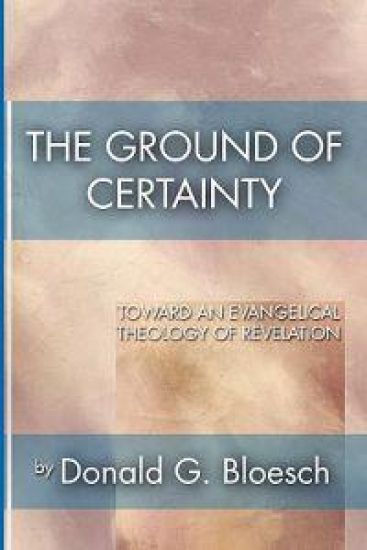
In this book Dr. Donald Bloesch sharply diverges from much traditional thinking on the relationship between theology and philosophy and suggests an alternative that is solidly anchored in biblical faith. Instead of seeing this relationship in terms of synthesis or correlation or even simple subordination, he calls for the conversion and transformation of philosophical meanings in the light of the biblical revelation. Philosophy can be of considerable aid to theologians, but they must take care not to let philosophical concepts determine the meaning of faith. Reason can be enlisted in the service of revelation, but it cannot establish the truth of revelation. Against the irrationalism of contemporary existentialist theology and the rationalism that has pervaded both scholastic orthodoxy (Catholic and Protestant) and liberal philosophical theology, Bloesch proposes an evangelical theology of revelation that seeks to employ reason in the task of understanding the faith. The author upholds not an autonomous reason but an obedient reason, and he shows that this ideal has support in the history of theology as well as in the Bible.