Kirjailija
Donald Getz
Kirjat ja teokset yhdessä paikassa: 13 kirjaa, julkaisuja vuosilta 2004–2024, suosituimpiin kuuluu Foodies and Food Tourism. Vertaile teosten hintoja ja tarkista saatavuus suomalaisista kirjakaupoista.
13 kirjaa
Kirjojen julkaisuvuodet: 2004–2024.
Fully updated and revised in its fifth edition, Event Studies remains the most comprehensive book devoted to developing knowledge and theory about event management and event tourism, focusing on the study of events, the event experience, and meanings associated with them. International in scope and embellished with useful figures and tables throughout, the authors carefully examine current forces, trends, and issues, including impacts of the pandemic. All the major types of planned events are profiled, with emphasis on their forms, functions, experiential dimensions, meanings, and values. This book’s framework encompasses antecedents, planning and design, outcomes and impacts, and the various patterns and processes that influence the events sector, including policy. New and expanded topics in the fifth edition include:• Content has been substantially reorganised to give much more attention to establishing theoretical foundations and advocating principles for the core management functions.• New content on gender studies, human rights, crisis management and resilience, sustainability, and events as agents of change. • Expert opinion boxes cover major issues: educational philosophy; technology and its impacts; human rights and mega-events; virtual events and agile management; trends in corporate events; happiness and well-being; event portfolios management; civic dramaturgy; event design; trends in communications, including new media; dynamic crowd management; overtourism; and event-sector recovery.• Additional chapters on design, policy, management fundamentals, planning and operations, event tourism, and the inter-related management challenges of risk, security, health and safety, and environment. This insightful volume will be an invaluable resource for all undergraduate students of events studies throughout their degree programmes.
Event Studies
Donald Getz; Stephen J. Page
TAYLOR FRANCIS LTD
2024
nidottu
Halvin toimitettuna 72,20 €
Fully updated and revised in its fifth edition, Event Studies remains the most comprehensive book devoted to developing knowledge and theory about event management and event tourism, focusing on the study of events, the event experience, and meanings associated with them. International in scope and embellished with useful figures and tables throughout, the authors carefully examine current forces, trends, and issues, including impacts of the pandemic. All the major types of planned events are profiled, with emphasis on their forms, functions, experiential dimensions, meanings, and values. This book’s framework encompasses antecedents, planning and design, outcomes and impacts, and the various patterns and processes that influence the events sector, including policy. New and expanded topics in the fifth edition include:• Content has been substantially reorganised to give much more attention to establishing theoretical foundations and advocating principles for the core management functions.• New content on gender studies, human rights, crisis management and resilience, sustainability, and events as agents of change. • Expert opinion boxes cover major issues: educational philosophy; technology and its impacts; human rights and mega-events; virtual events and agile management; trends in corporate events; happiness and well-being; event portfolios management; civic dramaturgy; event design; trends in communications, including new media; dynamic crowd management; overtourism; and event-sector recovery.• Additional chapters on design, policy, management fundamentals, planning and operations, event tourism, and the inter-related management challenges of risk, security, health and safety, and environment. This insightful volume will be an invaluable resource for all undergraduate students of events studies throughout their degree programmes.
Event Portfolio Management
Vladimir Antchak; Vassilios Ziakas; Donald Getz
Goodfellow Publishers Limited
2019
sidottu
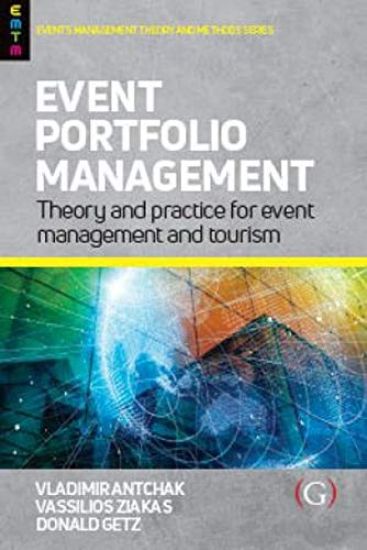
Event Portfolio Management explores the phenomenon of the event portfolio as a policy tool for cities and destinations. Divided into two parts – ‘Theory’ and ‘Practice’ – the book critically analyses and summarises key underpinnings behind portfolio theory development and identifies key trends and issues in the event portfolio approach. It examines the processes of event portfolio development and management, leveraging, stakeholder networking and collaboration, portfolio design, risk assessment and evaluation. With a wide geographical reach, the book introduces the results of empirical research from different international case studies, including Auckland, Wellington and Dunedin in New Zealand, Canberra and Melbourne in Australia, and Manchester and Edinburgh in the UK. The Event Management Theory and Methods Series examines the extent to which mainstream theory is employed to develop event-specific theory, and to influence the very core practices of event management and event tourism. Each compact volume contains overviews of mainstream management theories and methods, examples from the events literature, case studies, and guidance on all aspects of planned-event management. The series introduces the theory, shows how it is being used in the events sector through a literature review, incorporates examples and case studies written by researchers and/or practitioners, and contains methods that can be used effectively in the real world. Series editor: Donald Getz PhD., Professor Emeritus, University of Calgary, Canada. This is an indispensable specialist text for events students, scholars and practitioners. With additional online resource material, the book is ideal for lecturers who teach event tourism and need theoretical foundations and case studies for their classes. It is a valuable source of reference for students undertaking events and tourism programmes. For destination managers and other industry professionals, the book provides a theoretical and practical guide to developing successful and sustainable portfolios of events. Vladimir Antchak, PhD., is Senior Lecturer in Applied Management at the University of Derby, UK. Vassilios Ziakas, PhD., is Associate Professor in Sport Management at Plymouth Marjon University, UK. Donald Getz, PhD., is Professor Emeritus at the University of Calgary, Canada and Visiting Professor at the University of Derby, UK.
Event Portfolio Management
Vladimir Antchak; Vassilios Ziakas; Donald Getz
Goodfellow Publishers Limited
2019
nidottu
Event Portfolio Management explores the phenomenon of the event portfolio as a policy tool for cities and destinations. Divided into two parts – ‘Theory’ and ‘Practice’ – the book critically analyses and summarises key underpinnings behind portfolio theory development and identifies key trends and issues in the event portfolio approach. It examines the processes of event portfolio development and management, leveraging, stakeholder networking and collaboration, portfolio design, risk assessment and evaluation. With a wide geographical reach, the book introduces the results of empirical research from different international case studies, including Auckland, Wellington and Dunedin in New Zealand, Canberra and Melbourne in Australia, and Manchester and Edinburgh in the UK. The Event Management Theory and Methods Series examines the extent to which mainstream theory is employed to develop event-specific theory, and to influence the very core practices of event management and event tourism. Each compact volume contains overviews of mainstream management theories and methods, examples from the events literature, case studies, and guidance on all aspects of planned-event management. The series introduces the theory, shows how it is being used in the events sector through a literature review, incorporates examples and case studies written by researchers and/or practitioners, and contains methods that can be used effectively in the real world. Series editor: Donald Getz PhD., Professor Emeritus, University of Calgary, Canada. This is an indispensable specialist text for events students, scholars and practitioners. With additional online resource material, the book is ideal for lecturers who teach event tourism and need theoretical foundations and case studies for their classes. It is a valuable source of reference for students undertaking events and tourism programmes. For destination managers and other industry professionals, the book provides a theoretical and practical guide to developing successful and sustainable portfolios of events. Vladimir Antchak, PhD., is Senior Lecturer in Applied Management at the University of Derby, UK. Vassilios Ziakas, PhD., is Associate Professor in Sport Management at Plymouth Marjon University, UK. Donald Getz, PhD., is Professor Emeritus at the University of Calgary, Canada and Visiting Professor at the University of Derby, UK.
This new text and reference focuses on stakeholder theory applied to event management and goes beyond traditional approaches by treating event management as an applied field. The book goes further than the economic impacts of events, and looks with a new perspective at issues such as- • The relationships between stakeholders and the consequences that such relationships create • An approach strongly rooted in management and the commonly-recognized management functions of planning, organizing, staffing, directing and controlling • Introducing throughout the relevant theory and showing how theory is being used in the events sector The book uses a wide range of relevant examples and case studies that will be relatable to the real world. Online resources will also be included, such as annotated bibliographies, lists of further readings and periodicals, and relevant websites. It will be an essential introduction for all events students and practitioners The Events Management Theory and Methods Series examines the extent to which mainstream theory is being employed to develop event-specific theory, and to influence the very core practices of event management and event tourism. Each compact volume contains overviews of mainstream management theories and methods, examples from the events literature, case studies, and guidance on all aspects of planned-event management. They introduce the theory, show how it is being used in the events sector through a literature review, incorporate examples and case studies written by researchers and/or practitioners, and contain methods that can be used effectively in the real world. Series editor: Donald Getz. With online resource material, this mix-and-match collection is ideal for lecturers who need theoretical foundations and case studies for their classes, by students in need of reference works, by professionals wanting increased understanding alongside practical methods, and by agencies or associations that want their members and stakeholders to have access to a library of valuable resources.
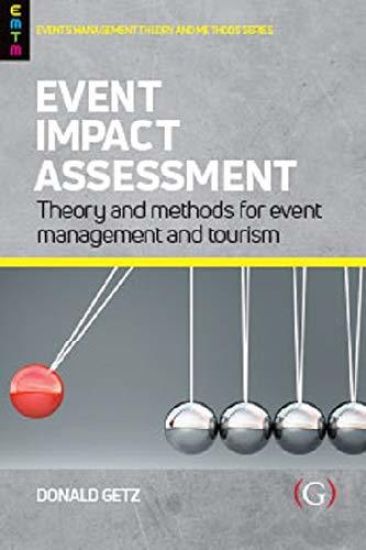
Impact assessment can be highly technical and complex, requiring a broad knowledge base and diverse skills, but like evaluation, it is a process fraught with philosophical, technical and political perils. Why is it done, by whom, and how, must be carefully planned. Impacts cannot always be ’proven’, so the nature of evidence becomes critical. Accordingly, a strong theoretical base is needed by all IA practitioners. Whilst economic impacts have received a great deal of attention, with sufficient material available to guide all applications, for social, cultural and environmental IA the theory and practice has lagged. In the context of Triple Bottom Line, social responsibility and sustainability approaches most of the available literature is on normative goals (such as going green, meeting sustainability standards), the nature of positive and negative impacts (a descriptive approach or based on public input), or theory about how impacts occur; very little theory development or praxis has been directed at impact assessment for these applied fields. In response to this lack of information, Event Impact Assessment is the first text to: • Develop professionalism for IA and evaluation in these applied management fields. • Position impact assessment within sustainability and responsibility paradigms. • Recommend goals, methods and measures for planning, evaluation and impact assessment pertaining to events and tourism. • Encourage the adoption of standard methods and key performance indicators in evaluation and impact assessment in order to facilitate valid comparisons, benchmarking, reliable forecasts, transparency and accountability. • Provide concepts and models that can be adapted to diverse situations. • Connect readers to the research literature through use of Research Notes and provision of additional readings. This text also works well as a companion text to Event Evaluation: Theory and methods for event management and tourism. The Events Management Theory and Methods Series examines the extent to which mainstream theory is being employed to develop event-specific theory, and to influence the very core practices of event management and event tourism. Each compact volume contains overviews of mainstream management theories and methods, examples from the events literature, case studies, and guidance on all aspects of planned-event management. They introduce the theory, show how it is being used in the events sector through a literature review, incorporate examples and case studies written by researchers and/or practitioners, and contain methods that can be used effectively in the real world. Series editor: Donald Getz. With online resource material, this mix-and-match collection is ideal for lecturers who need theoretical foundations and case studies for their classes, by students in need of reference works, by professionals wanting increased understanding alongside practical methods, and by agencies or associations that want their members and stakeholders to have access to a library of valuable resources.
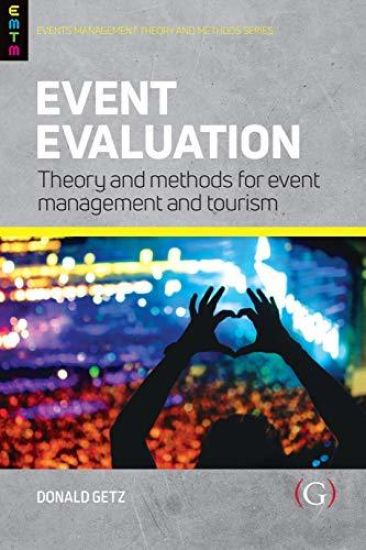
This is the first textbook and reference work on evaluation intended for event management and event tourism. Drawing upon generic evaluation theory and methods, event and tourism research and real-world experiences, the author provides concepts and tools needed for the establishment of a comprehensive evaluation system and the implementation of varied evaluation projects. The strength of this book lies in its emphasis on evaluation foundations, both theoretical and methodological, enabling the student and practitioner to adapt the evaluation process to many situations using: *A range of tools from simple checklists to more advanced logic models; *Specific chapters devoted to the most challenging evaluation contexts: the visitor and their experience, quality and human resources; *A chapter devoted to exploring different evaluation challenges in the full range of planned events, including the tourism dimension; *An introduction of impact assessment. The Events Management Theory and Methods Series examines the extent to which mainstream theory is being employed to develop event-specific theory, and to influence the very core practices of event management and event tourism. Each compact volume contains overviews of mainstream management theories and methods, examples from the events literature, case studies, and guidance on all aspects of planned-event management. They introduce the theory, show how it is being used in the events sector through a literature review, incorporate examples and case studies written by researchers and/or practitioners, and contain methods that can be used effectively in the real world. Series editor: Donald Getz. With online resource material, this mix-and-match collection is ideal for lecturers who need theoretical foundations and case studies for their classes, by students in need of reference works, by professionals wanting increased understanding alongside practical methods, and by agencies or associations that want their members and stakeholders to have access to a library of valuable resources.
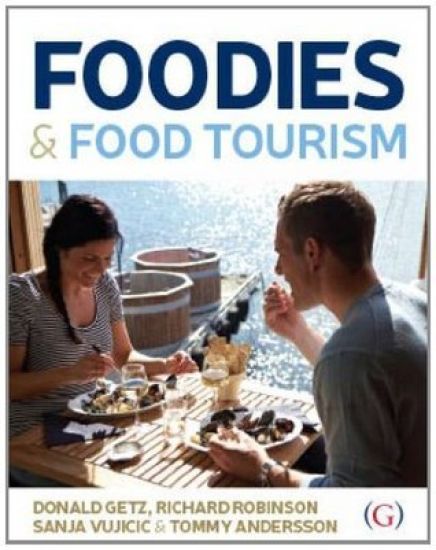
Foodies and Food Tourism
Donald Getz; Richard Robinson; Tommy Andersson; Sanja Vujicic
Goodfellow Publishers Limited
2014
sidottu
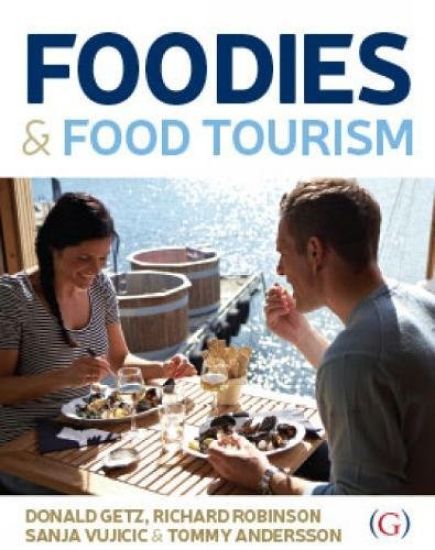
Food is an attraction that has matured into a highly sought-after niche market with distinct trip motivation, travel preferences and patterns. Foodies and Food Tourism supplies comprehensive new evidence and theory based overview of the phenomenon of food tourism and how it is being, or should be developed and marketed and understood. Food tourism has huge impacts in the hospitality, destination management and tourism development sectors and across all these sectors the book presents the latest research on market developments: •Understanding the food tourist and their perspective. •Taking a demand- side approach to planning developing and marketing. •Taking a global view based on widespread research data that combines theory and practice. •Using case studies, profiles and direct practitioner insights to illustrate every aspect of the field. The book is designed as key text for students in Hospitality, Tourism and Events and Food and Beverage Management with summaries, questions and key points highlighted throughout the text, and also as a major reference and professional guide for practitioners across the industry. About the authors: Donald Getz, Professor, The University of Queensland, School of Tourism, Richard Robinson', Lecturer, School of Tourism, The University of Queensland, Tommy Andersson, Professor, School of Business, Economics and Law at the University of Gothenburg Sanja Vujicic, Principal of Experience Consulting, Gothenburg, Sweden
Foodies and Food Tourism
Donald Getz; Richard Robinson; Tommy Andersson; Sanja Vujicic
Goodfellow Publishers Limited
2014
nidottu
Food is an attraction that has matured into a highly sought-after niche market with distinct trip motivation, travel preferences and patterns. Foodies and Food Tourism supplies comprehensive new evidence and theory based overview of the phenomenon of food tourism and how it is being, or should be developed and marketed and understood. Food tourism has huge impacts in the hospitality, destination management and tourism development sectors and across all these sectors the book presents the latest research on market developments: •Understanding the food tourist and their perspective. •Taking a demand- side approach to planning developing and marketing. •Taking a global view based on widespread research data that combines theory and practice. •Using case studies, profiles and direct practitioner insights to illustrate every aspect of the field. The book is designed as key text for students in Hospitality, Tourism and Events and Food and Beverage Management with summaries, questions and key points highlighted throughout the text, and also as a major reference and professional guide for practitioners across the industry. About the authors: Donald Getz, Professor, The University of Queensland, School of Tourism, Richard Robinson', Lecturer, School of Tourism, The University of Queensland, Tommy Andersson, Professor, School of Business, Economics and Law at the University of Gothenburg Sanja Vujicic, Principal of Experience Consulting, Gothenburg, Sweden
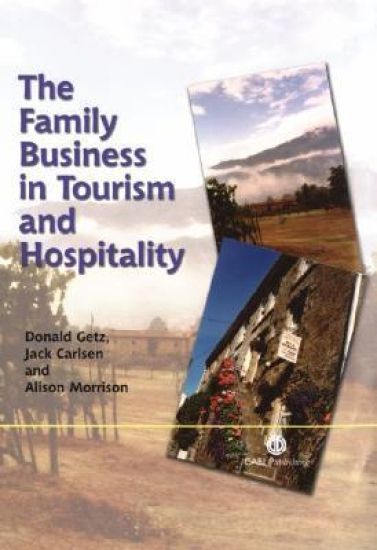
Family Business in Tourism and Hospitality
Donald Getz; Jack Carlsen; Alison Morrison
CABI Publishing
2004
sidottu
The family business is a global phenomenon, and is particularly prominent in tourism and hospitality. In many cases, the family business was developed for the purpose of facilitating personal and family goals. For example, in rural areas, farmers can use tourism as a way to generate additional income, thereby remaining in the area and retaining family property. Running a bed and breakfast establishment is a way to mix family and work. Lifestyle, locational and autonomy motives are the norm, but profit and growth-oriented entrepreneurs are also found within family businesses. This book is the first academic treatment of family business issues within the tourism and hospitality industry. It provides comprehensive assessment of ownership, management and family-related concerns across the entire business and family life cycle. Many new international case studies of real family businesses are used to illustrate key points. The book will be of significant interest to researchers and students in tourism and hospitality, small business and entrepreneurship studies, as well as to owners and potential investors in family businesses.