Kirjojen hintavertailu – 12 903 732 kirjaa ja 27 kauppaa

Kirjailija

Donald J. Savoie

Kirjat ja teokset yhdessä paikassa: 23 kirjaa, julkaisuja vuosilta 1981–2024, suosituimpiin kuuluu Canada. Vertaile teosten hintoja ja tarkista saatavuus suomalaisista kirjakaupoista.

23 kirjaa

Kirjojen julkaisuvuodet: 1981–2024.

Canada

Canada

Donald J. Savoie

MCGILL-QUEEN'S UNIVERSITY PRESS
2023
sidottu
Canada’s political structure runs contrary to North America’s economic geography and the north-south economic pull. Canada imported political and administrative institutions designed for a unitary state, and its political leaders have struggled to make them work since the country was founded. Because of this, many Canadians, their communities, and their regions view themselves as victims, to a greater degree than groups in other Western democracies do. Our federal government has shown a greater willingness to apologize for historical wrongs than other Western countries. Canada also outperforms other nations in helping victims make the transition to full participants in the country’s political and economic life. Donald Savoie maintains that Canada continues to thrive despite the many shortcomings in its national political institutions and the tendency of Canadians to see themselves as victims, and that our history and these shortcomings have taught us the art of compromise. Canada’s constitution and its political institutions amplify rather than attenuate victimization; however, they have also enabled Canadians to manage the issue better than other countries. Canadians also recognize that the alternative to Canada is worse, and this more than anything else continues to strengthen national unity. Drawing on his extensive experience in academe and as an advisor to governments, Savoie provides new insights into how Canada works for Canadians.

Speaking Truth to Canadians about Their Public Service

Speaking Truth to Canadians about Their Public Service

Donald J. Savoie

MCGILL-QUEEN'S UNIVERSITY PRESS
2024
sidottu
The federal public service plays a vital role in Canada’s development by helping to shape public policies and deliver programs and services to Canadians. Speaking Truth to Canadians about Their Public Service provides a comprehensive review of the challenges confronting the public service, how the relationship between politicians and career officials has evolved in recent years, and what motivates public servants. Donald Savoie calls on Canadians and their politicians to consider what they want from their federal public service. Answering this question requires a fresh look at the government’s traditional accountability requirements, how policies are shaped, and how government programs and services are delivered. It also requires a review of ambitious modernization and reform measures launched over the past forty years to make the public service more accommodating to political direction and to improve program delivery. Dividing federal public servants into two groups – poets (those who write policy) and plumbers (those who deliver programs and services) – the book establishes who has the upper hand. This division sheds new light on the theories that seek to explain the attitudes and behaviours of career government officials. Amid increasingly strong signs that the public service is in need of a reset, Speaking Truth to Canadians about Their Public Service concludes with practical recommendations to assist Canadians and their politicians in defining what they want their public service to be.
Le Canada

Le Canada

Donald J. Savoie

MCGILL-QUEEN'S UNIVERSITY PRESS
2023
sidottu
La structure politique du Canada va à l’encontre de la géographie économique de l’Amérique du Nord et de l’attraction économique entre le nord et le sud. Le Canada a importé des institutions politico-administratives conçues pour un État unitaire et, depuis la fondation du pays, ses leaders politiques se sont démenés pour qu’elles fonctionnent. Pour cette raison, plusieurs Canadien.ne.s, leurs communautés et leurs régions se perçoivent comme des victimes, et ce, à un degré plus élevé que chez d’autres groupes dans des démocraties occidentales. Notre gouvernement fédéral a démontré un plus grand empressement à s’excuser pour des injustices que les autres pays occidentaux. Le Canada est également plus performant que d’autres nations dans l’aide qu’il apporte aux victimes pour qu’elles fassent la transition les menant à participer pleinement à la vie politique et économique du pays. Donald Savoie soutient que le Canada continue à prospérer malgré les nombreux défauts de ses institutions politiques nationales et le penchant qu’ont les Canadien.ne.s à se voir comme des victimes, et que notre histoire et ces défauts nous ont appris l’art du compromis. La constitution du Canada et ses institutions politiques amplifient plus qu’elles n’atténuent la victimisation ; cependant, elles ont également permis aux Canadien.ne.s de mieux gérer cet enjeu que dans d’autres pays. Les Canadien.ne.s reconnaissent aussi que l’alternative au Canada est pire, et cela, plus que tout autre chose, continue à renforcer l’unité nationale. Puisant dans sa longue expérience dans le monde universitaire et en tant que conseiller auprès des gouvernements, Savoie propose de nouvelles manières de voir comment le Canada travaille pour sa population.
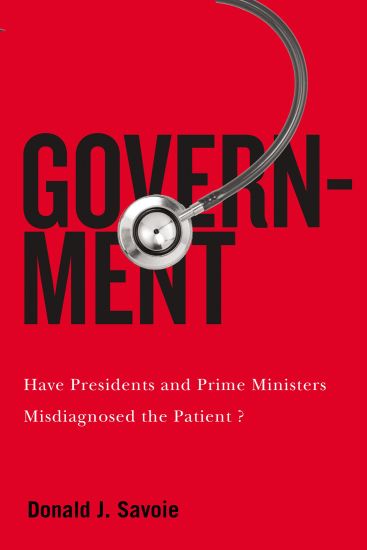
Government

Government

Donald J. Savoie

MCGILL-QUEEN'S UNIVERSITY PRESS
2022
sidottu
Citizens have lost trust in their institutions of public governance. In trying to fix the problem, presidents and prime ministers have misdiagnosed the patient, failing to recognize that government bureaucracies are inseparable from political institutions. As a result, career officials have become adroit at managing the blame game but much less so at embracing change. Donald Savoie looks to the United States, Great Britain, France, and Canada to assess two of the most important challenges confronting governments throughout the Western world: the concentration of political power and the changing role of government bureaucracy. The four countries have distinct institutions shaped by distinct histories, but what they have in common is a professional non-partisan civil service. When presidents and prime ministers decide to expand their personal authority, national institutions must adjust while bureaucracies grow to fill the gap, paradoxically further constricting government efficacy. The side effects are universal – political power is increasingly centralized; Parliament, Congress, and the National Assembly have been weakened; Cabinet has lost standing; political parties have been debased; and civil services have been knocked off their moorings. Reduced responsibility and increased transparency make civil servants slow to take risks and politicians quick to point fingers. Government astutely diagnoses the problem of declining trust in government: presidents and prime ministers have failed to see that efficacy in government is tied to well-performing institutions.
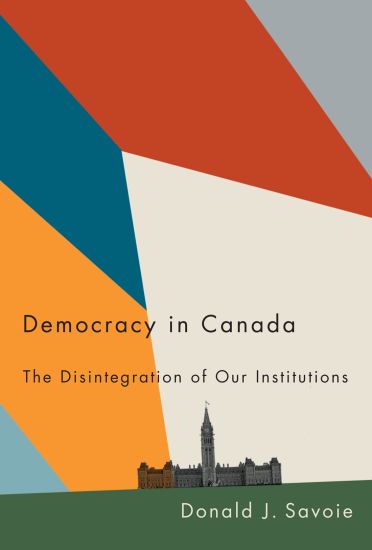
Democracy in Canada

Democracy in Canada

Donald J. Savoie

McGill-Queen's University Press
2021
nidottu
Canada's representative democracy is confronting important challenges. At the top of the list is the growing inability of the national government to perform its most important roles: namely mapping out collective actions that resonate in all regions as well as enforcing these measures. Others include Parliament's failure to carry out important responsibilities, an activist judiciary, incessant calls for greater transparency, the media's rapidly changing role, and a federal government bureaucracy that has lost both its way and its standing. Arguing that Canadians must reconsider the origins of their country in order to understand why change is difficult and why they continue to embrace regional identities, Democracy in Canada explains how Canada's national institutions were shaped by British historical experiences, and why there was little effort to bring Canadian realities into the mix. As a result, the scope and size of government and Canadian federalism have taken on new forms largely outside the Constitution. Parliament and now even Cabinet have been pushed aside so that policy makers can design and manage the modern state. This also accounts for the average citizen's belief that national institutions cater to economic elites, to these institutions' own members, and to interest groups at citizens' own expense. A masterwork analysis, Democracy in Canada investigates the forces shaping the workings of Canadian federalism and the country's national political and bureaucratic institutions.
La démocratie au Canada

La démocratie au Canada

Donald J. Savoie

McGill-Queen's University Press
2019
sidottu
La démocratie représentative canadienne se heurte à de grandes difficultés. Au sommet de leur liste figure l'incapacité croissante du gouvernement national à remplir ses rôles les plus essentiels, soit planifier des actions collectives qui ont un écho dans toutes les régions, en plus de mettre ces mesures en application. Parmi les autres difficultés, on peut mentionner l'incapacité du Parlement à assumer d'importantes responsabilités, un appareil judiciaire militant, des appels incessants à une plus grande transparence, l'évolution rapide du rôle des médias et une bureaucratie du gouvernement fédéral qui a perdu à la fois son chemin et son influence. Soutenant que les Canadiens doivent réexaminer les origines de leur pays s'ils veulent comprendre pourquoi il est difficile de changer et pourquoi ils continuent à adhérer aux identités régionales, Démocratie au Canada explique en quoi les expériences historiques britanniques ont façonné les institutions nationales canadiennes et pour quelle raison on s'est peu efforcé d'intégrer des réalités canadiennes à l'amalgame. Par conséquent, l'ampleur et la taille du gouvernement et du fédéralisme canadiens ont évolué principalement en dehors de la Constitution. Le Parlement et même le Cabinet désormais ont été mis à l'écart, laissant la voie libre aux responsables des orientations politiques pour concevoir et gérer l'État moderne. Cela explique également la conviction des citoyens ordinaires que les institutions nationales répondent aux besoins des élites économiques, de leurs propres membres et des groupes d'intérêt à leurs propres dépens. Analyse magistrale, La démocratie au Canada examine les forces qui façonnent les rouages du fédéralisme canadien et des institutions politiques et démocratiques nationales du pays.
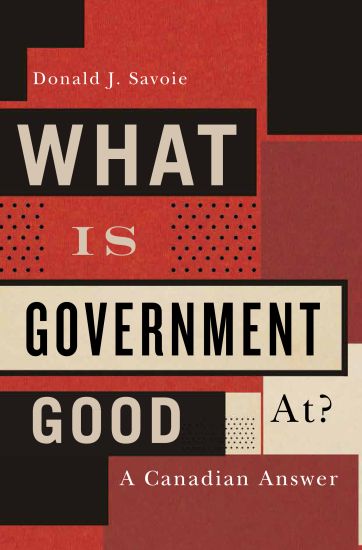
What Is Government Good At?

What Is Government Good At?

Donald J. Savoie

McGill-Queen's University Press
2017
nidottu
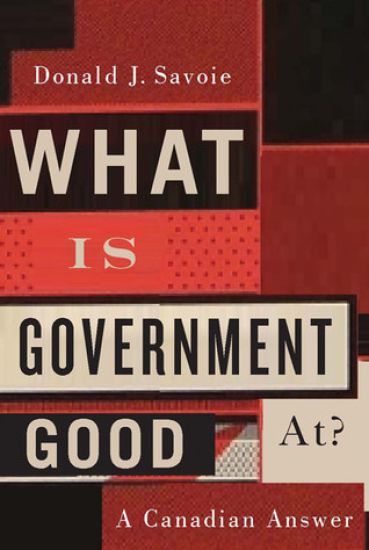
Winner: Donner Prize for Excellence and Innovation in Public Policy Writing by Canadians (2016) Winner: New Brunswick Book Award for Non-Fiction (2016) Recent decades have shown the public's support for government plummet alongside political leaders' credibility. This downward spiral calls for an exploration of what has gone wrong. The questions "What is government good at?" and "What is government not good at?" are critical ones - and their answers should be the basis for good public policy and public administration. In What Is Government Good At?, Donald Savoie argues that politicians and public servants are good at generating and avoiding blame, playing to a segment of the population to win the next election, embracing and defending the status quo, adding management layers and staff, keeping ministers out of trouble, responding to demands from the prime minister and his office, and managing a complex, prime minister-centred organization. Conversely, they are not as good at defining the broader public interest, providing and recognizing evidence-based policy advice, managing human and financial resources with efficiency and frugality, innovating and reforming itself, being accountable to Parliament and to citizens, dealing with non-performers, paying sufficient attention to service delivery, and implementing and evaluating the impact of policies and programs. With wide implications for representative democracy, What Is Government Good At? is a persuasive analysis of an approach to government that has opened the door to those with the resources to influence policy and decision-making while leaving average citizens on the outside looking in.
What Is Government Good At?

What Is Government Good At?

Donald J. Savoie

McGill-Queen's University Press
2015
sidottu
Winner: Donner Prize for Excellence and Innovation in Public Policy Writing by Canadians (2016) Winner: New Brunswick Book Award for Non-Fiction (2016) Recent decades have shown the public's support for government plummet alongside political leaders' credibility. This downward spiral calls for an exploration of what has gone wrong. The questions "What is government good at?" and "What is government not good at?" are critical ones - and their answers should be the basis for good public policy and public administration. In What Is Government Good At?, Donald Savoie argues that politicians and public servants are good at generating and avoiding blame, playing to a segment of the population to win the next election, embracing and defending the status quo, adding management layers and staff, keeping ministers out of trouble, responding to demands from the prime minister and his office, and managing a complex, prime minister-centred organization. Conversely, they are not as good at defining the broader public interest, providing and recognizing evidence-based policy advice, managing human and financial resources with efficiency and frugality, innovating and reforming itself, being accountable to Parliament and to citizens, dealing with non-performers, paying sufficient attention to service delivery, and implementing and evaluating the impact of policies and programs. With wide implications for representative democracy, What Is Government Good At? is a persuasive analysis of an approach to government that has opened the door to those with the resources to influence policy and decision-making while leaving average citizens on the outside looking in.
Whatever Happened to the Music Teacher?

Whatever Happened to the Music Teacher?

Donald J. Savoie

McGill-Queen's University Press
2014
nidottu
Thirty years ago, Anglo-American politicians set out to make the public sector look like the private sector. These reforms continue today, ultimately seeking to empower elected officials to shape policies and pushing public servants to manage operations in the same manner as their private-sector counterparts. In Whatever Happened to the Music Teacher?, Donald Savoie provides a nuanced account of how the Canadian federal government makes decisions. Savoie argues that the traditional role of public servants advising governments on policy has been turned on its head, and that evidence-based policy making is no longer valued as it once was. Policy making has become a matter of opinion, Google searches, focus groups, and public opinion surveys, where a well-connected lobbyist can provide any answers politicians wish to hear. As a result, public servants have lost their way and are uncertain about how they should assess management performance, how they should generate policy advice, how they should work with their political leaders, and how they should speak truth to political power - even within their own departments. Savoie demonstrates how recent management reforms in government have caused a steep rise in the overhead cost of government, as well as how the notion that public administration could be made to operate like the private sector has been misguided and costly to taxpayers. Abandoning "textbook" discussions of government and public service, Whatever Happened to the Music Teacher? Is a realistic portrayal of how policy decisions are made and how actors and institutions interact with one another and exposes the complexities, contradictions present in Canadian politics and governance.
Harrison McCain

Harrison McCain

Donald J. Savoie

McGill-Queen's University Press
2013
sidottu
The only rival to Harrison McCain's entrepreneurial success was his deep attachment to his Maritime roots. From McCain's beginnings in Florenceville, New Brunswick, the early mentorship he received from K. C. Irving, to the global success of his corporate empire McCain Foods, Donald Savoie presents a compelling and candid biography of one of the most famous and down-to-earth figures in Canadian business history. Savoie, a longtime friend to McCain, describes a driven, charismatic, and energetic man who had a keen wit and a deep commitment to his business and hometown. Through unprecedented access to McCain's papers and interviews with family members, friends, and colleagues, Savoie details the decisions that McCain made alongside his brother and business partner, Wallace McCain, from the company's humble beginnings to its expansion in Europe, Australia, India, and China. McCain saw the potential of globalization before others did. Despite conflict between the brothers and the eventual fracture of their partnership, Savoie presents the McCains' dedication as so immersed in the development of their company that they had little time left for second-guessing. At a time when New Brunswick struggles to reinvent itself economically, Savoie points to former government policies and programs that helped the company thrive and holds up the example of Harrison McCain with the hope of seeing Canadian success stories like this in the future.
Whatever Happened to the Music Teacher?

Whatever Happened to the Music Teacher?

Donald J. Savoie

McGill-Queen's University Press
2013
sidottu
Thirty years ago, Anglo-American politicians set out to make the public sector look like the private sector. These reforms continue today, ultimately seeking to empower elected officials to shape policies and pushing public servants to manage operations in the same manner as their private-sector counterparts. In Whatever Happened to the Music Teacher?, Donald Savoie provides a nuanced account of how the Canadian federal government makes decisions. Savoie argues that the traditional role of public servants advising governments on policy has been turned on its head, and that evidence-based policy making is no longer valued as it once was. Policy making has become a matter of opinion, Google searches, focus groups, and public opinion surveys, where a well-connected lobbyist can provide any answers politicians wish to hear. As a result, public servants have lost their way and are uncertain about how they should assess management performance, how they should generate policy advice, how they should work with their political leaders, and how they should speak truth to political power - even within their own departments. Savoie demonstrates how recent management reforms in government have caused a steep rise in the overhead cost of government, as well as how the notion that public administration could be made to operate like the private sector has been misguided and costly to taxpayers. Abandoning "textbook" discussions of government and public service, Whatever Happened to the Music Teacher? Is a realistic portrayal of how policy decisions are made and how actors and institutions interact with one another and exposes the complexities, contradictions present in Canadian politics and governance.
The Governance in a World without Frontiers

The Governance in a World without Frontiers

Thomas J. Courchene; Donald J. Savoie

The Institute for Research on Public Policy
2003
nidottu
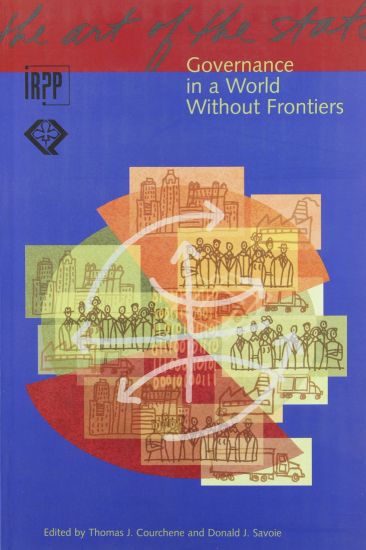
The Art of the State includes contributions from Ron Daniels (University of Toronto) on corporate governance, Rick Harris (Simon Fraser University) on the new economic order, Pierre Marc Johnson (Heenan-Blaikie, Montreal law firm) on international governance and Canada, Michael Keating (European University Institute) on sub-national communities, Will Kymlicka (Queen's University) on new forms of citenzenship, B. Guy Peters (University of Pittsburg) on the changing nature of power and democracy, Christopher Pollitt (Erasmus University) on new forms of public services and Ronald Watts (Queen's University) on managing interdependence in a federal state. The publication also includes an introduction by conference co-chairs and editors Thomas J. Courchene and Donald J. Savoie.
Pulling Against Gravity

Pulling Against Gravity

Donald J. Savoie

The Institute for Research on Public Policy
2001
nidottu
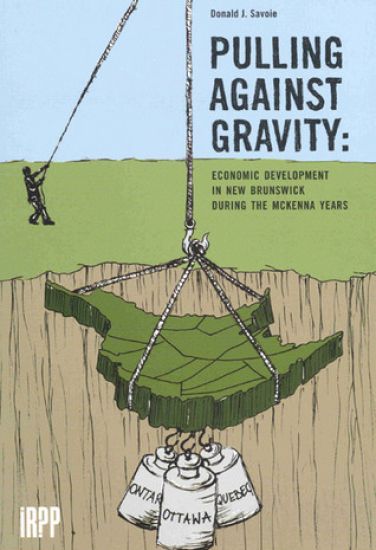
In Pulling Against Gravity Donald Savoie, one of Canada's foremost authorities on regional public policy, offers a sweeping overview of the policy challenges faced by Frank McKenna as New Brunswick premier in the 1980s and 1990s. He documents McKenna's attempts at affecting changes that went to the very core of the province's economic and social life. Set against this backdrop, Pulling Against Gravity assesses the successes and failures of the McKenna years and beyond. This study is a must-read for students of federalism and all concerned about the future of Canada's Atlantic region.
Governance in the Twenty-first Century

Governance in the Twenty-first Century

Guy Peters; Donald J. Savoie

McGill-Queen's University Press
2000
sidottu
This text examines the changes required to revitalize government in industrial democracies. The contributors to the book recognize both the difficulty of making predictions and the need to consider the future in order to prepare the public sector for new challenges.
Governance in the Twenty-first Century

Governance in the Twenty-first Century

Guy Peters; Donald J. Savoie

McGill-Queen's University Press
2000
nidottu
In Governance in the Twenty-first Century Canadian and international experts recognize both the difficulty of making predictions and the need to consider the future in order to prepare the public sector for new challenges. The authors' predictions and recommendations are anchored in a thorough understanding of contemporary public administration. They point out that not only have previous reforms made yet more change necessary and inevitable but that the purpose of these reforms is to attempt to return government to the position of respect and competence it enjoyed in the past. Contributors include Peter Aucoin (Dalhousie), Jonathan Boston (University of Wellington, New Zealand), Jacques Bourgault (Ecole nationale d'administration publique Montreal), David R. Cameron (Toronto), Ralph Heintzman (Treasury Board Canada), Christopher Hood (London School of Economics and Political Science), Patricia W. Ingraham (The Maxwell School, Syracuse University), Donald P. Moynihan (The Maxwell School, Syracuse University), Jon Pierre (Goteborg University), B. Guy Peters, Christopher Pollitt (Erasmus University, The Netherlands), Donald J. Savoie, Richard Simeon (Toronto), Ignace Th. M. Snellen (Erasmus University, The Netherlands), and Vincent Wright (Oxford, England).
Taking Stock

Taking Stock

Guy Peters; Donald J. Savoie

McGill-Queen's University Press
1998
nidottu
Distinguished scholars from six countries investigate the effects of reforms in a number of areas, including budgeting, personnel management, and accountability. While reforms have been beneficial in some of these areas, success has been far from universal. By comparing and contrasting measures in Canada, the United States, Britain, Australia, New Zealand, and Europe, contributors isolate and evaluate factors - such as individual political leaders and the complexity of government - that influence the success or failure of reforms. Contents: Introduction - B. Guy Peters (Pittsburgh) and Donald J. Savoie (Moncton) The Changing Role of the State - Bert A. Rockman (Pittsburgh) Managerialism Revisited - Christopher Pollitt (Brunel) What Works? The Antiphons of Administrative Reform - B. Guy Peters Public Sector Values and Administrative Reforms - Nicole de Montricher (Ecole Normale Superieure, Paris) Public Consultation and Citizen Participation: Dilemmas of Policy Advice - Jon Pierre (Goteborg) Making Public Policy: The Changing Role of the Higher Civil Service - Patricia W. Ingraham (Syracuse) Assessing Past and Current Personnel Reforms: The Pursuit of Flexibility, Pay-for-Performance, and the Management of Reform Initiatives - Hal G. Rainey (Georgia) Innovation in Public Sector Management - Michel Paquin (Ecole nationale d'administration publique) A New Generation of Budget Reform - Naomi Caiden (California State) Central Agencies and Departments: Empowerment and Coordination - John Hart (Australian National) Restructuring Government for the Management and Delivery of Public Services - Peter Aucoin (Dalhousie); The Changing Nature of Accountability - Paul G. Thomas (Manitoba); Fifteen Years of Reform: What Have We Learned? - Donald J. Savoie
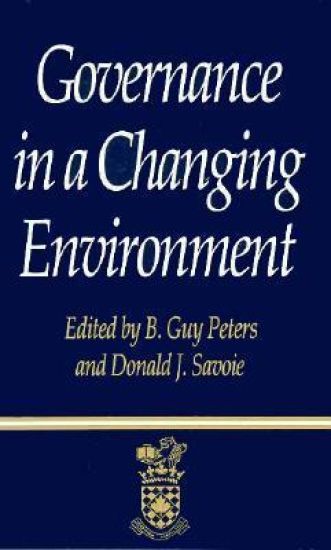
Governance in a Changing Environment

Governance in a Changing Environment

Guy Peters; Donald J. Savoie

McGill-Queen's University Press
1995
sidottu
Fiscal cutbacks, the public's declining confidence in government, and new ideologies are forcing the public sector in industrialized democracies to undertake major reforms. In these essays contributing authors examine changes to the political and economic envirnoment and the ways in which governments have responded. The essays attempt to explain what is happening in government in the late 20th century and suggest changes that can be expected in the future.
Governance in a Changing Environment

Governance in a Changing Environment

Guy Peters; Donald J. Savoie

McGill-Queen's University Press
1995
nidottu
Fiscal cutbacks, the public's declining confidence in government, and new ideologies are forcing the public sector in industrialized democracies to undertake major reforms. In these essays contributing authors examine changes to the political and economic envirnoment and the ways in which governments have responded. The essays attempt to explain what is happening in government in the late 20th century and suggest changes that can be expected in the future.