Kirjojen hintavertailu – 12 859 827 kirjaa ja 27 kauppaa

Kirjailija

Donald Jackson

Kirjat ja teokset yhdessä paikassa: 7 kirjaa, julkaisuja vuosilta 1972–2021, suosituimpiin kuuluu Camp Victory. Vertaile teosten hintoja ja tarkista saatavuus suomalaisista kirjakaupoista.

7 kirjaa

Kirjojen julkaisuvuodet: 1972–2021.

Camp Victory

Camp Victory

Donald Jackson

Five Stone Publishing
2021
pokkari
Matthew, Beth, Shawna and Sanjay love their summer camp for disabled kids. The 'Special Kid's Olympics' is held at Camp Victory this year but some scammers are rigging the games to make Camp Victory turn into 'Camp Losers.' These kids aren't having it They use their wits and unbeatable spirit to expose the villains and save their summer CAMP VICTORY is more than an adventure advocating for people with disabilities, it lets us all see how teamwork overcomes our individual limitations. A master Stroke for this amazing artist and storyteller.
Pastoral and Monumental

Pastoral and Monumental

Donald Jackson

University of Pittsburgh Press
2013
sidottu
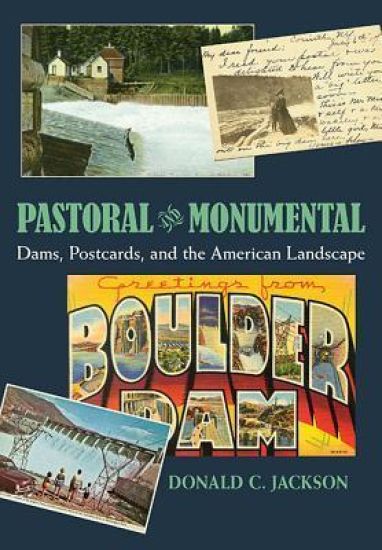
In Pastoral and Monumental, Donald C. Jackson chronicles America's longtime fascination with dams as represented on picture postcards from the late nineteenth to the mid-twentieth century. Through over four hundred images, Jackson documents the remarkable transformation of dams and their significance to the environment and culture of America. Initially, dams were portrayed in pastoral settings on postcards that might jokingly proclaim them as "a dam pretty place." But scenes of flood damage, dam collapses, and other disasters also captured people's attention. Later, images of New Deal projects, such as the Hoover Dam, Grand Coulee Dam, and Norris Dam, symbolized America's rise from the Great Depression through monumental public works and technological innovation. Jackson relates the practical applications of dams, describing their use in irrigation, navigation, flood control, hydroelectric power, milling, mining, and manufacturing. He chronicles changing construction techniques, from small timber mill dams to those more massive and more critical to a society dependent on instant access to electricity and potable water. Concurrent to the evolution of dam technology, Jackson recounts the rise of a postcard culture that was fueled by advances in printing, photography, lowered postal rates, and America's fascination with visual imagery. In 1910, almost one billion postcards were mailed through the U. S. Postal Service, and for a period of over fifty years, postcards featuring dams were "all the rage." Whether displaying the charms of an old mill, the aftermath of a devastating flood, or the construction of a colossal gravity dam, these postcards were a testament to how people perceived dams as structures of both beauty and technological power.

The Diaries v. 6; Jan., 1790-Dec., 1799

The Diaries v. 6; Jan., 1790-Dec., 1799

George Washington; Donald Jackson; Dorothy Twohig

University of Virginia Press
1980
sidottu
Washington was rarely isolated from the world during his eventful life. His diary for 1751-52 relates a voyage to Barbados when he was nineteen. The next two accounts concern the early phases of the French and Indian War, in which Washington commanded a Virginia regiment. By the 1760s when Washington's diaries resume, he considered himself retired from public life, but George III was on the British throne and in the American colonies the process of unrest was beginning that would ultimately place Washington in command of a revolutionary army. Even as he traveled to Philadelphia in 1787 to chair the Constitutional Convention, however, and later as president, Washington's first love remained his plantation, Mount Vernon. In his diary, he religiously recorded the changing methods of farming he employed there and the pleasures of riding and hunting. Rich in material from this private sphere, The Diaries of George Washington offer historians and anyone interested in Washington a closer view of the first president in this bicentennial year of his death.
The Diaries v. 5; July 1786-Dec., 1789

The Diaries v. 5; July 1786-Dec., 1789

George Washington; Donald Jackson; Dorothy Twohig

University of Virginia Press
1979
sidottu
Washington was rarely isolated from the world during his eventful life. His diary for 1751-52 relates a voyage to Barbados when he was nineteen. The next two accounts concern the early phases of the French and Indian War, in which Washington commanded a Virginia regiment. By the 1760s when Washington's diaries resume, he considered himself retired from public life, but George III was on the British throne and in the American colonies the process of unrest was beginning that would ultimately place Washington in command of a revolutionary army. Even as he traveled to Philadelphia in 1787 to chair the Constitutional Convention, however, and later as president, Washington's first love remained his plantation, Mount Vernon. In his diary, he religiously recorded the changing methods of farming he employed there and the pleasures of riding and hunting. Rich in material from this private sphere, The Diaries of George Washington offer historians and anyone interested in Washington a closer view of the first president in this bicentennial year of his death.
The Diaries v. 4; 1784-June, 1786

The Diaries v. 4; 1784-June, 1786

George Washington; Donald Jackson; Dorothy Twohig

University of Virginia Press
1978
sidottu
Washington was rarely isolated from the world during his eventful life. His diary for 1751-52 relates a voyage to Barbados when he was nineteen. The next two accounts concern the early phases of the French and Indian War, in which Washington commanded a Virginia regiment. By the 1760s when Washington's diaries resume, he considered himself retired from public life, but George III was on the British throne and in the American colonies the process of unrest was beginning that would ultimately place Washington in command of a revolutionary army. Even as he traveled to Philadelphia in 1787 to chair the Constitutional Convention, however, and later as president, Washington's first love remained his plantation, Mount Vernon. In his diary, he religiously recorded the changing methods of farming he employed there and the pleasures of riding and hunting. Rich in material from this private sphere, The Diaries of George Washington offer historians and anyone interested in Washington a closer view of the first president in this bicentennial year of his death.
The Diaries v. 3; 1771-75

The Diaries v. 3; 1771-75

George Washington; Donald Jackson; Dorothy Twohig

University of Virginia Press
1978
sidottu
Washington was rarely isolated from the world during his eventful life. His diary for 1751-52 relates a voyage to Barbados when he was nineteen. The next two accounts concern the early phases of the French and Indian War, in which Washington commanded a Virginia regiment. By the 1760s when Washington's diaries resume, he considered himself retired from public life, but George III was on the British throne and in the American colonies the process of unrest was beginning that would ultimately place Washington in command of a revolutionary army. Even as he traveled to Philadelphia in 1787 to chair the Constitutional Convention, however, and later as president, Washington's first love remained his plantation, Mount Vernon. In his diary, he religiously recorded the changing methods of farming he employed there and the pleasures of riding and hunting. Rich in material from this private sphere, The Diaries of George Washington offer historians and anyone interested in Washington a closer view of the first president in this bicentennial year of his death.
Custer's Gold

Custer's Gold

Donald Jackson

Bison Books
1972
pokkari
The white settlers had little interest in the semiarid land assigned to the Sioux under the Treaty of 1868 and, for a time, the Indians enjoyed their domain in relative peace. However, when rumors spread that the Black Hills of the Dakota Territory were rich in gold, miners and newspapers wanted to organize prospecting parties. At first the government discouraged attempts to trespass upon the Sioux land, but under the pressure of public opinion, the Army in 1874 sent the Seventh Cavalry Regiment, commanded by General George A. Custer, to explore the Hills. With reports that gold had indeed been found by Custer, all hope of preserving the Sioux treaty vanished. Miners flocked to the area despite attempts by the government to keep them out; by 1876, the Black Hills had been officially removed from Sioux control. The story of the expedition and its effect on relations with the Sioux is told from government documents, including much new material from the National Archives, and from newspaper correspondents' reports and previously unpublished journals. William Illingworth's original photographs of the expedition, reproduced here, were almost as influential as reports of the expedition in luring prospectors to the Black Hills.