Kirjojen hintavertailu – 12 859 819 kirjaa ja 27 kauppaa

Kirjailija

Donald Kuspit

Kirjat ja teokset yhdessä paikassa: 9 kirjaa, julkaisuja vuosilta 1991–2019, suosituimpiin kuuluu Arman: Monochrome Accumulation. Vertaile teosten hintoja ja tarkista saatavuus suomalaisista kirjakaupoista.

9 kirjaa

Kirjojen julkaisuvuodet: 1991–2019.

Québec

Québec

Clarence Epstein; François-Marc Gagnon; Donald Kuspit; Alexandre Turgeon

McGill-Queen's University Press
2019
nidottu
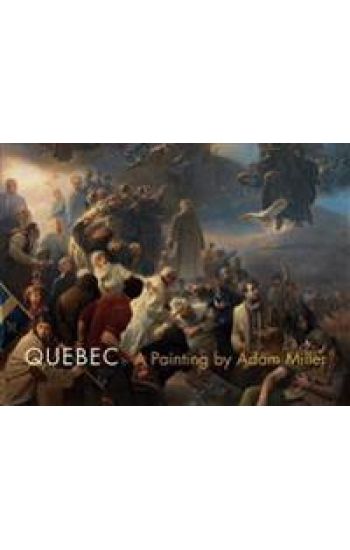
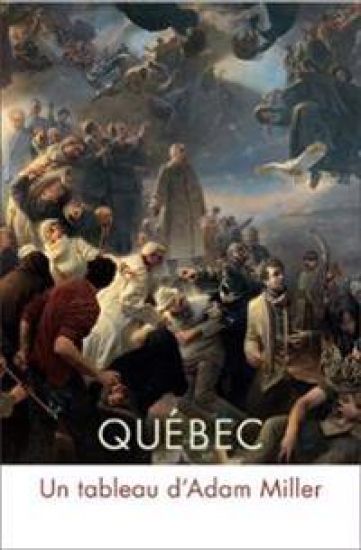
Le tableau d'Adam Miller intitulée Québec évoque plus de quatre siècles d'histoire de la province. Représentant des personnages politiques québécois et canadiens identifiables, des gens ordinaires et des figures allégoriques, cette œuvre hors du commun aborde de nombreux débats entourant le 150e anniversaire de la Confédération ainsi que le 375e anniversaire de la fondation de Montréal. Rassemblant une collection de commentaires sur cette toile et son artiste, cet ouvrage explore l'expérience québécoise et canadienne ainsi que les liens qui unissent l'art et l'histoire. On y trouve une reproduction du tableau, un assortiment de gros plans, l'identification des personnages représentés et des esquisses ayant servi de préparation à l'œuvre définitive. En outre, des essais rédigés par les historiens de l'art François-Marc Gagnon, Donald Kuspit et Alexandre Turgeon incitent à la réflexion sur le tableau et son style, de même que sur sa représentation de l'histoire relativement aux questions de la politique, de l'art et de la mémoire collective. L'ouvrage renferme aussi une entrevue avec Adam Miller réalisée par Clarence Epstein qui révèle les sources d'inspiration de l'œuvre et le processus créatif de son auteur. Une préface rédigée par le mécène qui a commandé la toile vient compléter le tout. Adam Miller est un peintre réputé pour son style figuratif néo-classique raffiné dépeignant des sujets historiques et des thèmes liés à la justice sociale. Il vit à New York.
The Arc of Abstraction

The Arc of Abstraction

Tricia Laughlin Bloom; Donald Kuspit

Newark Museum,U.S.
2019
sidottu
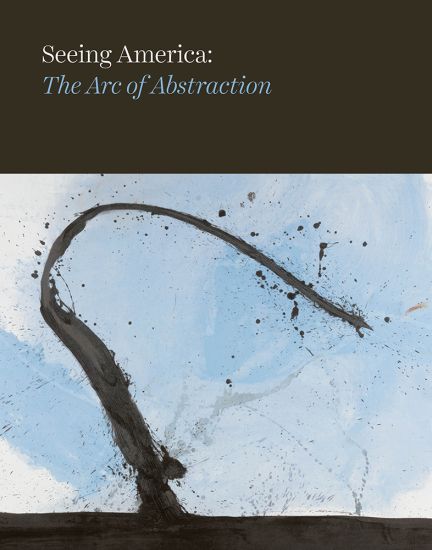
Where do we begin to talk about abstract art? This question depends on one’s worldview. From the point of view of the collection included in this book, the arc of abstraction is very broad, sweeping and multivalent. The essays included here take an open view of the story of abstraction, reflecting the variation and diversity of American art included in the holdings of the Newark Museum. The museum gave avant-garde abstraction an early American home, exhibiting the works of painter Max Weber in 1913. Yet abstraction’s American roots extend earlier as seen in indigenous objects as well. Donald Kuspit discusses America’s earliest abstract painter Arthur Dove and the innovations of Georgia O’Keefe, Joseph Stella, Morgan Russell, and Alexander Calder who all “convey abstraction’s ambivalent consciousness of nature and its unconscious attempt to recover the self.” The Arc of Abstraction is lavishly illustrated with over 80 full-color images of works by a broad array of abstract artists including Ad Reinhardt, Phillip K. Smith, III, Philip Guston, Isamu Noguchi, Romare Howard Bearden, Stuart Davis, Louise Nevelson, Arshile Gorky, Mark Rothko, Melvin Edwards, and Joaquín Torres-García. Expert commentary by Ulysses Grant Dietz, Tricia Laughlin Bloom, Gabriel Dawe, Jalena Louise Jampolsky, Marela Zacarias, Tarin Fuller, William L. Coleman, Souleo, Tricia Laughlin Bloom, and Kay WalkingStick provides important insights to help readers understand the nature and significance of the artwork. Published by Newark Museum. Distributed worldwide by Rutgers University Press.
Quebec

Quebec

Clarence Epstein; François-Marc Gagnon; Donald Kuspit; Alexandre Turgeon

McGill-Queen's University Press
2017
sidottu
The 2017 painting Quebec by Adam Miller represents over four hundred years of Quebec history. Featuring recognizable Quebec and Canadian politicians, ordinary characters, and allegorical figures, this unusual work visualizes many of the debates surrounding the 150th anniversary of Canadian Confederation as well as the 375th anniversary Montreal's founding. Bringing together a collection of commentaries on the painting and its artist, this volume contemplates the Quebec and Canadian experience and the bonds that link art and history. Included within are a reproduction of the painting, assorted detail shots, a key to the figures represented, and preparatory drawings used for the final work. Furthermore, essays by art historians Francois-Marc Gagnon and Alexandre Turgeon reflect on the painting and its style, as well as on its representation of history in relation to questions of politics, art, and collective memory. The book also contains an interview with Adam Miller conducted by Concordia professor and figurative artist David Elliott, which reveals the sources of inspiration for the piece and the artist's creative process. A preface by the patron who commissioned the painting,Salvatore Guerrera, rounds out the contributions.
Samaras

Samaras

Donald Kuspit

Skira
2017
sidottu
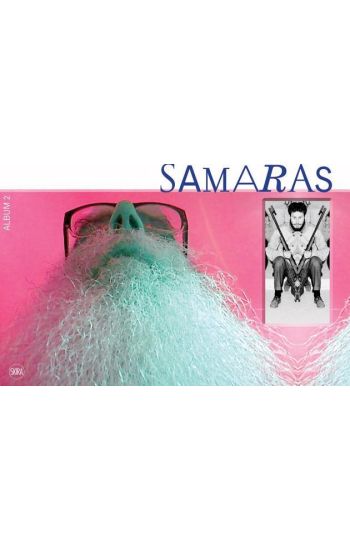
The astounding 700 pictures that compose this book have all been digitally altered and feature the artist at various stages of his life and in different moods, poses, and states of undress. They range from images of a fresh-faced, innocent-looking boy to pictures of a bearded, sinister older man. Presiding over this autobiographical album-- ostensibly a family album, for it begins with some photographs of Lucas Samaras' Greek family--are thirty-four larger-scale photos of the artist as he looks today. Samaras seems to find himself endlessly fascinating; indeed, he is as in love with his image as Narcissus was, absorbed in himself as though no one else existed. Unlike that mythological figure, Samaras hasn't yet drowned in his image, but death haunts his consciousness. "Old age is catastrophe," he has said. His photos are unique in the annals of self-portraiture; only Francis Bacon's come close to them in traumatic intensity and self-distorting suffering.
Sohan Qadri

Sohan Qadri

Donald Kuspit; Tushara Bindu Gude

Skira
2011
sidottu
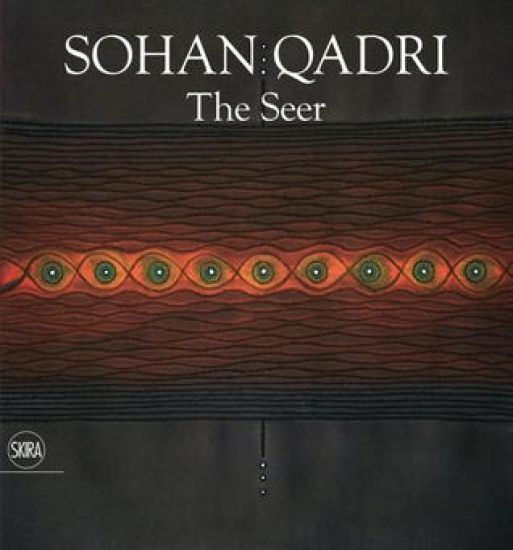
This is the first monograph of the Indian artist Sohan Qadri, a modern Tantric painter. Born in 1932 in Punjab, India, Qadri began his quest for his true self through Tantric yoga and spent long periods of time silently meditating in remote temples in the Himalayas and Tibet. His isolation propelled his urge to paint. He received his MFA in 1960 from the Government College of Art in Simla, India, but soon discovered that academic trappings were not for him. Shortly after his first exhibition in 1965, he left India for the West. In Qadri's work, there is a tranquil coexistence of binary opposites male and female, known and unknown, physical and spiritual. Although he clearly has Western influences, such as Mark Rothko and Clyfford Still, his work is uniquely Eastern. His paintings are monochrome surfaces with structural effects that, in their repetition, convey the rhythmic expressions of colour energies. The vibrations created by these energies are endless and break the boundaries between the inner space of the image and the external space of the viewer. Heinrich Boll, the 1972 Nobel Prize winner in Literature, said that Qadri, with his painting liberates the word meditation from its fashionable taste and brings it back to its proper origin uninfluenced by Western propaganda, misunderstandings and corruptions.
Homage

Homage

Christian Peltenburg-Brechneff; Donald Kuspit; H. H. Gaj Singh

Glitterati Inc
2007
sidottu
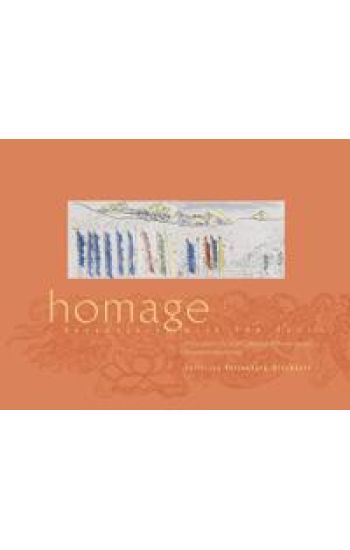
Explores the 'lost kingdoms' with brush, ink and colour. A breathtakingly beautiful quest. In the age of mechanical reproduction, many fail to appreciate intricate drawings made by hand, hands having become mere obsolete instruments these days, compared to the fast precision of the digital camera. Christian Peltenburg-Brechneff's drawings capture what the camera can never capture: the spirit of the places he has rendered. Brechneff takes on the challenge of exploring and translating the architectural and spiritual wonders of the 'lost' kingdoms of the Himalayas with brush and ink and colour washes: Laddakh, Nepal, Sikkim, Bhutan, India, Burma, Cambodia and Laos. Brought to life through imaginative investment, Brechneff's subjects become more mysterious, and preciously exciting than ever. They sparkle with subjective life and become rapturously alive in a way that a photograph could never be. The ancient architecture of India - many old palaces and temples - and ageless mountains are already inspired creations, with archetypal import, emphasising that Brechneffs's journey to them is a spiritual journey. The intricate drawings form a visual diary of his travels. Each drawing is dated, and the place depicted named, indicating that the drawing is a documentary as well as personal journal. Peltenburg-Brechneff decodes and maps India's architecture and mountains with the hope of grasping the secret of their creative dynamic, rather than only preserving their dramatic appearance for posterity. Homage is a breathtakingly beautiful spiritual quest.
The End of Art

The End of Art

Donald Kuspit

Cambridge University Press
2004
sidottu
In The End of Art, Donald Kuspit argues that art is over because it has lost its aesthetic import. Art has been replaced by ‘postart’, a term invented by Alan Kaprow, as a new visual category that elevates the banal over the enigmatic, the scatological over the sacred, cleverness over creativity. Tracing the demise of aesthetic experience to the works and theory of Marcel Duchamp and Barnett Newman, Kuspit argues that devaluation is inseparable from the entropic character of modern art, and that anti-aesthetic postmodern art is if final state. In contrast to modern art, which expressed the universal human unconscious, postmodern art degenerates into an expression of narrow ideological interests. In reaction to the emptiness and stagnancy of postart, Kuspit signals the aesthetic and human future that lies with the New Old Masters. The End of Art points the way to the future for the visual arts.
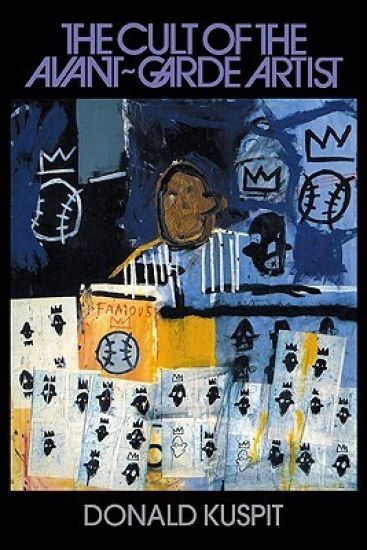
The Cult of the Avant-Garde Artist

The Cult of the Avant-Garde Artist

Donald Kuspit

Cambridge University Press
1994
pokkari
The Cult of the Avant-Garde Artist examines the philosophical, psychological and aesthetic premises for avant-garde art and its subsequent evolution and corruption in the late twentieth century. Arguing that modernist art is essentially therapeutic in intention, both towards self and society, Donald Kuspit further posits that neo-avant-garde, or post-modern art, at once mocks and denies the possibility of therapeutic change. As such, it accommodates the status quo of capitalist society, in which fame and fortune are valued above anything else. Stripping avant-garde art of its missionary, therapeutic intention, neo-avant-garde art instead converts it into a cliché of creative novelty or ironical value for its fashionable look. Moreover, it destroys the precarious balance of artistic narcissism and social empathy that characterizes modern art, tilting it cynically towards the former. Incorporating psychoanalytic ideas, particularly those concerned with narcissism, The Cult of the Avant-Garde Artist offers a reinterpretation of modern art history. Donald Kuspit, one of America's foremost art critics, is a contributing editor to Artforum and the author of many books.