Kirjojen hintavertailu – 12 903 724 kirjaa ja 27 kauppaa

Kirjailija

Donald Ostrowski

Kirjat ja teokset yhdessä paikassa: 11 kirjaa, julkaisuja vuosilta 1998–2023, suosituimpiin kuuluu The Ruling Families of Rus. Vertaile teosten hintoja ja tarkista saatavuus suomalaisista kirjakaupoista.

11 kirjaa

Kirjojen julkaisuvuodet: 1998–2023.

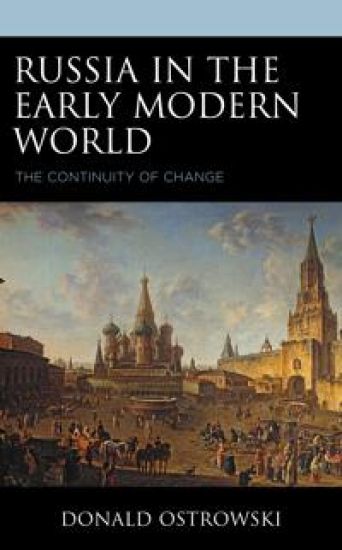
Russia in the Early Modern World

Russia in the Early Modern World

Donald Ostrowski

BLOOMSBURY PUBLISHING PLC
2023
nidottu
A fundamental problem in studying early modern Russian history is determining Russia’s historical development in relationship to the rest of the world. The focus throughout this book is on the continuity of Russian policies during the early modern period (1450–1800) and that those policies coincided with those of other successful contemporary Eurasian polities. The continuities occurred in the midst of constant change, but neither one nor the other, continuities or changes alone, can account for Russia’s success. Instead, Russian rulers from Ivan III to Catherine II with their hub advisors managed to sustain a balance between the two. During the early modern period, these Russian rulers invited into the country foreign experts to facilitate the transfer of technology and know-how, mostly from Europe but also from Asia. In this respect, they were willing to look abroad for solutions to domestic problems. Russia looked westward for military weaponry and techniques at the same time it was expanding eastward into the Eurasian heartland. The ruling elite and by extension the entire ruling class worked in cooperation with the ruler to implement policies. The Church played an active role in supporting the government and in seeking to eliminate opposition to the government.
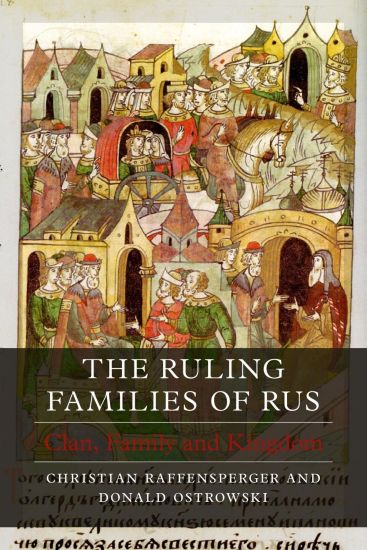
The Ruling Families of Rus

The Ruling Families of Rus

Christian Raffensperger; Donald Ostrowski

REAKTION BOOKS
2023
sidottu

Halvin toimitettuna 31,00 €

This is a new history of the region known as Kyivan Rus’, a state in eastern and northern Europe from the late ninth to the mid-sixteenth century that encompassed a variety of polities and peoples, including Lithuanian, Polish, Ottoman and others. This account for the first time focuses on the history of the region via families, which allows the discussion of a wider region and a larger group of people than has been possible before. The book examines the development of Rus, Lithuania, Muscovy and Tver, and their relations and interconnections with the Mongols, Byzantines and many other peoples. This readable yet thoroughly scholarly book will appeal to anyone with an interest in the history of eastern Europe, a region that is crucial in world politics today.
Russia in the Early Modern World

Russia in the Early Modern World

Donald Ostrowski

BLOOMSBURY PUBLISHING PLC
2022
sidottu
A fundamental problem in studying early modern Russian history is determining Russia’s historical development in relationship to the rest of the world. The focus throughout this book is on the continuity of Russian policies during the early modern period (1450–1800) and that those policies coincided with those of other successful contemporary Eurasian polities. The continuities occurred in the midst of constant change, but neither one nor the other, continuities or changes alone, can account for Russia’s success. Instead, Russian rulers from Ivan III to Catherine II with their hub advisors managed to sustain a balance between the two. During the early modern period, these Russian rulers invited into the country foreign experts to facilitate the transfer of technology and know-how, mostly from Europe but also from Asia. In this respect, they were willing to look abroad for solutions to domestic problems. Russia looked westward for military weaponry and techniques at the same time it was expanding eastward into the Eurasian heartland. The ruling elite and by extension the entire ruling class worked in cooperation with the ruler to implement policies. The Church played an active role in supporting the government and in seeking to eliminate opposition to the government.
Who Wrote That?

Who Wrote That?

Donald Ostrowski

Northern Illinois University Press
2020
sidottu
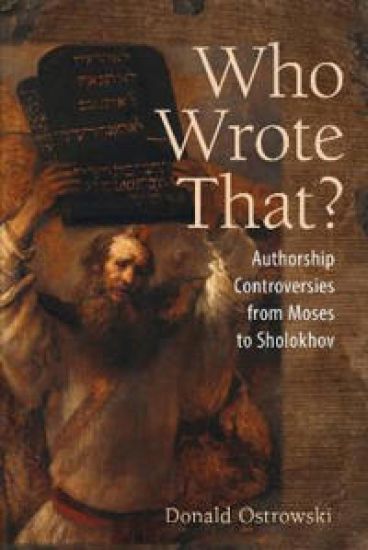
Who Wrote That? examines nine authorship controversies, providing an introduction to particular disputes and teaching students how to assess historical documents, archival materials, and apocryphal stories, as well as internet sources and news. Donald Ostrowski does not argue in favor of one side over another but focuses on the principles of attribution used to make each case. While furthering the field of authorship studies, Who Wrote That? provides an essential resource for instructors at all levels in various subjects. It is ultimately about historical detective work. Using Moses, Analects, the Secret Gospel of Mark, Abelard and Heloise, the Compendium of Chronicles, Rashid al-Din, Shakespeare, Prince Andrei Kurbskii, James MacPherson, and Mikhail Sholokov, Ostrowski builds concrete examples that instructors can use to help students uncover the legitimacy of authorship and to spark the desire to turn over the hidden layers of history so necessary to the craft.
Who Wrote That?

Who Wrote That?

Donald Ostrowski

Northern Illinois University Press
2020
pokkari
Who Wrote That? examines nine authorship controversies, providing an introduction to particular disputes and teaching students how to assess historical documents, archival materials, and apocryphal stories, as well as internet sources and news. Donald Ostrowski does not argue in favor of one side over another but focuses on the principles of attribution used to make each case. While furthering the field of authorship studies, Who Wrote That? provides an essential resource for instructors at all levels in various subjects. It is ultimately about historical detective work. Using Moses, Analects, the Secret Gospel of Mark, Abelard and Heloise, the Compendium of Chronicles, Rashid al-Din, Shakespeare, Prince Andrei Kurbskii, James MacPherson, and Mikhail Sholokov, Ostrowski builds concrete examples that instructors can use to help students uncover the legitimacy of authorship and to spark the desire to turn over the hidden layers of history so necessary to the craft.
Europe, Byzantium, and the "Intellectual Silence" of Rus' Culture
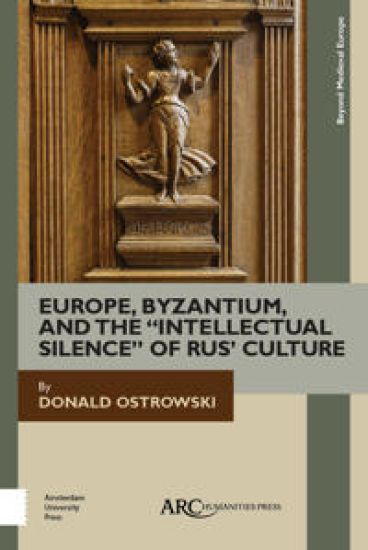
This book sets out to answer the question of why Eastern Church writers showed no interest in analytical reasoning - the so-called "intellectual silence" of Rus' culture - while Western Church writers, by the time of the Scholastics, routinely incorporated analytical reasoning into their defences of the faith. Donald Ostrowski suggests that Western, post-Enlightenment- trained, analytical scholars miss the point, not because of an inability to comprehend cultural ideas which seem abstract and ineffable, but because the agenda is different. For the Eastern Church, faith was superior to reason. Eastern Church thinkers did not see any worth in disputation. If God is a mystery, and this world is an emanation from God, then this world is a mystery too. In the Eastern Church, they did not ask “Why” because, for them, any answer, any explanation, was merely a begging of the question. Why divide into categories what is whole and seamless? Why try to articulate what is ineffable?
History as Therapy: Alternative History and Nationalist Imaginings in Russia

History as Therapy: Alternative History and Nationalist Imaginings in Russia

Konstantin Sheiko; Stephen Brown; Donald Ostrowski

ibidem-Verlag, Jessica Haunschild u Christian Schon
2014
nidottu
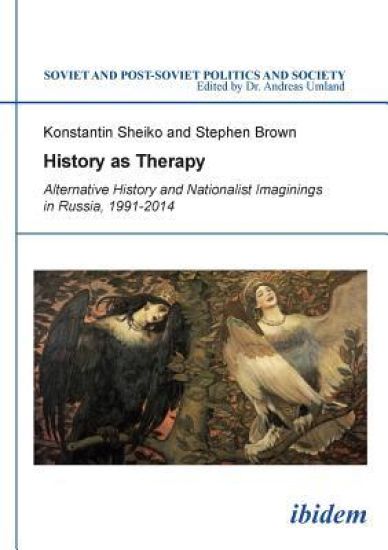
This astonishing book explores the delusional imaginings of Russia's past by the pseudo-scientific 'Alternative History' movement. Despite the chaotic collapse of two empires in the last century, Russia's glorious imperial past continues to inspire millions. The lively movement of 'Alternative History', diligently re-writing Russia's past and 'rediscovering' its hidden greatness, has been growing dramatically since the collapse of Communism in 1991. Virtually unknown in the West, these pseudo-historians have published best-selling books, attracted widespread media attention, and are a prominent voice in Internet discussions about Russian and world history. Alternative History claims that Russia is much older than Ancient Egypt, Greece and Rome; that the medieval Mongol Empire was in fact a Slav-Turk world empire; and that, in the twentieth century, duplicitous foreign powers stabbed Russia in the back and stole its empire. For its followers the key to Russia's greatness in the future lies in ensuring that Russians understand the true wealth of their past. Alternative history has become a popular therapy for Russians still coming to terms with the reality of Post-Soviet life. It is one of the forces shaping a new Russian nationalism and an important factor in the geopolitics of the twenty-first century.
Portraits of Old Russia

Portraits of Old Russia

Donald Ostrowski; Marshall T. Poe

Routledge
2011
sidottu
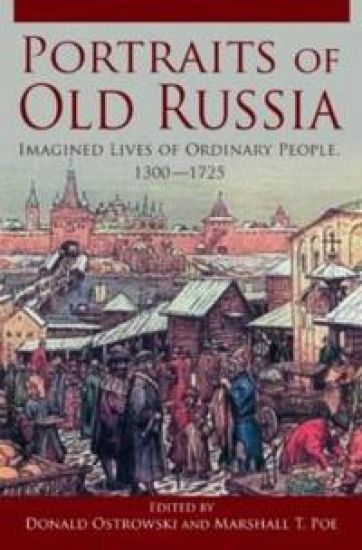
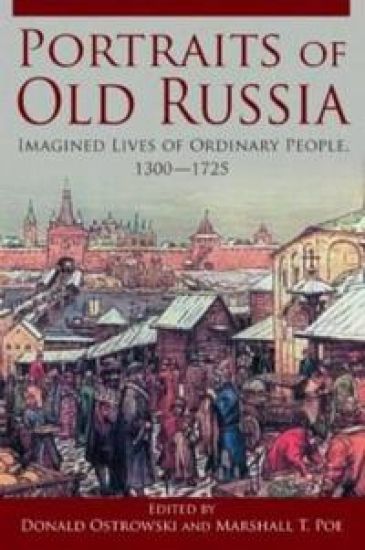
This book introduces readers to a little-known place and time in world history – early modern Russia, from its beginnings as Muscovy, in the fourteenth century, through the reign of Peter I (1689-1725) – by portraying the lives of representative individuals from the major levels of the society of that era. The portraits, written by professional historians, are imaginative reconstructions or composites of individual lives, rather than biographies. The portraits are arranged into socio-political categories, and include members of ruling families, government servitors, clerks, military personnel, church prelates, monks, provincial landowners, townspeople and artisans, Siberian explorers and traders, free peasants, serfs, slaves and holy fools. Using these portraits, the book brings old Russian society to life in an interesting way.
Portraits of Old Russia

Portraits of Old Russia

Donald Ostrowski; Marshall T. Poe

Routledge
2011
nidottu
This book introduces readers to a little-known place and time in world history – early modern Russia, from its beginnings as Muscovy, in the fourteenth century, through the reign of Peter I (1689-1725) – by portraying the lives of representative individuals from the major levels of the society of that era. The portraits, written by professional historians, are imaginative reconstructions or composites of individual lives, rather than biographies. The portraits are arranged into socio-political categories, and include members of ruling families, government servitors, clerks, military personnel, church prelates, monks, provincial landowners, townspeople and artisans, Siberian explorers and traders, free peasants, serfs, slaves and holy fools. Using these portraits, the book brings old Russian society to life in an interesting way.
Muscovy and the Mongols

Muscovy and the Mongols

Donald Ostrowski

Cambridge University Press
2002
pokkari
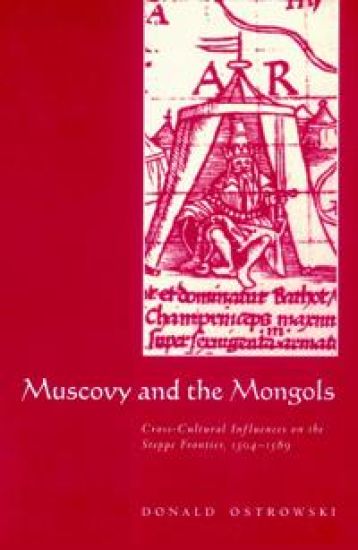
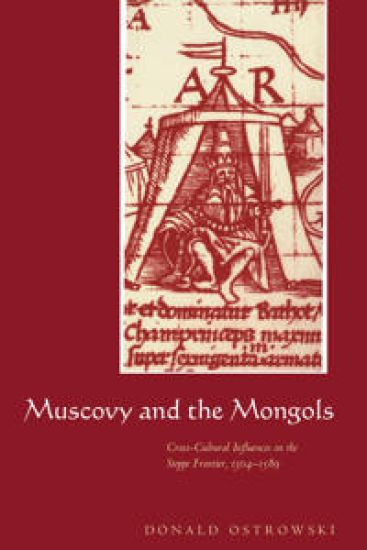
The importance of the Mongols’ impact on the Rus lands has been recognised by many scholars, but its precise nature and extent is very contentious. While diverse opinions exist on the origins and development of Muscovy, the author argues that no society arises ex nihilo and that Muscovy is no exception. Donald Ostrowski considers here the outside origins and influences, as well as indigenous origins and development, in order that the reader may gain a clearer understanding of Muscovy as a political entity, its political institutions and political culture. He shows that during the early period of Muscovy (1304–1448) the ecclesiastical and secular institutions were affected by two different outside influences, Byzantium and the Qipchaq Khanate, respectively. In considering these outside influences, he has set out to study Muscovy as an integral and important part of world history.
Muscovy and the Mongols

Muscovy and the Mongols

Donald Ostrowski

Cambridge University Press
1998
sidottu
The importance of the Mongols’ impact on the Rus lands has been recognised by many scholars, but its precise nature and extent is very contentious. While diverse opinions exist on the origins and development of Muscovy, the author argues that no society arises ex nihilo and that Muscovy is no exception. Donald Ostrowski considers here the outside origins and influences, as well as indigenous origins and development, in order that the reader may gain a clearer understanding of Muscovy as a political entity, its political institutions and political culture. He shows that during the early period of Muscovy (1304–1448) the ecclesiastical and secular institutions were affected by two different outside influences, Byzantium and the Qipchaq Khanate, respectively. In considering these outside influences, he has set out to study Muscovy as an integral and important part of world history.