Kirjojen hintavertailu – 12 859 828 kirjaa ja 27 kauppaa

Kirjailija

Donald Preziosi

Kirjat ja teokset yhdessä paikassa: 11 kirjaa, julkaisuja vuosilta 1979–2013, suosituimpiin kuuluu In the Aftermath of Art. Vertaile teosten hintoja ja tarkista saatavuus suomalaisista kirjakaupoista.

11 kirjaa

Kirjojen julkaisuvuodet: 1979–2013.

Art, Religion, Amnesia

Art, Religion, Amnesia

Donald Preziosi

Routledge
2013
sidottu
Art, Religion, Amnesia addresses the relationship between art and religion in contemporary culture, directly challenging contemporary notions of art and religion as distinct social phenomena and explaining how such Western terms represent alternative and even antithetical modes of world-making. In this new book, Professor Preziosi offers a critique of the main thrust of writing in recent years on the subjects of art, religion, and their interconnections, outlining in detail a perspective which redefines the basic terms in which recent debates and discussions have been articulated both in the scholarly and popular literature, and in artistic, political and religious practice. Art, Religion and Amnesia proposes an alternative to the two conventional traditions of writing on the subject which have been devoted on the one hand to the ‘spiritual’ dimensions of artistry, and on the other hand to the (equally spurious) ‘aesthetic’ aspects of religion. The book interrogates the fundamental assumptions fuelling many current controversies over representation, idolatry, blasphemy, and political culture. Drawing on debates from Plato’s proposal to banish representational art from his ideal city-state to the Danish cartoons of Mohamed, Preziosi argues that recent debates have echoed a number of very ancient controversies in political philosophy, theology, and art history over the problem of representation and its functions in individual and social life. This book is a unique re-evaluation of the essential indeterminacy of meaning-making, marking a radically new approach to understanding the inextricability of aesthetics and theology and will be of interest to students and researchers in art history, philosophy and religion and cultural theory.
Art, Religion, Amnesia

Art, Religion, Amnesia

Donald Preziosi

Routledge
2013
nidottu
Art, Religion, Amnesia addresses the relationship between art and religion in contemporary culture, directly challenging contemporary notions of art and religion as distinct social phenomena and explaining how such Western terms represent alternative and even antithetical modes of world-making. In this new book, Professor Preziosi offers a critique of the main thrust of writing in recent years on the subjects of art, religion, and their interconnections, outlining in detail a perspective which redefines the basic terms in which recent debates and discussions have been articulated both in the scholarly and popular literature, and in artistic, political and religious practice. Art, Religion and Amnesia proposes an alternative to the two conventional traditions of writing on the subject which have been devoted on the one hand to the ‘spiritual’ dimensions of artistry, and on the other hand to the (equally spurious) ‘aesthetic’ aspects of religion. The book interrogates the fundamental assumptions fuelling many current controversies over representation, idolatry, blasphemy, and political culture. Drawing on debates from Plato’s proposal to banish representational art from his ideal city-state to the Danish cartoons of Mohamed, Preziosi argues that recent debates have echoed a number of very ancient controversies in political philosophy, theology, and art history over the problem of representation and its functions in individual and social life. This book is a unique re-evaluation of the essential indeterminacy of meaning-making, marking a radically new approach to understanding the inextricability of aesthetics and theology and will be of interest to students and researchers in art history, philosophy and religion and cultural theory.
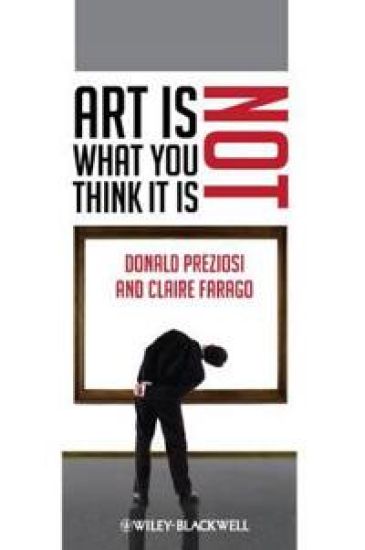
Art Is Not What You Think It Is

Art Is Not What You Think It Is

Donald Preziosi; Claire Farago

Wiley-Blackwell (an imprint of John Wiley Sons Ltd)
2012
nidottu
Art Is Not What You Think It Is utilizes original research to present a series of critical incursions into the current state of debate on the idea of art, making manifest what has been largely missing or unsaid in those discussions. Links museology, history, theory, and criticism to the realities of contemporary social conditions and shows how they have structurally functioned in a variety of contextsDeals with divisive and controversial problems such as blasphemy and idolatry, and the problem of artistic truthAddresses relations between European notions about art and artifice and those developed in other and especially indigenous cultural traditions
Art Is Not What You Think It Is

Art Is Not What You Think It Is

Donald Preziosi; Claire Farago

Wiley-Blackwell (an imprint of John Wiley Sons Ltd)
2012
sidottu
Art Is Not What You Think It Is utilizes original research to present a series of critical incursions into the current state of debate on the idea of art, making manifest what has been largely missing or unsaid in those discussions. Links museology, history, theory, and criticism to the realities of contemporary social conditions and shows how they have structurally functioned in a variety of contextsDeals with divisive and controversial problems such as blasphemy and idolatry, and the problem of artistic truthAddresses relations between European notions about art and artifice and those developed in other and especially indigenous cultural traditions
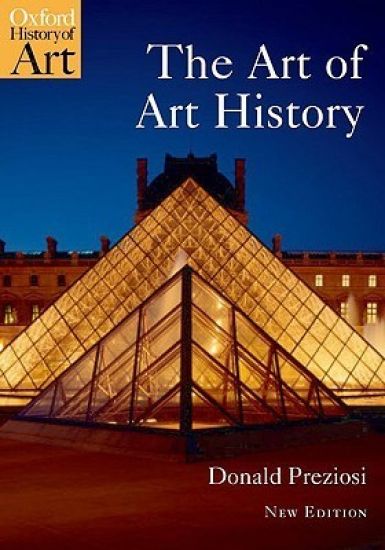
The Art of Art History

The Art of Art History

Donald Preziosi

Oxford University Press
2009
nidottu

Halvin toimitettuna 30,60 €

What is art history? Why, how, and where did it originate, and how have its methods changed over time? The history of art has been written and rewritten since classical antiquity. Since the foundation of the modern discipline of art history in Germany in the late eighteenth century, debates about art and its histories have intensified. Historians, philosophers, psychologists, and anthropologists among others have changed our notions of what art history has been, is, and might be. This anthology is a guide to understanding art history through critical reading of the field's most innovative and influential texts, focusing on the past two centuries. Each section focuses on a key issue: art as history; aesthetics; form, content, and style; anthropology; meaning and interpretation; authorship and identity; and the phenomenon of globalization. More than thirty readings from writers as diverse as Winckelmann, Kant, Mary Kelly, and Michel Foucault are brought together, with editorial introductions to each topic providing background information, bibliographies, and critical elucidations of the issues at stake. This updated and expanded edition contains sixteen newly included extracts from key thinkers in the history of art, from Giorgio Vasari to Walter Benjamin and Satya Mohanty; a new section on globalization; and also a new concluding essay from Donald Preziosi on the tasks of the art historian today.
In the Aftermath of Art

In the Aftermath of Art

Donald Preziosi; Johanne Lamoureux

Routledge
2005
nidottu
By juxtaposing issues and problems, Donald Preziosi's latest collection of essays, In the Aftermath of Art, opens up multiple interpretive possibilities by bringing to the surface hidden resonances in the implications of each text. In re-reading his own writings, Preziosi opens up alternatives to contemporary discourses on art history and visual culture. A critical commentary by critic, historian, and theorist Johanne Lamoureux complements the author's own introduction, mirroring the multiple interpretations within the essays themselves.
In the Aftermath of Art

In the Aftermath of Art

Donald Preziosi; Johanne Lamoureux

Routledge
2005
sidottu
By juxtaposing issues and problems, Donald Preziosi's latest collection of essays, In the Aftermath of Art, opens up multiple interpretive possibilities by bringing to the surface hidden resonances in the implications of each text. In re-reading his own writings, Preziosi opens up alternatives to contemporary discourses on art history and visual culture. A critical commentary by critic, historian, and theorist Johanne Lamoureux complements the author's own introduction, mirroring the multiple interpretations within the essays themselves.
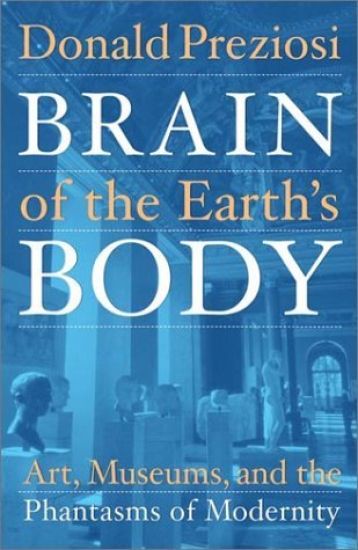
Brain of the Earth's Body

Brain of the Earth's Body

Donald Preziosi

University of Minnesota Press
2003
nidottu
What begins as a meditation on "the museum" by one of the world's leading art historians becomes, in this book, a far-reaching critical examination of how art history and museums have guided and controlled not only the way we look at art but the ways in which we understand modernity itself. Originally delivered as the 2001 Slade Lectures in the Fine Arts at Oxford University, the book makes its deeply complex argument remarkably accessible and powerfully clear. Concentrating on a period from the beginning of the nineteenth century to the beginning of the twentieth, Donald Preziosi presents case studies of major institutions that, he argues, have defined--and are still defining--the possible limits of museological and art historical theory and practice. These include Sir John Soane's Museum in London, preserved in its 1837 state; the Crystal Palace Exhibition of 1851; and four museums founded by Europeans in Egypt in the late nineteenth century, which divided up that country's history into "ethnically marked" aesthetic hierarchies and genealogies that accorded with Europe's construction of itself as the present of the world's past, and the "brain of the earth's body." Through this epistemological and institutional archaeology, Preziosi unearths the outlines of the more radical Enlightenment project that academic art history, professional museology, and art criticism have rendered marginal or invisible. Finally, he sketches a new theory about art, artifice, and visual signification in the cracks and around the margins of the "secular theologisms" of the globalized imperial capital called modernity. Addressed equally to the theoretical and philosophical foundations of art history,museology, history, and anthropology, this book goes to the heart of recent debates about race, ethnicity, nationality, colonialism, and multiculturalisms--and to the very foundations of modernity and modern modes of knowledge production.
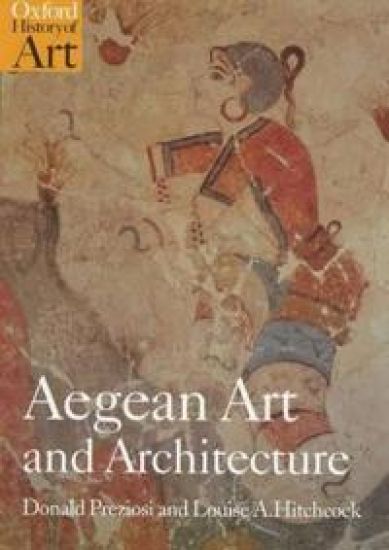
Aegean Art and Architecture

Aegean Art and Architecture

Donald Preziosi; Louise Hitchcock

Oxford University Press
1999
nidottu
The amazing discovery of the 'first European civilization' in Crete, Greece and the Aegean islands during the late nineteenth and early twentieth centuries was beyond what anyone had imagined. Beginning with the Neolithic period, before 3000 BCE, and ending at the close of the Bronze Age and the transition to the Iron Age of Hellenic Greece (c.1000 BCE), this is the first comprehensive introduction to the visual arts and architecture of this extraordinary era. This book introduces the reader to the historical and social contexts within which the arts - pottery, gold, silver, and ivory objects, gravestone reliefs, frescoes, and architecture - of the Aegean area developed. It examines the functions they served, and the ways in which they can be read as evidence for the interactions of many different peoples and societies in the eastern Mediterranean. It also provides an up-to-date critical historiography of the field in its relationship to the growth of ancient art history, archaeology, and museology in the nineteenth and twentieth centuries, giving a contemporary audience a clear appreciation of what has been at stake in the uncovering and reconstruction of this ancient society.