Kirjailija
Donald R. Prothero
Kirjat ja teokset yhdessä paikassa: 40 kirjaa, julkaisuja vuosilta 1994–2026, suosituimpiin kuuluu The Story of the Mammals in 25 Discoveries. Vertaile teosten hintoja ja tarkista saatavuus suomalaisista kirjakaupoista.
40 kirjaa
Kirjojen julkaisuvuodet: 1994–2026.
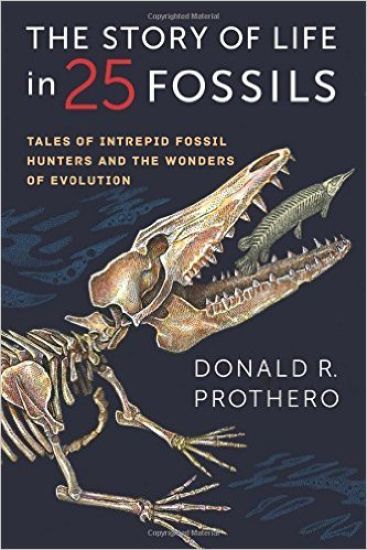
Every fossil tells a story. Best-selling paleontology author Donald R. Prothero describes twenty-five famous, beautifully preserved fossils in a gripping scientific history of life on Earth. Recounting the adventures behind the discovery of these objects and fully interpreting their significance within the larger fossil record, Prothero creates a riveting history of life on our planet. The twenty-five fossils portrayed in this book catch animals in their evolutionary splendor as they transition from one kind of organism to another. We witness extinct plants and animals of microscopic and immense size and thrilling diversity. We learn about fantastic land and sea creatures that have no match in nature today. Along the way, we encounter such fascinating fossils as the earliest trilobite, Olenellus; the giant shark Carcharocles; the "fishibian" Tiktaalik; the "Frogamander" and the "Turtle on the Half-Shell"; enormous marine reptiles and the biggest dinosaurs known; the first bird, Archaeopteryx; the walking whale Ambulocetus; the gigantic hornless rhinoceros Paraceratherium, the largest land mammal that ever lived; and the Australopithecus nicknamed "Lucy," the oldest human skeleton. We meet the scientists and adventurers who pioneered paleontology and learn about the larger intellectual and social contexts in which their discoveries were made. Finally, we find out where to see these splendid fossils in the world's great museums. Ideal for all who love prehistoric landscapes and delight in the history of science, this book makes a treasured addition to any bookshelf, stoking curiosity in the evolution of life on Earth.
The Evolution of North American Rhinoceroses
Donald R. Prothero
Cambridge University Press
2018
pokkari
The family Rhinocerotidae has a long and amazing history in North America. From their first appearance about forty million years ago, they diversified into an incredible array of taxa, with a variety of ecologies that do not resemble any of the five living species. They ranged from delicate long-legged dog-sized forms, to huge hippo-like forms that apparently lived in rivers and lakes. This book includes a systematic review of the entire North American Rhinocerotidae, with complete descriptions, measurements, and figures of every bone in every species - the first such review in over a century. More importantly, it discusses the biogeographic patterns of rhinos, their evolutionary patterns and paleoecology, and what rhinos tell us about the evolution of North American landscapes and faunas over 35 million years. It is a complete and authoritative volume that will be a reference of interest to a variety of scientists for years to come.
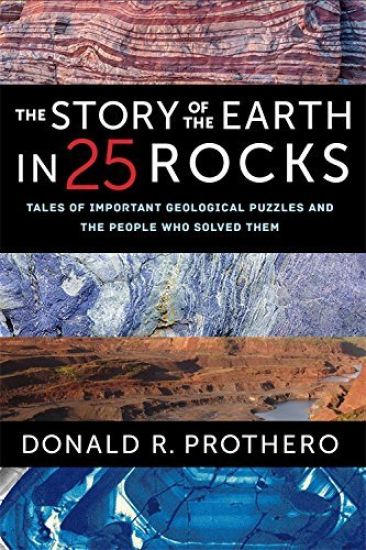
Every rock is a tangible trace of the earth's past. In The Story of the Earth in 25 Rocks, Donald R. Prothero tells the fascinating stories behind the discoveries that shook the foundations of geology. In twenty-five chapters-each about a particular rock, outcrop, or geologic phenomenon-Prothero recounts the scientific detective work that took us from the unearthing of exemplary specimens to tectonic shifts in how we view our planet and history. Prothero follows in the footsteps of the scientists who asked-and answered-geology's biggest questions: How do we know how old the earth is? What happened to the supercontinent Pangea? How did ocean rocks end up at the top of Mount Everest? What can we learn about our planet from meteorites and moon rocks? The Story of the Earth in 25 Rocks answers these questions through expertly chosen case studies, such as Pliny the Elder's firsthand account of the eruption of Vesuvius; the granite outcrops that led a Scottish scientist to theorize that the landscapes he witnessed were far older than Noah's Flood; the gypsum deposits under the Mediterranean Sea that indicate that it was once a desert; and how trying to date the age of meteorites revealed the dangers of lead poisoning. Each of these breakthroughs filled in a piece of the puzzle that is the earth, with scientific discoveries dovetailing with each other to offer increasingly solid evidence of the geologic past. Summarizing a wealth of information in an entertaining, approachable style, The Story of the Earth in 25 Rocks is essential reading for the armchair geologist, the rock hound, and all who are curious about the earth beneath their feet.
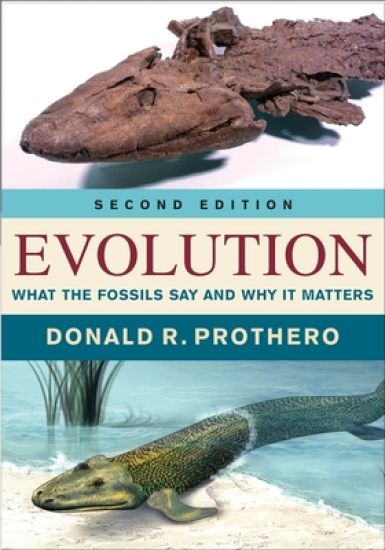
Donald R. Prothero's Evolution is an entertaining and rigorous history of the transitional forms and series found in the the fossil record. Its engaging narrative of scientific discovery and well-grounded analysis has led to the book's widespread adoption in courses that teach the nature and value of fossil evidence. Evolution tackles flood geology, rock dating, neo-Darwinism, and macroevolution. It includes extensive coverage of the primordial soup, invertebrate transitions, the development of the backbone, the reign of the dinosaurs, and the transformation from chimpanzee to human. The book details the many "missing links," including some of the most recent discoveries, that flesh out the fossil timeline and the evolutionary process. In this second edition, Prothero describes new transitional fossils from various periods, vividly depicting such bizarre creatures as the Odontochelys, or the "turtle on the half shell," fossil snakes with legs, and the "Frogamander," a new example of amphibian transition. Prothero's discussion of intelligent-design arguments includes more historical examples and careful examination of the "experiments" and observations that are exploited by creationists seeking to undermine sound science education. With new perspectives, Prothero reframes creationism more as a case study in denialism and pseudoscience than as a field with its own intellectual dynamism. The first edition was hailed as the best book on the fossil evidence for evolution, and this second edition will be welcome in the libraries of scholars, teachers, and general readers who stand up for sound science.
UFOs, Chemtrails, and Aliens
Donald R. Prothero; Timothy D. Callahan; Michael Shermer
Indiana University Press
2017
sidottu
UFOs. Aliens. Strange crop circles. Giant figures scratched in the desert surface along the coast of Peru. The amazing alignment of the pyramids. Strange lines of clouds in the sky. The paranormal is alive and well in the American cultural landscape. In UFOs, Chemtrails, and Aliens, Donald R. Prothero and Tim Callahan explore why such demonstrably false beliefs thrive despite decades of education and scientific debunking. Employing the ground rules of science and the standards of scientific evidence, Prothero and Callahan discuss a wide range of topics including the reliability of eyewitness testimony, psychological research into why people want to believe in aliens and UFOs, and the role conspiratorial thinking plays in UFO culture. They examine a variety of UFO sightings and describe the standards of evidence used to determine whether UFOs are actual alien spacecraft. Finally, they consider our views of aliens and the strong cultural signals that provide the shapes and behaviors of these beings. While their approach is firmly based in science, Prothero and Callahan also share their personal experiences of Area 51, Roswell, and other legendary sites, creating a narrative that is sure to engross both skeptics and believers.
UFOs, Chemtrails, and Aliens
Donald R. Prothero; Timothy D. Callahan; Michael Shermer
Indiana University Press
2017
pokkari
UFOs. Aliens. Strange crop circles. Giant figures scratched in the desert surface along the coast of Peru. The amazing alignment of the pyramids. Strange lines of clouds in the sky. The paranormal is alive and well in the American cultural landscape. In UFOs, Chemtrails, and Aliens, Donald R. Prothero and Tim Callahan explore why such demonstrably false beliefs thrive despite decades of education and scientific debunking. Employing the ground rules of science and the standards of scientific evidence, Prothero and Callahan discuss a wide range of topics including the reliability of eyewitness testimony, psychological research into why people want to believe in aliens and UFOs, and the role conspiratorial thinking plays in UFO culture. They examine a variety of UFO sightings and describe the standards of evidence used to determine whether UFOs are actual alien spacecraft. Finally, they consider our views of aliens and the strong cultural signals that provide the shapes and behaviors of these beings. While their approach is firmly based in science, Prothero and Callahan also share their personal experiences of Area 51, Roswell, and other legendary sites, creating a narrative that is sure to engross both skeptics and believers.
The battles over evolution, climate change, childhood vaccinations, and the causes of AIDS, alternative medicine, oil shortages, population growth, and the place of science in our country—all are reaching a fevered pitch. Many people and institutions have exerted enormous efforts to misrepresent or flatly deny demonstrable scientific reality to protect their nonscientific ideology, their power, or their bottom line. To shed light on this darkness, Donald R. Prothero explains the scientific process and why society has come to rely on science not only to provide a better life but also to reach verifiable truths no other method can obtain. He describes how major scientific ideas that are accepted by the entire scientific community (evolution, anthropogenic global warming, vaccination, the HIV cause of AIDS, and others) have been attacked with totally unscientific arguments and methods. Prothero argues that science deniers pose a serious threat to society, as their attempts to subvert the truth have resulted in widespread scientific ignorance, increased risk of global catastrophes, and deaths due to the spread of diseases that could have been prevented.
The Princeton Field Guide to Prehistoric Mammals
Donald R. Prothero
PRINCETON UNIVERSITY PRESS
2016
sidottu
Halvin toimitettuna 33,80 €
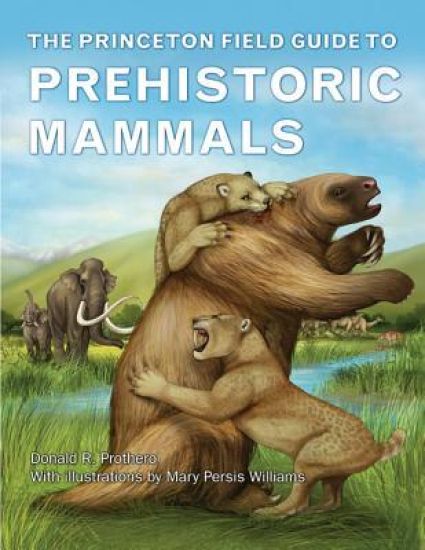
After the mass extinction of the dinosaurs 65 million years ago, mammals became the dominant terrestrial life form on our planet. Roaming the earth were spectacular beasts such as saber-toothed cats, giant mastodonts, immense ground sloths, and gigantic giraffe-like rhinoceroses. Here is the ultimate illustrated field guide to the lost world of these weird and wonderful prehistoric creatures. A woolly mammoth probably won't come thundering through your vegetable garden any time soon. But if one did, this would be the book to keep on your windowsill next to the binoculars. It covers all the main groups of fossil mammals, discussing taxonomy and evolutionary history, and providing concise accounts of the better-known genera and species as well as an up-to-date family tree for each group. No other book presents such a wealth of new information about these animals--what they looked like, how they behaved, and how they were interrelated. In addition, this unique guide is stunningly illustrated throughout with full-color reconstructions of these beasts--many never before depicted--along with photographs of amazing fossils from around the world. * Provides an up-to-date guidebook to hundreds of extinct species, from saber-toothed cats to giant mammoths * Features a wealth of color illustrations, including new reconstructions of many animals never before depicted* Demonstrates evolution in action--such as how whales evolved from hoofed mammals and how giraffes evolved from creatures with short necks* Explains how mass extinctions and climate change affected mammals, including why some mammals grew so huge
Every fossil tells a story. Best-selling paleontology author Donald R. Prothero describes twenty-five famous, beautifully preserved fossils in a gripping scientific history of life on Earth. Recounting the adventures behind the discovery of these objects and fully interpreting their significance within the larger fossil record, Prothero creates a riveting history of life on our planet. The twenty-five fossils portrayed in this book catch animals in their evolutionary splendor as they transition from one kind of organism to another. We witness extinct plants and animals of microscopic and immense size and thrilling diversity. We learn about fantastic land and sea creatures that have no match in nature today. Along the way, we encounter such fascinating fossils as the earliest trilobite, Olenellus; the giant shark Carcharocles; the "fishibian" Tiktaalik; the "Frogamander" and the "Turtle on the Half-Shell"; enormous marine reptiles and the biggest dinosaurs known; the first bird, Archaeopteryx; the walking whale Ambulocetus; the gigantic hornless rhinoceros Paraceratherium, the largest land mammal that ever lived; and the Australopithecus nicknamed "Lucy," the oldest human skeleton. We meet the scientists and adventurers who pioneered paleontology and learn about the larger intellectual and social contexts in which their discoveries were made. Finally, we find out where to see these splendid fossils in the world's great museums. Ideal for all who love prehistoric landscapes and delight in the history of science, this book makes a treasured addition to any bookshelf, stoking curiosity in the evolution of life on Earth.
Abominable Science!
Daniel Loxton; Donald R. Prothero; Michael Shermer
Columbia University Press
2015
pokkari
Throughout our history, humans have been captivated by mythic beasts and legendary creatures. Tales of Bigfoot, the Yeti, and the Loch Ness monster are part of our collective experience. Now comes a book from two dedicated investigators that explores and elucidates the fascinating world of cryptozoology. Daniel Loxton and Donald R. Prothero have written an entertaining, educational, and definitive text on cryptids, presenting the arguments both for and against their existence and systematically challenging the pseudoscience that perpetuates their myths. After examining the nature of science and pseudoscience and their relation to cryptozoology, Loxton and Prothero take on Bigfoot; the Yeti, or Abominable Snowman, and its cross-cultural incarnations; the Loch Ness monster and its highly publicized sightings; the evolution of the Great Sea Serpent; and Mokele Mbembe, or the Congo dinosaur. They conclude with an analysis of the psychology behind the persistent belief in paranormal phenomena, identifying the major players in cryptozoology, discussing the character of its subculture, and considering the challenge it poses to clear and critical thinking in our increasingly complex world.
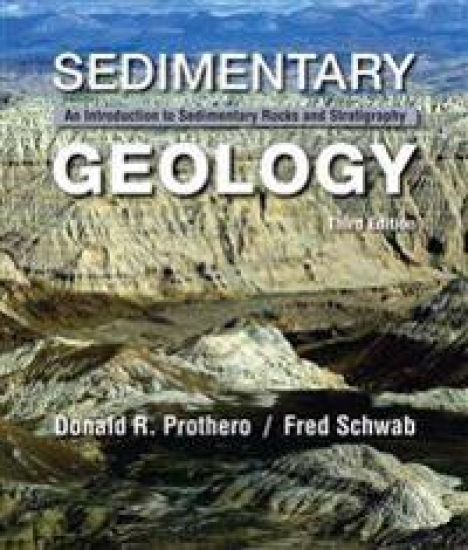
Both authors have created this textbook to show students how sedimentary strata serves geologists as a continuous record of Earth's history. The authors' conversational style, and focus on the important concepts make the book highly accessible to an undergraduate audience. Such complex ideas are broken down and made understandable to geology students. Written for a first course in sedimentary geology or sedimentary rocks and stratigraphy (with only an introductory geology/physical geology course as a prerequisite). Each chapter focuses on general principles, without bringing in too much detail too quickly, allowing students to develop a solid base level of understanding core concepts. An accessible title for those covering two principal fields of sedimentary geology—sedimentary petrology (properties of sedimentary rocks, their classification and nomenclature) and stratigraphy (defines and describes natural bodies of rock).
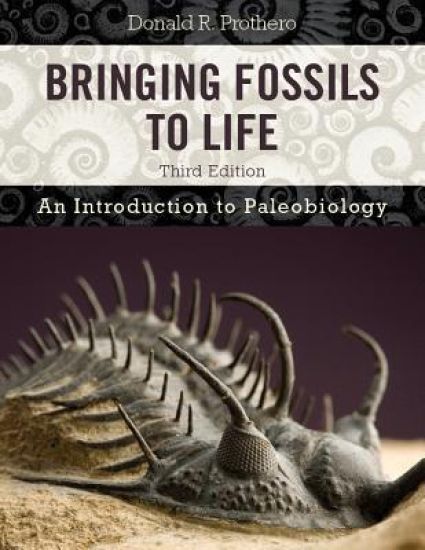
One of the leading textbooks in its field, Bringing Fossils to Life applies paleobiological principles to the fossil record while detailing the evolutionary history of major plant and animal phyla. It incorporates current research from biology, ecology, and population genetics, bridging the gap between purely theoretical paleobiological textbooks and those that describe only invertebrate paleobiology and that emphasize cataloguing live organisms instead of dead objects. For this third edition Donald R. Prothero has revised the art and research throughout, expanding the coverage of invertebrates and adding a discussion of new methodologies and a chapter on the origin and early evolution of life.
Abominable Science!
Daniel Loxton; Donald R. Prothero; Michael Shermer
Columbia University Press
2013
sidottu
Throughout our history, humans have been captivated by mythic beasts and legendary creatures. Tales of Bigfoot, the Yeti, and the Loch Ness monster are part of our collective experience. Now comes a book from two dedicated investigators that explores and elucidates the fascinating world of cryptozoology. Daniel Loxton and Donald R. Prothero have written an entertaining, educational, and definitive text on cryptids, presenting the arguments both for and against their existence and systematically challenging the pseudoscience that perpetuates their myths. After examining the nature of science and pseudoscience and their relation to cryptozoology, Loxton and Prothero take on Bigfoot; the Yeti, or Abominable Snowman, and its cross-cultural incarnations; the Loch Ness monster and its highly publicized sightings; the evolution of the Great Sea Serpent; and Mokele Mbembe, or the Congo dinosaur. They conclude with an analysis of the psychology behind the persistent belief in paranormal phenomena, identifying the major players in cryptozoology, discussing the character of its subculture, and considering the challenge it poses to clear and critical thinking in our increasingly complex world.
Devastating natural disasters have profoundly shaped human history, leaving us with a respect for the mighty power of the earth-and a humbling view of our future. Paleontologist and geologist Donald R. Prothero tells the harrowing human stories behind these catastrophic events. Prothero describes in gripping detail some of the most important natural disasters in history: * the New Madrid, Missouri, earthquakes of 1811-1812 that caused church bells to ring in Boston* the 2004 Indian Ocean tsunami that killed more than 230,000 people* the massive volcanic eruptions of Krakatau, Mount Tambora, Mount Vesuvius, Mount St. Helens, and Nevado del Ruiz His clear and straightforward explanations of the forces that caused these disasters accompany gut-wrenching accounts of terrifying human experiences and a staggering loss of human life. Floods that wash out whole regions, earthquakes that level a single country, hurricanes that destroy everything in their path-all are here to remind us of how little control we have over the natural world. Dramatic photographs and eyewitness accounts recall the devastation wrought by these events, and the people-both heroes and fools-that are caught up in the earth's relentless forces. Eerie, fascinating, and often moving, these tales of geologic history and human fortitude and folly will stay with you long after you put the book down.
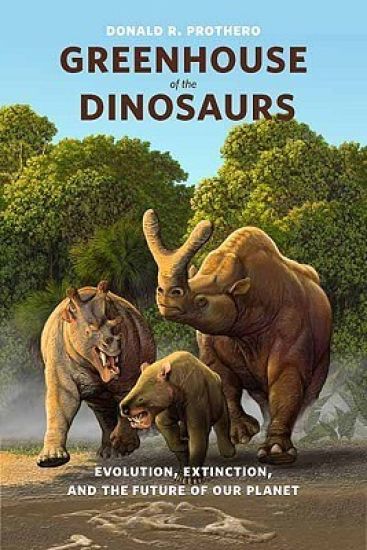
Donald R. Prothero's science books combine leading research with first-person narratives of discovery, injecting warmth and familiarity into a profession that has much to offer nonspecialists. Bringing his trademark style and wit to an increasingly relevant subject of concern, Prothero links the climate changes that have occurred over the past 200 million years to their effects on plants and animals. In particular, he contrasts the extinctions that ended the Cretaceous period, which wiped out the dinosaurs, with those of the later Eocene and Oligocene epochs. Prothero begins with the "greenhouse of the dinosaurs," the global-warming episode that dominated the Age of Dinosaurs and the early Age of Mammals. He describes the remarkable creatures that once populated the earth and draws on his experiences collecting fossils in the Big Badlands of South Dakota to sketch their world. Prothero then discusses the growth of the first Antarctic glaciers, which marked the Eocene-Oligocene transition, and shares his own anecdotes of excavations and controversies among colleagues that have shaped our understanding of the contemporary and prehistoric world. The volume concludes with observations about Nisqually Glacier and other locations that show how global warming is happening much quicker than previously predicted, irrevocably changing the balance of the earth's thermostat. Engaging scientists and general readers alike, Greenhouse of the Dinosaurs connects events across thousands of millennia to make clear the human threat to natural climate change.
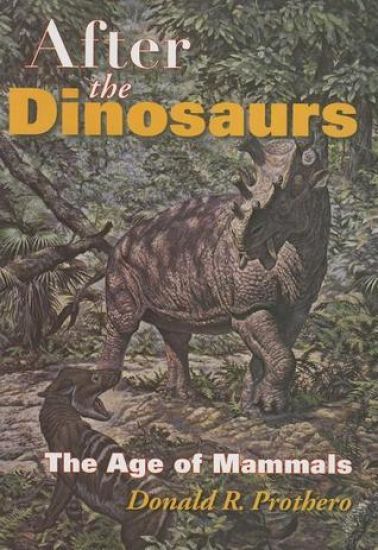
Perhaps nudged over the evolutionary cliff by a giant boloid striking the earth, the incredible and fascinating group of animals called dinosaurs became extinct some 65 million years ago (except for their feathered descendants). In their place evolved an enormous variety of land creatures, especially the mammals, which in their way were every bit as remarkable as their Mesozoic cousins. The Age of Mammals, the Cenozoic Era, has never had its Jurassic Park, but it was an amazing time in earth's history, populated by a wonderful assortment of bizarre animals. The rapid evolution of thousands of species of mammals brought forth gigantic hornless rhinos, sabertooth cats, mastodonts and mammoths, and many other creatures—including our own ancestors. Their story is part of a larger story of a world emerging from the greenhouse conditions of the Mesozoic, warming up dramatically about 55 million years ago, and then cooling rapidly so that 33 million years ago the glacial ice returned. The earth's vegetation went through equally dramatic changes, from tropical jungles in Montana and forests at the poles, to grasslands and savannas across the entire world. Life in the sea also underwent striking evolution reflecting global climate change, including the emergence of such creatures as giant sharks, seals, sea lions, dolphins, and whales. After the Dinosaurs is a book for everyone who has an abiding fascination with the remarkable life of the past.
The Evolution of North American Rhinoceroses
Donald R. Prothero
Cambridge University Press
2005
sidottu
The family Rhinocerotidae has a long and amazing history in North America. From their first appearance about 40 million years ago, they diversified into an incredible array of taxa, with a variety of ecologies that don’t resemble any of the five living species. They ranged from delicate long-legged dog-sized forms, to huge hippo-like forms that apparently lived in rivers and lakes. This book includes a systematic review of the entire North American Rhinocerotidae, with complete descriptions, measurements, and figures of every bone in every species - the first such review in over a century. More importantly, it discusses the biogeographic patterns of rhinos, their evolutionary patterns and paleoecology, and what rhinos tell us about the evolution of North American landscapes and faunas over 35 million years. It is a complete and authoritative volume that will be a reference of interest to a variety of scientists for years to come.
Horns, Tusks, and Flippers
Donald R. Prothero; Robert M. Schoch
Johns Hopkins University Press
2003
sidottu
Since the extinction of the dinosaurs, hoofed mammals have been the planet's dominant herbivores. Native to all continents except Australia and Antarctica, they include not only even-toed artiodactyls (pigs, hippos, camels, deer, antelopes, giraffes, sheep, goats, and cattle) and odd-toed perissodactyls (horses and rhinos), but also tethytheres (elephants and their aquatic relatives, manatees and seas cows) and cetaceans (whales and dolphins), which descended from hoofed land mammals. Recent paleontological and biological discoveries have deepened our understanding of their evolution and in some cases have made previous theories obsolete. In Horns, Tusks, and Flippers, Donald R. Prothero and Robert M. Schoch present a compelling new evolutionary history of these remarkable creatures, combining the latest scientific evidence with the most current information about their ecology and behavior. Using an approach based on cladistics, the authors consider both living and extinct ungulates. Included in their discussion are the stories of rhinos, whose ancestors include both dinosaur-sized hornless species and hippo-like river waders; elephants, whose earliest ancestors had neither tusks nor trunks; and whales, whose descent from hoofed mesonychids has never properly been described for the lay audience. Prothero and Schoch also update the evolutionary history of the horse, correcting the frequent errors made in textbooks and popular works, and they make available to the general public new evidence about the evolution of camels, horned antelopes, and cattle. In addition, they raise important conservation issues and relate anecdotes of significant fossil finds. Scientifically accurate and up to date, generously illustrated, and clearly written, Horns, Tusks, and Flippers is a useful and much-needed resource for specialists in the fields of paleontology, zoology, ecology, and evolutionary biology, as well as for general readers interested in learning more about the story of life on earth.
Describes the Eocene-Oligocene extinctions, an important turning-point in Earth history approximately 40 million years ago, when the first signs of Antarctic glaciation appeared. The text relates how, during a period of global cooling, the planet's climate and vegetation changed dramatically.