Kirjojen hintavertailu – 12 903 731 kirjaa ja 27 kauppaa
Kirjailija
Donald S. Lopez
Kirjat ja teokset yhdessä paikassa: 21 kirjaa, julkaisuja vuosilta 1997–2025, suosituimpiin kuuluu From Stone to Flesh: A Short History of the Buddha. Vertaile teosten hintoja ja tarkista saatavuus suomalaisista kirjakaupoista.
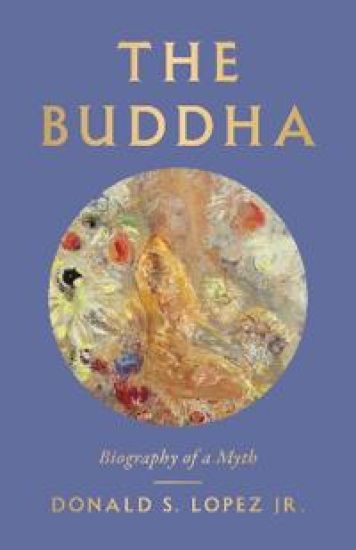
From one of the world’s leading Buddhist scholars, a deeply researched and unprecedented portrait of the Buddha Like Jesus and Muhammad, the Buddha is one of the most significant figures in history. But is he a historical figure? In this revelatory book, Donald S. Lopez Jr. explores this question and considers what is at stake in the answer. Using stories of the Buddha’s life—drawn from the earliest biographies, the work of other scholars, and his own research—Lopez traces a single narrative from the Buddha’s birth to his enlightenment to his passage into nirvana. Unlike those who transformed the Buddha into a rationalist philosopher, Lopez seeks to “remythologize” the Buddha, restoring the rainbow that encircled the Buddha for centuries, radiating his teachings around the world. Complementing traditional Buddhist sources with insights from Gustave Flaubert, Oscar Wilde, George Eliot, and others, Lopez produces a rich, accessible, and unprecedented portrait of one of the world’s most important religious figures.
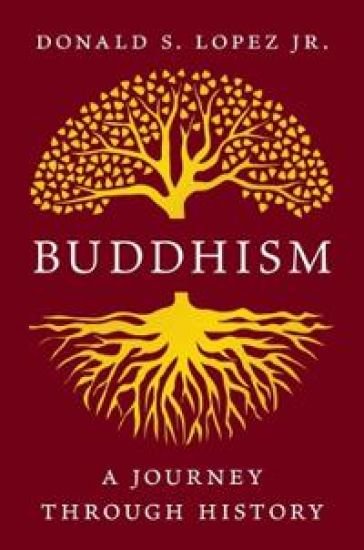
One of the world’s leading scholars of Buddhism presents the story of its dramatic journey across the globe, from 2,500 years ago to the present day Over the course of twenty-five centuries, Buddhism spread from its place of origin in northern India to become a global tradition of remarkable breadth, depth, and richness. In this ambitious book, Donald S. Lopez Jr. draws on the latest scholarship to construct a detailed and innovative history of Buddhism—not just as a chronology through the centuries or as geographic movement across a map, but as a dense matrix of interconnections. Beginning with the life and teachings of the Buddha, Lopez shows how a set of evolving ideas and practices traveled north and east to China, Korea, Japan, Mongolia, and Tibet, south and southeast to Sri Lanka, Burma, Thailand, Cambodia, Laos, Vietnam, and Indonesia, and finally westward to Europe and the Americas. He provides insights on questions that Buddhism has asked and answered in different times and different places—about apocalypse, art, identity, immortality, law, nation, persecution, philosophy, science, sex, war, and writing. Vast in its erudition and expansive in its vision, this is the most complete single-volume history of Buddhism in its full historical and geographical range.
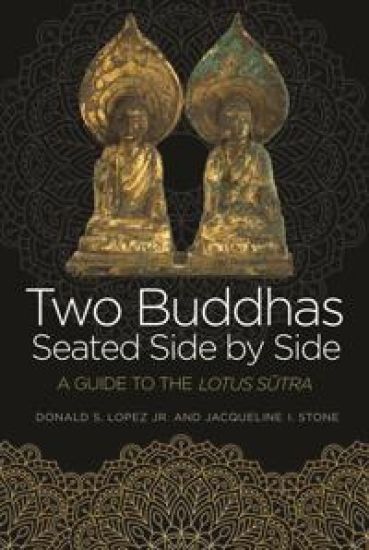
An essential companion to a timeless spiritual classicThe Lotus Sutra is among the most venerated scriptures of Buddhism. Composed in India some two millennia ago, it asserts the potential for all beings to attain supreme enlightenment. Donald Lopez and Jacqueline Stone provide an essential reading companion to this inspiring yet enigmatic masterpiece, explaining how it was understood by its compilers in India and, centuries later in medieval Japan, by one of its most influential proponents. In this illuminating chapter-by-chapter guide, Lopez and Stone show how the sutra's anonymous authors skillfully reframed the mainstream Buddhist tradition in light of a new vision of the path and the person of the Buddha himself, and examine how the sutra's metaphors, parables, and other literary devices worked to legitimate that vision. They go on to explore how the Lotus was interpreted by the Japanese Buddhist master Nichiren (1222–1282), whose inspired reading of the book helped to redefine modern Buddhism. In doing so, Lopez and Stone demonstrate how readers of sacred works continually reinterpret them in light of their own unique circumstances. An invaluable guide to an incomparable spiritual classic, this book unlocks the teachings of the Lotus for modern readers while providing insights into the central importance of commentary as the vehicle by which ancient writings are given contemporary meaning.
An essential companion to a timeless spiritual classicThe Lotus Sutra is among the most venerated scriptures of Buddhism. Composed in India some two millennia ago, it asserts the potential for all beings to attain supreme enlightenment. Donald Lopez and Jacqueline Stone provide an essential reading companion to this inspiring yet enigmatic masterpiece, explaining how it was understood by its compilers in India and, centuries later in medieval Japan, by one of its most influential proponents. In this illuminating chapter-by-chapter guide, Lopez and Stone show how the sutra's anonymous authors skillfully reframed the mainstream Buddhist tradition in light of a new vision of the path and the person of the Buddha himself, and examine how the sutra's metaphors, parables, and other literary devices worked to legitimate that vision. They go on to explore how the Lotus was interpreted by the Japanese Buddhist master Nichiren (1222–1282), whose inspired reading of the book helped to redefine modern Buddhism. In doing so, Lopez and Stone demonstrate how readers of sacred works continually reinterpret them in light of their own unique circumstances. An invaluable guide to an incomparable spiritual classic, this book unlocks the teachings of the Lotus for modern readers while providing insights into the central importance of commentary as the vehicle by which ancient writings are given contemporary meaning.
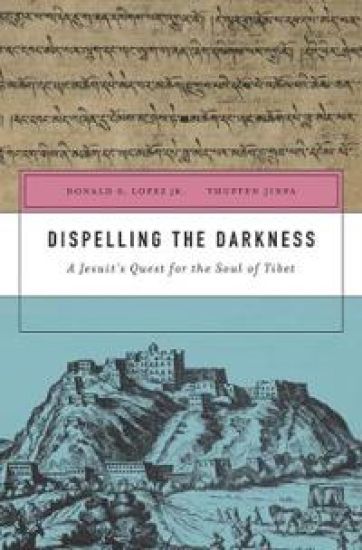
In a remote Himalayan village in 1721, the Jesuit priest Ippolito Desideri awaited permission from Rome to continue his mission to convert the Tibetan people to Christianity. In the meantime, he forged ahead with an ambitious project: a treatise, written in classical Tibetan, that would refute key Buddhist doctrines. If he could convince the Buddhist monks that these doctrines were false, thought Desideri, he would dispel the darkness of idolatry from Tibet. Offering a fascinating glimpse into the historical encounter between Christianity and Buddhism, Dispelling the Darkness brings Desideri’s Tibetan writings to readers of English for the first time. This authoritative study provides extended excerpts from Inquiry concerning the Doctrines of Previous Lives and Emptiness, Desideri’s unfinished masterpiece, as well as a full translation of Essence of the Christian Religion, a companion work that broadens his refutation of Buddhism. Desideri possessed an unusually sophisticated understanding of Buddhism and a masterful command of the classical Tibetan language. He believed that only careful argumentation could demolish the philosophical foundations of Buddhism, especially the doctrines of rebirth and emptiness that prevented belief in the existence of God. Donald Lopez and Thupten Jinpa’s detailed commentary reveals how Desideri deftly used Tibetan literary conventions and passages from Buddhist scriptures to make his case. When the Vatican refused Desideri’s petition, he returned to Rome, his manuscripts in tow, where they languished unread in archives. Dispelling the Darkness brings these vital texts to light after centuries of neglect.
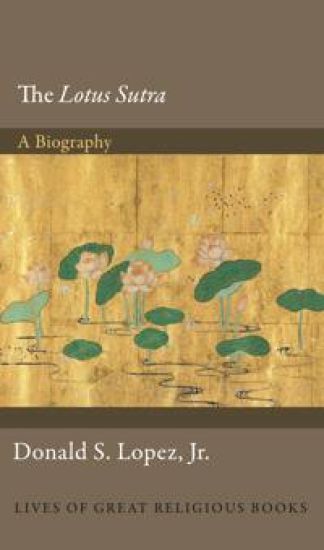
The Lotus Sutra is arguably the most famous of all Buddhist scriptures. Composed in India in the first centuries of the Common Era, it is renowned for its inspiring message that all beings are destined for supreme enlightenment. Here, Donald Lopez provides an engaging and accessible biography of this enduring classic. Lopez traces the many roles the Lotus Sutra has played in its travels through Asia, Europe, and across the seas to America. The story begins in India, where it was one of the early Mahayana sutras, which sought to redefine the Buddhist path. In the centuries that followed, the text would have a profound influence in China and Japan, and would go on to play a central role in the European discovery of Buddhism. It was the first Buddhist sutra to be translated from Sanskrit into a Western language--into French in 1844 by the eminent scholar Eugene Burnouf. That same year, portions of the Lotus Sutra appeared in English in The Dial, the journal of New England's Transcendentalists. Lopez provides a balanced account of the many controversies surrounding the text and its teachings, and describes how the book has helped to shape the popular image of the Buddha today. He explores how it was read by major literary figures such as Henry David Thoreau and Gustave Flaubert, and how it was used to justify self-immolation in China and political extremism in Japan. Concise and authoritative, this is the essential introduction to the life and afterlife of a timeless masterpiece.
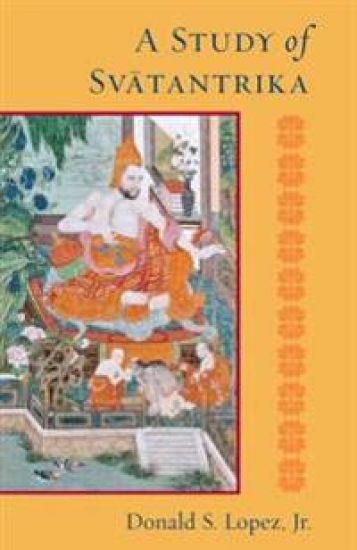
An extensive presentation of Svatantrika Madhyamika that analyzes issues and positions central to Indian philosophy during the final development of Buddhist thought in India. Written by one of the leading scholars and presenters of Buddhism in both academia and popular culture, " A Study of Svatantrika" presents one of the most influential philosophical schools of Indian and Tibetan Buddhism, sometimes called the Autonomous School. For historical reasons, this school's voice was muted, but its impact on the articulation of Buddhist views throughout the Buddhist world of South and Central Asia cannot be overestimated.
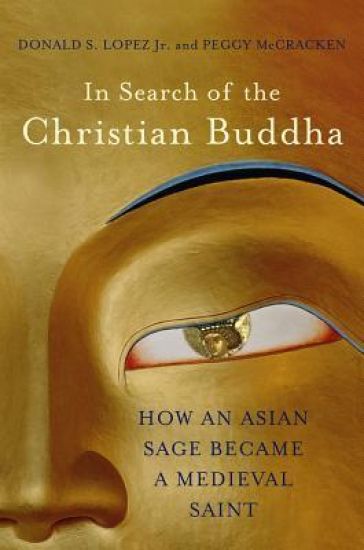
The story of Saint Josaphat, a prince who gave up his wealth and kingdom to follow Jesus, was one of the most popular Christian tales of the Middle Ages, translated into a dozen languages, and cited by Shakespeare in The Merchant of Venice. Yet Josaphat is only remembered today because of the similarities of his life to that of the Buddha. In Search of the Christian Buddha is set against the backdrop of the trade along the Silk Road, the Christian settlement of Palestine, the spread of Islam, and the Crusades. It traces the path of the Buddha’s tale from India and shows how it evolved, adopting details from each culture during its sojourn. These early instances of globalization allowed not only goods but also knowledge to flow between different cultures and around much of the world. Eminent scholars Donald S. Lopez Jr. and Peggy McCracken reveal how religions born thousands of miles apart shared ideas throughout the centuries. They uncover surprising convergences and divergences between these faiths on subjects including the meaning of death, the problem of desire, and their view of women. Demonstrating the incredible power of this tale, they ask not how stories circulate among religions but how religions circulate among stories.
With more than 5,000 entries totaling over a million words, this is the most comprehensive and authoritative dictionary of Buddhism ever produced in English. It is also the first to cover terms from all of the canonical Buddhist languages and traditions: Sanskrit, Pali, Tibetan, Chinese, Japanese, and Korean. Unlike reference works that focus on a single Buddhist language or school, The Princeton Dictionary of Buddhism bridges the major Buddhist traditions to provide encyclopedic coverage of the most important terms, concepts, texts, authors, deities, schools, monasteries, and geographical sites from across the history of Buddhism. The main entries offer both a brief definition and a substantial short essay on the broader meaning and significance of the term covered. Extensive cross-references allow readers to find related terms and concepts. An appendix of Buddhist lists (for example, the four noble truths and the thirty-two marks of the Buddha), a timeline, six maps, and two diagrams are also included. Written and edited by two of today's most eminent scholars of Buddhism, and more than a decade in the making, this landmark work is an essential reference for every student, scholar, or practitioner of Buddhism and for anyone else interested in Asian religion, history, or philosophy. * The most comprehensive dictionary of Buddhism ever produced in English * More than 5,000 entries totaling over a million words * The first dictionary to cover terms from all of the canonical Buddhist languages and traditions--Sanskrit, Pali, Tibetan, Chinese, Japanese, and Korean * Detailed entries on the most important terms, concepts, texts, authors, deities, schools, monasteries, and geographical sites in the history of Buddhism * Cross-references and appendixes that allow readers to find related terms and look up equivalent terms in multiple Buddhist languages * Includes a list of Buddhist lists, a timeline, and maps * Also contains selected terms and names in Thai, Burmese, Vietnamese, Lao, Khmer, Sinhalese, Newar, and Mongolian
How Western notions of the Buddha have come to misrepresent his teachings and the traditional goals of Buddhist practice This book tells the story of the Scientific Buddha, "born" in Europe in the 1800s but commonly confused with the Buddha born in India 2,500 years ago. The Scientific Buddha was sent into battle against Christian missionaries, who were proclaiming across Asia that Buddhism was a form of superstition. He proved the missionaries wrong, teaching a dharma that was in harmony with modern science. And his influence continues. Today his teaching of "mindfulness" is heralded as the cure for all manner of maladies, from depression to high blood pressure. In this potent critique, a well-known chronicler of the West's encounter with Buddhism demonstrates how the Scientific Buddha's teachings deviate in crucial ways from those of the far older Buddha of ancient India. Donald Lopez shows that the Western focus on the Scientific Buddha threatens to bleach Buddhism of its vibrancy, complexity, and power, even as the superficial focus on "mindfulness" turns Buddhism into merely the latest self-help movement. The Scientific Buddha has served his purpose, Lopez argues. It is now time for him to pass into nirvana. This is not to say, however, that the teachings of the ancient Buddha must be dismissed as mere cultural artifacts. They continue to present a potent challenge, even to our modern world.
The Tibetan Book of the Dead is the most famous Buddhist text in the West, having sold more than a million copies since it was first published in English in 1927. Carl Jung wrote a commentary on it, Timothy Leary redesigned it as a guidebook for an acid trip, and the Beatles quoted Leary's version in their song "Tomorrow Never Knows." More recently, the book has been adopted by the hospice movement, enshrined by Penguin Classics, and made into an audiobook read by Richard Gere. Yet, as acclaimed writer and scholar of Buddhism Donald Lopez writes, "The Tibetan Book of the Dead is not really Tibetan, it is not really a book, and it is not really about death." In this compelling introduction and short history, Lopez tells the strange story of how a relatively obscure and malleable collection of Buddhist texts of uncertain origin came to be so revered--and so misunderstood--in the West. The central character in this story is Walter Evans-Wentz (1878-1965), an eccentric scholar and spiritual seeker from Trenton, New Jersey, who, despite not knowing the Tibetan language and never visiting the country, crafted and named The Tibetan Book of the Dead. In fact, Lopez argues, Evans-Wentz's book is much more American than Tibetan, owing a greater debt to Theosophy and Madame Blavatsky than to the lamas of the Land of Snows. Indeed, Lopez suggests that the book's perennial appeal stems not only from its origins in magical and mysterious Tibet, but also from the way Evans-Wentz translated the text into the language of a very American spirituality.
This anthology, first published in 1995, illustrates the vast scope of Buddhist practice in Asia, past and present. Re-released now in a slimmer but still extensive edition, Buddhism in Practice presents a selection of thirty-five translated texts--each preceded by a substantial introduction by its translator. These unusual sources provides the reader with a sense of the remarkable diversity of the practices of persons who over the course of 2,500 years have been identified, by themselves or by others, as Buddhists. Demonstrating the many continuities among the practices of Buddhist cultures widely separated by both history and geography, Buddhism in Practice continues to provide an ideal introduction to Buddhism and a source of new insights for scholars.
An enlightening historical survey of Buddhism illuminates the great variety of teachings, schools, and practices associated with the religion, and traces the historical development of Buddhism throughout diverse cultures. Reprint.
The Tibetan Book of the Dead is one of the texts that, according to legend, Padma-Sambhava was compelled to hide during his visit to Tibet in the late 8th century. The guru hid his books in stones, lakes, and pillars because the Tibetans of that day and age were somehow unprepared for their teachings. Now, in the form of the ever-popular Tibetan Book of the Dead, these teachings are constantly being discovered and rediscovered by Western readers of many different backgrounds--a phenomenon which began in 1927 with Oxford's first edition of Dr. Evans-Wentz's landmark volume. While it is traditionally used as a mortuary text, to be read or recited in the presence of a dead or dying person, this book--which relates the whole experience of death and rebirth in three intermediate states of being--was originally understood as a guide not only for the dead but also for the living. As a contribution to the science of death and dying--not to mention the belief in life after death, or the belief in rebirth--The Tibetan Book of the Dead is unique among the sacred texts of the world, for its socio-cultural influence in this regard is without comparison. This fourth edition features a new foreword, afterword, and suggested further reading list by Donald S. Lopez, author of Prisoners of Shangri-La: Tibetan Buddhism and the West. Lopez traces the whole history of the late Evans-Wentz's three earlier editions of this book, fully considering the work of contributors to previous editions (C. G. Jung among them), the sections that were added by Evans-Wentz along the way, the questions surrounding the book's translation, and finally the volume's profound importance in engendering both popular and academic interest in the religion and culture of Tibet. Another key theme that Lopez addresses is the changing nature of this book's audience--from the prewar theosophists to the beat poets to the hippies to contemporary exponents of the hospice movement--and what these audiences have found (or sought) in its very old pages.
The Tibetan Book of the Dead is one of the texts that, according to legend, Padma-Sambhava was compelled to hide during his visit to Tibet in the late 8th century. The guru hid his books in stones, lakes, and pillars because the Tibetans of that day and age were somehow unprepared for their teachings. Now, in the form of the ever-popular Tibetan Book of the Dead, these teachings are constantly being discovered and rediscovered by Western readers of many different backgrounds--a phenomenon which began in 1927 with Oxford's first edition of Dr. Evans-Wentz's landmark volume. While it is traditionally used as a mortuary text, to be read or recited in the presence of a dead or dying person, this book--which relates the whole experience of death and rebirth in three intermediate states of being--was originally understood as a guide not only for the dead but also for the living. As a contribution to the science of death and dying--not to mention the belief in life after death, or the belief in rebirth--The Tibetan Book of the Dead is unique among the sacred texts of the world, for its socio-cultural influence in this regard is without comparison. This fourth edition features a new foreword, afterword, and suggested further reading list by Donald S. Lopez, author of Prisoners of Shangri-La: Tibetan Buddhism and the West. Lopez traces the whole history of the late Evans-Wentz's three earlier editions of this book, fully considering the work of contributors to previous editions (C. G. Jung among them), the sections that were added by Evans-Wentz along the way, the questions surrounding the book's translation, and finally the volume's profound importance in engendering both popular and academic interest in the religion and culture of Tibet. Another key theme that Lopez addresses is the changing nature of this book's audience--from the prewar theosophists to the beat poets to the hippies to contemporary exponents of the hospice movement--and what these audiences have found (or sought) in its very old pages.
This life story of Milarepa--the important Tibetan religious leader who lived over 800 years ago--is part of a remarkable four-volume series on Tibetan Buddhism produced by the late W. Y. Evans-Wentz, all four of which are being published by Oxford in new editions. While there are many parochial differences among the several sects of Tibetan Buddhism, each holds the Great Yogi Milarepa in the highest reverence and esteem. For exemplified in Milarepa's life, as we discover in these pages, are all of the teachings of the great yogis of India--including those of Gautama the Buddha, the greatest yogi known to history. Amid his detailed introductory and explanatory notes for this text, Evans-Wentz also reveals compelling similarities between the life and thought of Milarepa and those of Jesus, Gandhi, and "saints...in ancient China, or India, or Babylonia, or Egypt, or Rome, or in our own epoch." In composing this translation from the original Tibetan, the late Lama Kazi Dawa-Samdup, who was Evans-Wentz's guru for many years, aimed to show Western readers "one of our great teachers as he actually lived...much of which is couched in the words of his own mouth, and the remainder in the words of his disciple Rechung, who knew him in the flesh." For this third edition, Donald S. Lopez, author of Prisoners of Shangri-La: Tibetan Buddhism and the West, has written a critical foreword that updates and contextualizes this crucial part of Evans-Wentz's scholarship within the yoga tradition.
The Tibetan Book of the Great Liberation, which was unknown to the Western world until its first publication in 1954, speaks to the quintessence of the Supreme Path, or Mahayana, and fully reveals the yogic method of attaining Enlightenment. Such attainment can happen, as shown here, by means of knowing the One Mind, the cosmic All-Consciousness, without recourse to the postures, breathings, and other techniques associated with the lower yogas. The original text for this volume belongs to the Bardo Thödol series of treatises concerning various ways of achieving transcendence, a series that figures into the Tantric school of the Mahayana. Authorship of this particular volume is attributed to the legendary Padma-Sambhava, who journeyed from India to Tibet in the 8th century, as the story goes, at the invitation of a Tibetan king. Padma-Sambhava's text per se is preceded by an account of the great guru's own life and secret doctrines. It is followed by the testamentary teachings of the Guru Phadampa Sangay, which are meant to augment the thought of the other gurus discussed herein. Still more useful supplementary material will be found in the book's introductory remarks, by its editor Evans-Wentz and by the eminent psychoanalyst C. G. Jung. The former presents a 100-page General Introduction that explains several key names and notions (such as Nirvana, for instance) with the lucidity, ease, and sagacity that are this scholar's hallmark; the latter offers a Psychological Commentary that weighs the differences between Eastern and Western modes of thought before equating the "collective unconscious" with the Enlightened Mind of the Buddhist. As with the other three volumes in the late Evans-Wentz's critically acclaimed Tibetan series, all four of which are being published by Oxford in new editions, this book also features a new Foreword by Donald S. Lopez.
Books, audiotapes, and classes about yoga are today as familiar as they are widespread, but we in the West have only recently become engaged in the meditative doctrines of the East--only in the last 70 or 80 years, in fact. In the early part of the 20th century, it was the pioneering efforts of keen scholars like W. Y. Evans-Wentz, the late editor of this volume, that triggered our ongoing occidental fascination with such phenomena as yoga, Zen, and meditation. Tibetan Yoga and Secret Doctrines--a companion to the popular Tibetan Book of the Dead, which is also published by Oxford in an authoritative Evans-Wentz edition--is a collection of seven authentic Tibetan yoga texts that first appeared in English in 1935. In these pages, amid useful photographs and reproductions of yoga paintings and manuscripts, readers will encounter some of the principal meditations used by Hindu and Tibetan gurus and philosophers throughout the ages in the attainment of Right Knowledge and Enlightenment. Special commentaries precede each translated text, and a comprehensive introduction contrasts the tenets of Buddhism with European notions of religion, philosophy, and science. Evans-Wentz has also included a body of orally transmitted traditions and teachings that he received firsthand during his fifteen-plus years of study in the Orient, findings that will interest any student of anthropology, psychology, comparative religion, or applied Mahayana Yoga. These seven distinct but intimately related texts will grant any reader a full and complete view of the spiritual teachings that still inform the life and culture of the East. As with Evans-Wentz's other three Oxford titles on Tibetan religion, which are also appearing in new editions, this third edition of Tibetan Yoga and Secret Doctrines features a new foreword by Donald S. Lopez, author of the recent Prisoners of Shangri-La: Tibetan Buddhism and the West.
The Heart Sutra is perhaps the most famous Buddhist text, traditionally regarded as a potent expression of emptiness and of the Buddha's perfect wisdom. This brief, seemingly simple work was the subject of more commentaries in Asia than any other sutra. In Elaborations on Emptiness, Donald Lopez explores for the first time the elaborate philosophical and ritual uses of the Heart Sutra in India, Tibet, and the West. Included here are full translations of the eight extant Indian commentaries. Interspersed with the translations are six essays that examine the unusual roles the Heart Sutra has played: it has been used as a mantra, an exorcism text, a tantric meditation guide, and as the material for comparative philosophy. Taken together, the translations and essays that form Elaborations on Emptiness demonstrate why commentary is as central to modern scholarship on Buddhism as it was for ancient Buddhists. Lopez reveals unexpected points of instability and contradiction in the Heart Sutra, which, in the end, turns out to be the most malleable of texts, where the logic of commentary serves as a tool of both tradition and transgression.