
Kirjailija
Donatella Di Cesare
Kirjat ja teokset yhdessä paikassa: 34 kirjaa, julkaisuja vuosilta 2009–2026, suosituimpiin kuuluu Demokratie und Anarchie. Vertaile teosten hintoja ja tarkista saatavuus suomalaisista kirjakaupoista.
34 kirjaa
Kirjojen julkaisuvuodet: 2009–2026.



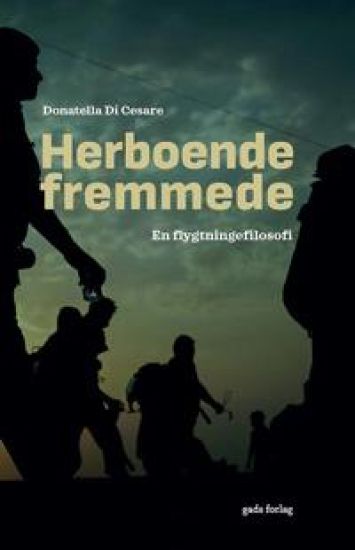
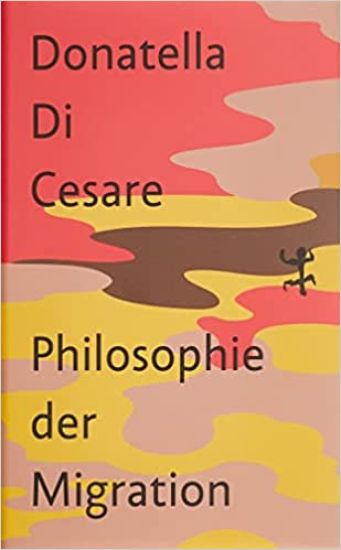
Fra Europas kyster til grænsen mellem Mexico og USA er presset fra massemigration et af vor tids store problemer. Argumenterne for at forsvare den nationale suverænitet bliver mere og mere voldsomme, og dem, der flygter fra krig, forfølgelse og nød, bliver set som en trussel mod vores sikkerhed og sociale og økonomiske orden. I denne bog udfordrer Donatella Di Cesare ideen om den ekskluderende stat og argumenterer for, at migration er en grundlæggende menneskerettighed. Hun udvikler en original flygtningefilosofi, der sætter migranterne selv, snarere end stater og deres grænser, i centrum. Gennem en analyse af de tre historiske byer Athen, Rom og Jerusalem viser Di Cesare, at vi ikke bør opfatte migranter som de andre, men snarere som herboende fremmede. Statsborgerskab kan ikke baseres på en historisk forbindelse til et stykke land eller eksklusivt ejerskab, som nægter rettigheder til dem, der kommer til. I stedet må statsborgerskab frigøres helt fra besiddelse og baseres på et princip om samliv – og på det faktum, at vi alle er midlertidige gæster og lånere af jorden. Donatella Di Cesare (f. 1956) er professor i teoretisk filosofi på La Sapienza-universitetet i Rom, gæsteforelæser i både Tyskland og USA, forfatter til en lang række filosofiske bøger og artikler. På dansk er tidligere udkommet Heidegger og jøderne, Tortur og Suveræn virus?
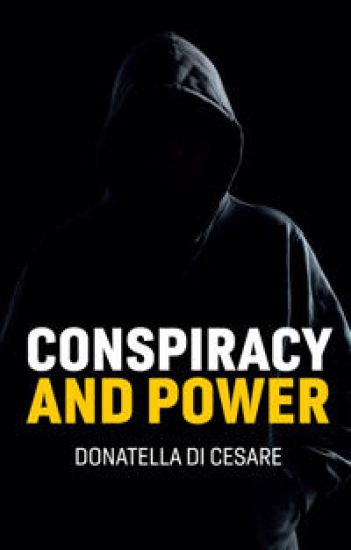
Conspiracy theories are neither delusions nor lies, neither simplistic fallacies nor psychological quirks: rather, they are a political problem. They are not so much about truth as about power. Rather than seeking to debunk conspiracy theories as the work of fringe groups and cranks, Donatella Di Cesare develops an original account that portrays conspiracy as the spectre of a shattered community. With the proliferation of conspiracy theories, the distrust of politics and politicians turns into a boundless and pervasive suspicion. Who is behind the scenes? Who is pulling the strings? The world, which seems increasingly confusing and impossible to read, must have a hidden side, a secret realm, that of the Deep State and the New World Order, where plans are hatched, information is gathered and thoughts are controlled. It is no longer a matter of a one-off plot or intrigue. Conspiracy is the very form in which citizens who feel condemned to a frustrating impotence, helpless before a techno-economic juggernaut, and manipulated by a faceless power relate to the world. This is why conspiracy, which exposes the emptiness of democracy, proves to be a fearsome weapon of mass depoliticisation.
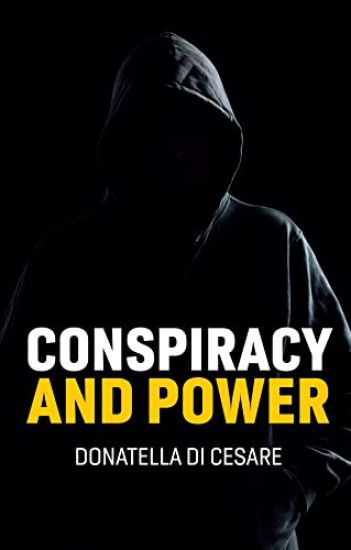
Conspiracy theories are neither delusions nor lies, neither simplistic fallacies nor psychological quirks: rather, they are a political problem. They are not so much about truth as about power. Rather than seeking to debunk conspiracy theories as the work of fringe groups and cranks, Donatella Di Cesare develops an original account that portrays conspiracy as the spectre of a shattered community. With the proliferation of conspiracy theories, the distrust of politics and politicians turns into a boundless and pervasive suspicion. Who is behind the scenes? Who is pulling the strings? The world, which seems increasingly confusing and impossible to read, must have a hidden side, a secret realm, that of the Deep State and the New World Order, where plans are hatched, information is gathered and thoughts are controlled. It is no longer a matter of a one-off plot or intrigue. Conspiracy is the very form in which citizens who feel condemned to a frustrating impotence, helpless before a techno-economic juggernaut, and manipulated by a faceless power relate to the world. This is why conspiracy, which exposes the emptiness of democracy, proves to be a fearsome weapon of mass depoliticisation.

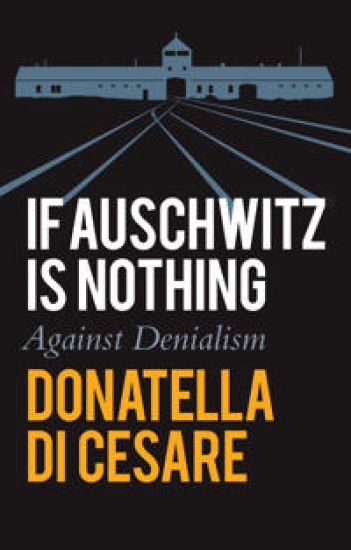
Ever since the end of World War II, when the sheer enormity of the Nazi crime against the Jews became apparent, there have been repeated attempts to deny that the Holocaust really happened. The existence of gas chambers was questioned and the testimony of survivors was thrown into doubt; the more witnesses spoke out, the more they were intimidated and attacked by a denialism that sought to present itself as a search for historical truth. The accusation of trickery and deception – so central to the centuries-old anti-Jewish hatred – continues to thrive in the present. Today, denialism takes a new and more insidious form: Jews are accused of exploiting the ‘cult of the Holocaust’ to justify the state of Israel and to take the reins of political power. Holocaust denial has merged with conspiracy theories, alleging the existence of a Jewish-controlled New World Order. Concisely and authoritatively, acclaimed philosopher Donatella Di Cesare reconstructs the evolution of denialism and sheds new light on one of the most troubling phenomena of our time.
Ever since the end of World War II, when the sheer enormity of the Nazi crime against the Jews became apparent, there have been repeated attempts to deny that the Holocaust really happened. The existence of gas chambers was questioned and the testimony of survivors was thrown into doubt; the more witnesses spoke out, the more they were intimidated and attacked by a denialism that sought to present itself as a search for historical truth. The accusation of trickery and deception – so central to the centuries-old anti-Jewish hatred – continues to thrive in the present. Today, denialism takes a new and more insidious form: Jews are accused of exploiting the ‘cult of the Holocaust’ to justify the state of Israel and to take the reins of political power. Holocaust denial has merged with conspiracy theories, alleging the existence of a Jewish-controlled New World Order. Concisely and authoritatively, acclaimed philosopher Donatella Di Cesare reconstructs the evolution of denialism and sheds new light on one of the most troubling phenomena of our time.
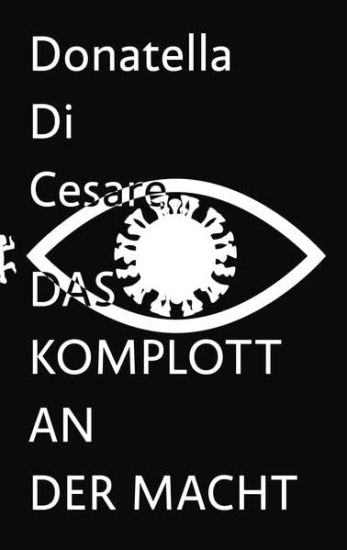
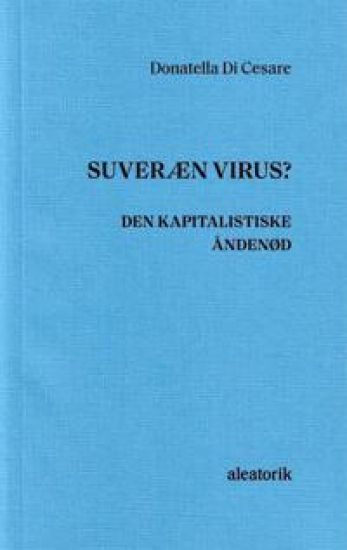
Suveræn virus? Den kapitalistiske åndenød er Donatella Di Cesare seneste bog, og er en kort og koncis intellektuel vejviser til Corona-pandemien. Den udgør et af de første væsentlige bidrag til den filosofiske litteratur om pandemien, og er en bearbejdning af en række centrale temaer inden for politisk filosofi, herunder undtagelsestilstand, livets sårbarhed, grænseregimet, teknokrati, ekspertvælde, konspirationsteorier, demokrati, isolation og vejrtrækning. Donatella di Cesare (f. 1956) er en af Italiens mest fremtrædende og nulevende filosoffer. Hun er forfatter til en række bøger om forholdet mellem filosofi og politik, herunder Heidegger og jøderne: de »sorte hæfter« (2014) samt Tortur (2016). Senest har hun i den italienske presse kritiseret Giorgio Agambens kommentarer om Corona-virussens farlighed og hans sammenligning af vaccinepas med de nazistiske jødestjerner; en parallel som også har været genstand for omfattende kritik i Danmark.
As capitalism triumphs on the ruins of utopias and faith in progress fades, revolts are breaking out everywhere. From London to Hong Kong and from Buenos Aires to Beirut, protests flare up, in some cases spreading like wildfire, in other cases petering out and reigniting elsewhere. Not even the pandemic has been able to stop them: as many were reflecting on the loss of public space, the fuse of a fresh explosion was lit in Minneapolis with the brutal murder of George Floyd. We are living in an age of revolt. But what is revolt? It would be a mistake to think of it as simply an explosion of anger, a spontaneous and irrational outburst, as it is often portrayed in the media. Exploding anger is not a bolt from the blue but a symptom of a social order in which the sovereignty of the state has imposed itself as the sole condition of order. Revolt challenges the sovereignty of the state, whether it is democratic or despotic, exposing the violence that underpins it. Revolt upsets the agenda of power, interrupts time, throws history into disarray. The time of revolt, discontinuous and intermittent, is also a revolt of time, an anarchic transition to a space of time that disengages itself from the architecture of politics. This brilliant reflection on the nature and significance of revolt will be of interest to students of politics and philosophy and to anyone concerned with the key questions of politics today.
As capitalism triumphs on the ruins of utopias and faith in progress fades, revolts are breaking out everywhere. From London to Hong Kong and from Buenos Aires to Beirut, protests flare up, in some cases spreading like wildfire, in other cases petering out and reigniting elsewhere. Not even the pandemic has been able to stop them: as many were reflecting on the loss of public space, the fuse of a fresh explosion was lit in Minneapolis with the brutal murder of George Floyd. We are living in an age of revolt. But what is revolt? It would be a mistake to think of it as simply an explosion of anger, a spontaneous and irrational outburst, as it is often portrayed in the media. Exploding anger is not a bolt from the blue but a symptom of a social order in which the sovereignty of the state has imposed itself as the sole condition of order. Revolt challenges the sovereignty of the state, whether it is democratic or despotic, exposing the violence that underpins it. Revolt upsets the agenda of power, interrupts time, throws history into disarray. The time of revolt, discontinuous and intermittent, is also a revolt of time, an anarchic transition to a space of time that disengages itself from the architecture of politics. This brilliant reflection on the nature and significance of revolt will be of interest to students of politics and philosophy and to anyone concerned with the key questions of politics today.
It is time for philosophy to return to the city. In today’s crisis-ridden world of globalised capitalism, increasingly closed in on itself, it may seem harder than ever to think of ways out. Philosophy runs the risk of becoming the handmaiden of science and of a hollowed-out democracy. Donatella Di Cesare calls on philosophy instead to return to the political fray and to the city, the global pólis, from which it was banished after the death of Socrates. Suggesting a radical existentialism and a new anarchism, Di Cesare shows that Western philosophy has been characterised by a political vocation ever since its origins in ancient Greece, and argues that the separation of philosophy from its political roots robs it of its most valuable and enlightening potential. But critique and dissent are no longer enough. Mindful of a defeated exile and an inner emigration, philosophers should return to politics and forge an alliance with the poor and the downtrodden. This passionate defence of the political relevance of philosophy and its radical potential in our globalised world will be of great interest to students and scholars of philosophy and to a wide general readership.
It is time for philosophy to return to the city. In today’s crisis-ridden world of globalised capitalism, increasingly closed in on itself, it may seem harder than ever to think of ways out. Philosophy runs the risk of becoming the handmaiden of science and of a hollowed-out democracy. Donatella Di Cesare calls on philosophy instead to return to the political fray and to the city, the global pólis, from which it was banished after the death of Socrates. Suggesting a radical existentialism and a new anarchism, Di Cesare shows that Western philosophy has been characterised by a political vocation ever since its origins in ancient Greece, and argues that the separation of philosophy from its political roots robs it of its most valuable and enlightening potential. But critique and dissent are no longer enough. Mindful of a defeated exile and an inner emigration, philosophers should return to politics and forge an alliance with the poor and the downtrodden. This passionate defence of the political relevance of philosophy and its radical potential in our globalised world will be of great interest to students and scholars of philosophy and to a wide general readership.
A stimulating and profound portrayal of the epochal event that has already left its mark on the twenty-first century. Immunodemocracy offers a stimulating and profound portrayal of the epochal event that has already left its mark on the twenty-first century. Moving from the ecological question to the rule of experts, from the state of exception to immunitarian democracy, from rule by fear to the contagion of conspiracy theory, from forced distancing to digital control, Donatella Di Cesare examines how existence is already changing-and what its future political effects may be. In her own personal style, the author reconstructs the dramatic phases of what she calls "the breathing catastrophe." Coronavirus is a sovereign virus that skirts its way around the walls of patriotism and the sovereignists' imperious frontiers. And it reveals in all its terrible crudeness the immunitarian logic that excludes the weakest and hits the poorest. The Cordon sanitaire of disengagement risks expanding beyond all proportion. The disparity between the protected and the helpless-a challenge to any idea of justice-has never been so blatant. The virus has not introduced, but merely brought out into the open the ruthlessness of the capitalism that is now wrapping us in its devastating spiral, in its compulsive, asphyxial vortex. Is it our final warning? The violent global pandemic shows that it is impossible for us to survive if we don't help each other. We will need to protect ourselves from protection and the specter of absolute immunization. When breathing can no longer be taken for granted, we need to rethink a new way of living together.