Kirjojen hintavertailu – 12 872 013 kirjaa ja 27 kauppaa

Kirjailija

Dong-Wook Song

Kirjat ja teokset yhdessä paikassa: 6 kirjaa, julkaisuja vuosilta 2001–2021, suosituimpiin kuuluu Maritime Logistics Value in Knowledge Management. Vertaile teosten hintoja ja tarkista saatavuus suomalaisista kirjakaupoista.

6 kirjaa

Kirjojen julkaisuvuodet: 2001–2021.

Maritime Logistics

Maritime Logistics

Dong-Wook Song; Photis Panayides

Kogan Page Ltd
2021
sidottu
Sea freight remains overwhelmingly the most common form of transport for goods globally. Grasp the core theories and understand the latest research in maritime logistics, along with how this field operates and contributes to global supply chains, with this key textbook. Maritime Logistics provides a complete overview of the core concepts within this discipline from a range of international expert contributors. This textbook examines the recent developments in the ports and shipping industries including supply chain strategies and emerging, innovative practices. Designed for maritime students and professionals, the structure offers a complete approach with an emphasis on developing a well-rounded knowledge and understanding of the field. The third edition is fully updated with new content on maintenance optimization, supply chain integration, economies of scale within liner shipping and port performance and management. In addition, this edition examines new technologies, considers new and existing risks to the maritime supply chain as well as generally how maritime logistics will continue to evolve. For those seeking to become maritime logistics specialists, this is the authoritative companion.
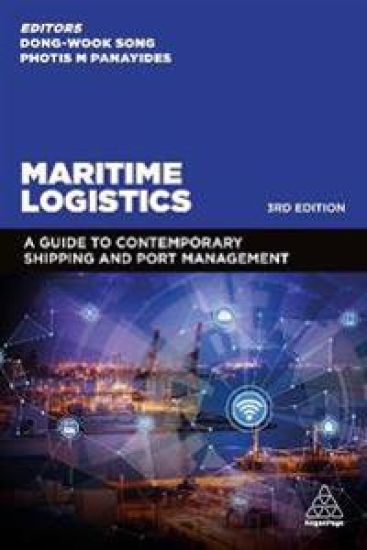
Maritime Logistics

Maritime Logistics

Dong-Wook Song; Photis Panayides

Kogan Page Ltd
2021
nidottu
Sea freight remains overwhelmingly the most common form of transport for goods globally. Grasp the core theories and understand the latest research in maritime logistics, along with how this field operates and contributes to global supply chains, with this key textbook. Maritime Logistics provides a complete overview of the core concepts within this discipline from a range of international expert contributors. This textbook examines the recent developments in the ports and shipping industries including supply chain strategies and emerging, innovative practices. Designed for maritime students and professionals, the structure offers a complete approach with an emphasis on developing a well-rounded knowledge and understanding of the field. The third edition is fully updated with new content on maintenance optimization, supply chain integration, economies of scale within liner shipping and port performance and management. In addition, this edition examines new technologies, considers new and existing risks to the maritime supply chain as well as generally how maritime logistics will continue to evolve. For those seeking to become maritime logistics specialists, this is the authoritative companion.
Maritime Logistics Value in Knowledge Management

Maritime Logistics Value in Knowledge Management

Eon-Seong Lee; Dong-Wook Song

Routledge
2020
nidottu
Knowledge management has been widely applied to various industries as a good strategy to help improve firms’ performance. As globalisation accelerates and international trade increases more and more, maritime transport operations have become one of the vitalest industries to receive large attention from international managers. This is because the managers have perceived that the maritime transport system is an integrated entity within the global logistics and supply chain, and it should be therefore managed in the most efficient and effective ways possible, as an organic body within a global logistics system. Taking this approach, this book examines how maritime transport operators – such as shipping companies, port terminal operators and freight forwarders – could successfully play a role within the global logistics flow wherein they are embedded by improving their logistic value, i.e. maritime logistics value. As per the objective, the current book suggests a knowledge management based solution. It attempts to systematically investigate what types of knowledge are needed in the maritime logistics industry, how maritime operators could effectively acquire the knowledge, and whether the acquired knowledge would help maritime operators enhance maritime logistics value. This book provides not only comprehensive understandings of knowledge management strategy, but also its practical application to the maritime logistics industry. This would therefore be a useful guidebook for the managers, academics, and undergraduate / postgraduate students in the field of maritime transport and global logistics, to help them to gain comprehensive knowledge of the application of knowledge management strategy to the industry.
The Productive Efficiency of Container Terminals

The Productive Efficiency of Container Terminals

Dong-Wook Song; Kevin Cullinane; Michael Roe

Routledge
2017
nidottu
This work applies the theory and techniques of economic efficiency measurement to the realistic context of the ports industry. The objective is to assess the practical impact of port privatization policies upon the economic performance of the sector. Specifically, this volume presents Korea’s port and terminal development plans and systematically analyses not only the process and results of privatisation, but also the claims of its proponents that it leads directly to improved efficiency. The Korean experience is given global relevance by applying the same approach to Britain’s main container ports and terminals which, of course, are at a more advanced stage in the privatisation process. This work constitutes a unique contribution to the literature relating to shipping and ports, econometrics and the Korean economy and will be of primary interest to port authorities and practitioners, as well as to students of economics and/or the shipping industry.
Maritime Logistics Value in Knowledge Management

Maritime Logistics Value in Knowledge Management

Eon-Seong Lee; Dong-Wook Song

Routledge
2014
sidottu
Knowledge management has been widely applied to various industries as a good strategy to help improve firms’ performance. As globalisation accelerates and international trade increases more and more, maritime transport operations have become one of the vitalest industries to receive large attention from international managers. This is because the managers have perceived that the maritime transport system is an integrated entity within the global logistics and supply chain, and it should be therefore managed in the most efficient and effective ways possible, as an organic body within a global logistics system. Taking this approach, this book examines how maritime transport operators – such as shipping companies, port terminal operators and freight forwarders – could successfully play a role within the global logistics flow wherein they are embedded by improving their logistic value, i.e. maritime logistics value. As per the objective, the current book suggests a knowledge management based solution. It attempts to systematically investigate what types of knowledge are needed in the maritime logistics industry, how maritime operators could effectively acquire the knowledge, and whether the acquired knowledge would help maritime operators enhance maritime logistics value. This book provides not only comprehensive understandings of knowledge management strategy, but also its practical application to the maritime logistics industry. This would therefore be a useful guidebook for the managers, academics, and undergraduate / postgraduate students in the field of maritime transport and global logistics, to help them to gain comprehensive knowledge of the application of knowledge management strategy to the industry.
The Productive Efficiency of Container Terminals

The Productive Efficiency of Container Terminals

Dong-Wook Song; Kevin Cullinane; Michael Roe

Ashgate Publishing Limited
2001
sidottu
This work applies the theory and techniques of economic efficiency measurement to the realistic context of the ports industry. The objective is to assess the practical impact of port privatization policies upon the economic performance of the sector. Specifically, this volume presents Korea’s port and terminal development plans and systematically analyses not only the process and results of privatisation, but also the claims of its proponents that it leads directly to improved efficiency. The Korean experience is given global relevance by applying the same approach to Britain’s main container ports and terminals which, of course, are at a more advanced stage in the privatisation process. This work constitutes a unique contribution to the literature relating to shipping and ports, econometrics and the Korean economy and will be of primary interest to port authorities and practitioners, as well as to students of economics and/or the shipping industry.