Kirjojen hintavertailu – 12 903 725 kirjaa ja 27 kauppaa
Kirjailija
Donghyun Park
Kirjat ja teokset yhdessä paikassa: 6 kirjaa, julkaisuja vuosilta 2015–2022, suosituimpiin kuuluu Wellness for a Healthy Asia. Vertaile teosten hintoja ja tarkista saatavuus suomalaisista kirjakaupoista.
This book sets out concrete policy options for promoting wellness among all Asians. Wellness, or the active pursuit of holistic health, can contribute to sustainable development. The book takes stock of wellness in the region, including the growing wellness economy. It discusses policies in four crosscutting areas: creating a healthy built environment, supporting physical activity, encouraging healthy diets, and enhancing wellness in the workplace. It notes the importance of a lifelong wellness policy framework and of investments in infrastructure such as community recreation centers and green parks in poor neighborhoods, as well as health education campaigns.
Coronavirus disease (COVID-19) has been an unprecedented, once-in-a-century gamechanger for the world. The central focus of Post-COVID Asia is the new world that will emerge after the coronavirus. In particular, this book explores how deglobalization will proceed in the post-COVID world and what kind of impact deglobalization will have on Asian economies. After all, in the last few decades, Asia has leveraged globalization to become the world's fastest-growing, most dynamic region. Therefore, an urgent challenge facing Asian economies is to figure out how to survive and thrive when the globalization which served them so well is giving way to deglobalization. Opportunities have emerged for Asian economies amid the winding down of the third wave of globalization. In fact, the next wave of globalization is already beginning to take shape, in tandem with the Fourth Industrial Revolution, which is full of exciting new technologies. This book offers insights that would help governments, companies and people in Asia to ride the next wave of globalization to power their prosperity.
Coronavirus disease (COVID-19) has been an unprecedented, once-in-a-century gamechanger for the world. The central focus of Post-COVID Asia is the new world that will emerge after the coronavirus. In particular, this book explores how deglobalization will proceed in the post-COVID world and what kind of impact deglobalization will have on Asian economies. After all, in the last few decades, Asia has leveraged globalization to become the world's fastest-growing, most dynamic region. Therefore, an urgent challenge facing Asian economies is to figure out how to survive and thrive when the globalization which served them so well is giving way to deglobalization. Opportunities have emerged for Asian economies amid the winding down of the third wave of globalization. In fact, the next wave of globalization is already beginning to take shape, in tandem with the Fourth Industrial Revolution, which is full of exciting new technologies. This book offers insights that would help governments, companies and people in Asia to ride the next wave of globalization to power their prosperity.
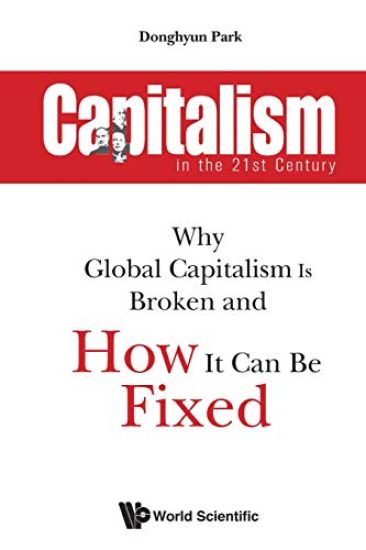
'Dr Donghyun Park is a prominent and rare economist in Asia who can combine frontline economic theories, lively data, and real-time policy analyses. Capitalism in the 21st Century is a masterful book by Dr Park, providing a comprehensive understanding of heterogenous trajectories of economies around the globe and more fundamental mechanisms of the modern capitalistic system. This is a 'must-read' for those who are interested in comparative economic systems, global economy, and international development.'Yasuyuki SawadaChief Economist, Asian Development BankProfessor of Economics, University of Tokyo'Donghyun Park makes clear that capitalism gets a bad rap, in large part because of too much emphasis on capital as in financial engineering, and too much emphasis on capitals as in government protectionism. Park argues a compelling case that genuine capitalism, which is about entrepreneurship, is necessary to solve the big problems most people face around the globe.'Adam S PosenPresident, Peterson Institute of International EconomicsGlobal capitalism is currently suffering from an unmistakable malaise, epitomized by wide and growing inequality that is eroding popular support for capitalism. Such anti-capitalist sentiment, coupled with a growing anti-globalization mood, delivered Brexit in a UK referendum and swept Donald Trump to the US presidency. In Capitalism in the 21st Century, internationally well-regarded economist Dr Donghyun Park articulately explains why more capitalism is needed to tackle global problems such as climate change and inhumane poverty. While defending capitalism against its unfair demonization, the author makes a positive case for entrepreneurial capitalism, which creates wealth and jobs as well as drives human progress. According to the author, reforming the financial industry, which has become a self-serving leviathan, and more fundamentally, tweaking the economic role of the government, which stifles growth-promoting entrepreneurship, are critical to restoring the vitality of capitalism. The book is explicitly written in such a way that the general reader without any background in economics or finance can easily understand it. Related Link(s)
'Dr Donghyun Park is a prominent and rare economist in Asia who can combine frontline economic theories, lively data, and real-time policy analyses. Capitalism in the 21st Century is a masterful book by Dr Park, providing a comprehensive understanding of heterogenous trajectories of economies around the globe and more fundamental mechanisms of the modern capitalistic system. This is a 'must-read' for those who are interested in comparative economic systems, global economy, and international development.'Yasuyuki SawadaChief Economist, Asian Development BankProfessor of Economics, University of Tokyo'Donghyun Park makes clear that capitalism gets a bad rap, in large part because of too much emphasis on capital as in financial engineering, and too much emphasis on capitals as in government protectionism. Park argues a compelling case that genuine capitalism, which is about entrepreneurship, is necessary to solve the big problems most people face around the globe.'Adam S PosenPresident, Peterson Institute of International EconomicsGlobal capitalism is currently suffering from an unmistakable malaise, epitomized by wide and growing inequality that is eroding popular support for capitalism. Such anti-capitalist sentiment, coupled with a growing anti-globalization mood, delivered Brexit in a UK referendum and swept Donald Trump to the US presidency. In Capitalism in the 21st Century, internationally well-regarded economist Dr Donghyun Park articulately explains why more capitalism is needed to tackle global problems such as climate change and inhumane poverty. While defending capitalism against its unfair demonization, the author makes a positive case for entrepreneurial capitalism, which creates wealth and jobs as well as drives human progress. According to the author, reforming the financial industry, which has become a self-serving leviathan, and more fundamentally, tweaking the economic role of the government, which stifles growth-promoting entrepreneurship, are critical to restoring the vitality of capitalism. The book is explicitly written in such a way that the general reader without any background in economics or finance can easily understand it. Related Link(s)
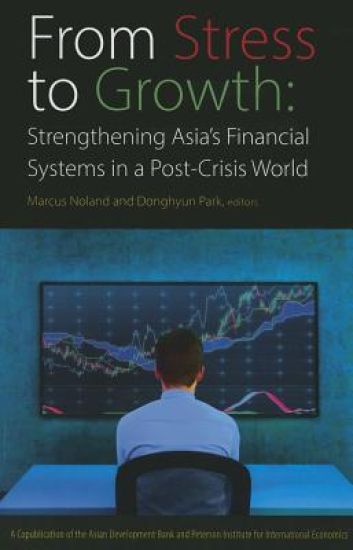
Asian financial systems, which serve the most economically dynamic region of the world, survived the global economic crisis of the last several years. In From Stress to Growth: Strengthening Asia's Financial Systems in a Post-Crisis World, scholars affiliated with the Peterson Institute for International Economics and the Asian Development Bank argue in separate essays that Asian systems must strengthen their quality, diversity, and resilience to future shocks in order to deliver growth in coming years. The book examines such phenomena as the dominance of state-owned banks, the growth of nonbank lending (the so-called shadow banks), and the need to develop local bond markets, new financial centers, and stronger supervisory tools to prevent dangerous real estate asset bubbles. China's large financial system is discussed at length, with emphasis on concerns that China's system has grown too fast, that it is overly tilted toward corporate borrowing, and that state domination has led to overly easy credit to state-owned actors. Asia needs investment to improve its infrastructure and carry out technological innovation, but the book argues that the region's financial systems face challenges in meeting that need.