

Kirjailija
Donna Stonecipher
Kirjat ja teokset yhdessä paikassa: 8 kirjaa, julkaisuja vuosilta 2002–2027, suosituimpiin kuuluu The Secret Life and Death of Ornament in Berlin. Vertaile teosten hintoja ja tarkista saatavuus suomalaisista kirjakaupoista.
8 kirjaa
Kirjojen julkaisuvuodet: 2002–2027.
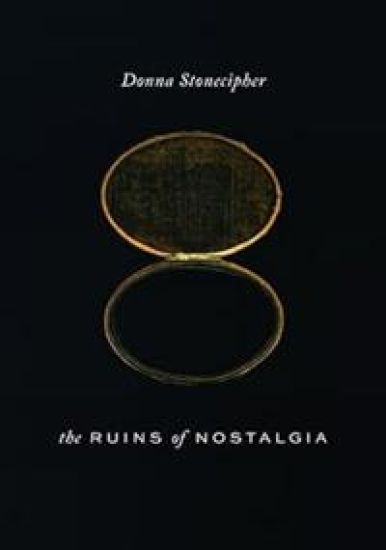
New work from one of the most compelling and transformative writers of the contemporary prose poem What is it to feel nostalgia, to be skeptical of it yet cleave intently to the complex truths of feeling and thought? In a series of 64 gorgeous, ramifying, unsettling prose poems addressing late-twentieth- and twenty-first century experience and its discontents, The Ruins of Nostalgia offers a strikingly original exploration of the misunderstood phenomenon of nostalgia as both feeling-state and historical phenomenon. Each poem, also titled The Ruins of Nostalgia, is a kind of lyrical mini-essay, playful, passionate, analytic. Some poems take a location, memory, conceit, or object as their theme. Throughout the series, the poems recognize and celebrate the nostalgias they ironize, which are in turn celebrated and then ironized again. Written often in the fictional persona of the first-person plural, The Ruins of Nostalgia explores the rich territory where individual response meets a collective phenomenon. [sample poem] The Ruins of Nostalgia 13 Where once there had been a low-end stationery store minded by an elderly beauty queen, there was now a store for high-end espresso machines minded by nobody. Where once there had been an illegal beer garden in a weedy lot, there was now a complex of luxury lofts with Parisian-style ivory façades. Where once there had been a bookstore and a bike shop and a bakery, there was now a wax museum for tourists. Where once there had been an empty lot there was now a building. Where once there had been an empty lot there was now a building. Where once there had been an empty lot there was now a building. Where once there had been an empty lot there was now a building. Where once there had been farms there were now subdivisions. Where once there had been subdivisions there were now sub-subdivisions. We lived in a sub-subdivision of a subdivision. We ourselves had become subdivided—where once we had merely been of two minds. * Where once there had been a river there was now a road. A vocal local group had started a movement to break up the road and "daylight" the river, which still flowed, in the dark, underneath the road. * Could we daylight the farms, the empty lots, the stationery store, the elderly beauty queen, the city we moved to? Was it still flowing somewhere, under the luxury lofts, deliquescing in the dark, inhabited by our luxury selves, not yet subdivided, because not yet whole? * Could we daylight the ruins of nostalgia?
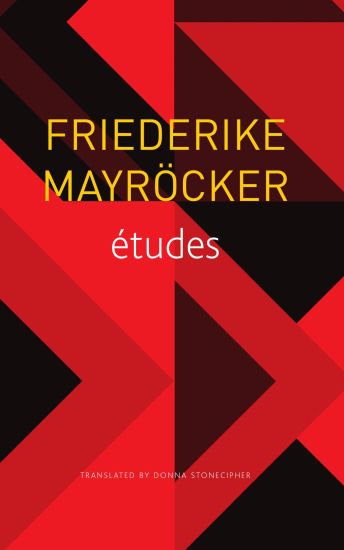
A diary-like sequence of poems from one of Austria’s best-known contemporary voices. Exploring longing, lust for life, aging, mortality, grief, and flowers in her inimitable late style, études is a diary-like sequence of poems by one of the greatest living Austrian poets. Friederike Mayröcker’s almost daily entries give us a unique view into the interplay between desire and her motivation for writing. In Mayröcker’s case, she writes both to keep a vanished world present and to exploit the possibilities of being present for constant experimentation. The poems in this volume are not only studies of how the mind works, moving from fragment to fragment, but also experiments with techniques of repetition, typography, collage, and quotation. Mayröcker transforms the humble page into spaces of radical openness. After all, she says, a poem is that which “opens everything up.” Each poem is date-stamped, and each date acts as a kind of permission for Mayröcker to pour in everything from notes on doctor’s visits to gorgeously structured elegies to obsessively repeating fragments of memory that act upon the whole like bits of recurring melody. Rarely before has the intimate process of writing been so exquisitely laid bare than in études. Traversing the boundaries of literary forms with Mayröcker’s distinctive style, this important volume strikes an admirable balance between playfulness and serious inquiry.

Reveling in the paradox of the formal prose poem, Donna Stonecipher’s Transaction Histories gathers together six series of poems that explore the disobedient incongruities of aesthetics and emotions. Stonecipher’s carefully sculpted forms and exacting language are held in tension with an unruly imagination to provoke a vision of experience densely layered with bodies impinging upon and altering each other, engaging in transactions that unfold in poetically complex and emotionally startling ways. By turns wry and melancholic, playful and acerbic, erotically charged and politically skeptical, Stonecipher’s poems marry a deeply felt lyricism to a fascination with the mechanisms of narrative. The result is akin to Roland Barthes’s notion of “the novelistic”: writing that flirts with the gestures and spaces of the novel without the trappings of plot, character, or action. Narrative fragments dart in and out of sight, spectral figures and motifs recur in fugal patterns, and habits of ruthless observation are brought to bear on the details of both intimate life and social organization. Stonecipher lays claim to a stylistic achievement and vision that are entirely her own, transparent and elusive, casual in address and rigorous in design. Whether training its eye on fetishized polar bears, illegal garbage dumping, or ideological debates around rose chintz wallpaper, Transaction Histories tracks the fitful and tragicomic relationships that exist among objects, landscapes, texts, and people, and lays bare the ways in which our transactions keep our lives going.
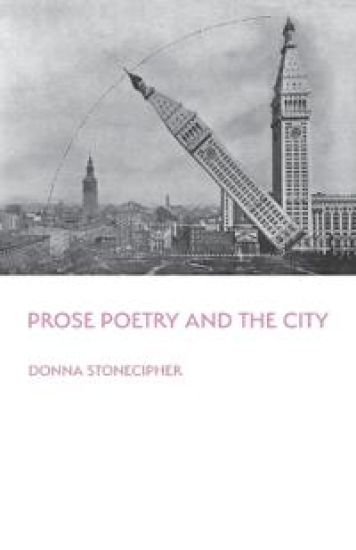
"In this fascinating book, Donna Stonecipher doubles down on the development of prose poetry and the city. Tactically, her sweeping, complex yet meticulous essay engages Baudelaire's sudden--or is it sudden?--incursion from the constraints of verse into the 'roominess' of prose, 'paragraphs of place, ' while linking 'civic horizontality' and 'corporate verticality.' Tracking possibilities, (m)using everything from architecture to landscape to cookbooks, flAneur-like, her essay exuberantly and expertly gathers together rhizomatic threads of thinkers and poets of the last two centuries. Reads like a song." --Norma Cole"This fascinating exploration of the prose poem begins with a question that most other studies have overlooked or taken for granted: 'What, if anything, do cities and prose poetry have to do with each other' Donna Stonecipher's touchstone for this question is Charles Baudelaire's prose poems in Le Spleen de Paris, but her excavation of the relationship between the 'built environment' of prose poem and city moves backwards to ancient Greece and forwards to the new sentence. As Stonecipher unpacks the 'dialogic space' of the prose poem, her essay moves vertically and horizontally, providing histories of the skyscraper and the aesthetics and ethics of vertical ascension, and much else. As she moves nimbly through large swaths of intellectual, architectural, urban, and aesthetic history, Stonecipher engages debates central to poetics and to modernity itself, taking seriously the challenge of considering how aesthetic forms register, respond to, and transform their built, social, and historical environments. An indispensable and enlightening guide that is also a pleasure to read." --Susan RosenbaumDonna Stonecipher is the author of four books of poetry: The Reservoir (winner of the Contemporary Poetry Series competition, 2002); Souvenir de Constantinople (2007); The Cosmopolitan (winner of the National Poetry Series, 2008), and Model City (2015). Her poems have been published in many journals, including The Paris Review, New American Writing, and Conjunctions, and have been translated into six languages. She lives in Berlin.

Model City answers its own inaugural question 'What was it like?' in 288 different ways. The accumulation of these answers offers a form of sustained and refined negative capability, which by turns is wry, profound and abundant with an unspecified longing for the passing ghost of European idealism. In the various enquiries and explorations of Model City this is also the mapping of a lived condition and its relationships not readily found on every street corner - nor in the broken ideologies from the populist bargain basement proffered by our political cadres. What becomes apparent is that the model city/Model City exists by virtue of a poet's wit and inventiveness, in its accomplished and elegantly measured language. Stonecipher's mesmerizing, epigrammatic fables establish the off-centre polis where, oddly, we find ourselves at home. - Kelvin Corcoran
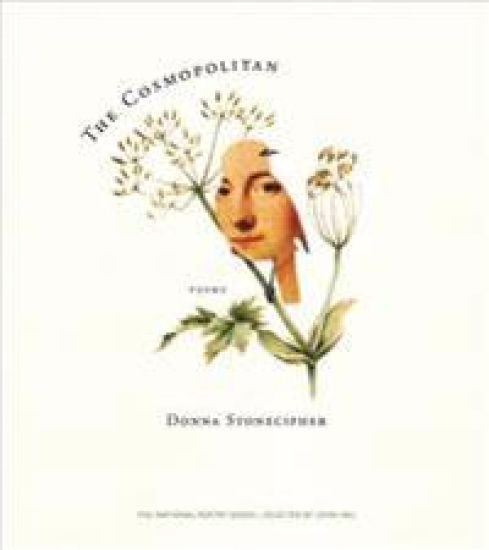
A National Poetry Series winner, chosen by John YauThese poems spin tales of traveling in a world both romantic and politicized, a world miniaturized by globalization and haunted by the figure of the cosmopolitan, who is aware of its saturated history, yet inspired by the knowledge that nostalgia is merely "memory decayed to sugar." In the kingdom of Donna Stonecipher's imagination, "a story is always forming to adorn reality," and the fall of the Eastern bloc is reenacted the night "the girl with the DDR bag met the boy with the CCCP T-shirt." Donna Stonecipher is the author of The Reservoir and Souvenir de Constantinople. She grew up in Seattle and Tehran and makes her home both here and abroad.
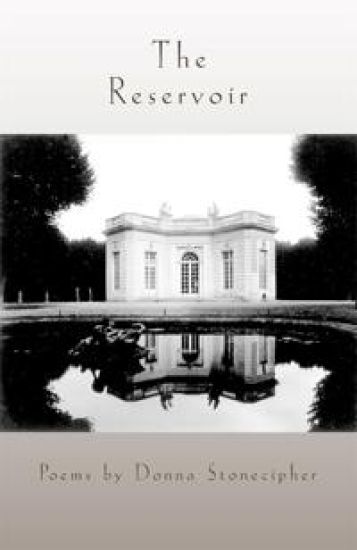
The poet blends narrative and lyrical forms to explore the line between the artificial and real in our society, using the reservoir as a metaphor for this mystery. Winner of the Contemporary Poetry Series Competition. (Poetry)