
Kirjailija
Donovan Sherman
Kirjat ja teokset yhdessä paikassa: 7 kirjaa, julkaisuja vuosilta 2016–2022, suosituimpiin kuuluu Loose Leaf for Theatre, Brief. Vertaile teosten hintoja ja tarkista saatavuus suomalaisista kirjakaupoista.
7 kirjaa
Kirjojen julkaisuvuodet: 2016–2022.
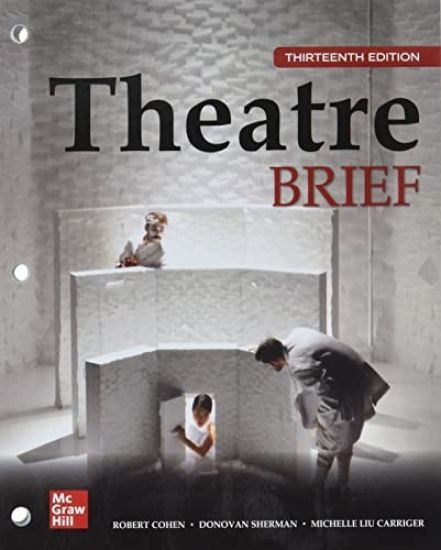
Loose Leaf for Theatre, Brief
Robert Cohen; Donovan Sherman; Michelle Liu Carriger
McGraw-Hill Companies
2022
irtolehti
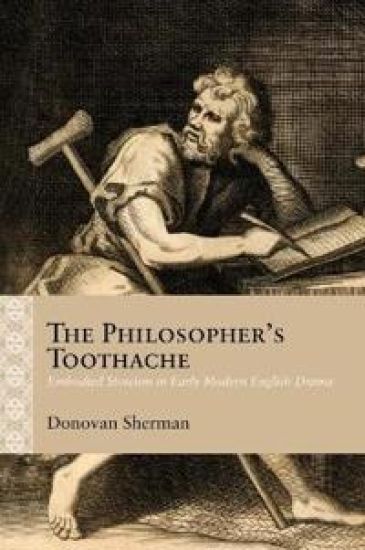
The Philosopher’s Toothache proposes that early modern Stoicism constituted a radical mode of performance. Stoicism—with its focus on bodily sensation, imagined spectatorship, and daily mental and physical exercise—exists as what the philosopher Pierre Hadot calls a “way of life,” a set of habits and practices. To be a Stoic is not to espouse doctrine but to act. Informed by work in both classical philosophy and performance studies, Donovan Sherman argues that Stoicism infused the complex theatrical culture of early modern England. Plays written and performed during this period gave life to Stoic exercises that instructed audiences to cultivate their virtue, self-awareness, and creativity. By foregrounding Stoicism’s embodied nature, Sherman recovers a vital dimension too often lost in reductive portrayals of the Stoics by early modern writers and contemporary scholars alike. The Philosopher’s Toothache features readings of dramatic works by William Shakespeare, Cyril Tourneur, and John Marston alongside considerations of early modern adaptations of classical Stoics (Seneca, Epictetus, and Marcus Aurelius) and Neo-Stoics such as Justus Lipsius. These plays model Stoic virtues like unpredictability, indifference, vulnerability, and dependence—attributes often framed as negative but that can also rekindle a sense of responsible public action.
The Philosopher’s Toothache proposes that early modern Stoicism constituted a radical mode of performance. Stoicism—with its focus on bodily sensation, imagined spectatorship, and daily mental and physical exercise—exists as what the philosopher Pierre Hadot calls a “way of life,” a set of habits and practices. To be a Stoic is not to espouse doctrine but to act. Informed by work in both classical philosophy and performance studies, Donovan Sherman argues that Stoicism infused the complex theatrical culture of early modern England. Plays written and performed during this period gave life to Stoic exercises that instructed audiences to cultivate their virtue, self-awareness, and creativity. By foregrounding Stoicism’s embodied nature, Sherman recovers a vital dimension too often lost in reductive portrayals of the Stoics by early modern writers and contemporary scholars alike. The Philosopher’s Toothache features readings of dramatic works by William Shakespeare, Cyril Tourneur, and John Marston alongside considerations of early modern adaptations of classical Stoics (Seneca, Epictetus, and Marcus Aurelius) and Neo-Stoics such as Justus Lipsius. These plays model Stoic virtues like unpredictability, indifference, vulnerability, and dependence—attributes often framed as negative but that can also rekindle a sense of responsible public action.
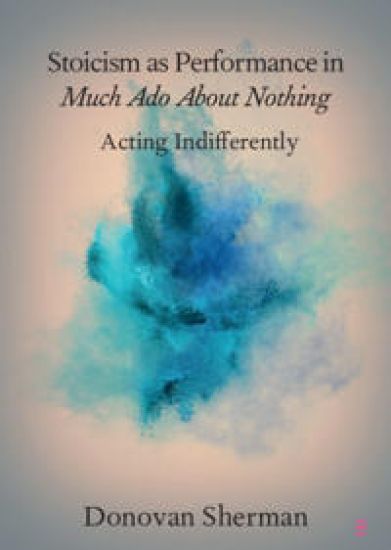
Stoicism as Performance in Much Ado about Nothing
Donovan Sherman
Cambridge University Press
2019
pokkari
This Element demonstrates how Shakespeare's Much Ado about Nothing models an understanding of the philosophy of Stoicism as performance, rather than as intellectual doctrine. To do this, it explores how, despite many early modern cultural institutions' suppression of Stoicism's theatrical capacity, a performative understanding lived on in one of the most influential texts of the era, Baldassare Castiglione's The Book of the Courtier, and that this performativity was itself inherited from one of Castiglione's sources, Cicero's De Oratore. The books concludes with a sustained reading of Much Ado to demonstrate how the play, in performance, itself acts as a Stoic exercise.
Donovan Sherman's study is original in the ways in which it seeks to join together a theology of the soul and the mode of performance and theatre. I admire the determinedly "pre-Cartesian" thrust of the book, as also the sense that Shakespeare is doing philosophical work in the form of theatre. -- Sarah Beckwith, Duke University Second Death seeks to revitalise our understanding of the soul as a philosophically profound, theoretically radical, and ultimately-and counterintuitively-theatrically realised concept. The book contends that the work of Shakespeare, when closely read alongside early modern cultural and religious writings, helps us understand the soul's historical placement as a powerful paradox: it was essential to establishing humanity but resistant to clear representation. Drawing from current critical theory as well as extensive historical research, Second Death examines works of Shakespearean drama, including The Merchant of Venice, Coriolanus, and The Winter's Tale, to suggest that rather than simply being incapable of understanding or physical realisation, the soul expressed itself in complex and subtle modes of performance. As a result, this book offers new ways of looking at identity, theatre, and spirituality in Shakespeare's era and in our own.
Illuminates our understanding of the soul as a historically and philosophically vital concept through Shakespearean dramaSecond Death seeks to revitalise our understanding of the soul as a philosophically profound, theoretically radical, and ultimately-and counterintuitively-theatrically realised concept. The book contends that the work of Shakespeare, when closely read alongside early modern cultural and religious writings, helps us understand the soul's historical placement as a powerful paradox: it was essential to establishing humanity but resistant to clear representation. Drawing from current critical theory as well as extensive historical research, Second Death examines works of Shakespearean drama, including The Merchant of Venice, Coriolanus, and The Winter's Tale, to suggest that rather than simply being incapable of understanding or physical realisation, the soul expressed itself in complex and subtle modes of performance. As a result, this book offers new ways of looking at identity, theatre, and spirituality in Shakespeare's era and in our own. Key FeaturesProvides understanding of the soul as not only a religious, cultural, and literary concept, but also a theatrical oneDiscusses genealogy of the philosophical and theological traditions that inform the soul's placement in the early modern era, from Plato to ProtestantismIncludes novel readings of key works of Shakespearean drama along with substantial analyses of other Shakespeare plays (King Lear, Hamlet) as well as other early modern works (by John Donne, Christopher Marlowe, John Foxe, John Stow, Thomas Middleton, John Milton, and others)Draws new interdisciplinary connections among theatre studies, Shakespeare, critical theory, and religious studies