
Kirjailija
Dora Russell
Kirjat ja teokset yhdessä paikassa: 78 kirjaa, julkaisuja vuosilta 1959–2026, suosituimpiin kuuluu The Right to Be Happy. Vertaile teosten hintoja ja tarkista saatavuus suomalaisista kirjakaupoista.
78 kirjaa
Kirjojen julkaisuvuodet: 1959–2026.





A Bitter Birthright. [A Novel.]
Dora Russell
British Library, Historical Print Editions
2011
pokkari






A Bitter Birthright. [A Novel.]
Dora Russell
British Library, Historical Print Editions
2011
pokkari

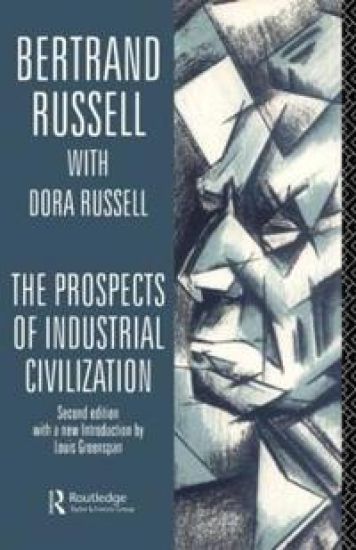
The Prospects of Industrial Civilization provides a rare glimpse into areas of Russell's political thought which are often ignored. Written with Dora Black (who became Russell's second wife) on a trip to China in 1920, it is revealing both as a period piece and as a book for our times. Russell criticises his own age, and demonstrates how humanity perpetually struggles against the centralising forces of industrialism and nationalism. He views industrialism as a threat to human freedom, as it creates large populations which have to be subject to controls and he likens Bolshevik Russia to Cromwell's England, asserting that both were dictatorships designed to force an essentially feudal society to adopt industrialism. He sees industrialism and nationalism as fundamentally linked and proposes one government for the whole world as a solution. Russell is not blind to the positive side of industrialism; without machines an economy of subsistence would be the best for which society could hope, but argues that the global village and prevailing political democracy should be its eventual results.
The Prospects of Industrial Civilization provides a rare glimpse into areas of Russell's political thought which are often ignored. Written with Dora Black (who became Russell's second wife) on a trip to China in 1920, it is revealing both as a period piece and as a book for our times. Russell criticises his own age, and demonstrates how humanity perpetually struggles against the centralising forces of industrialism and nationalism. He views industrialism as a threat to human freedom, as it creates large populations which have to be subject to controls and he likens Bolshevik Russia to Cromwell's England, asserting that both were dictatorships designed to force an essentially feudal society to adopt industrialism. He sees industrialism and nationalism as fundamentally linked and proposes one government for the whole world as a solution. Russell is not blind to the positive side of industrialism; without machines an economy of subsistence would be the best for which society could hope, but argues that the global village and prevailing political democracy should be its eventual results.