Kirjailija
Doreen Massey
Kirjat ja teokset yhdessä paikassa: 18 kirjaa, julkaisuja vuosilta 1985–2022, suosituimpiin kuuluu City Worlds. Vertaile teosten hintoja ja tarkista saatavuus suomalaisista kirjakaupoista.
18 kirjaa
Kirjojen julkaisuvuodet: 1985–2022.
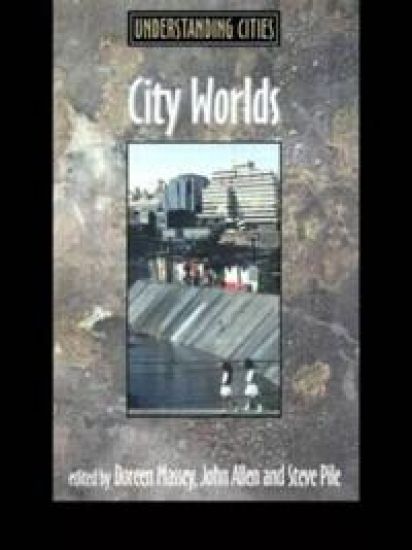
For the first time in history, half of the worlds population is living in mega-cities. Never before have we confronted such a geography of the worlds people. Analysing cities through spatial understanding, City Worlds explores how different worlds within the city are brought into close proximity. The authors outline new ways to address the ambiguities of cities: their promise and potential, their problems and threats.
A collection of political writings by the radical socialist and feminist geographer, Doreen Massey, edited by David Featherstone and Diarmaid Kelliher.
Science parks are becoming established in increasing numbers in almost all parts of the world. Promoted as places on the frontiers of science where a new breed of scientist-entrepreneur invents a new future, extolled as high-status workplaces where a new style of employee and flexible labour process is in the making, they are seen as the potential saviours of local and national economies. High-Tech Fantasies criticises the divisive hype of science parks arguing that both the theory and practice are unproductive for the economy and for any socially progressive science and technology. Questioning responsibility, innovation and symbolism, the authors explore the mutual determination of society, science and space.
Job loss is one of the most important issues in the capitalist world today: endless reports document the increasing scale of unemployment. This title, first published in 1982, adopted a new approach to the geography of job loss, to assess why redundancy happens and where. Massey and Meegan argue that an increase in dismissal does not necessarily mean that an industry is in decline; rather, it can be the result of a variety of issues, including production for profit and the relationship between industry and location. Throughout the book, discussions about theory and methodology are complemented by industry-based case studies. This title addresses issues of particular relevance to today’s economic climate, and will be particularly valuable to students with an interest in employment and job loss, and industrial labour and profitability.
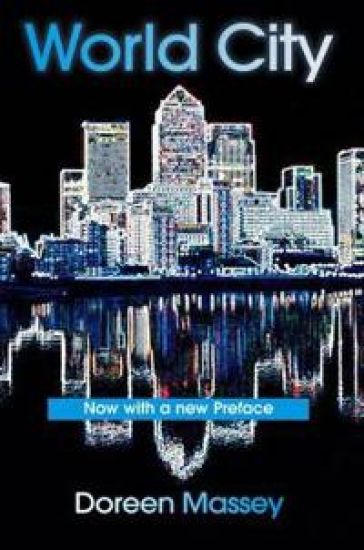
Cities around the world are striving to be 'global'. This book tells the story of one of them, and in so doing raises questions of identity, place and political responsibility that are essential for all cities. World City focuses its account on London, one of the greatest of these global cities. London is a city of delight and of creativity. It also presides over a country increasingly divided between North and South and over a neo-liberal form of globalisation - the deregulation, financialisation and commercialisation of all aspects of life - that is resulting in an evermore unequal world. World City explores how we can understand this complex narrative and asks a question that should be asked of any city: what does this place stand for? Following the implosion within the financial sector, such issues are even more vital. In a new Preface, Doreen Massey addresses these changed times. She argues that, whatever happens, the evidence of this book is that we must not go back to 'business as usual', and she asks whether the financial crisis might open up a space for a deeper rethinking of both our economy and our society.
Cities around the world are striving to be global. This book tells the story of one of them, and in so doing raises questions which are essential for all cities. These questions concern identity, place, and political responsibility in the changing geographies of our times. The book also tells the story of the rise of a new class, of deepening inequality, and of the geographical imaginations that are mobilised to legitimate the increasing dominance of these powerful metropoles. In so doing, it sets the global city in its wider geographical and political context. World City focuses its account on London, one of the greatest of these global cities. London is a city of delight and of creativity, of the generation of vast wealth and of acute poverty. It also presides over a country increasingly divided between North and South and over a neo-liberal form of globalisation the deregulation, financialisation and commercialisation of all aspects of life that results in an evermore unequal world. World City explores how we can understand this complex narrative and asks a question that should be asked of any city: what does this place stand for? This book will appeal to students of human geography, politics and sociology as well as to the general reader.

For the first time in history, half of the worlds population is living in mega-cities. Never before have we confronted such a geography of the worlds people. Analysing cities through spatial understanding, City Worlds explores how different worlds within the city are brought into close proximity. The authors outline new ways to address the ambiguities of cities: their promise and potential, their problems and threats.
Rethinking the Region
John Allen; with Julie Charlesworth; Allan Cochrane; Gill Court; Nick Henry; Doreen Massey; Phil Sarre
Routledge
1998
nidottu
Rethinking the Region argues that regions are not simply bounded spaces on a map. This book uses unique research of England during the 1980s to show how regions are made and unmade by social processes. The book examines how new lines of division both social and geographical were laid down as free-market growth and reconstructed this are as a `neo-liberal' region. The authors argue that a more balanced form of growth is possible - within and between regions as well as between social groups. This book shows that to grasp the complexities of growth we must rethink `the region' in time as well as in space.
Rethinking the Region
John Allen; with Julie Charlesworth; Allan Cochrane; Gill Court; Nick Henry; Doreen Massey; Phil Sarre
Routledge
1998
sidottu
Rethinking the Region argues that regions are not simply bounded spaces on a map. This book uses unique research of England during the 1980s to show how regions are made and unmade by social processes. The book examines how new lines of division both social and geographical were laid down as free-market growth and reconstructed this are as a `neo-liberal' region. The authors argue that a more balanced form of growth is possible - within and between regions as well as between social groups. This book shows that to grasp the complexities of growth we must rethink `the region' in time as well as in space.
Debate still rages over some of the questions Doreen Massey provoked in the classic first edition of Spatial Divisions of Labor, such as the nature of theory, the importance of contingency and uniqueness, and the relationship of Marxism. This second edition addresses these controversies, and also reflects on other debates which have taken place over the last decade. It contains a new first chapter and a lengthy additional concluding essay in which Massey takes up the issues of the book's relation to Marxism, its position on explanation, its argument about the conceptualization of social space and its relation to gender and feminism.
The first edition of Spatial Divisions of Labour rapidly became a classic. It had enormous influence on thinking about uneven development, the nature of economic space, and the conceptualisation of place arguing for an approach embedding all these issues in a notion of spatialised social relations. This second edition includes a new first chapter and an extensive additional concluding essay addressing key issues in the debates and controversies which followed initial publication.
This volume brings together Massey's key writings on space, place and gender. She traces the development of ideas about the social nature of space and place, and the relation of both to issues of gender and debates within feminism.
Science parks are becoming established in increasing numbers in almost all parts of the world. Promoted as places on the frontiers of science where a new breed of scientist-entrepreneur invents a new future, extolled as high-status workplaces where a new style of employee and flexible labour process is in the making, they are seen as the potential saviours of local and national economies. High-Tech Fantasies criticises the divisive hype of science parks arguing that both the theory and practice are unproductive for the economy and for any socially progressive science and technology. Questioning responsibility, innovation and symbolism, the authors explore the mutual determination of society, science and space.
First Published in 1985. For more than a decade now a number of debates have been taking place within industrial geography. The period has been one in which issues of the geography of industry—of the spatial form of industrial decline and growth—have often been at the forefront of wider political debate. The issue of the relationship between theory, method, politics and policies is common to all the social sciences, and the debate which is presented here has relevance beyond industrial geography —in economics, in sociology, in other branches of human geography. This book is built around a seminar which was held in 1983. It was organized under the auspices of the then SSRC, now ESRC, as part of the programme of Doreen Massey’s Fellowship in Industrial Location Research. The aim was explicitly to allow time for a small group of participants to discuss the range of issues around the question of the relationship between policies, politics, theory and method.