Kirjojen hintavertailu – 12 859 818 kirjaa ja 27 kauppaa

Kirjailija

Dorolyn Smith

Kirjat ja teokset yhdessä paikassa: 9 kirjaa, julkaisuja vuosilta 1992–2015, suosituimpiin kuuluu Academic Vocabulary Building in English, Intermediate. Vertaile teosten hintoja ja tarkista saatavuus suomalaisista kirjakaupoista.

9 kirjaa

Kirjojen julkaisuvuodet: 1992–2015.

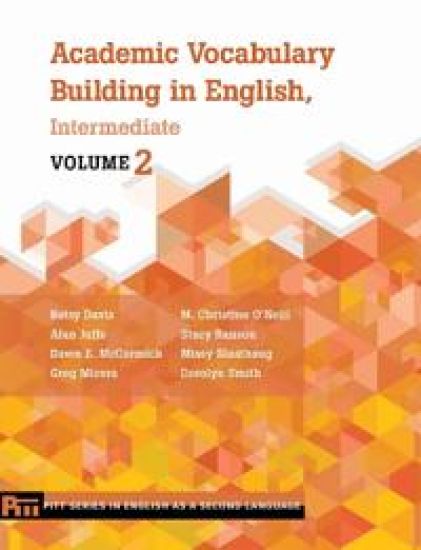
Academic Vocabulary Building in English, Intermediate

Academic Vocabulary Building in English, Intermediate

Betsy Davis; Alan Juffs; Dawn E. McCormick; Greg Mizera; M. Christine O'Neill; Stacy Ranson; Marilyn Smith Slaathaug; Dorolyn Smith

The University of Michigan Press
2015
nidottu
The English Language Institute at the University of Pittsburgh is known for its popular eight-volume series Words for Students of English (University of Michigan Press). In the years since the series was first published, faculty at Pitt ELI has been considering new ways to address learners’ challenges in acquiring vocabulary. The result of the research and experience is a new five-volume series, Academic Vocabulary Building in English. This series weaves together three sets of knowledge: (1) the results of recent research from applied linguists and psycholinguists, (2) the rich classroom experience of the Institute faculty, who together have many decades of practical classroom ESL experience, and (3) the data gathered from our online student database and corpus studies that have informed us of which words students need to know more deeply. Each unit contains sections that emphasize various components of word learning. First, each chapter opens with a chart of target words and their various morphological forms. The next step establishes form-meaning mappings: Each word is listed with a definition and two example sentences. The lists and definitions are followed by exercises that concentrate students’ attention on establishing form-meaning links. These exercises consist of practice opportunities that require multiple retrievals in order to promote label-to-concept links and begin awareness of derivational and inflectional variations. Follow-up exercises focus on collocations related to the unit’s theme. Each chapter closes with exercises that can be used as quizzes. By the time students have finished a unit, they should have had both receptive and productive practice with the form, meaning, morphosyntax, and collocational properties of each lexical item.
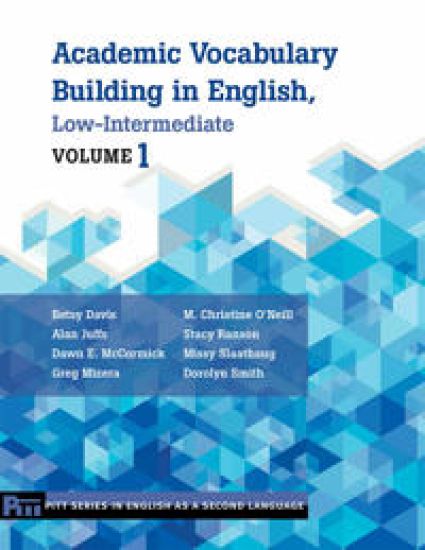
Academic Vocabulary Building in English, Low-Intermediate

Academic Vocabulary Building in English, Low-Intermediate

Betsy Davis; Dawn E. McCormick; Greg Mizera; M. Christine O'Neill; Stacy Ranson; Marilyn Smith Slaathaug; Dorolyn Smith; Alan Juffs

The University of Michigan Press
2015
nidottu
The English Language Institute at the University of Pittsburgh is known for its popular eight-volume series Words for Students of English (University of Michigan Press). In the years since the series was first published, faculty at Pitt ELI has been considering new ways to address learners’ challenges in acquiring vocabulary. The result of the research and experience is a new five-volume series, Academic Vocabulary Building in English. This series weaves together three sets of knowledge: (1) the results of recent research from applied linguists and psycholinguists, (2) the rich classroom experience of the Institute faculty, who together have many decades of practical classroom ESL experience, and (3) the data gathered from our online student database and corpus studies that have informed us of which words students need to know more deeply. Each unit contains sections that emphasize various components of word learning. First, each chapter opens with a chart of target words and their various morphological forms. The next step establishes form-meaning mappings: Each word is listed with a definition and two example sentences. The lists and definitions are followed by exercises that concentrate students’ attention on establishing form-meaning links. These exercises consist of practice opportunities that require multiple retrievals in order to promote label-to-concept links and begin awareness of derivational and inflectional variations. Follow-up exercises focus on collocations related to the unit’s theme. Each chapter closes with exercises that can be used as quizzes. By the time students have finished a unit, they should have had both receptive and productive practice with the form, meaning, morphosyntax, and collocational properties of each lexical item.
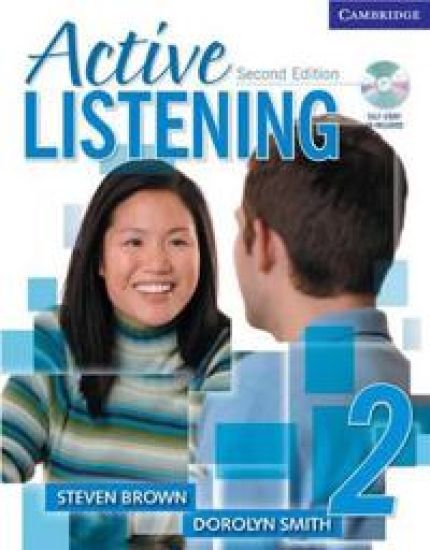
Active Listening 2 Student's Book with Self-study Audio CD

Active Listening 2 Student's Book with Self-study Audio CD

Steven Brown; Dorolyn Smith

Cambridge University Press
2006
muu
Active Listening, Second Edition, is grounded in the theory that learners are more successful listeners when they activate their prior knowledge of a topic. Student's Book 2 is intended for low-intermediate to intermediate students. The Student's Book offers 16 task-based units, each built around an engaging topic. Through a careful balance of activities, students learn to listen for main ideas, to listen for details, and to listen and make inferences. Prelistening schema-building activities help students build vocabulary, and listen-again activities provide additional skills practice. A full page of optional speaking activities with pronunciation practice is provided in each unit. Expansion units, with authentic student interviews, offer rich cultural material and provide review. A free Self-Study Audio CD is also included in every Student's Book.
Active Listening 3 Class Audio CDs

Active Listening 3 Class Audio CDs

Steve Brown; Dorolyn Smith

Cambridge University Press
2007
cd
Active Listening, Second Edition, is grounded in the theory that learners are more successful listeners when they activate their prior knowledge of a topic. Class Audio CDs include natural conversational recordings for the listening tasks in each unit, pronunciation practice, and Expansion units containing authentic student interviews.
Active Listening 2 Class Audio CDs

Active Listening 2 Class Audio CDs

Steven Brown; Dorolyn Smith

Cambridge University Press
2006
cd
Active Listening Second edition for adult and young adult learners has task-based units built around a topic, function, or grammatical theme. Class Audio CDs include natural conversational recordings for the listening tasks in each unit, pronunciation practice, and expansion units containing authentic student interviews.
Active Listening 1 Class Audio CDs

Active Listening 1 Class Audio CDs

Steve Brown; Dorolyn Smith

Cambridge University Press
2006
cd
Active Listening Second edition for adult and young adult learners has task-based units built around a topic, function, or grammatical theme. Class Audio CDs include natural conversational recordings for the listening tasks in each unit, pronunciation practice, and expansion units containing authentic student interviews.
Words for Students of English, Vol. 6

Words for Students of English, Vol. 6

Holly Deemer Rogerson; Gary Esarey; Suzanne Hershelman; Carol Jasnow; Linda Schmandt; Dorolyn Smith

The University of Michigan Press
1992
nidottu
Volume 6 consists of 25 units that present basewords with definitions, usage examples, and exercises. Each unit focuses on a specific topic, carefully selected for its relevance to students' lives, so that students can practice new words in meaningful contexts. The exercises are flexible and easy to use, taking students from simple, fairly controlled practice to a final phase of communicative exercise. A list of words covered in previous volumes is included.
Words for Students of English, Vol. 2

Words for Students of English, Vol. 2

Holly Deemer Rogerson; Gary Esarey; Linda Schmandt; Dorolyn Smith

The University of Michigan Press
1992
nidottu
SKILL LEVEL: High Beginning/Low-intermediateVolume 2 consists of 25 units that present basewords with definitions, usage examples, and exercises. Each unit focuses on a specific topic, carefully selected for its relevance to students' lives, so that students can practice new words in meaningful contexts. The exercises are flexible and easy to use, taking students from simple, fairly controlled practice to a final phase of communicative exercise. A list of words covered in the previous volume is included.