Kirjojen hintavertailu – 12 903 724 kirjaa ja 27 kauppaa

Kirjailija

Dorota Glowacka

Kirjat ja teokset yhdessä paikassa: 5 kirjaa, julkaisuja vuosilta 2012–2019, suosituimpiin kuuluu Bandit Algorithms in Information Retrieval. Vertaile teosten hintoja ja tarkista saatavuus suomalaisista kirjakaupoista.

5 kirjaa

Kirjojen julkaisuvuodet: 2012–2019.

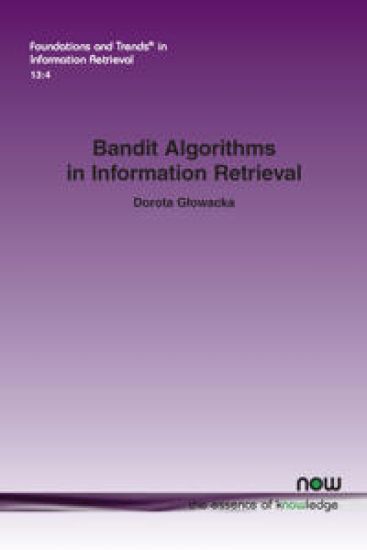
Bandit Algorithms in Information Retrieval

Bandit Algorithms in Information Retrieval

Dorota Glowacka

now publishers Inc
2019
nidottu
This monograph provides an overview of bandit algorithms inspired by various aspects of Information Retrieval (IR), such as click models, online ranker evaluation, personalization or the cold-start problem. Using a survey style, each chapter focuses on a specific IR problem and explains how it was addressed with various bandit approaches. Within each section, all the algorithms are presented in chronological order. The monograph shows how specific concepts related to bandit algorithms. This comprehensive, chronological approach enables the author to explain the impact of IR on the development of new bandit algorithms as well as the impact of bandit algorithms on the development of new methods in IR. The survey is primarily intended for two groups of readers: researchers in Information Retrieval or Machine Learning and practicing data scientists. It is accessible to anyone who has completed introductory to intermediate level courses in machine learning and/or statistics.
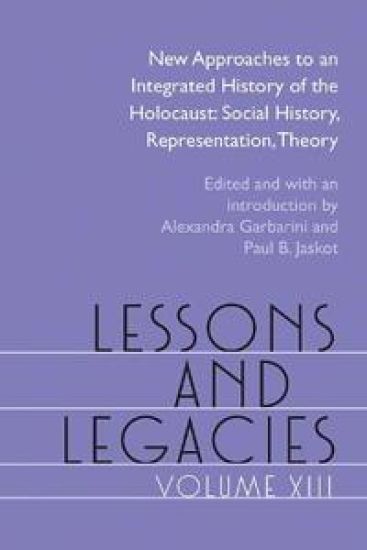
Lessons and Legacies XIII

Lessons and Legacies XIII

Alexandra Garbarini; Paul Jaskot; Brad Prager; Dana Smith; Marion Kaplan; Kaelber Lutz; Kubátová Hana; Martin Dean; Jan Grabowski; Simone Gigliotti; Pedro Correa Martín-Arroyo; Jonathan Druker; Gershon Greenberg; Lissa Skitolsky; Dorota Glowacka

Northwestern University Press
2018
sidottu
The social history of the genocide, its representation in postwar culture, and new theoretical approaches stand at the forefront of current research in a range of disciplines. Analyses at the most intimate scale—of the individual or of a particular locale— are juxtaposed with those that turn to broader studies of the war or postwar order. Complementing these different scales are theoretical investigations that address individual agency, moral judgment, and the construction of meaning and memory in the study of the victims of the Holocaust and in our understanding of society as a whole. Together they mark the contemporary scholarly landscape of Holocaust studies, which includes history as well as film and literary studies, philosophy, and religious studies (among other disciplines). Each of the volume's three sections contributes to understanding the Holocaust and postwar ramifications of the genocide by focusing on: 1) the history of specific communities of both victims and perpetrators; 2) postwar cultural representations; and 3) new theoretical understandings of each. The essays in this volume thus represent new interests in the field that contribute to building integrated histories of the Holocaust.
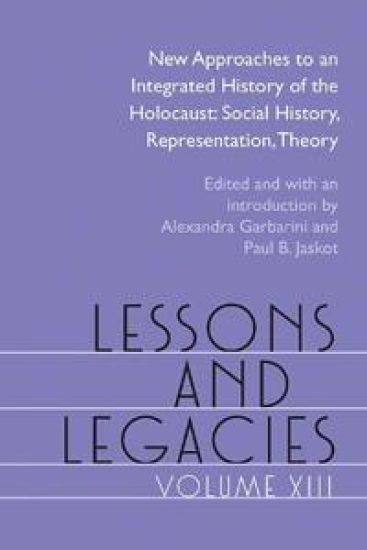
Lessons and Legacies XIII

Lessons and Legacies XIII

Alexandra Garbarini; Paul Jaskot; Brad Prager; Dana Smith; Marion Kaplan; Kaelber Lutz; Kubátová Hana; Martin Dean; Jan Grabowski; Simone Gigliotti; Pedro Correa Martín-Arroyo; Jonathan Druker; Gershon Greenberg; Lissa Skitolsky; Dorota Glowacka

Northwestern University Press
2018
nidottu
The social history of the genocide, its representation in postwar culture, and new theoretical approaches stand at the forefront of current research in a range of disciplines. Analyses at the most intimate scale—of the individual or of a particular locale— are juxtaposed with those that turn to broader studies of the war or postwar order. Complementing these different scales are theoretical investigations that address individual agency, moral judgment, and the construction of meaning and memory in the study of the victims of the Holocaust and in our understanding of society as a whole. Together they mark the contemporary scholarly landscape of Holocaust studies, which includes history as well as film and literary studies, philosophy, and religious studies (among other disciplines). Each of the volume's three sections contributes to understanding the Holocaust and postwar ramifications of the genocide by focusing on: 1) the history of specific communities of both victims and perpetrators; 2) postwar cultural representations; and 3) new theoretical understandings of each. The essays in this volume thus represent new interests in the field that contribute to building integrated histories of the Holocaust.
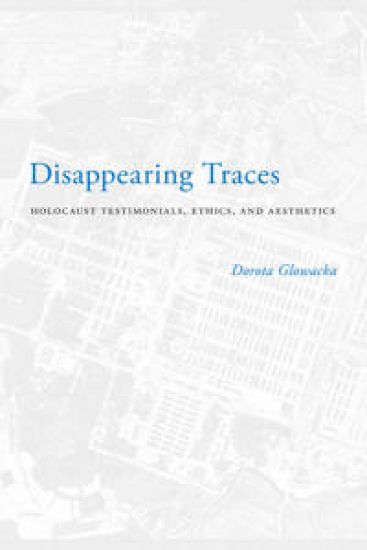
Disappearing Traces

Disappearing Traces

Dorota Glowacka

University of Washington Press
2012
sidottu
In Disappearing Traces, Dorota Glowacka examines the tensions between the ethical and aesthetic imperatives in literary, artistic, and philosophical works about the Holocaust, in a search for new ways to understand the traumatic past and its impact on the present. She engages with the work of leading 20th-century philosophers and theorists, including Levinas, Benjamin, Lyotard, and Derrida, to consider the role of language in the construction and transmission of traumatic memories; the relation between self-identity and the act of bearing witness; and the ethical implications of representing trauma. Glowacka's work draws on a wide range of discourses and disciplines, bringing into conversation various genres of writing and artistic production. It reveals the need to find innovative idioms and new means of engaging with the past, and to create alliances between different disciplines and modes of representing the past that transform and transcend existing paradigms of representation.
Disappearing Traces

Disappearing Traces

Dorota Glowacka

University of Washington Press
2012
pokkari
In Disappearing Traces, Dorota Glowacka examines the tensions between the ethical and aesthetic imperatives in literary, artistic, and philosophical works about the Holocaust, in a search for new ways to understand the traumatic past and its impact on the present. She engages with the work of leading 20th-century philosophers and theorists, including Levinas, Benjamin, Lyotard, and Derrida, to consider the role of language in the construction and transmission of traumatic memories; the relation between self-identity and the act of bearing witness; and the ethical implications of representing trauma. Glowacka's work draws on a wide range of discourses and disciplines, bringing into conversation various genres of writing and artistic production. It reveals the need to find innovative idioms and new means of engaging with the past, and to create alliances between different disciplines and modes of representing the past that transform and transcend existing paradigms of representation.