Kirjojen hintavertailu – 12 859 818 kirjaa ja 27 kauppaa

Kirjailija

Dorothy Noyes

Kirjat ja teokset yhdessä paikassa: 5 kirjaa, julkaisuja vuosilta 2003–2017, suosituimpiin kuuluu Sustaining Interdisciplinary Collaboration. Vertaile teosten hintoja ja tarkista saatavuus suomalaisista kirjakaupoista.

5 kirjaa

Kirjojen julkaisuvuodet: 2003–2017.

Sustaining Interdisciplinary Collaboration

Sustaining Interdisciplinary Collaboration

Regina Bendix; Kilian Bizer; Dorothy Noyes

University of Illinois Press
2017
nidottu
At once a slogan and a vision for future scholarship, interdisciplinarity promises to break through barriers to address today's complex challenges. Yet even high-stakes projects often falter, undone by poor communication, strong feelings, bureaucratic frameworks, and contradictory incentives. This new book shows newcomers and veteran researchers how to craft associations that will lead to rich mutual learning under inevitably tricky conditions. Strikingly candid and always grounded, the authors draw a wealth of profound, practical lessons from an in-depth case study of a multiyear funded project on cultural property. Examining the social dynamics of collaboration, they show readers how to anticipate sources of conflict, nurture trust, and jump-start thinking across disciplines. Researchers and institutions alike will learn to plan for each phase of a project life cycle, capturing insights and shepherding involvement along the way.
Sustaining Interdisciplinary Collaboration

Sustaining Interdisciplinary Collaboration

Regina Bendix; Kilian Bizer; Dorothy Noyes

University of Illinois Press
2017
sidottu
At once a slogan and a vision for future scholarship, interdisciplinarity promises to break through barriers to address today's complex challenges. Yet even high-stakes projects often falter, undone by poor communication, strong feelings, bureaucratic frameworks, and contradictory incentives. This new book shows newcomers and veteran researchers how to craft associations that will lead to rich mutual learning under inevitably tricky conditions. Strikingly candid and always grounded, the authors draw a wealth of profound, practical lessons from an in-depth case study of a multiyear funded project on cultural property. Examining the social dynamics of collaboration, they show readers how to anticipate sources of conflict, nurture trust, and jump-start thinking across disciplines. Researchers and institutions alike will learn to plan for each phase of a project life cycle, capturing insights and shepherding involvement along the way.
Humble Theory

Humble Theory

Dorothy Noyes

Indiana University Press
2016
sidottu
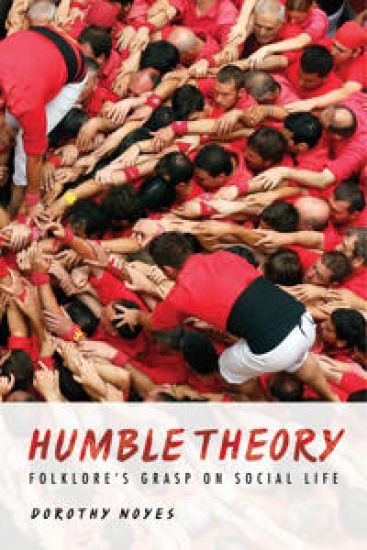
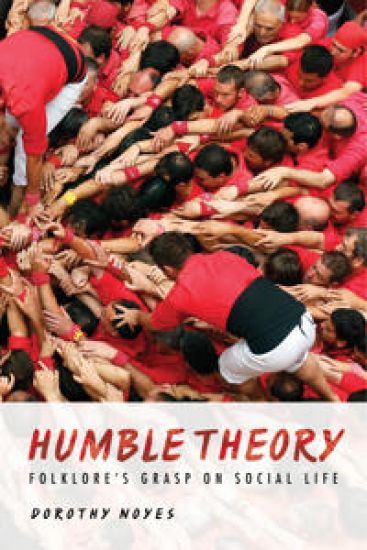
Celebrated folklorist, Dorothy Noyes, offers an unforgettable glimpse of her craft and the many ways it matters. Folklore is the dirty linen of modernity, carrying the traces of working bodies and the worlds they live in. It is necessary but embarrassing, not easily blanched and made respectable for public view, although sometimes this display is deemed useful. The place of folklore studies among modern academic disciplines has accordingly been marginal and precarious, yet folklore studies are foundational and persistent. Long engaged with all that escapes the gaze of grand theory and grand narratives, folklorists have followed the lead of the people whose practices they study. They attend to local economies of meaning; they examine the challenge of making room for maneuver within circumstances one does not control. Incisive and wide ranging, the fifteen essays in this book chronicle the "humble theory" of both folk and folklorist as interacting perspectives on social life in the modern Western world.
Humble Theory

Humble Theory

Dorothy Noyes

Indiana University Press
2016
pokkari
Celebrated folklorist, Dorothy Noyes, offers an unforgettable glimpse of her craft and the many ways it matters. Folklore is the dirty linen of modernity, carrying the traces of working bodies and the worlds they live in. It is necessary but embarrassing, not easily blanched and made respectable for public view, although sometimes this display is deemed useful. The place of folklore studies among modern academic disciplines has accordingly been marginal and precarious, yet folklore studies are foundational and persistent. Long engaged with all that escapes the gaze of grand theory and grand narratives, folklorists have followed the lead of the people whose practices they study. They attend to local economies of meaning; they examine the challenge of making room for maneuver within circumstances one does not control. Incisive and wide ranging, the fifteen essays in this book chronicle the "humble theory" of both folk and folklorist as interacting perspectives on social life in the modern Western world.
Fire in the Placa

Fire in the Placa

Dorothy Noyes

University of Pennsylvania Press
2003
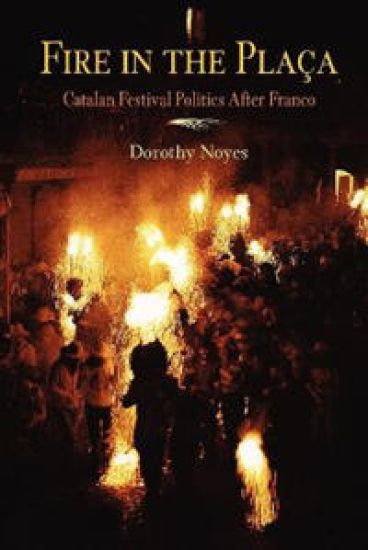
pokkari
Selected by Choice magazine as an Outstanding Academic Title Fire in the PlaÇa is the first full-length study in English of the Patum, a Corpus Christi fire festival unique to Berga, Catalonia, Spain, celebrated annually since the seventeenth century. Participants in the festival are transformed through drink, sleep deprivation, crowding, constant motion, and the smoke and sparks of close-range firecrackers into passionate members of a precarious body politic. Combining richly layered symbolism with intense bodily expression, the Patum has long served as a grassroots equivalent of grand social theory; it moves from a representation of social divisions to a forcible communion among them. The Patum's dancing effigies-giants, dwarves, Turks and Christian knights, devils and angels, a crowned eagle, and two flaming mule-dragons-have provided local allegories for a long series of political conflicts, but the festival obscures its own messages in smoke and motion to enable a temporary merging of opposites. Activists in the 1970s transition to democracy in Spain took the Patum as a model of how old adversaries might collaborate: it helped to shape the mix of assertiveness in performance and compromise in practice that is typical of contemporary Catalan nationalism. The Patum became a focus of resistance to the Franco regime and drew visitors from all over Catalonia, serving as a rehearsal for the mass protests in Barcelona. Later, it provided the newly autonomous region with a vehicle for integrating immigrants and a vocabulary of belonging, culminating in the Patum-derived devils of the closing ceremonies of the 1992 Olympic games. Today, as mines and factories have closed in Berga, the Patum serves as an arena in which provincial Catalans model their relationship to Barcelona, Europe, and the world, and reflects their ambivalence about the choices open to them. Seeking a third way between tourism and terrorism, provincial towns like Berga show us the future of all local communities under globalization. In collective performances such as the Patum, tensions between cultural and political representation are made visible, and the gap between aspiration and possibility is both bridged and acknowledged. In this exceptionally rich ethnographic study, Dorothy Noyes explores the predicament of provincial communities striving to overcome internal conflict and participate in a wider world.